Published on Show Me Mizzou Aug. 28, 2026
Stories by Dale Smith, BJ ’88
The Thompson Center for Autism & Neurodevelopment welcomed the first patient to its new building on March 10: a little girl wearing a pink bow. She took in the lobby and its soaring ceiling, but the stimulation soon tipped into overload. Her parents and a behavior therapist led the child to a quiet seat, where watching a few minutes of Frozen settled her. Then she spotted the blue line curving along the floor. “Follow the blue road,” she suggested, as the group walked into one of the nation’s most advanced centers for autism care.
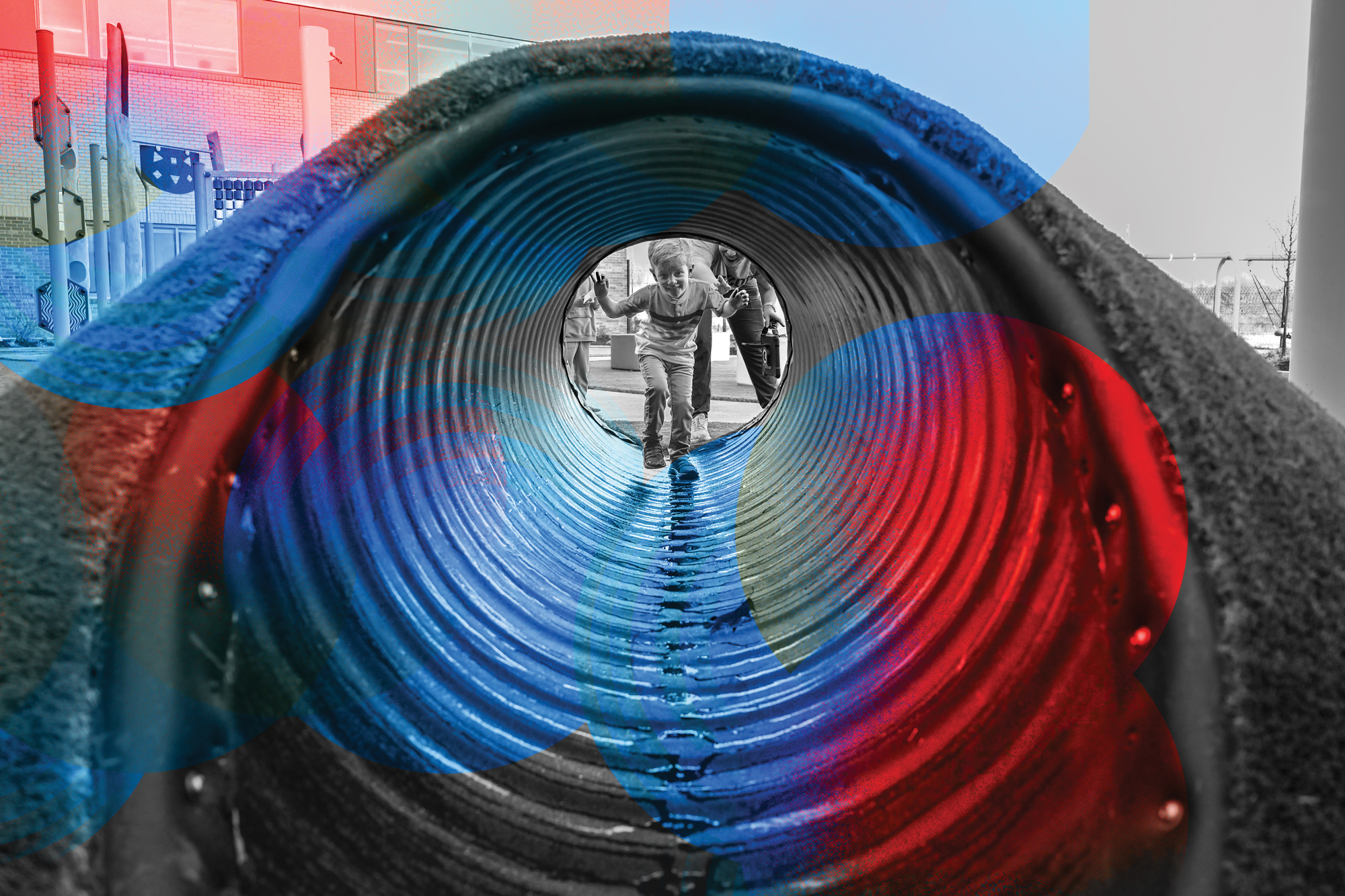
The graceful blue line represents the Missouri River. It’s part of a color-coded wayfinding system that threads the state’s ecosystems — forest, river, prairie — through 74,000 square feet of space devoted to caring for patients and discovering new ways to address neurodevelopmental needs. The $54.8 million facility is roughly 1.5 times larger than the center’s previous two buildings combined. It will allow the nationally recognized program to double its previous patient capacity of 18,000 visits a year and match the volume of centers in larger cities.
Families nationwide sometimes wait years for an autism diagnosis — a delay that can cost precious developmental time. With increased space and staff, the center has reduced its waiting list by 37 percent since 2025.
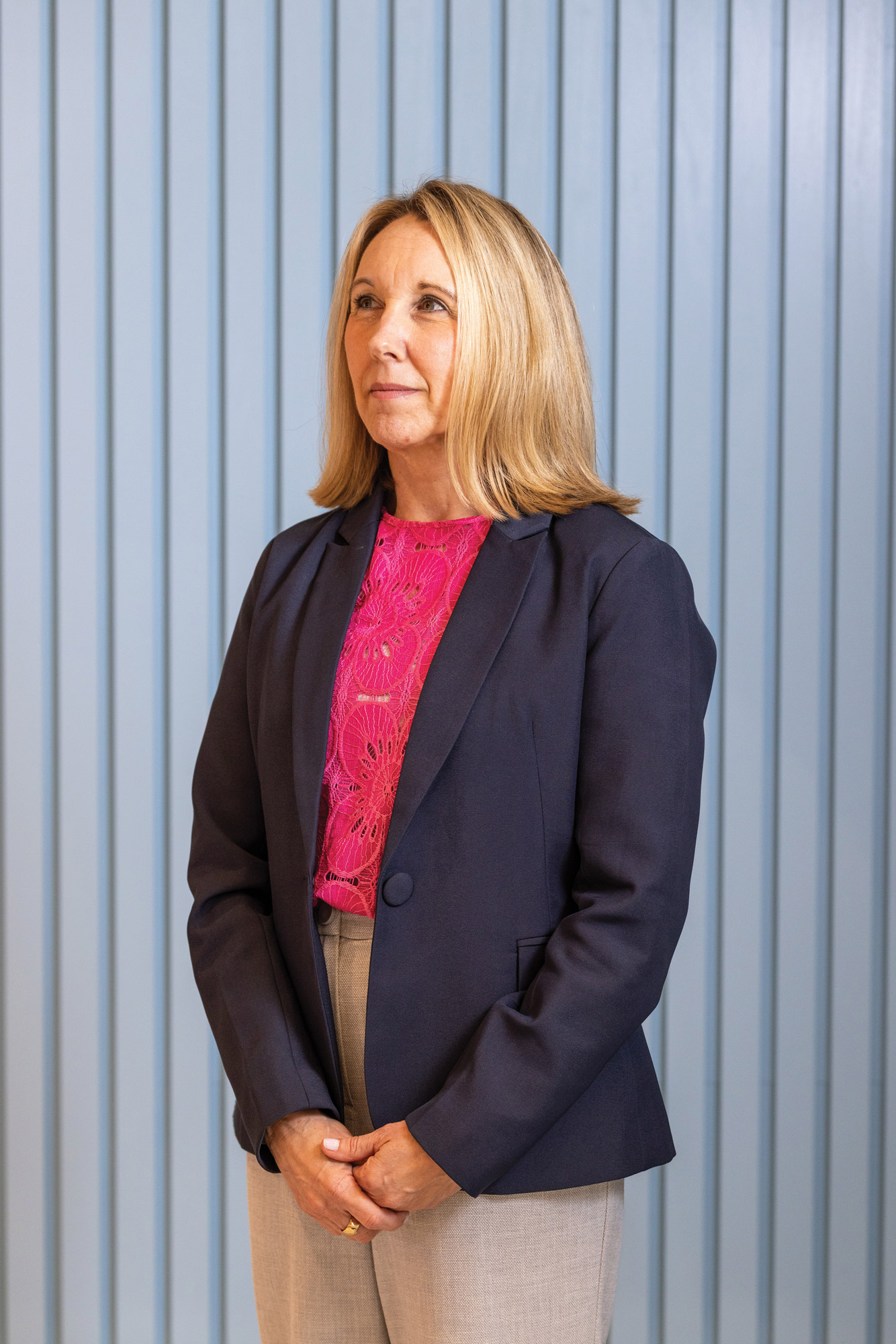
“The point of having all of the different disciplines in one place is so that we can coordinate better patient care,” says psychologist Connie Brooks, BA ’96, PhD ’07, executive director. “When we were in two different buildings, even though it wasn’t far across the parking lot, it felt like miles.”
The center, founded in 2005, gets much of its funding and other support from the Thompson Foundation for Autism & Neurodevelopment and other private philanthropy, the University of Missouri, the State of Missouri, grants and insurance payments. Although most centers emphasize one or two areas, the Thompson Center pursues initiatives including clinical care, research, education and family services. Its state‑of‑the‑art building was designed to make those functions, and the staff providing them, collide in productive ways. Brooks calls it “bumpability.”
For starters, offices are assigned so psychologists sit near pediatricians, who sit near speech‑language pathologists and neurologists. Wide hallways open into huddle spaces for quick consultations.
Brooks recalls how the proximity played out one day when she noticed something unusual about swirls in a patient’s hair, a possible sign of a genetic condition. She walked down the hall and asked pediatrician Benjamin Black, the center’s medical director, to take a look. Within less than 10 minutes, he had examined the child, recommended genetic testing and explained next steps to the parent, Brooks says. “That just wouldn’t happen if I were in a psychology‑only building.”
Multiply that approach across 15 subspecialties — from neuropsychology to genetic counseling — and the design becomes a clinical strategy. “I don’t have to know everything,” Brooks adds. “I’m surrounded by really smart, amazing colleagues.”
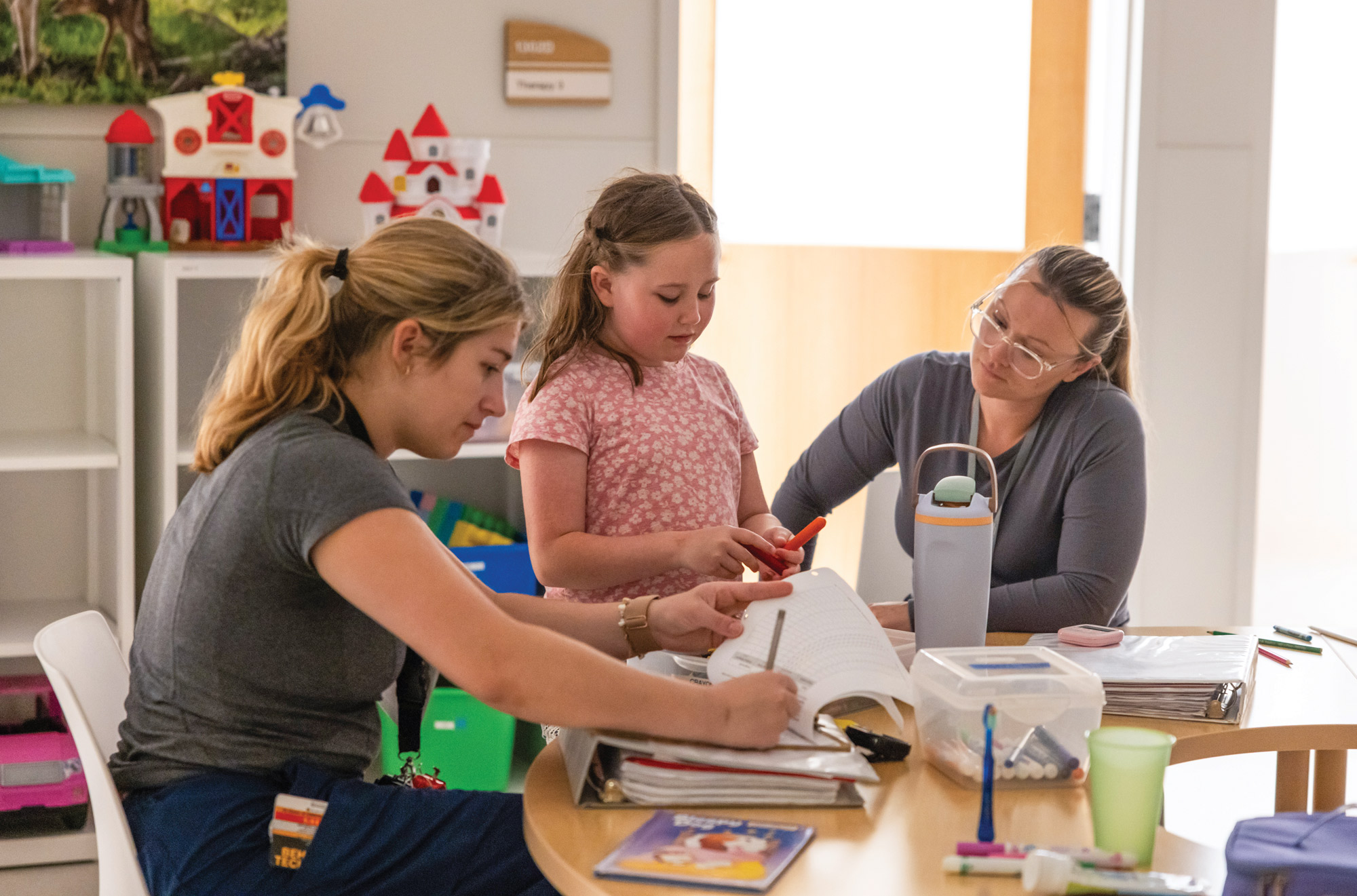
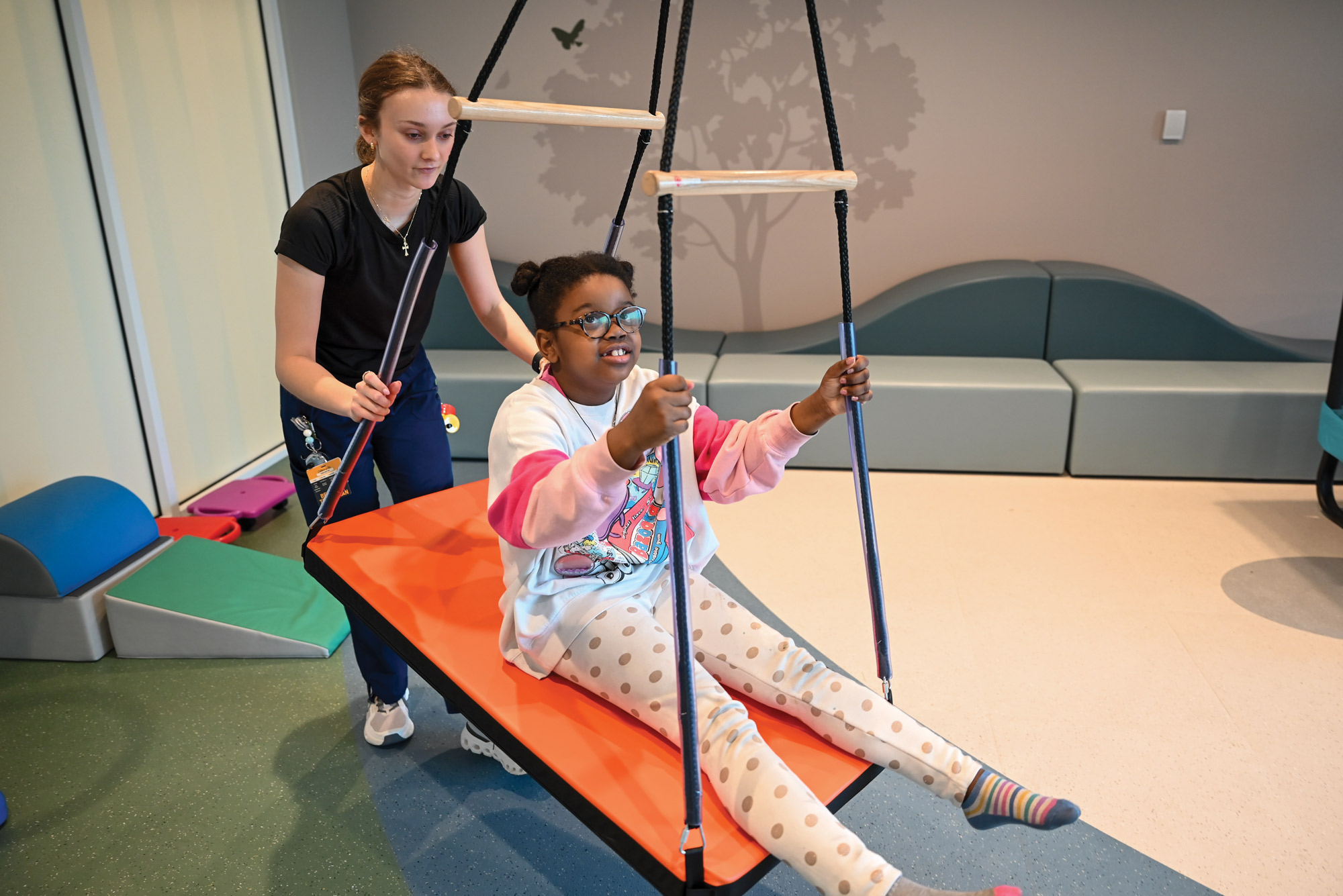
Patients’ needs take precedence on the first floor. Muted colors reduce overstimulation. Kid‑level cameras capture therapy sessions, and observation mirrors let colleagues and trainees observe. Height‑adjustable tables, sensory alcoves and sound‑dampening textures make rooms adaptable for each child. The clinic layout means that patients often can remain in a single room while various professionals visit to provide care.
The building also houses Missouri’s first Intensive Outpatient Program (IOP) for patients with autism, a 12‑ to 16‑week multidisciplinary offering for those with severe behavioral concerns who might otherwise be hospitalized. Padded walls and anchored furniture protect children with severe behaviors. A rare feature is the elopement hallway, a safe, enclosed loop where children who tend to run away from caregivers can practice stopping when asked. Behavior analysts, therapists, physicians and social workers collaborate in a wing with its own entrance and safety features. “The program is not possible without this facility,” Brooks says.
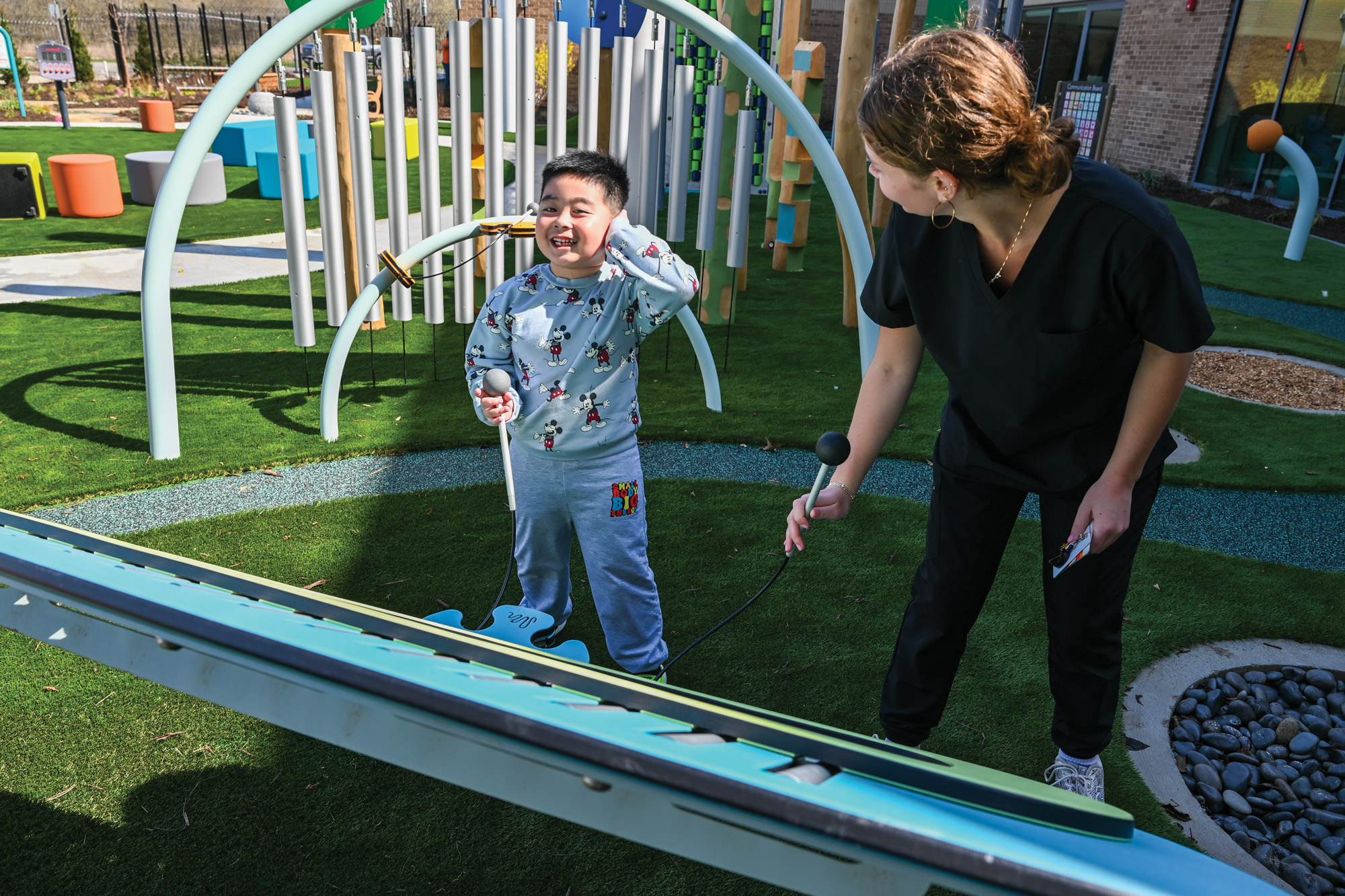
Outside, a playground doubles as a therapeutic space where providers can meet with parents while children play.
Upstairs, a research wing mirrors the clinical rooms below so children moving from clinic to a research session see familiar-looking spaces. A small cross‑trained team of coordinators supports faculty across campus running studies with neurodiverse patients — a model psychologist and researcher Stephen Sheinkopf says is rare among autism centers. The arrangement spares investigators the time and cost of building their own staff while giving the coordinators themselves a launchpad into graduate school, medical school and research careers.
Combined with a longstanding patient database, the center’s research operation gives Mizzou investigators a study recruitment advantage few peers can match. The center attracted $9.6 million in research funding in 2025. “Lots of places have some of the elements we’re talking about,” Sheinkopf says. “Very few have all of them. That’s the secret sauce.”
When it comes to training, last year, the center provided 4,800 hours of supervision to 400 trainees ranging from high schoolers to advanced graduate students. It also reached 3,400 educators and autistic students through schools, webinars and conferences. Its Autism Friendly Business program has certified more than 45 Columbia organizations. Telehealth services saved Missouri families roughly 583,000 miles of travel.
Family services thread through it all. A navigation team helps parents schedule appointments and stay connected long after visits end. Brooks recalls one mother who, weeks after her first visit, reached into her purse and pulled out the name and phone number of her navigator, Larissa, still her lifeline through the health system. The navigation team is invited to every clinical training the center offers. Brooks says this level of education and integration sets the center apart.
Five months in, the staff is still discovering what the new building makes possible. Trainees are learning to provide care in real time. Researchers are enrolling patients in studies in the time it takes to walk down a corridor. Families are finishing four‑hour appointments on a playground bench instead of a waiting room. And somewhere in Missouri, a parent who has been looking for answers is about to get a call that the wait is over.
A Family-First
Philosophy
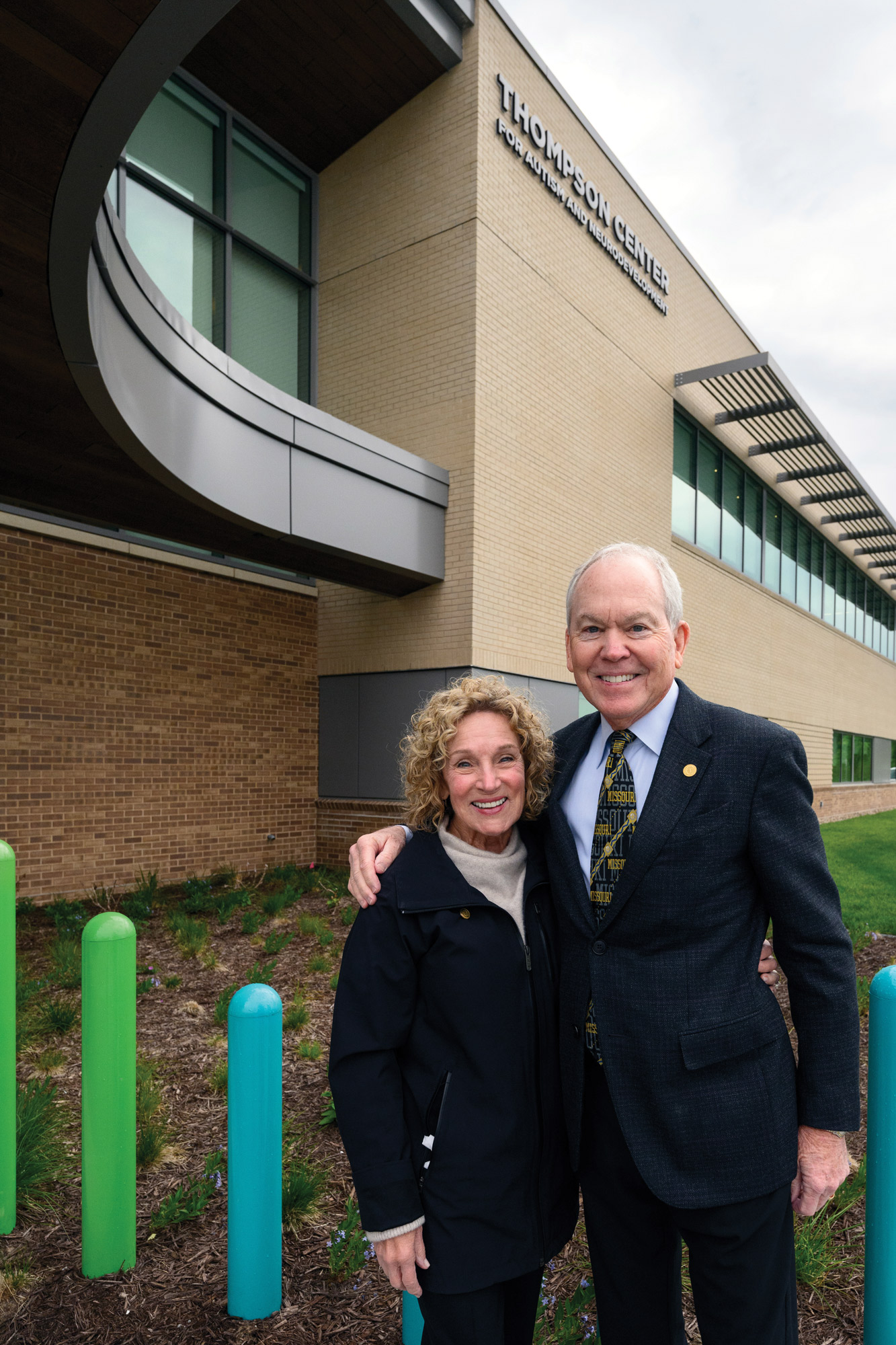
The idea for the autism center that now bears Bill and Nancy Thompson’s name emerged gradually. Their daughter Emily, a behavioral therapist, may have planted a seed by sharing stories of her work with children on the spectrum. Those conversations made the Thompsons aware of a gap in services families desperately needed. When, in 2015, Mizzou’s For All We Call Mizzou capital campaign called out children’s health as a priority, “It clicked with us,” recalls Bill, BS CiE ’68, who co-chaired the campaign. “How can we help children and their families?”
Through conversations with Mizzou researchers and clinicians, the Thompsons learned that many pediatricians didn’t recognize autism early enough, and the delay could be devastating to children’s development. What’s more, few physicians were well prepared to treat neurodevelopmental disorders. Families had precious few options. So the couple set out to build a center offering not only clinical care and research but also training for the next generation of providers across disciplines.
The Thompsons live in California and could have launched the center close to home. But Missouri was where their story began. Both grew up in Affton, Mo., a suburb of St. Louis, and built deep ties to the university they say shaped them. Bill served as Missouri Students Association president, helped lead Homecoming and at 27 became the University of Missouri System’s youngest curator. For the couple, locating the center at Mizzou felt like returning a good deed. “It was pretty easy,” Bill says — a chance to give back.
Rather than simply writing a check, the Thompsons have remained involved over the years, meeting with families to understand their needs and building a foundation to respond. Through the Thompson Foundation for Autism, chaired by
Ron Ashworth, they have worked to shorten waitlists, recruit specialists and secure funding for capital and clinical purposes.
The new building reflects their family-first philosophy.
Designed with careful attention to acoustics, colors, angles and the features of the outdoor playground, Nancy, who met Bill in high school and studied human environmental sciences at Mizzou, says the result feels less like a clinic and “almost like coming home.”
The couple’s mission remains clear and personal. “We strive to save and improve lives,” Nancy says. Bill is quick to add that much work remains: “This game is not over.”
Audra's Magical Moment
When Tara O’Shea first brought her daughter Audra (left) to the Thompson Center for Autism & Neurodevelopment, she was desperate for answers. Did her toddler have autism, and could the center help? Audra was an eloper who would run off without warning, and their home bordered a busy road. “My biggest fear was that she’d get out and end up on the highway,” O’Shea says.
At 22 months, Audra was nonverbal. They had just moved to Missouri from New Jersey, where O’Shea had tried to schedule an autism evaluation but couldn’t find an opening. The family had done the best it could, teaching her to sign words such as “please” and “thank you.” A turning point came through the center’s care. On a recommendation from pediatrician Benjamin Black, the center’s medical director, Audra was fitted with a “talker,” an iPad that speaks when its user presses buttons. Using the device, she began repeating words, then sentences. At about age 4, the magic happened. When Audra started talking, some troubling behaviors subsided, O’Shea says. “The first time she said ‘Mom,’ I was floored.”
Audra’s care plan included applied behavioral analysis, social skills groups, and speech, physical, and occupational therapies. Before long, a reevaluation moved her from a Level 3 autism diagnosis, the highest, down to Level 1.
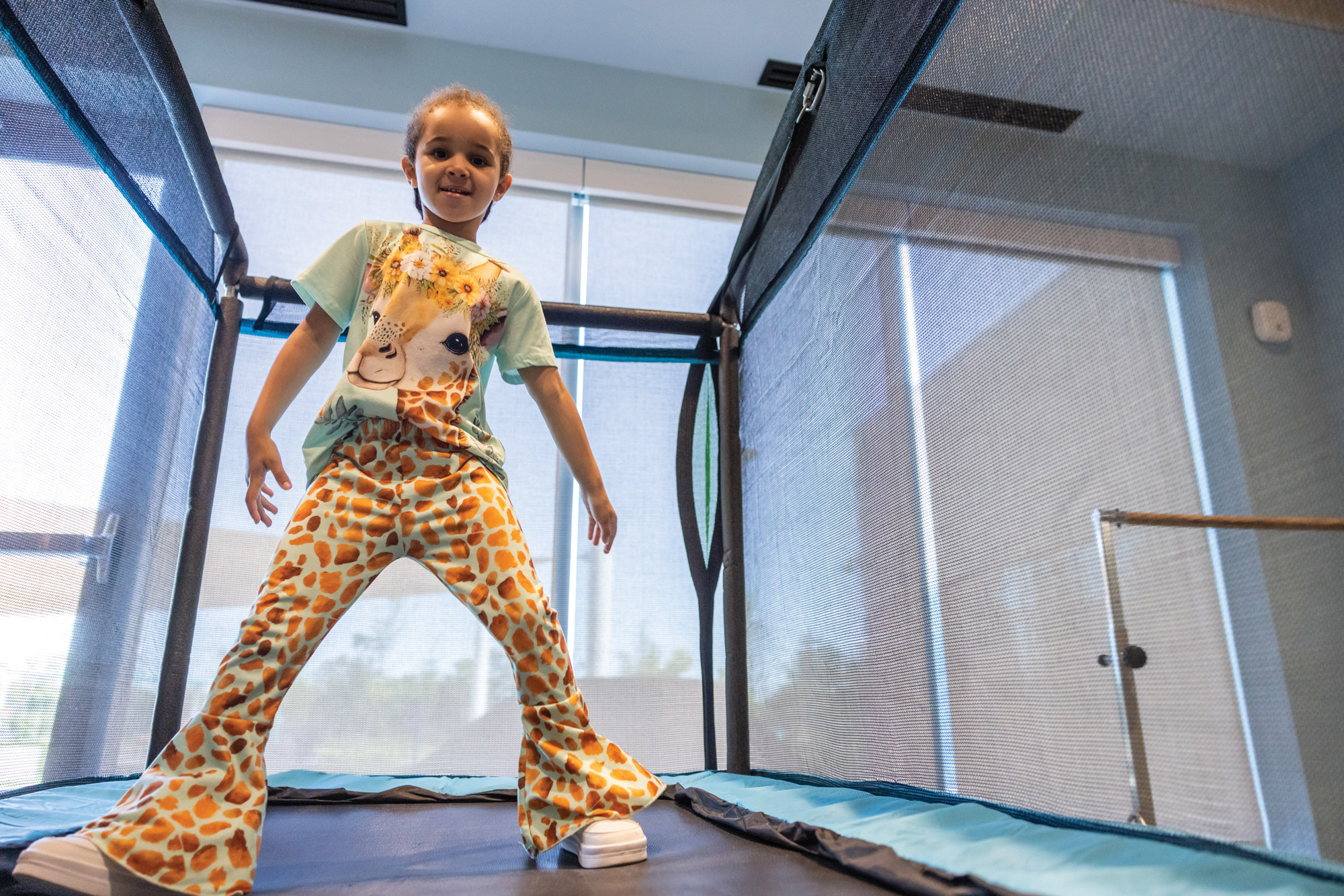
Today, Audra holds conversations, tests ahead of her peers and loves helping classmates. Her preschool teacher calls her a “big helper” who cleans up messes, follows directions and keeps classmates in line. Now 5, she is headed to kindergarten alongside neurotypical students. O’Shea believes that without the center’s diagnosis and interventions, “we would not be anywhere near where we are right now.”
The center’s care extends to caregivers. When O’Shea called the triage nurses in tears out of frustration with Audra’s school, they listened without judgment. “Sometimes I just need somebody who understands,” she says.
Her hope for Audra now? “No limits.”
To read more articles like this, become a Mizzou Alumni Association member and receive MIZZOU magazine in your mailbox. Click here to join.