
Published on Show Me Mizzou Aug. 28, 2026
Story by Jack Wax, BS Ed ’73, MS ’76, MA ’87
Photos by Abbie Lankitus
By the winter of his senior year in high school, Josh Donaldson, BS BE ’26, understood something most people never have to consider: sometimes the water coming out of the tap could make them sick. In St. Joseph, Mo., broken water mains triggered a boil-water order affecting part of the city’s aging water network and shutting down his high school for a week. Such disruptions were familiar. They stalled daily life, and over time a pattern became clear, with breakdowns occurring more often in older, poorer parts of town than in newer, more prosperous neighborhoods.
For Donaldson, the issue was more than an inconvenience. It was an early lesson in how something as basic as clean water can divide a community quietly. Though he believes the imbalance is often unintentional, “We’ve structured infrastructure so that older and poorer parts of town experience a disproportionate water burden,” he says. That recognition stayed with him and, at the University of Missouri, sharpened into focus.
Drawn to the intersections of engineering, public health and equitability, Donaldson began asking not just how systems functioned but also whom they served. Early on, he imagined a future in the nonprofit sector, possibly as a physician. That trajectory shifted during a Critical Language Scholarship program in Tanzania, where he studied Swahili while confronting water challenges far beyond anything he had seen at home. Tens of millions of Tanzanians lack safe drinking water. The scale alone demands a different way of thinking.
“The process of applying for the CLS and the time he spent in Tanzania led to a change in his vision of who he could and would become,” says Lauren Pike, Mizzou fellowships coordinator. “It is important to him to create a world where everyone has a right to clean water.” Back in Columbia, the direction was clearer. Engineering could not exist in isolation.
“I’ve loved all the engineering I’ve done, but I realized that I’m missing so much of everything else that makes an engineering solution work in context,” Donaldson says. “I need more depth in sociology, philosophy and politics to understand how to make those solutions accessible and equitable.”
How systems move
The idea that technical solutions succeed only when grounded in human context has guided Donaldson’s work since. With the Mizzou chapter of Engineers Without Borders, he joined a team supporting repairs to a gravity-fed water system in a rural village in Panama. What initially appeared straightforward quickly proved otherwise, as progress slowed when the effort was treated as a problem to solve from afar.
In response, he shifted the approach and moved away from directing the work and toward relying on local capacity. “He internalized the idea of leadership coming from within a group, and he adopted the role of teacher,” says Erik Potter, program manager in Mizzou’s Office of Global and National Fellowships. By training a community member in the relevant engineering principles, Donaldson helped locals take ownership of the project while his team moved into an advisory role. Once that transition occurred, the work advanced.
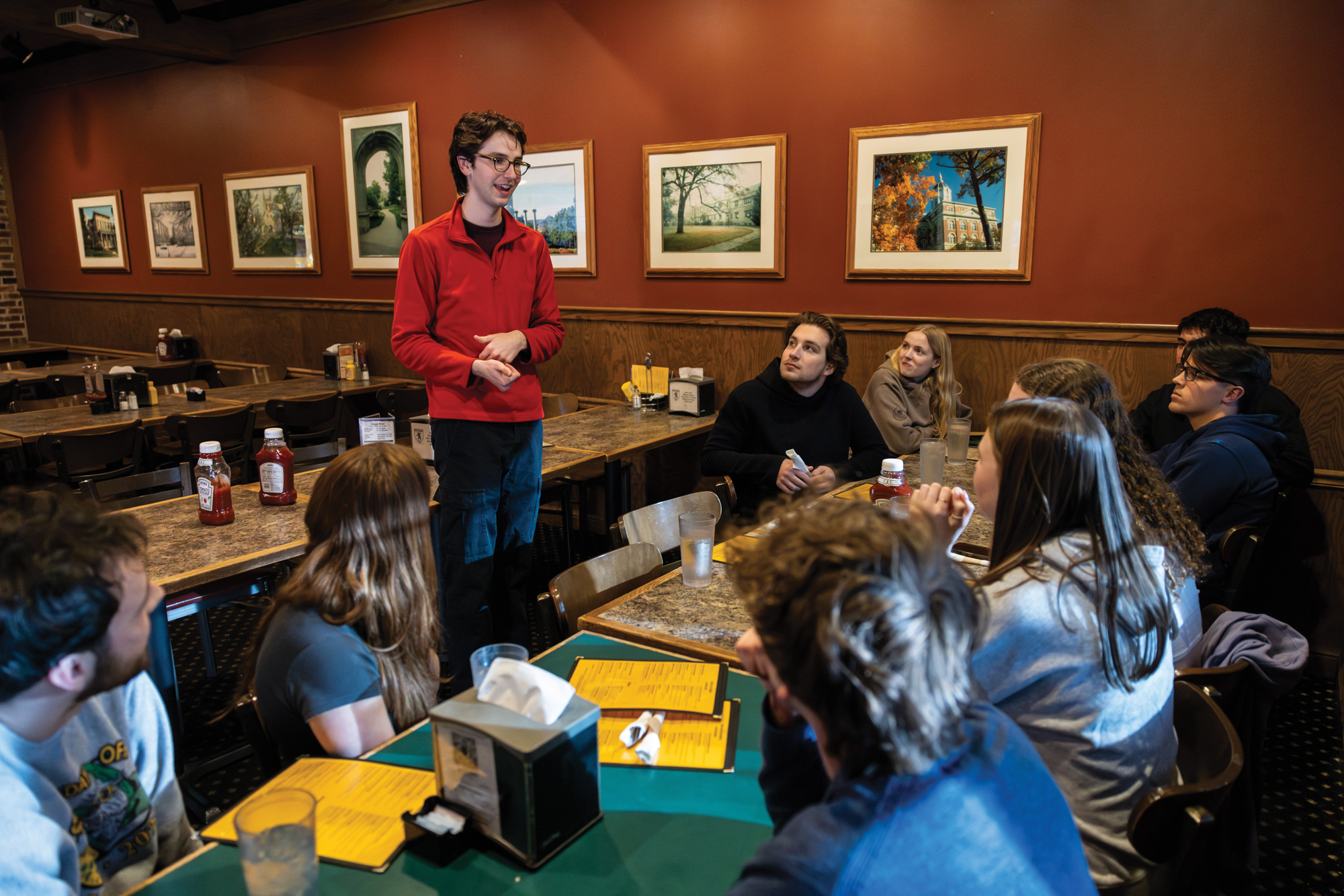
That lesson carried into his work on campus, where a different need revealed similar dynamics. After attending a First Year Council lecture on campus food resource Tiger Pantry, Donaldson realized the scale of student food insecurity. “I had no clue about the extent of food insecurity among college students here on the MU campus and its impact on their lives,” he says. What began as volunteer work soon expanded. Eventually, he became executive director of the student-run organization.

Rather than treating the pantry as a static service, he focused on expanding its reach. Pop-up pantries extended access across campus, while monthly meetings of the Midwest Pantry Alliance brought together representatives from 20 colleges and universities to share ideas and approaches. “All the other pantry leaders are professional staff,” Potter says. “And Josh, as a sophomore, was pulling them in with his vision and leading the meetings.” The context differed from the Panama project, but the underlying principle stayed the same.
The long way home
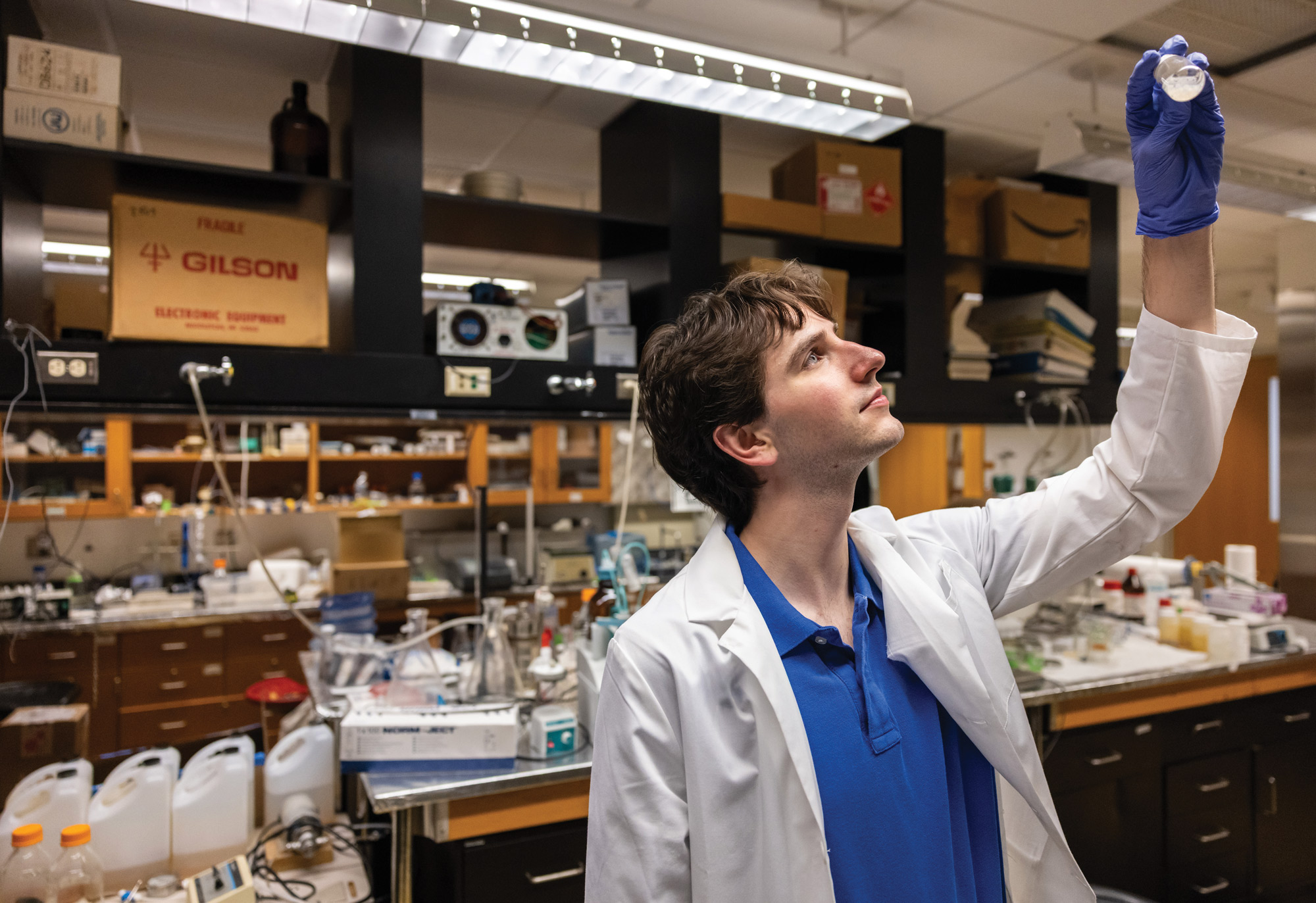
Through research, Donaldson’s thinking took on another dimension. During his senior year, he worked at the Missouri Water Center, where he studied methods for recovering rare earth minerals from mining wastewater. Under the guidance of co-director Baolin Deng, the project linked engineering practice with broader questions of sustainability and resource use. “He has a wonderful combination of curiosity, intellect and compassion to help society,” Deng says of Donaldson.
Across these experiences, a pattern comes into view. Whether working in a rural village, on a college campus or in a research setting, Donaldson approaches problems by examining how systems function and who benefits from the outcomes. That perspective, paired with strong academic performance, brought him national recognition for both leadership and public service.
In his junior year, he was named a Truman Scholar. As a senior, he received the Marshall Scholarship, one of the most competitive postgraduate awards in the United States and a distinction earned by only a handful of Mizzou students since 1954.
Now in the United Kingdom, Donaldson is extending the interdisciplinary path he began as an undergraduate. At the University of Leeds, he is pursuing a master’s degree in water, sanitation and health engineering, with plans to continue at the University of Edinburgh, where he will study global environment, politics and society. Together, the programs reflect a deliberate goal: pairing technical ability with a deeper understanding of how policy and power shape the distribution of resources.
That goal traces back to the approach that first took shape in St. Joseph. “I want to be able to help communities facing water challenges,” he says, “to address their issues from a technical perspective but also to arrive at equitable solutions through community-led governance.”
After completing his studies abroad, Donaldson plans to return to the United States and pursue a career in public service, potentially with the Missouri Department of Natural Resources or the Environmental Protection Agency. He’s interested in roles that allow him to shape policy, guide implementation and encourage younger students to engage with water-related challenges.
For Donaldson, the governing principle hasn’t changed much since St. Joseph. It still begins with water. It just no longer ends there.



To read more articles like this, become a Mizzou Alumni Association member and receive MIZZOU magazine in your mailbox. Click here to join.