Published on Show Me Mizzou April 24, 2026
Story by Randall Roberts, BA ’88
A spare but elegant house sits in southeastern Zhejiang, far from China’s political centers and tucked into a Chen’ao Cun village in Pingyang County where the mountains overwhelm the horizon. Homes built in the traditional Jiangnan style, with clean lines and curved tile roofs, date back to the Ming Dynasty more than four centuries ago.
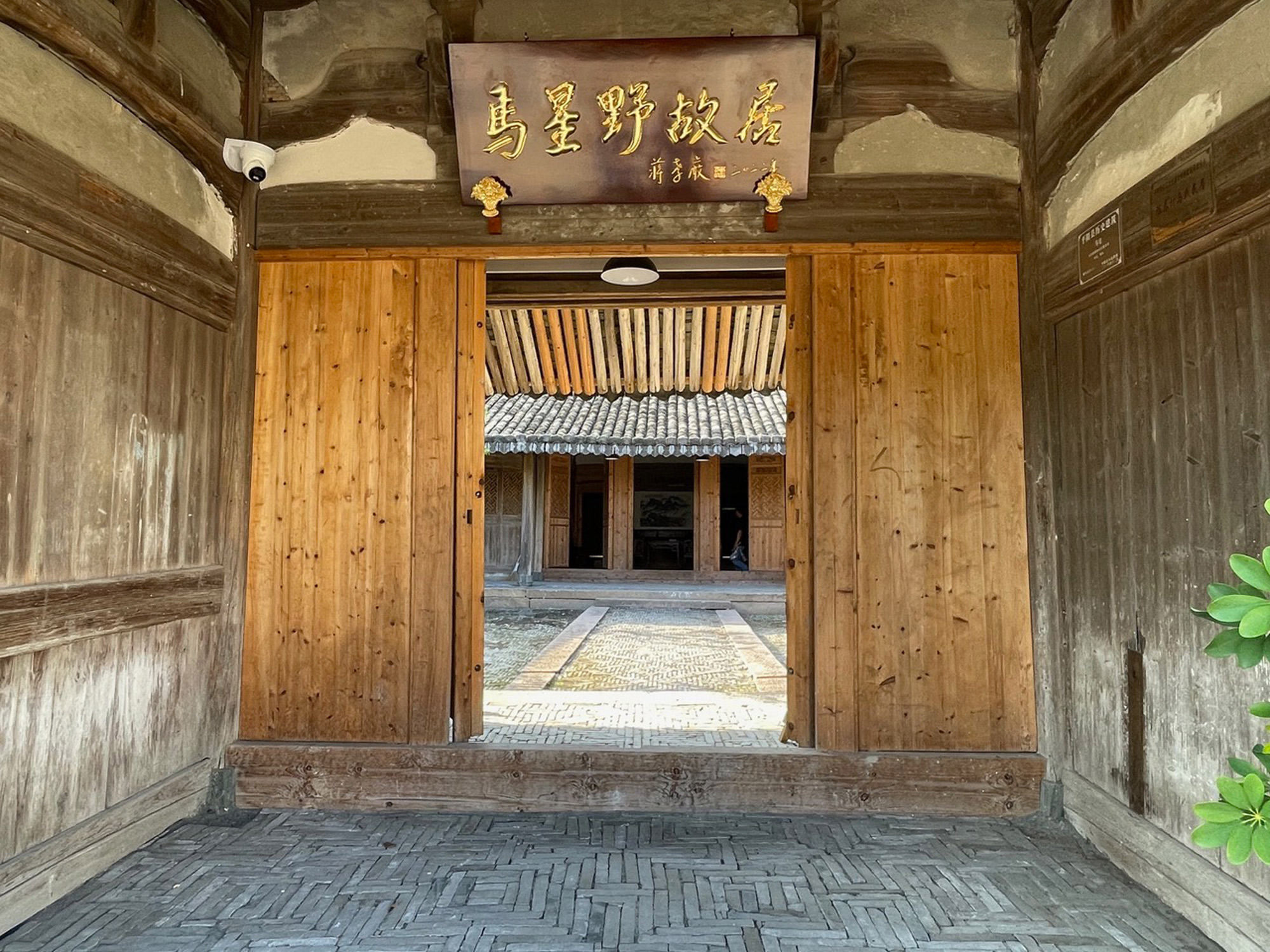
In October 2024, local officials quietly opened the Ma Hsin-yeh Ancestral Home Museum, restoring a traditional courtyard residence that once belonged to a family of teachers and scholars.
Photos show rooms humble in scale and furnished less like an exhibition than a preserved life, with photographs, documents and panels tracing the career of a man who would one day carry a Chinese newspaper operation across a collapsing nation and into exile.
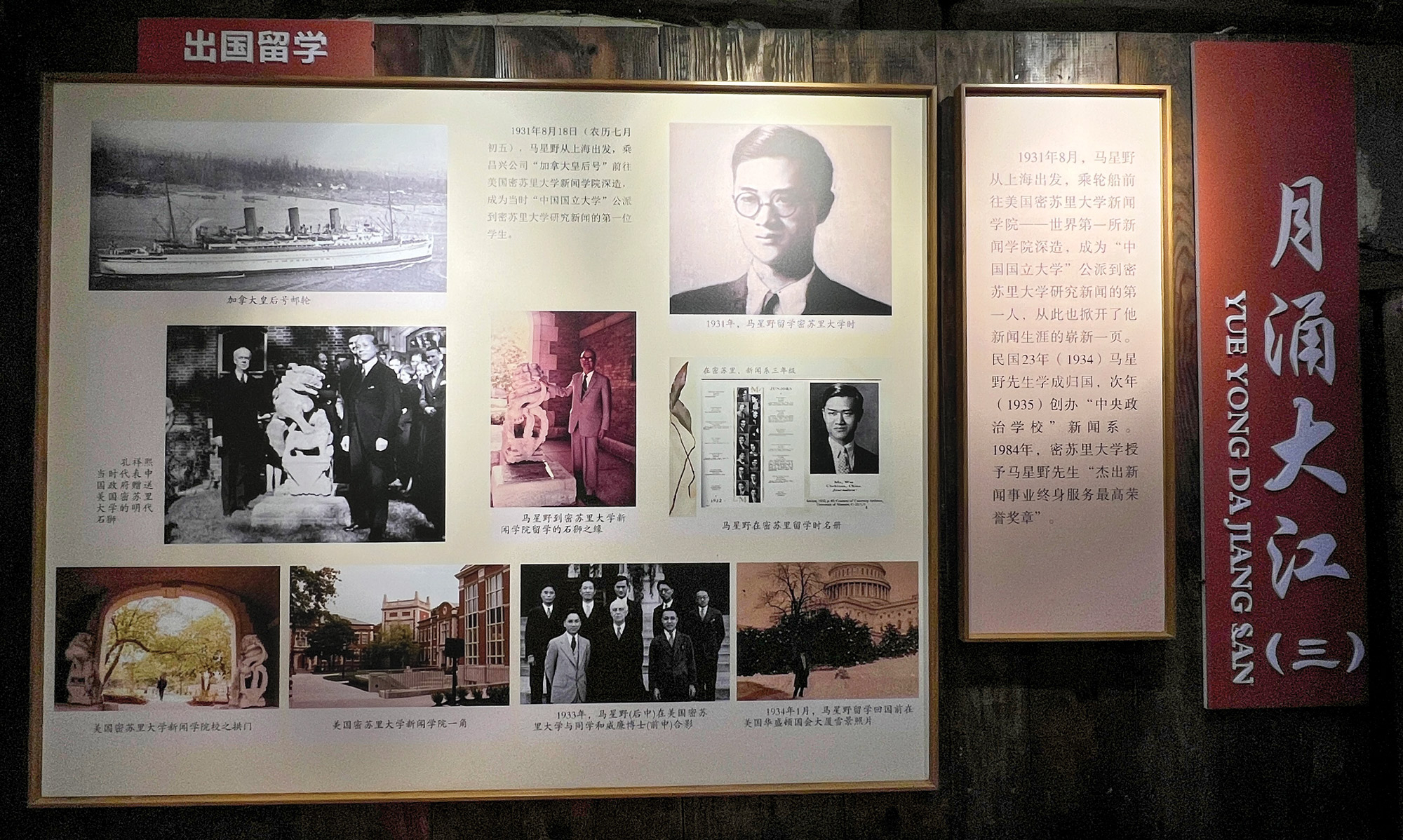
For Jeffrey Kao, walking through the museum triggered an unexpected reckoning with his own family history. Among the displays of Ma Hsin-yeh, BJ ’34, was a photograph of his father, George Kao, MA ’34, standing beside Ma.
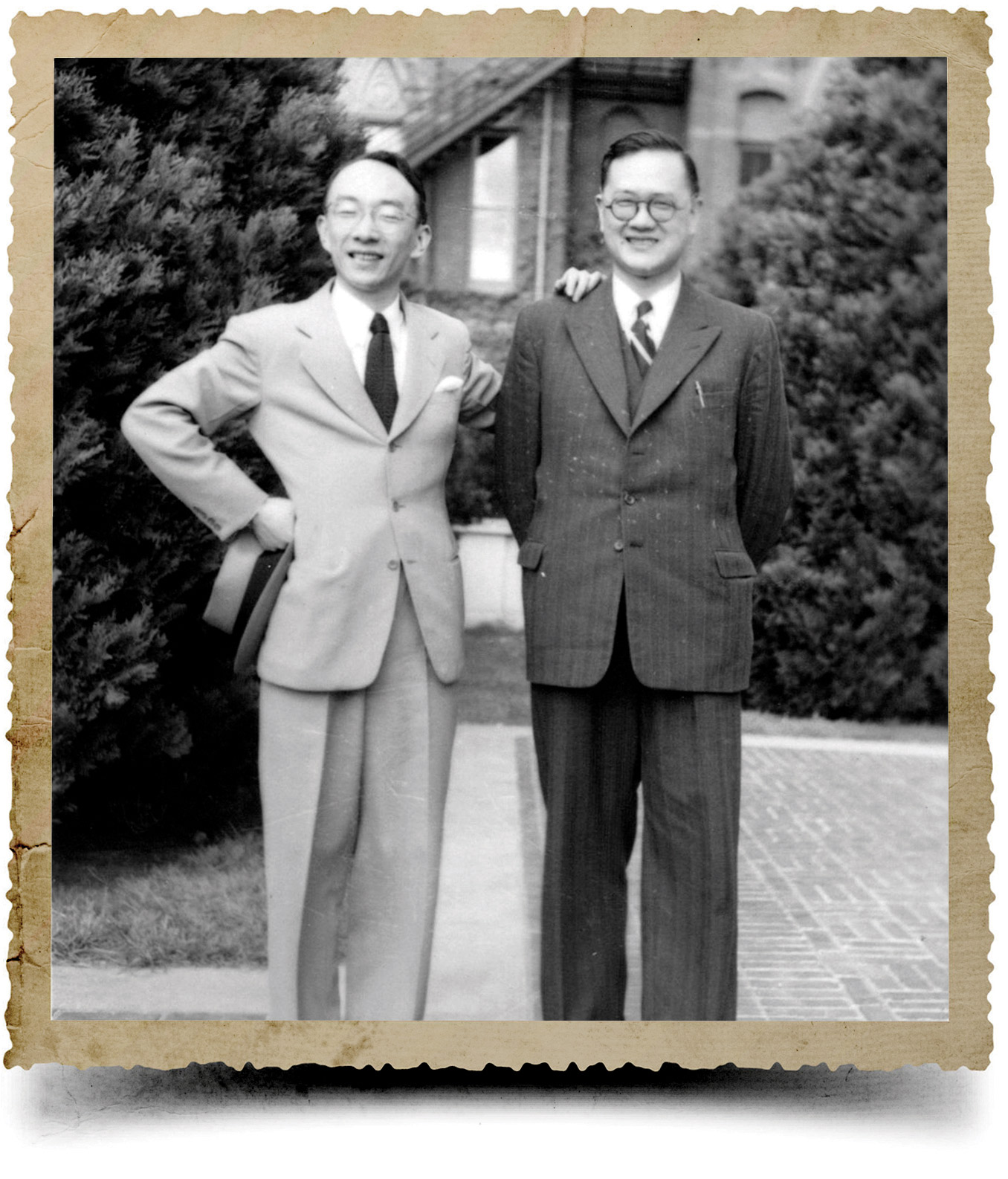
Jeffrey already understood the outline of Ma’s life through his father’s recollections and writings, but this was different. “Seeing my father there, inside a museum in China, was genuinely moving,” Jeffrey says. He calls the exhibit a tribute to Ma’s family heritage and legacy. “My father’s friendship is in some ways a part of that, one that begun so many years and miles away in a small college town.”
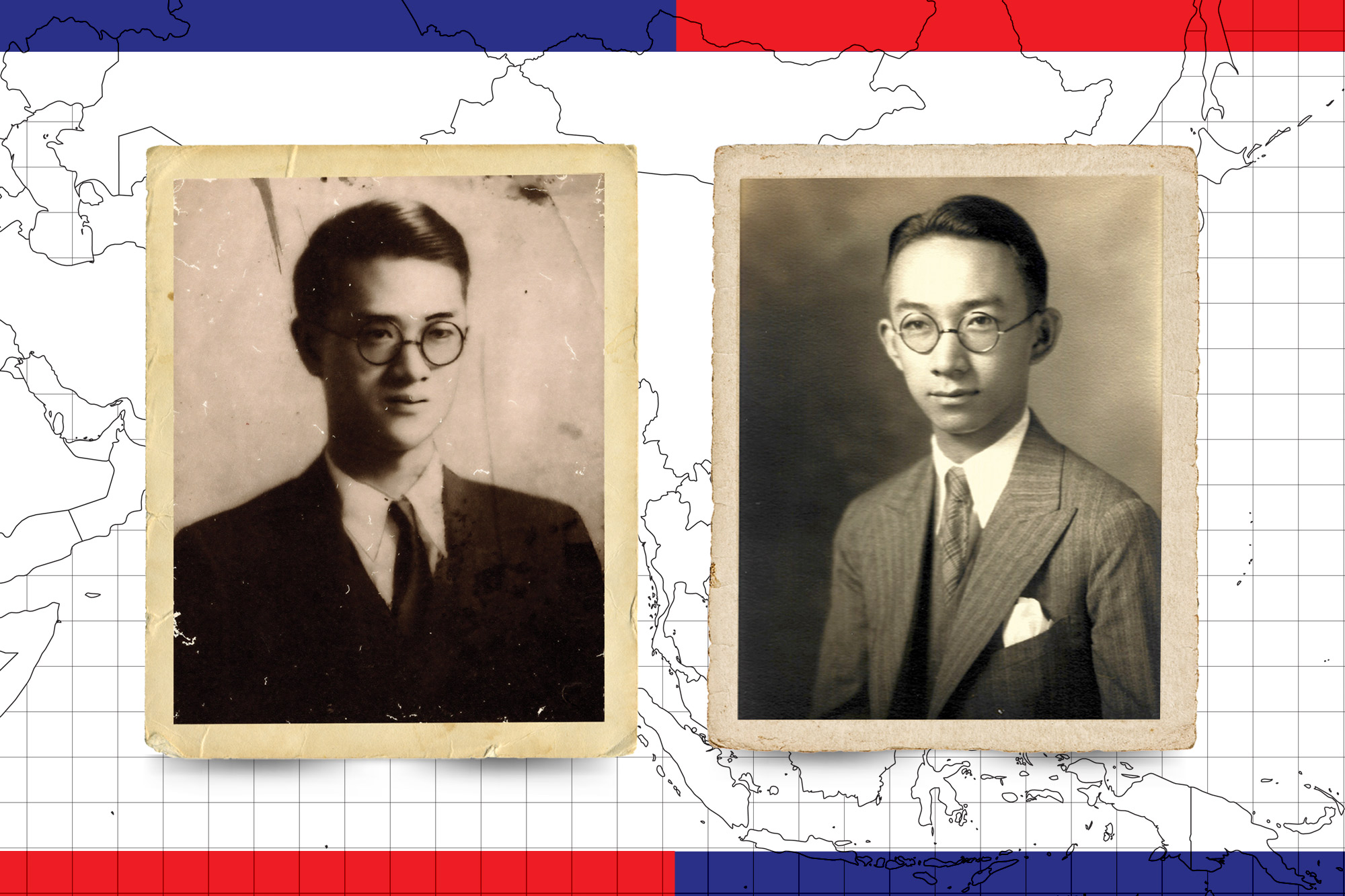
Specifically, Ma and Kao met 7,000 miles away at the University of Missouri nearly a century ago, when they arrived on campus a few years apart. Both joined an audacious experiment welcoming Chinese students to study at the Missouri School of Journalism as China was straining toward modernity.
By the end of the 1930s, China would be engulfed by invasion, civil war and revolution. By the end of the ’40s, the Nationalist Party, which envisioned a modern constitutional republic and was led by Chiang Kai-shek, would retreat across the Taiwan Strait, while the Chinese Communist Party would consolidate power on the mainland under Mao Zedong. The United States, once an educational partner, would become a geopolitical rival.
In the years that followed, Ma and Kao entered different institutions and political arenas but remained tied by their concern for China’s future. Their brief overlap at Mizzou proved unexpectedly lasting, and the skills they carried from it would be tested sooner than either could imagine.

Ma didn’t stumble into writing and reporting. He was shaped for it early in that southeastern Zhejiang village, where learning was a birthright. Born in 1909 to a well-studied family, he grew up in a household steeped in books. His earliest schooling took place at home, where a strict grandfather in the Confucian mold taught him poetry and classical prose before he was old enough to sit at a desk.
This background shows in his writing. When Ma described the spring blooming season of his youth, he recalled that their “courtyard lawn was covered with fallen osmanthus flowers, like a layer of embroidered red carpet.”
“It was always about education,” says his daughter, Diana Ip, who was born in Taiwan right after the family’s 1949 exodus from mainland China. Ma’s foundation provided him a seriousness that set him apart. As a teenager, he gravitated toward editing newspapers and journals, and his teacher, the renowned modern Chinese literary icon, Zhu Ziqing, took notice.
At 17, after a short stay at Xiamen University during a period of student unrest, he transferred to the Central Political School, then led by Chiang Kai‑shek. “Everything was unstable,” Ip says. In 1931, at 22, Ma earned the chance to study at Mizzou and chose journalism.
Ma departed Shanghai in August of that year aboard the Empress of Canada and traveled via Japan and Canada to the United States. He remembered the crossing as both physical and psychological passage. “I felt a sense of exhilaration and freedom amidst the blue waves of the Pacific Ocean,” Ma wrote in an essay later in life. “I had always envied students who went abroad, and now I finally had the opportunity myself.”
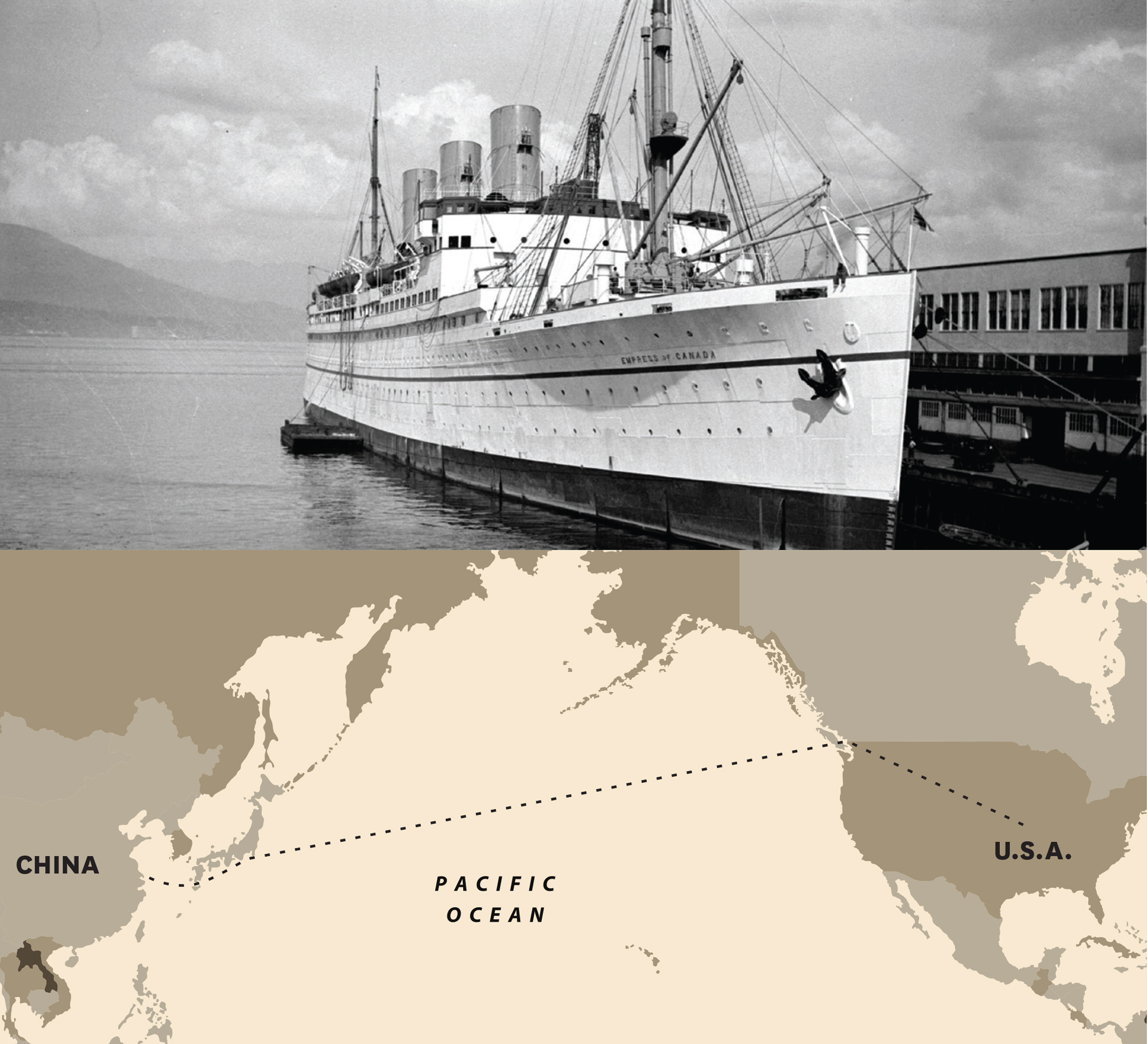
As the ship passed Hawaii and reached Vancouver, B.C., “Mountains stretched out before us like a vast ribbon,” he wrote. “The New World had arrived.” The journey continued eastbound and south by rail until, late one autumn night, the train slipped into the MKT train depot, better known as Katy Station, on East Broadway.
Despite the understandable culture shock, Ma remembered not isolation but open doors. “To our surprise, we were incredibly well received,” he wrote. He linked that warmth to ties already in place.
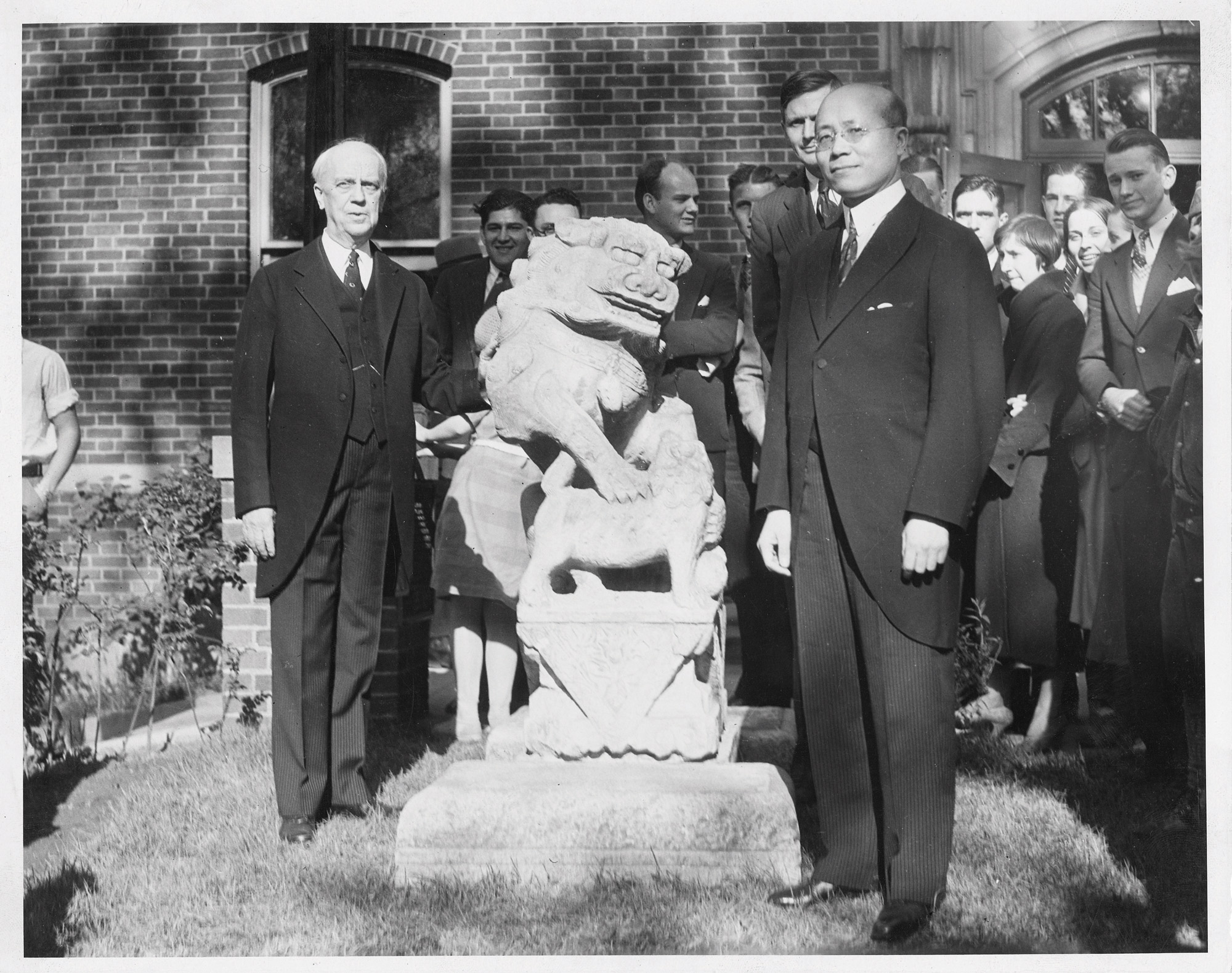
The first two Chinese students had arrived to study journalism in 1908, and more followed. School of Journalism founder Walter Williams cultivated deep ties in China, particularly in Beijing at Yenching University. The same year that Ma arrived, those relationships took tangible form when H.H. Kung, China’s minister of industry and a descendant of Confucius, gifted two Ming Dynasty-era stone lions to the school. They still stand outside Walter Williams Hall.
Ma spent three years at Mizzou, a period he later described with affection. “My teachers, classmates, the local Americans and the Chinese community, especially my fellow Chinese students, were all friendly and kind,” he wrote.
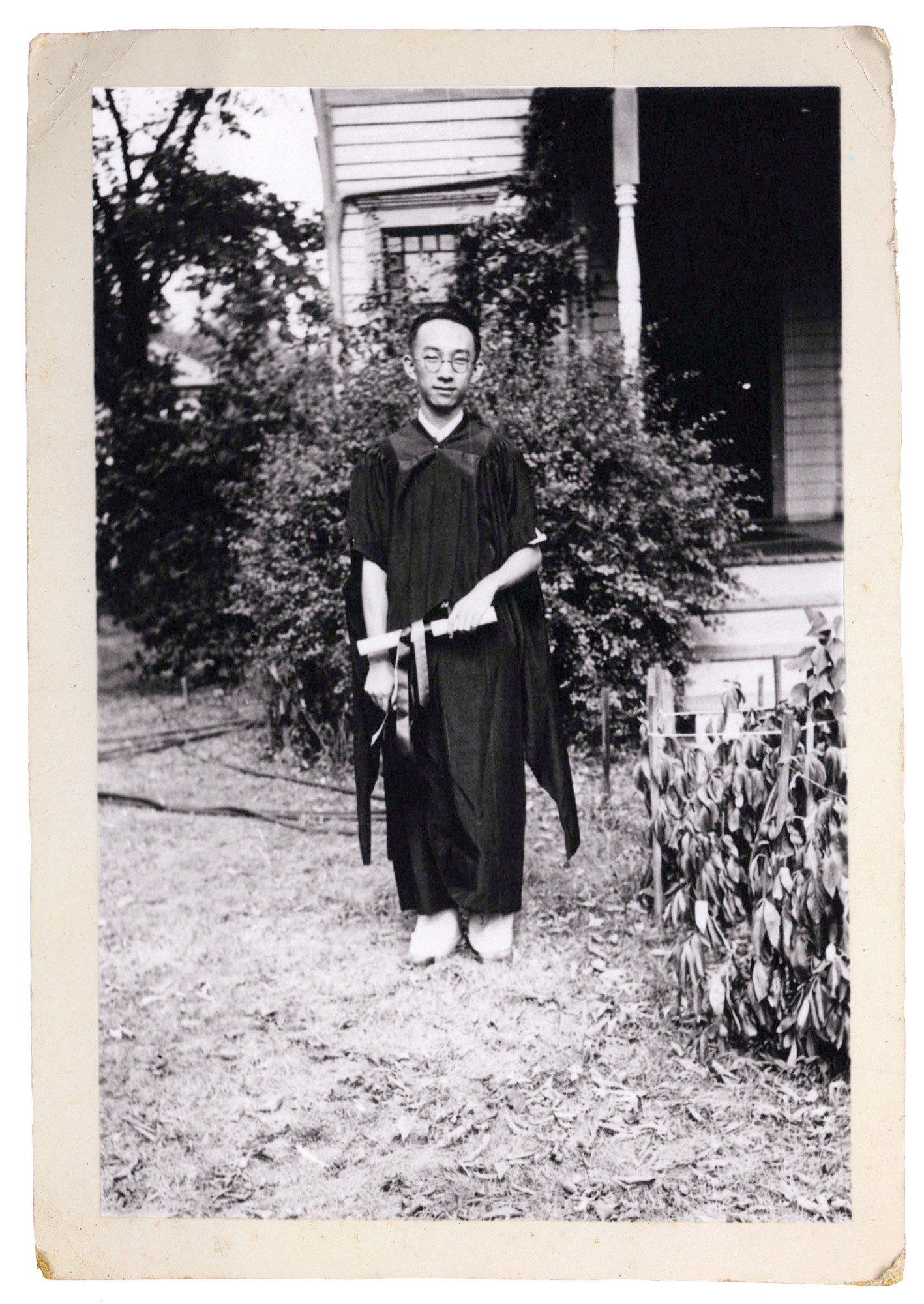
George Kao arrived to earn his master’s degree at the Missouri School of Journalism in 1933 after studying at Yenching. He was greeted at Katy Station by a smiling stranger. It was Ma.
“That welcome meant a great deal to my father. It shaped how he understood journalism and what it meant to be a journalist,” Jeffrey says, adding that his dad “felt that Ma exemplified what he was aspiring to be.” A brief front-page story in The Columbia Missourian noted Kao’s arrival.
Born in 1912 in Ann Arbor, Michigan, to parents attending the University of Michigan under a program that invited Chinese nationals to study in America, Kao returned to China with his family at age 3 and was raised in Nanjing, Beijing and Shanghai. He came of age in a bilingual, bicultural world.
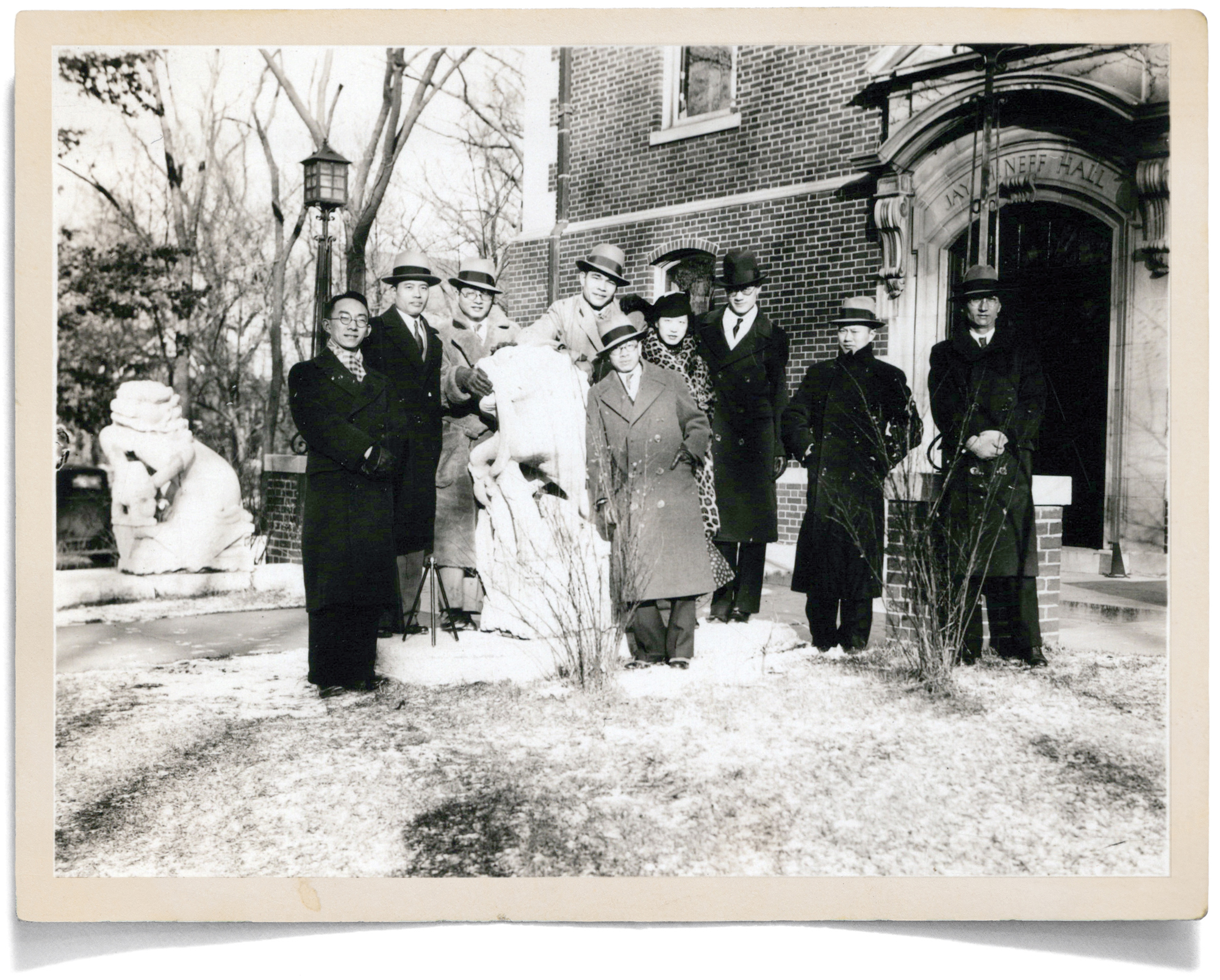
As he got to know Mizzou, Kao’s circle of friends grew. Photographs from those years show him relaxed and self-possessed: standing with fellow Chinese students on campus lawns, gathered in small expatriate circles, even posing between the stone lions.
After Mizzou, Kao entered Columbia University to study international relations while also writing for English- and Chinese-language publications about American affairs and culture. He earned his MA in 1937, but the escalating Sino-Japanese conflict soon redirected his work toward advocacy.
From 1937 to 1945, he emerged as one of the most active Chinese voices in the United States. He edited an English-language monthly and argued China’s case against Japanese aggression in both print and public forums. His efforts were varied and included adapting the Chinese national anthem into English for a 1939 World’s Fair program arranged by famed bandleader Artie Shaw. In 1945, he served as information officer for the Chinese delegation at the founding of the United Nations.
Beyond his work for the Chinese Republic, Kao stayed attuned to American life. He was the lone Chinese correspondent in the Foreign Press Association to contribute to the 1939 volume of essays You Americans. One reviewer noted that “strangely, it is the Chinese correspondent, George Kao, who exhibits the most intelligent understanding of Americans.”
Armed with his master’s degree and a mission, Kao’s former classmate Ma had been called home by the ruling Nationalist Party in 1934. The Japanese invasion of Manchuria was in full swing, and having studied the workings of modern press, Ma’s job was to apply them. When the elite Central Political School established a journalism department the following year, Ma became its founding chair. One project he took on was adapting Williams’ famed Journalist’s Creed for mainland China reporters and editors.
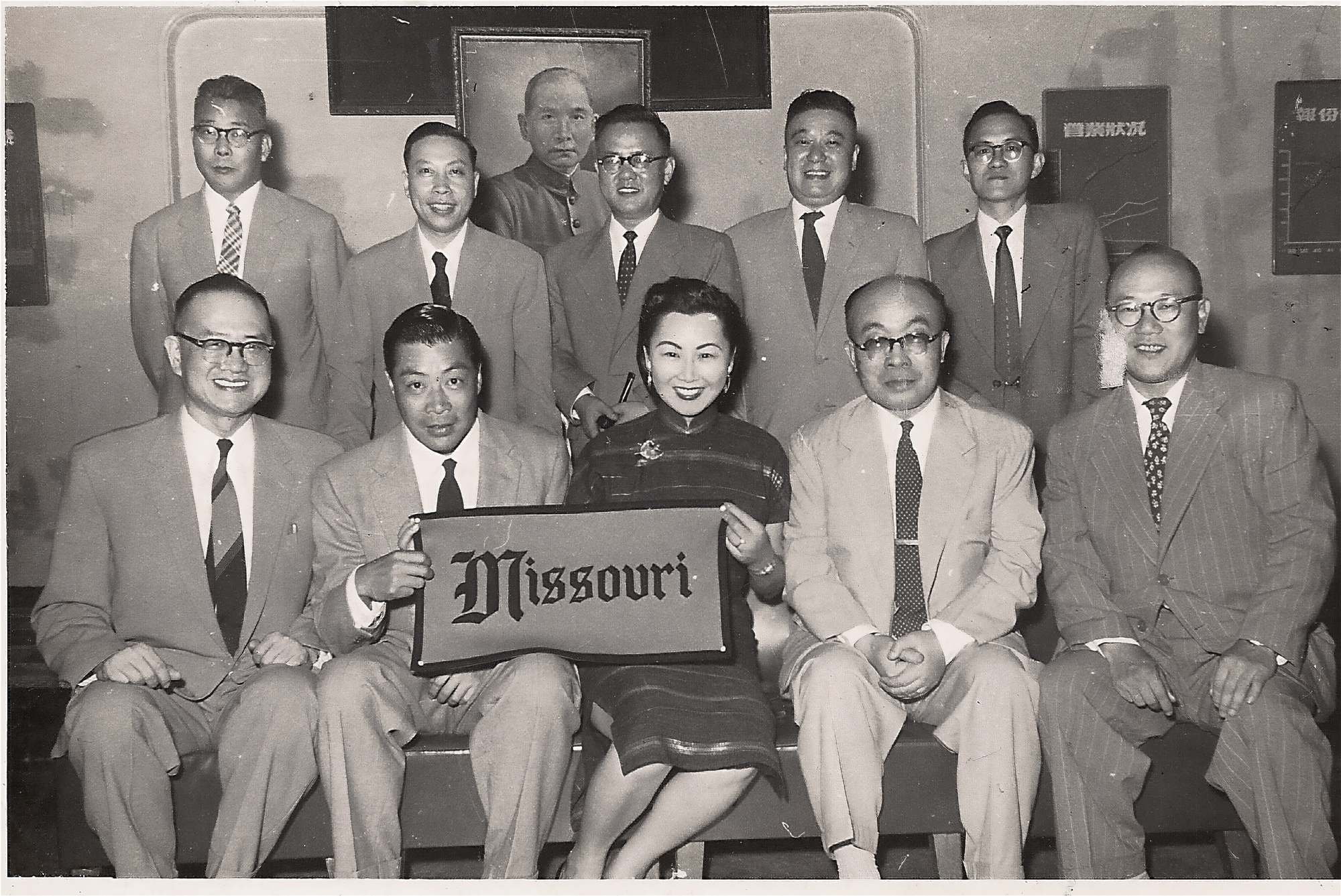
Over the decades, Ma trained thousands of Chinese journalists, who fanned out across the country to report as he’d learned at Mizzou, but with a patriotic spin. “When students returned, they adapted the Missouri Method,” says Yong Volz, the Roger Gafke Distinguished Faculty Fellow at the Missouri School of Journalism. “They added publicity courses aligned with nationalist goals. Some became propagandists or censors; they saw it as serving a higher need.” Volz co‑authored the paper “American Pragmatism and Chinese Modernization: Importing the Missouri Model of Journalism Education to Modern China.”
War collapsed the distance between theory and reality. Japan invaded China in 1937, forcing the ruling government inland; Ma followed, drawing closer to the Nationalist Party’s news apparatus. By 1945, as president of The Central Daily News in Nanjing, he was leading a national institution under strain. Japan had surrendered, but the Chinese Communist Party was pressing its revolution.
The paper sat at the nerve center of the Nationalist government and was expected to project continuity as conditions deteriorated. “The Chinese Communists were sweeping the mainland,” Ma recalled in a late‑career essay, “and we had to publish our newspaper every day as usual while, at the same time, gradually withdrawing all our equipment to Taiwan.” A delayed edition suggested weakness; a missed one signaled chaos. Despite friction and public criticism, Ma ordered the machinery to be dismantled and moved the entire news operation to Taiwan in January 1949.
On Oct. 1, 1949, Chinese Communist Party leader Mao Zedong announced the birth of the People’s Republic of China. By then, Chiang Kai-shek and the expelled Republic of China government had withdrawn to Taiwan. More than 75 years later, that division continues to shape events beyond China.
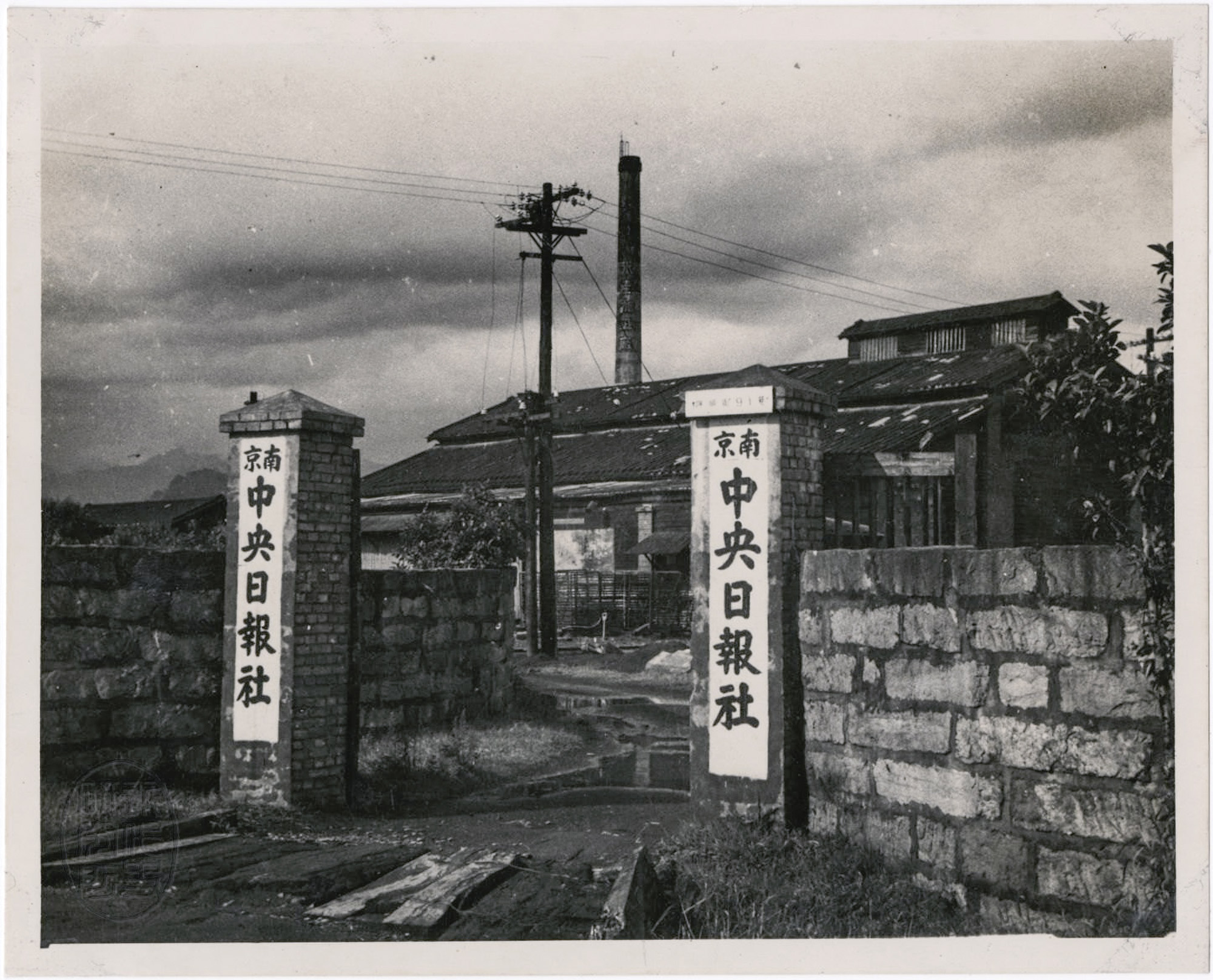
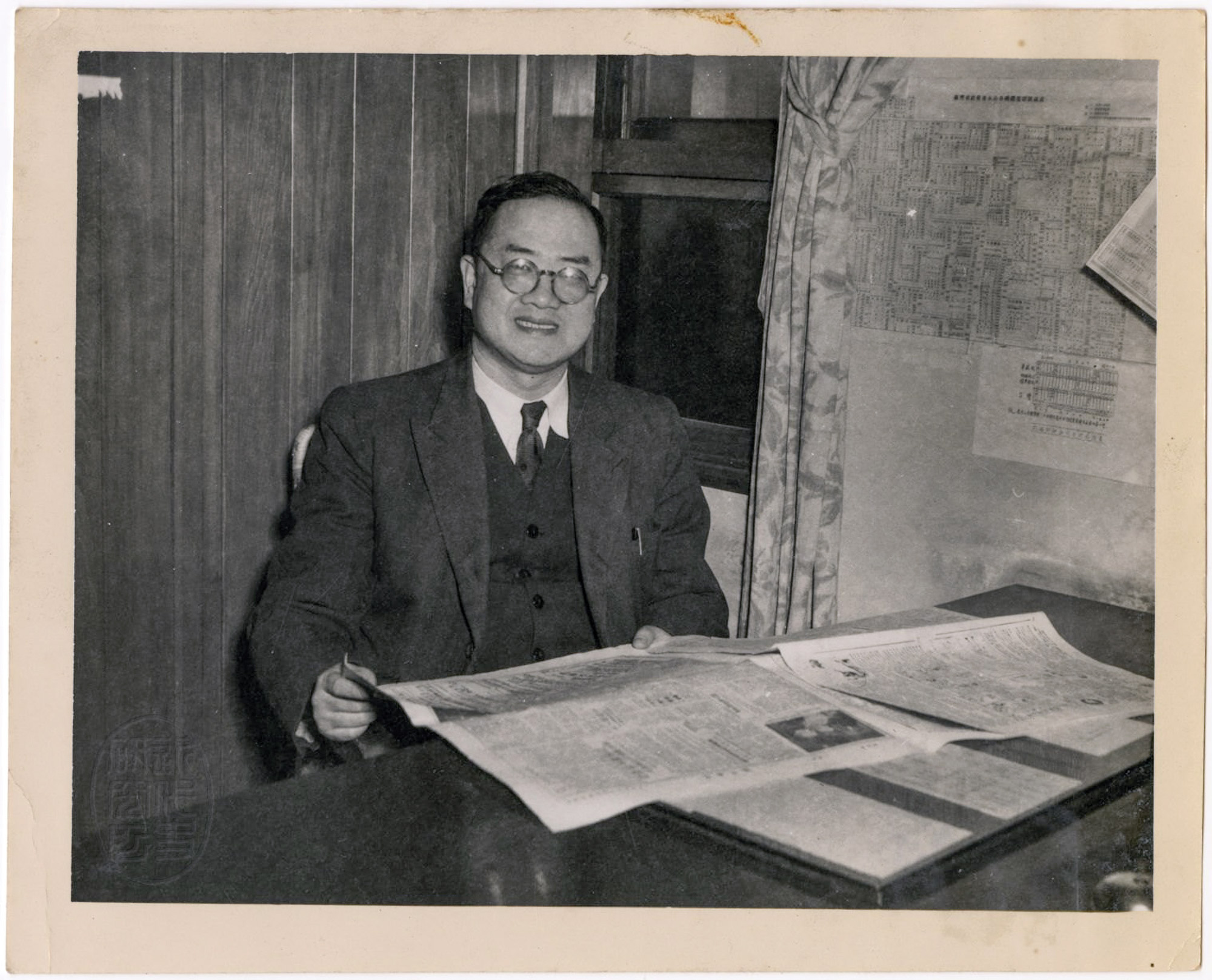
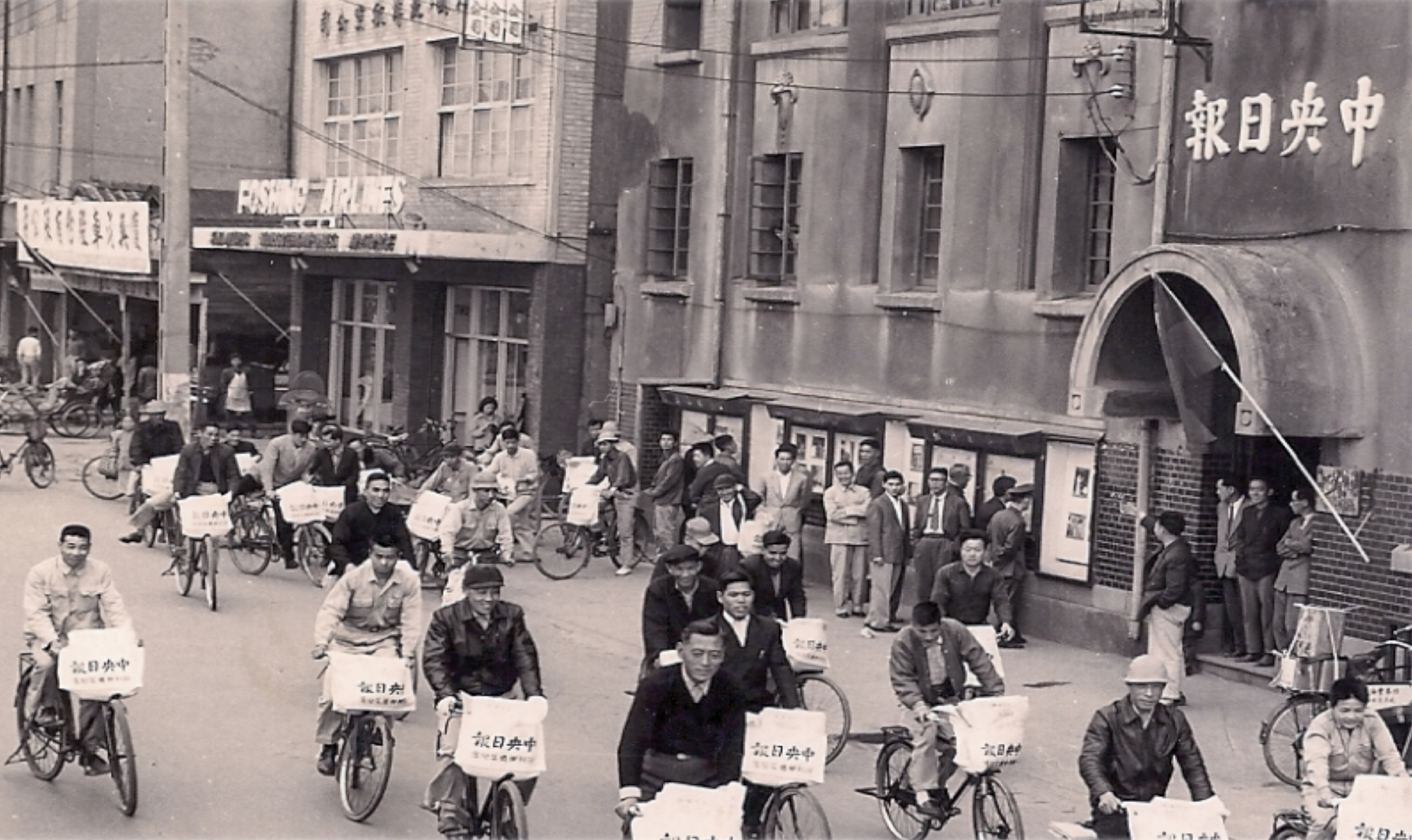
Kao watched China’s revolution from afar. With him and his family living on the West Coast, Kao was safe and at a remove from the turmoil his friends faced. Despite that distance, he and Ma kept in touch.
In 1957, Kao got a job as chief editor of the China branch of Voice of America. The role displayed American power but demanded restraint. Broadcasting before the United States formally recognized the People’s Republic of China, Kao worked inside a narrow corridor between languages and political systems. He shaped news that had to travel without hardening into ideology. In this role, his friendship with Ma took on an official dimension.
Alongside his public work, Kao maintained a quieter vocation as a translator. He worked in both directions, rendering American writers such as F. Scott Fitzgerald, Eugene O’Neill and Thomas Wolfe into Chinese for the first time, and later helping introduce modern Chinese literature to English-language readers.
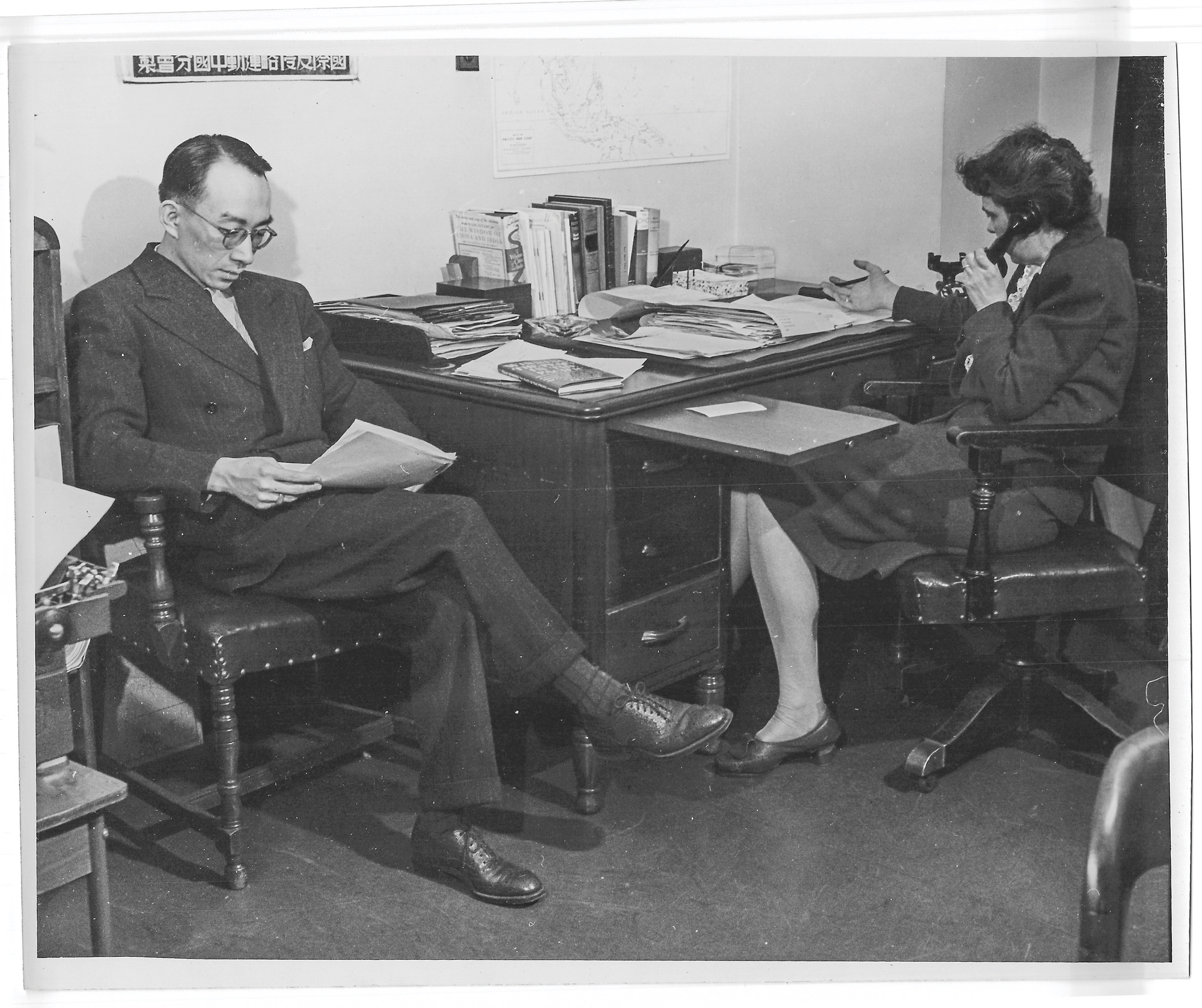
The Ma family has photos of the two friends posing together from nearly every decade since their first Mizzou meeting. Although Ip recalls Kao being constantly in motion — Hong Kong, Taiwan, the United States — whenever his path crossed with her father, the effect on Ma was unmistakable. “He was euphoric!” Ip says.
In 1959, Ma became the Republic of China’s ambassador to Panama. While there, he worked to support the Chinese community during a politically fraught moment between Panama and the U.S. “Many Chinese laborers had been brought in to work,” Ip explains, “suffering hardship, malaria and death.” Those who survived and stayed, she notes, have become an influential part of Panamanian society.
Ma returned to Taipei five years later to lead the Central News Agency. He held the role for the rest of his professional life. In 1984, he returned to Mizzou to accept the Missouri Honor Medal. He remained an influential statesman until his death in 1991.
Jeffrey Kao first met Ma in Taiwan in the early 1970s. At the time, Ma was near the center of political power, but what struck the younger Kao was more than his status. “What impressed people about Ambassador Ma wasn’t just his historical importance but the strength of his character,” Jeffrey says. In Western shorthand, he explains, one might call him a Renaissance man, “but in China the emphasis is more on morality, deportment and ethics — humility, graciousness.”
George Kao died in 2008, and by then he was regarded as a bridge-builder driven by cultural exchange in the literal sense. Major news outlets reported on his passing. “His whole life embodied the two cultures,” Jeffrey told The Washington Post for his father’s obituary. “He sincerely believed that the key to good translation was not just knowing the language but having an understanding of the people and culture behind the words.”
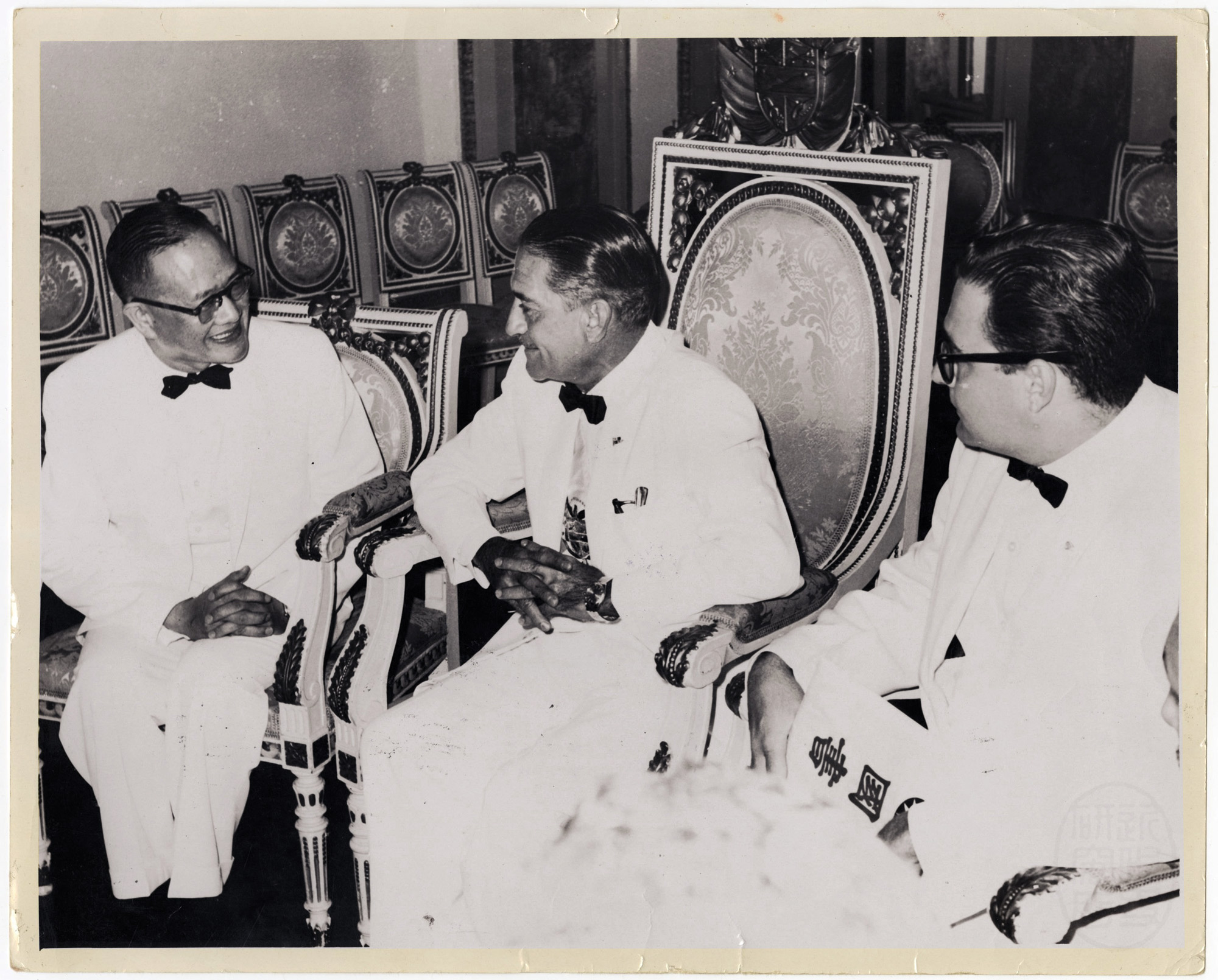
After Kao’s death, Jeffrey began sorting through decades of drafts, correspondence and unfinished projects. Among them he found an old journal his dad’s friend Ma had kept during his years in Panama. “I was startled by its importance, both personally and historically,” he says. Believing Ma’s journal should be saved for posterity, Jeffrey contacted Ip and sent it to her in Taiwan. “That’s how we got to know each other.”
Plans to restore Ma’s ancestral home had begun circulating in the mid-2010s as interest in landmark preservation grew. “The Chinese care intensely about history, and when something is seen as cultural heritage, they preserve it for tourism and culture,” Ip says. As work commenced, she was at work on her biography, called Ma Hsin-yeh, Luminary of Modern Chinese Journalism. It will be published in Taiwan later this year.
Originally built more than 450 years ago, the structure was deteriorating, she says, and residents still occupied parts of it. She wondered why Chinese officials would preserve the home of a man associated with journalism and the Republic of China.
The answer, Ip believes, transcends cross-strait politics. “They saw him as someone who brought ideas from the West and reshaped them into something new, something relevant to the time and fundamental to the study of Chinese journalism.” Her meticulous archive of photos and documents enrich the exhibit.
For Ip, the project also carries a more personal weight: “We want harmony. Ma spent half his life in Taiwan and half his life on the mainland, but he never returned home. He never saw his parents again.”
“In wartime, people tell themselves it will be over in a week, and then it isn’t,” she adds. “It’s very sad. After we finished the book. I felt I could go back, and I did. As the plane approached Wenzhou, a flood of emotions came over me. Dad had finally come home.”
Jeffrey was already planning a trip to China when Ip told him the home restoration was on track, so he added a brief detour. “We were delighted to find some photos of my father,” he says, “and an account of Ma’s J-School experience among the many displays chronicling his life.”
What struck him was how naturally the past reached forward. The photos, the records and the rooms in Chen’ao Cun showed that the friendship had never gone dormant. It carried itself through upheaval until it rested in the hands of their children and grandchildren. The restoration felt less like tribute than a reminder of what endured, the continuation of a nearly century‑long friendship forged at Mizzou, before war, before exile, before two Chinas.
To read more articles like this, become a Mizzou Alumni Association member and receive MIZZOU magazine in your mailbox. Click here to join.