Published on Show Me Mizzou April 24, 2026
Columbia’s arts scene has long been shaped by Mizzou, with generations of alumni choosing to stay, return or put down roots here. Faculty artists, former students and creatives trained in Mizzou classrooms have helped build a city where making art is not an extracurricular activity but a way of life. Galleries, studios, performance spaces and pop-up events stretch across town, forming a collaborative culture grounded in academic rigor and a DIY spirit.
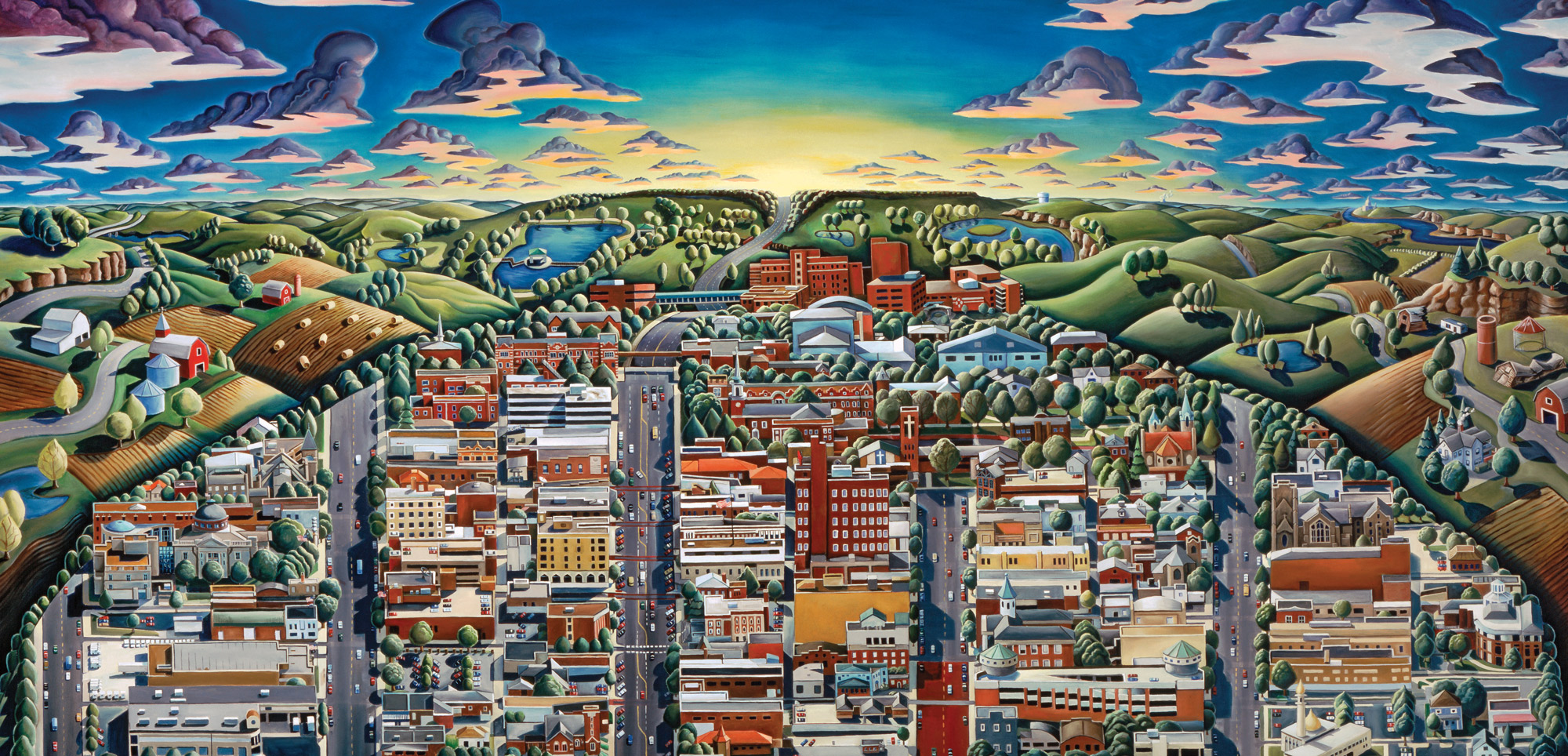
That influence comes into especially sharp focus in the North Village Arts District, a roughly nine-block, walkable pocket that feels less like a destination and more like a living ecosystem. More than 100 artists, studios and venues cluster here, generating a level of creative energy more often associated with much larger cities.
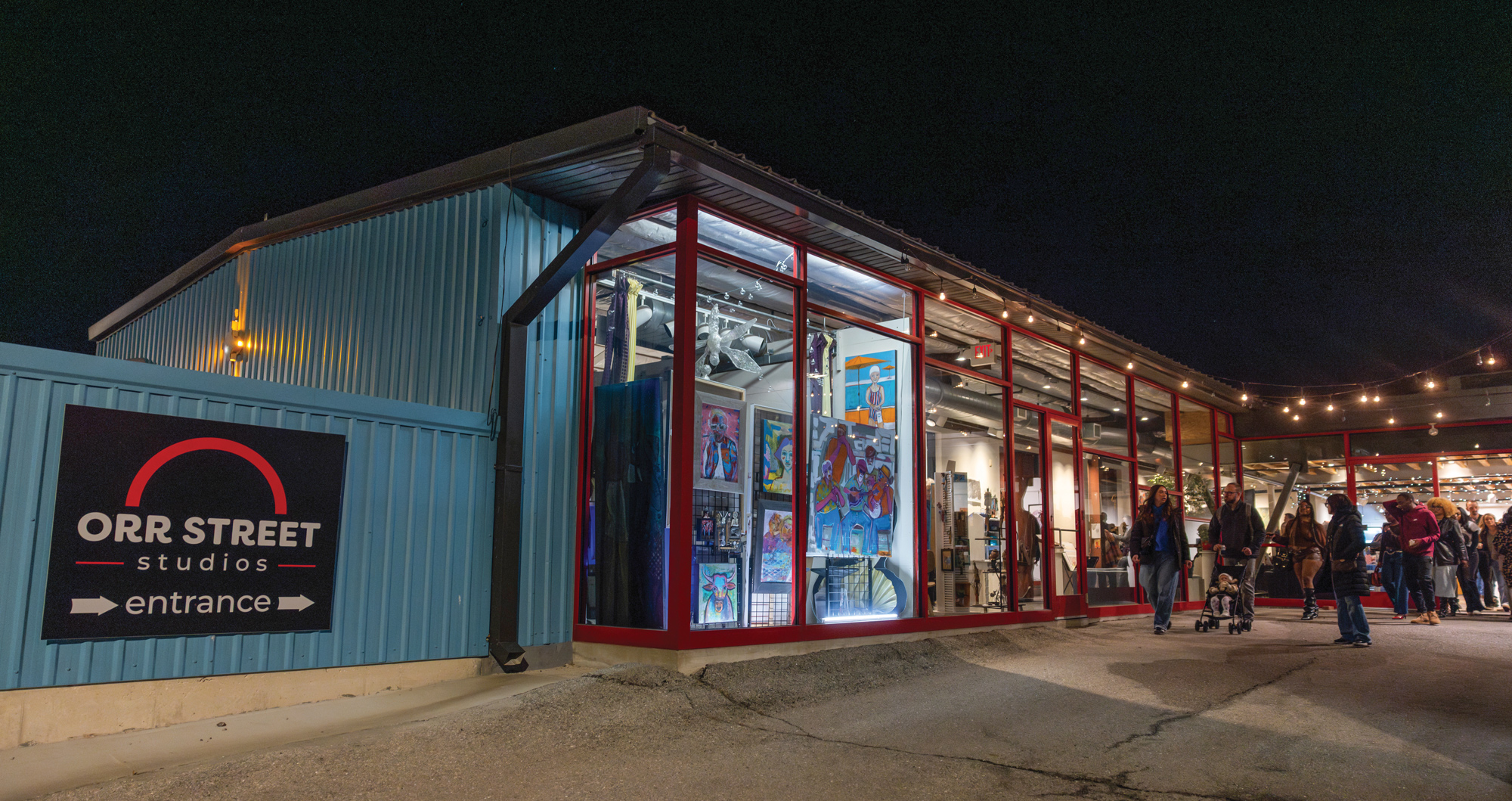
Orr Street Studios serves as the district’s creative anchor, its personality evident in everything from artist-designed doors to rotating exhibitions. The stories that follow move outward from that center to the artists and events shaping Columbia’s most colorful neighborhood.
We spotlight longtime Orr Street occupant and Mizzou art professor emeritus Frank Stack, whose influence threads through generations of creatives. Stack died April 12. We also turn our attention to First Fridays, which brings the community into the streets each month for a free art crawl alive with music, new exhibitions and open studios. Some Fridays can draw up to 800 visitors, proof that even a modest arts district can deliver cosmopolitan energy. By the end of the year, a new North Village park will add a welcome touch of green space. Together, these details reveal an area that lights itself from within.
The doors to Columbia’s art community
How Orr Street Studios helped the North Village Arts District shine and grow. Story by Jessica Vaughn Martin, BJ ’15
Orr Street Studios has been an anchor in the Columbia arts world since its inception nearly 20 years ago. It opens the door for new and seasoned artists to expand their art and their community. Situated just east of downtown’s Wabash bus station, it’s in the heart of the North Village Arts District.
The compound is more than a gallery and studio space. It is also a nonprofit organization “dedicated to heightening awareness and appreciation of art and local artists for Columbians and visitors alike,” per its mission statement. “It’s a place not only for artists to make art, but to communicate with each other and the community, and for the community to experience art,” says Chris Teeter, BA ’72, artist and founding member of Orr Street Studios.
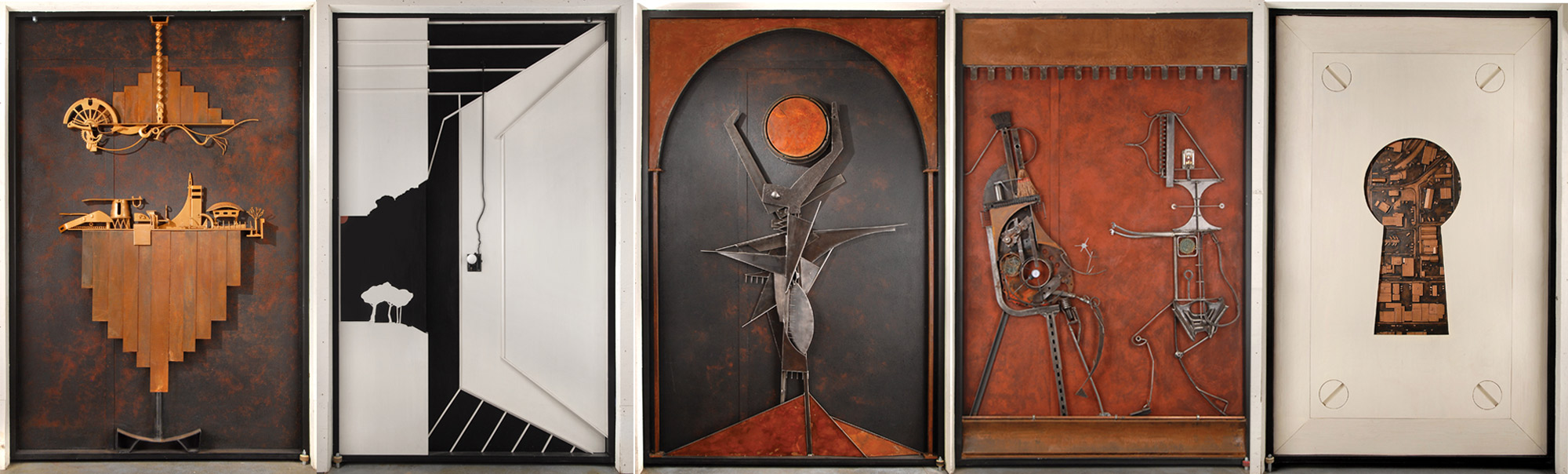
That appreciation begins the moment you enter and are greeted by the gallery’s oldest original artwork: a collection of massive six-by-nine-foot pieces, embellished with stories in the form of metal work and found materials. These are the renowned studio doors, each of which glides open to unveil one of 16 individual studios.
Crafted by Teeter, a metal sculptor and painter, the doors were the first art pieces installed in the building ahead of its opening and remain some of its most beloved. For longtime Orr Street resident artist and board member Tootie Burns, BS ’89, the doors brought her in.
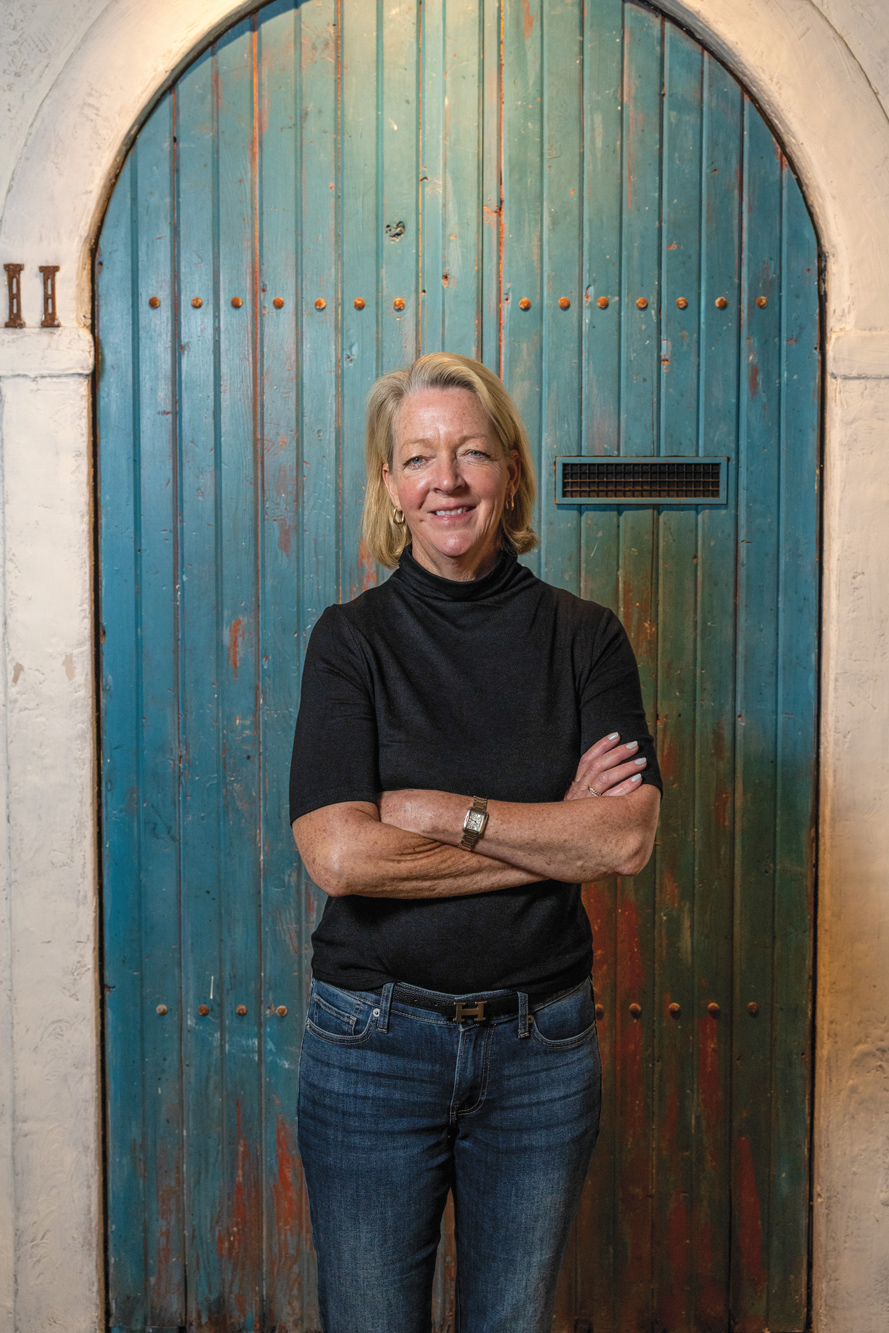
“I think they’re the best art in Columbia,” she says of her friend and neighbor Teeter’s doors. “I saw him the day after the studios opened in 2007, and there was such a tremendous buzz about Orr Street Studios that I said, ‘Please put me on the list for when new studios are available.’”He did, and a year later Burns settled in. She has used the space ever since to create a variety of mixed-media pieces, such as a beaded skull on a painted canvas background and a small flock of birds wearing leafy masks.
Painters, mixed media artists, photographers and writers use Orr Street Studios to weave their own work into the eclectic property’s tapestry. Rotating shows speckle the walls with color. Many well-known Columbia artists, including Frank Stack, John Fennell and Artlandish founder Lisa Bartlett, have at one time or another made their artistic home here.
This, in part, is how the North Village Arts District came to be, with Orr Street Studios, Sager Reeves gallery and Ernie’s Cafe drawing in new neighbors. David Spear, MA ’12, keeps his AlleywayArts studio in the area, and Art Underground, Fretboard Coffee and, more recently, the boutique Hedda and Nightjar Arts Collective have entered the district. In the last few years, Orr Street opened its artist-in-residency program, offering four studios to young, underrepresented artists “whose practice could benefit from dedicated studio space and who could not otherwise afford one,” according to the program description. In total, Orr Street currently houses 25 artist spaces.
To better understand the studio’s grounding presence in Columbia’s visual art scene, you first have to know how much it has changed in two decades. Orr Street Studios opened two years before the official formation of the North Village Arts District in 2009. “When we first started, it was PS gallery and the [Columbia] Art League,” Teeter says of the early 2000s art community. Before it was Orr Street Studios, the block housed a dilapidated Sunshine Laundry building and shipping dock.
Despite its state, local developer Mark Timberlake, BS ME ’82, saw its best days ahead. He needed someone to help bring them to life. He put his trust in Teeter to lead a project that would provide space for committed artists. For nearly 20 years, it has.
It hasn’t been without speed bumps. In late summer 2024, a fire threatened to shut them down. The blaze damaged eight studios, including Burns’ space. As in the early 2000s, though, Timberlake and his crew worked quickly to restore the building. “The fire was in July, and we were back in our studios in October,” Burns says.
In the aftermath, Columbia stepped up. “People rallied around the studios,” Burns says. “They still came out for First Fridays, came down for different activities.” It’s this community, one that keeps showing up, that underscores the impact Orr Street Studios has had on the larger art community, and on Columbia as a whole.
Current Orr Street Board President Barbara Hoppe, JD ’86, describes the institution as “like your town square, where artists and community come together.” Teeter highlights the tight-knit groups of twenty-somethings that make Orr Street Studios their gathering place on First Fridays. “It’s a neutral meeting place for young people.” It’s a welcome evolution, she adds. “It’s not a bar, it’s not a church. It’s just a nice place to meet. The energy is good. And it’s free.”
More space for art-driven community gatherings is on the horizon. The planned North Village Park, located southeast of Rose Music Hall and north of Orr Street Studios, will open to the public by the end of 2026. The city parks department is transforming the long empty Ameren property into green space. Featuring a walking path and room to relax, the park will provide a platform for art shows and live events. Area artists have been invited to create original pieces for the new park.
Teeter didn’t expect Orr Street Studio to become such a crucial hub. The studio’s original tagline was “art and artists,” but they’ve since added the word community.“When I talked to people about renting a studio,” he says, “they were interested in having a place to work, having a place to interact with the public that was not their house and being part of a community of artists, benefiting from the encouragement of people all housed together making this art.”
It was appealing not just to the folks renting the spaces, but to the patrons, as well. Teeter calls it a gradual shift: “We still focus on art and artists, but community plays a bigger part than I would have ever envisioned.”
Orr Street Studios is free and open to the public Wednesday through Friday, 12–4 p.m., and for evening events during First Fridays. The space also is available to rent for private events; it has played host to many a wedding and other community celebrations over the years.
Columbia’s monthly creative surge
First Fridays have become the place to see and be seen in Columbia. By Jon Hadusek, BJ ’12
As evening descends at the end of the first work week of the month, downtown Columbia springs to life with an influx of pedestrian foot traffic that signals the beginning of First Fridays festivities.
Known around town as a day for art gallery openings and “gallery crawls,” First Fridays took shape in Columbia over the past two decades in conjunction with the growth of the North Village Arts District.
First Fridays crawlers might start their night at Fretboard Coffee, located in the “Artist Alley” running parallel to the Wabash Bus Station. Here, they can grab a drink before weaving through the connected underground tunnels. Colloquially known as “the catacombs,” these tunnels are adorned with local art.
An ascent into the Hedda clothing boutique, the former space of the Artlandish Gallery, leads back outside to a veritable street festival during the warmer months. Buskers, fire spinners and food vendors take over the nearby lawn outside the Sager Reeves Gallery.
For Sager Reeves, First Fridays is the moment to present new exhibits. Gallery designer Jonny Pez likens it to a casual party atmosphere, complete with an open wine and beer bar and a DJ from nearby Hitt Records. Galleries encourage patrons to take in, discuss and, ideally, buy the art around them.
“Fridays are a great day of celebration,” Pez says. “It’s the end of the work week for most people. To have it be one particular Friday every month, consistently, rain or shine, that’s something that people can rely on. And if we didn’t do it, a lot less people would be exposed to the art we’re putting up every month. Exposure to art, I think, is important to all humans.”
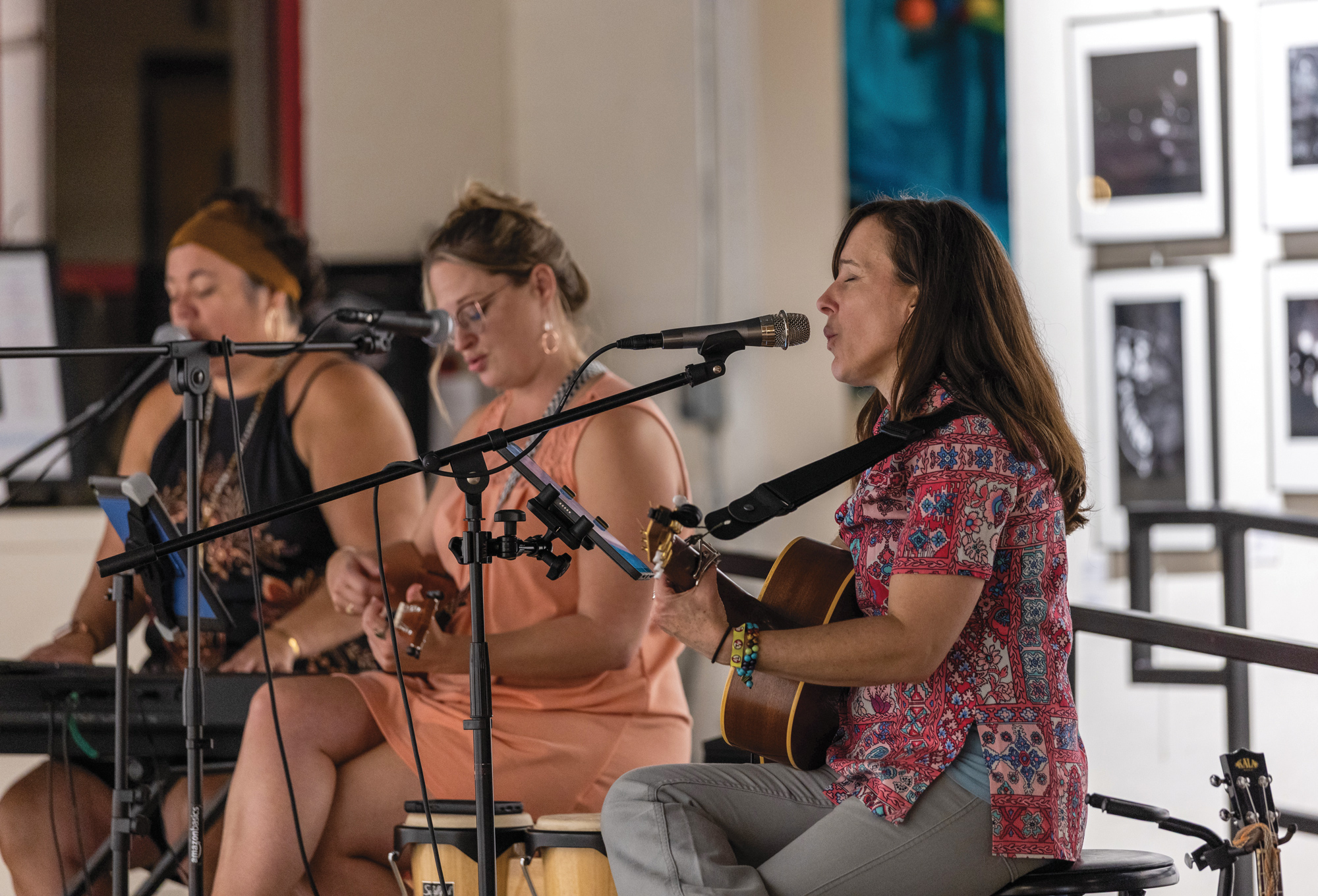
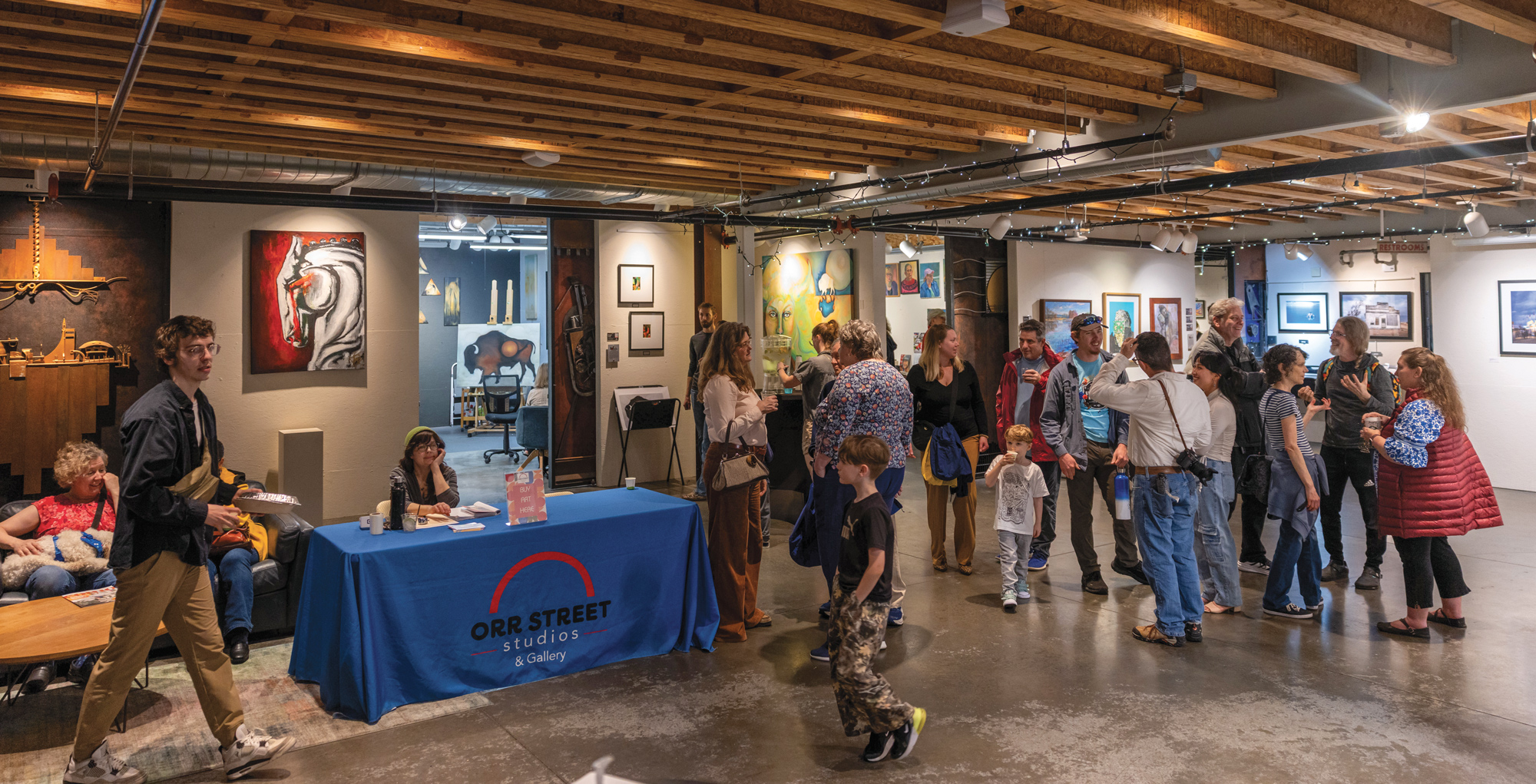
Around the corner from Sager Reeves is Orr Street Studios, an obligatory stop and a First Fridays finale for many. Like those at Sager Reeves, Orr Street Studio artists also unveil their latest exhibits during the event. Local musicians and a bar by Six Mile Bridge Brewery enliven the scene with communal energy.
Orr Street Studios manager Sarah Nguyen estimates that up to 1,200 people pass through the space on a typical First Friday during the warmer months. That number likely will increase when the city begins work on a park on Orr Street, which will feature art installations and a space for live music.
Nguyen describes First Fridays as “a nice way to start out the month and the weekend for Columbia.” She’s always struck by how many people come through: “visitors and tourists, college students maybe discovering it for the first time — because it’s a happening.”
Barbara Hoppe, JD ’86, the president of the Orr Street board, compares the First Fridays vibe to Columbia’s defunct Twilight Festival, a recurring summer event that celebrated art and street performance downtown from 1990 through 2008. She believes First Fridays have filled that void by encouraging community engagement with not only the arts, but one another.
“It draws a lot of people downtown to a variety of galleries and other businesses,” Hoppe says. “People can get out and not only enjoy art but also see each other and communicate. It becomes an old-fashioned town square kind of thing: a community.”
The art of being Frank
His underground comics and decades of teaching shaped a generation of artists in Columbia’s North Village Arts District and beyond. Story by Marcus Wilkins, BA ’03
Looking through Frank Stack’s collection of original art at the State Historical Society of Missouri (SHSMO), you can’t help noticing the cosmic joke: Few artists ever lived up to their name quite so literally.
Reams of sketches, paintings, lithographs and etchings stack high in archival boxes, each one showcasing his forthright, unmistakable — frank, if you will — style.
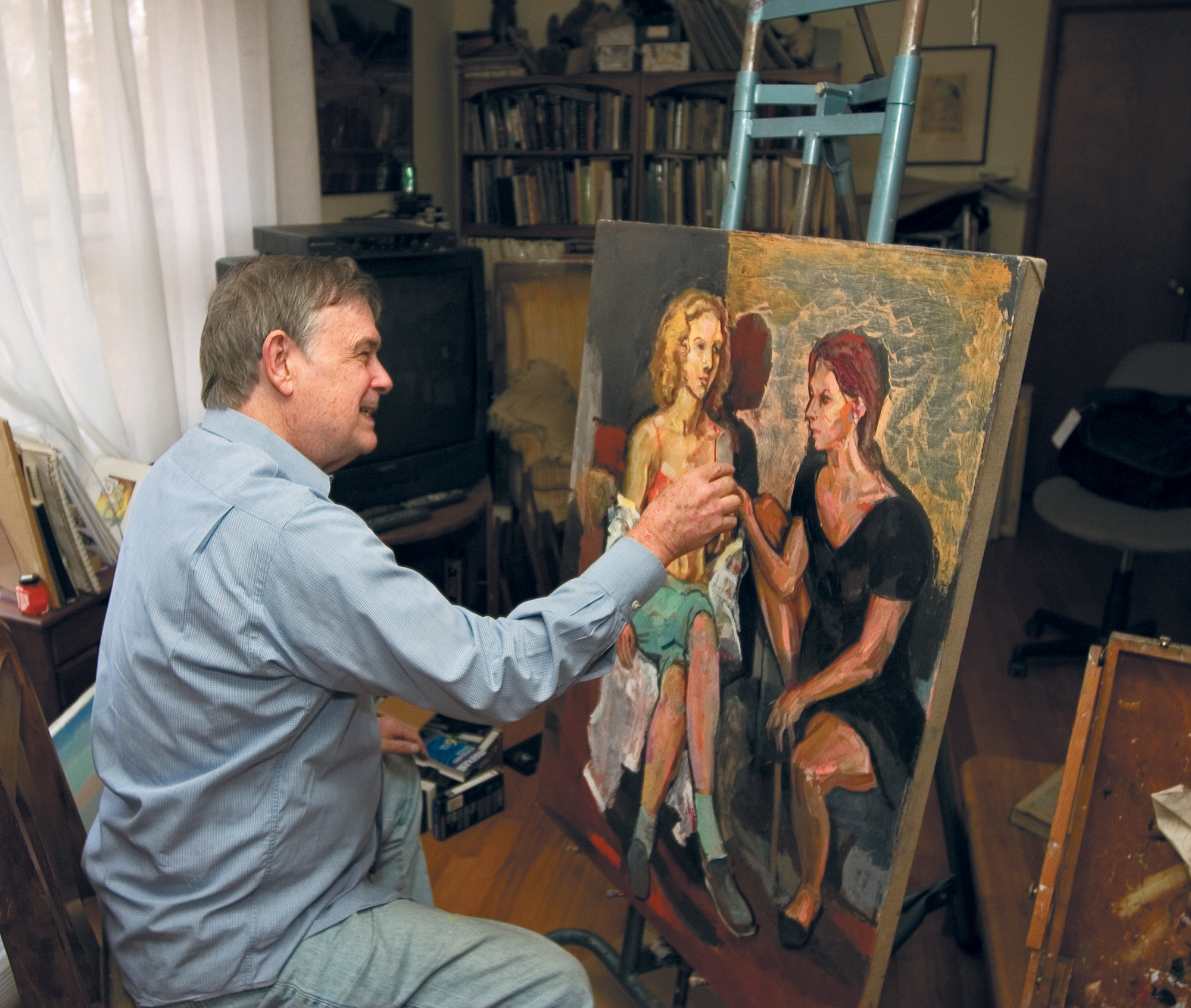
An esteemed Mizzou professor emeritus of art, legendary underground cartoonist and dedicated fine artist, Stack died April 12 in Columbia, Mo., at age 88. The artist was a longtime fixture in and around the North Village Arts District, where he maintained a studio for decades and presented several exhibitions, including “Frank Stack at 75” in 2012 and “A Year of Figure Painting” in 2020. His most recent show, a career retrospective, was organized for his 87th birthday in 2024.
His family embraced creativity as a perpetual way of life at home, says Joan Stack, his daughter and curator of art collections at the State Historical Society of Missouri.
“Dad always had a sketchbook within reach, and once he made us an illustrated alphabet with pictures for each letter,” she says. “My brother and I also had a toy box, and Dad painted us jumping over a mountain on it.”
Stack’s multifaceted artistic interests included a lifetime fascination with comics and cartooning. In 1957, while still an undergraduate at the University of Texas at Austin, he served as editor of The Texas Ranger, a student humor magazine. After graduating and serving in the U.S. Army, he earned a master’s degree at the University of Wyoming and took a faculty position in the art department at Mizzou, where he taught from 1963 until his retirement in 2001.
During this time, he spent a year abroad. He studied at the Académie de la Grande Chaumière in Paris and published the satirical underground comic book The New Adventures of Jesus under the winking, folksy nom de plume “Foolbert Sturgeon.” Stack’s alter ego gave him room to sharpen his edgy sociopolitical commentary as he moved through academia.
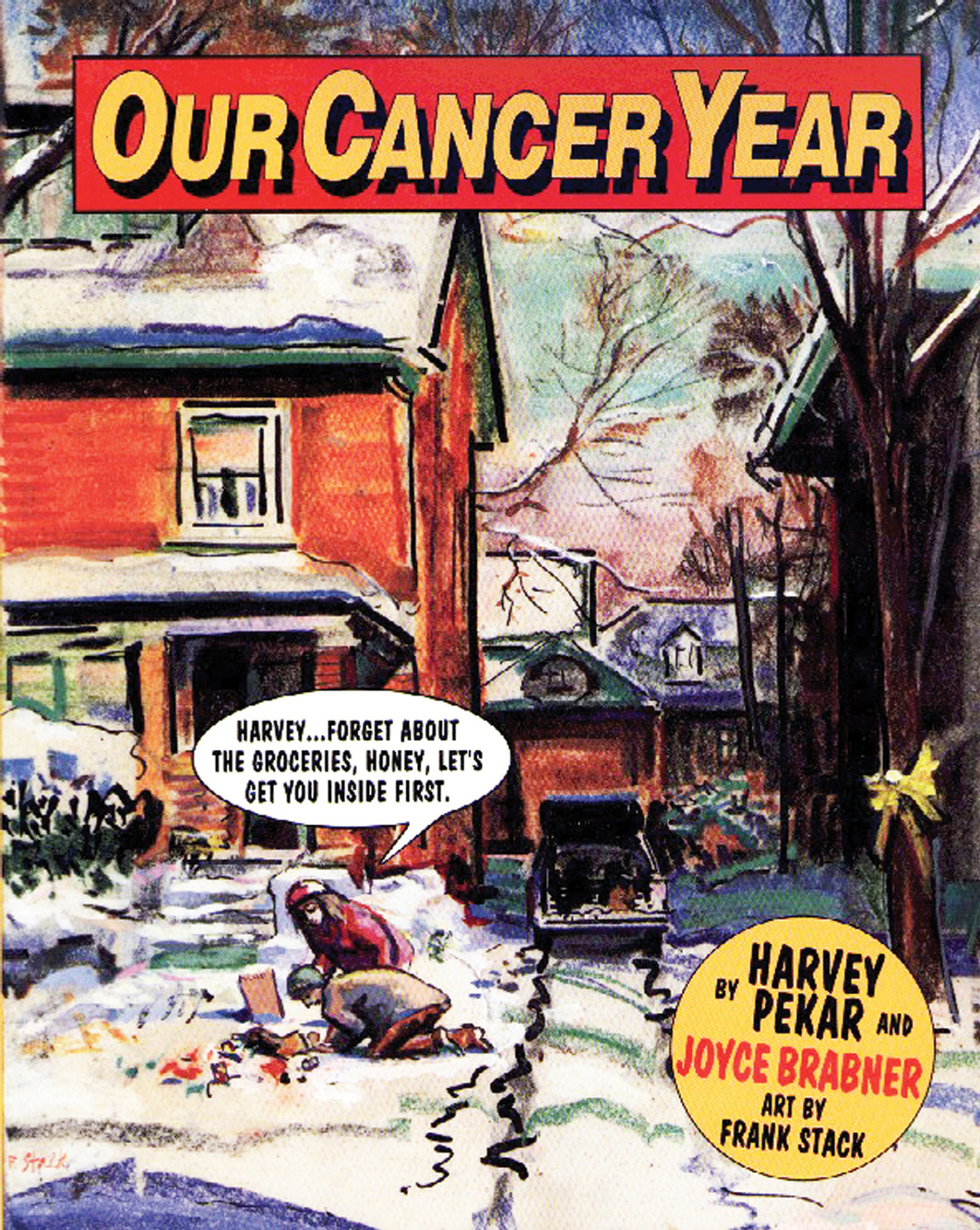
Over the years, the artist developed friendships with contemporary underground comics luminaries Robert Crumb (Fritz the Cat, Mr. Natural) and the late Harvey Pekar (American Splendor). Most notably, Stack illustrated Pekar’s graphic novel Our Cancer Year, an acclaimed autobiographical account of Pekar’s life following a 1990 lymphoma diagnosis.
Writing in the academic journal ImageText about Our Cancer Year, Bruce Dadey at the University of Waterloo in Ontario, Canada, described Stack as conveying “a reality that encompasses both the sublime and mundane,” noting the book’s “willingness to let the visual manifest itself in all its complexity without its being given a particular meaning through text.”
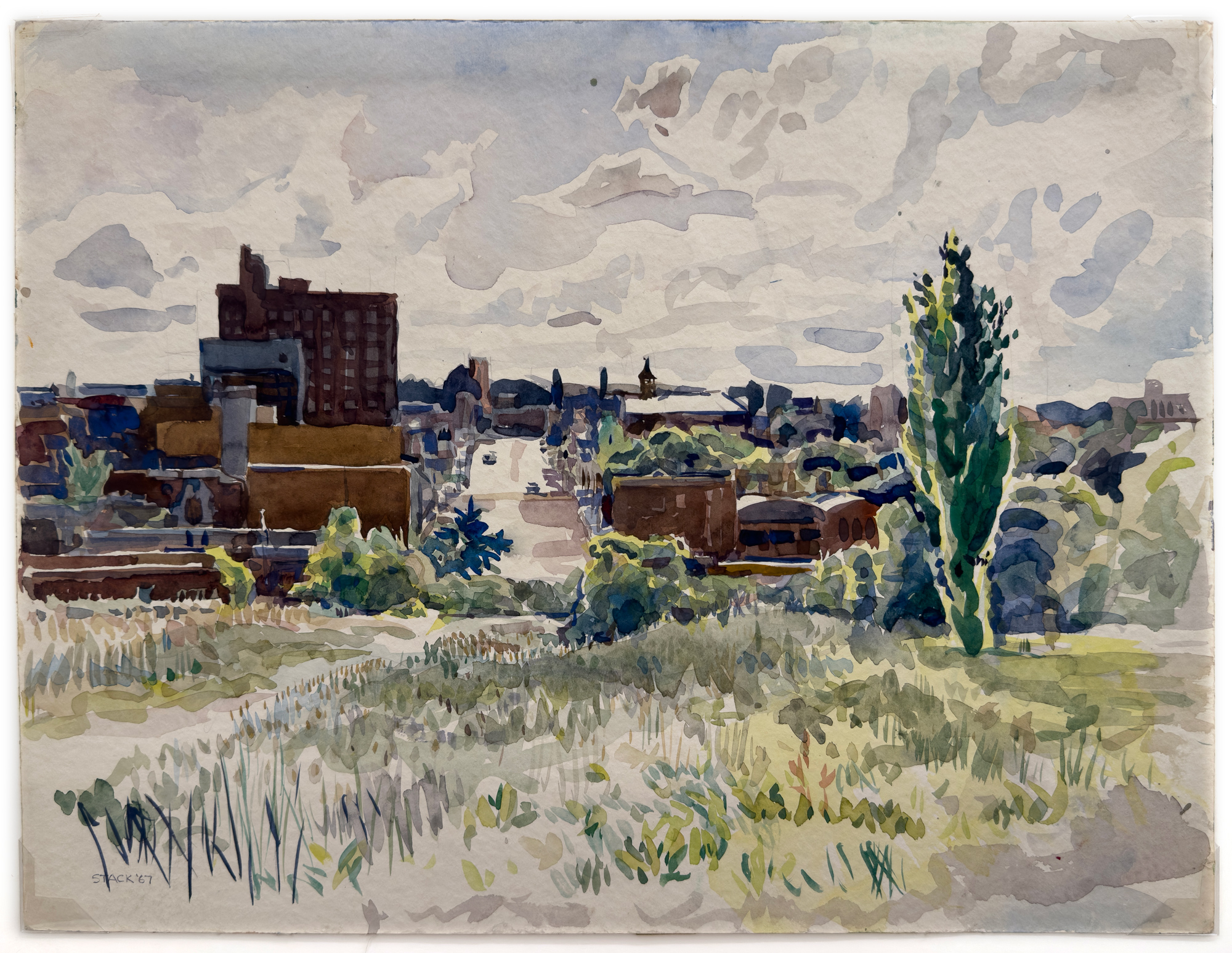
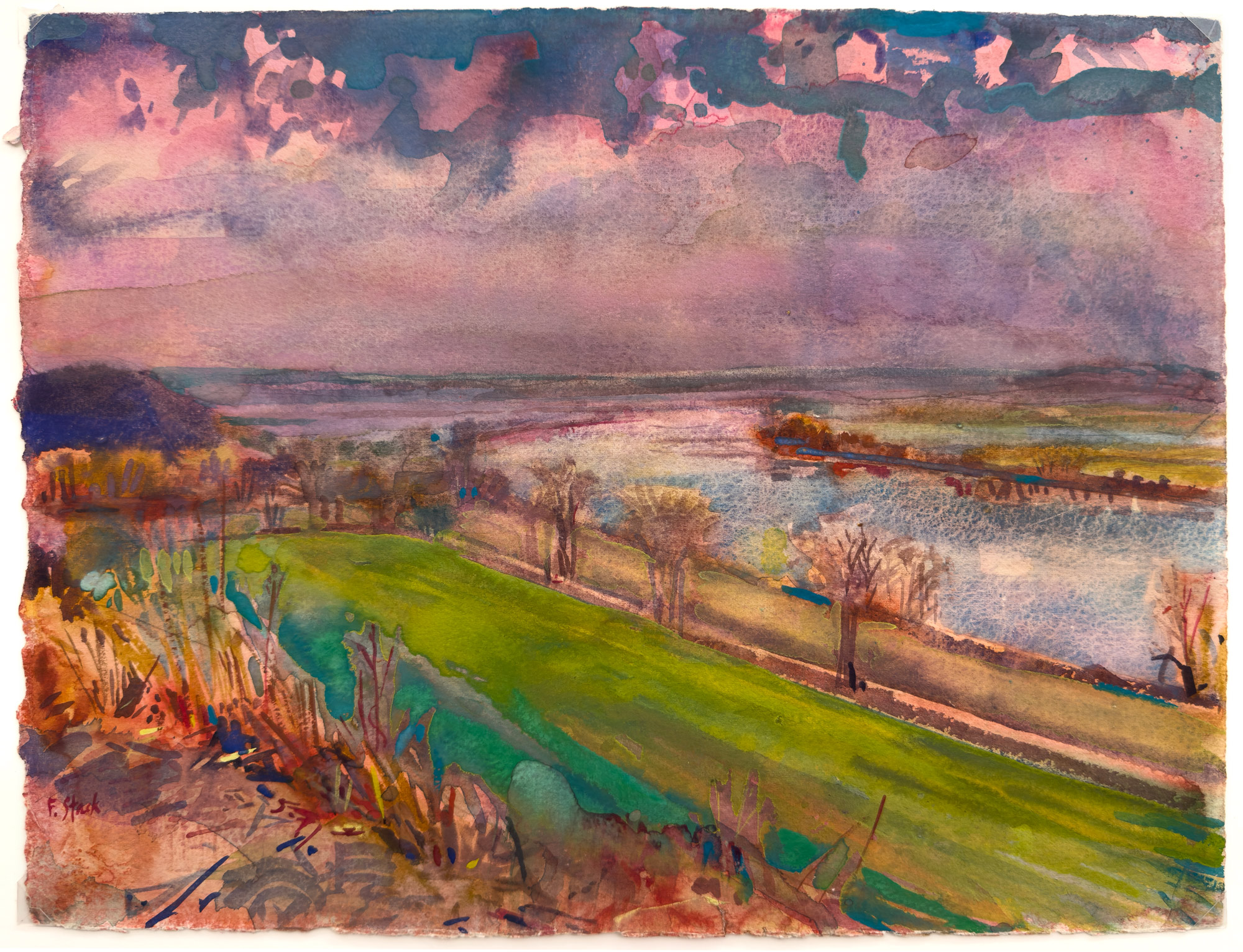
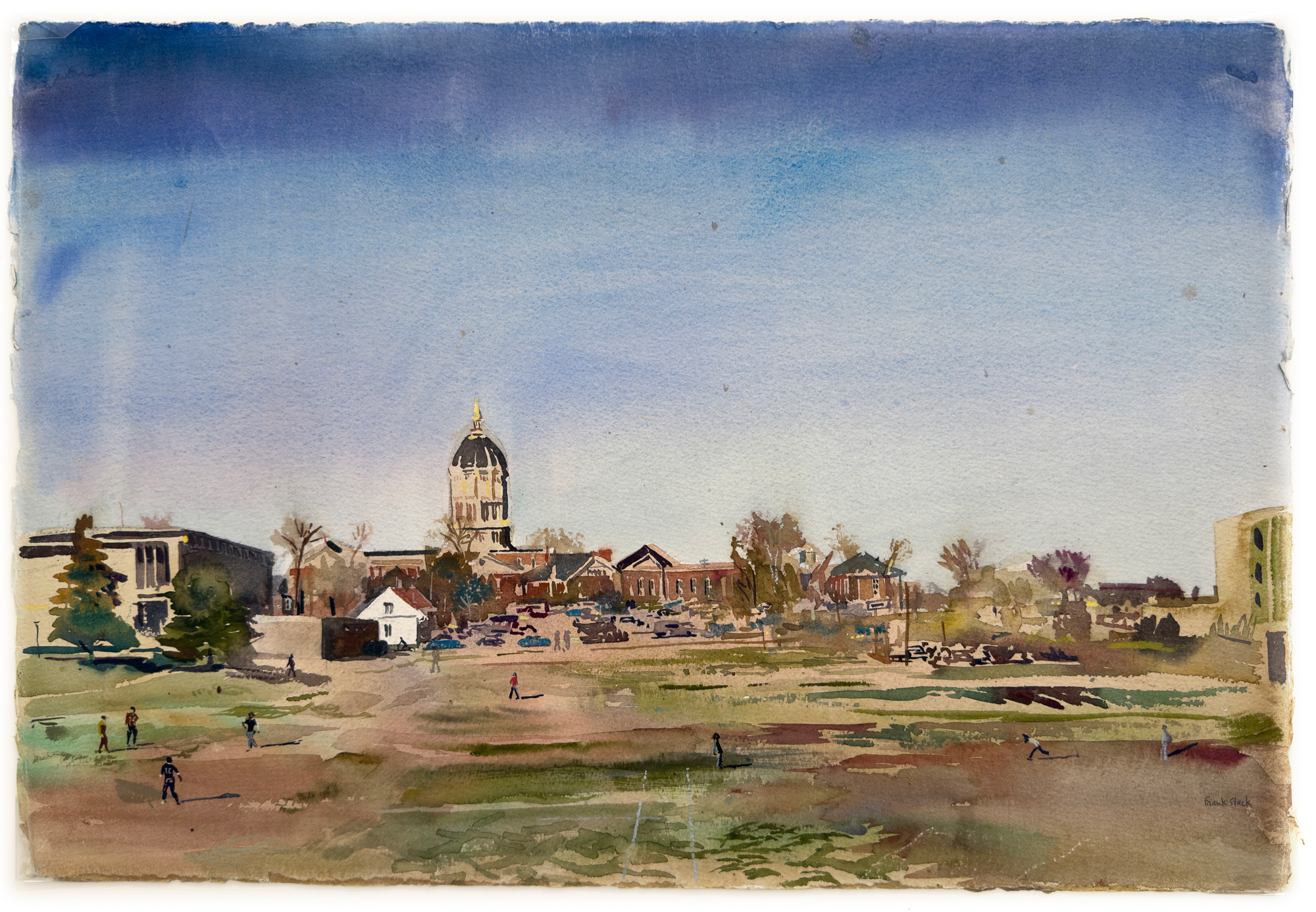
Stack’s work spans several media, including oil, watercolor, pastel, intaglio and lithography, and often features Missouri landscapes and cityscapes. A selection of his original work is currently on display at the State Historical Society of Missouri and Mizzou’s Museum of Art & Archaeology. His work also has been shown in France, Italy, Switzerland, Poland, Turkey and South Korea.
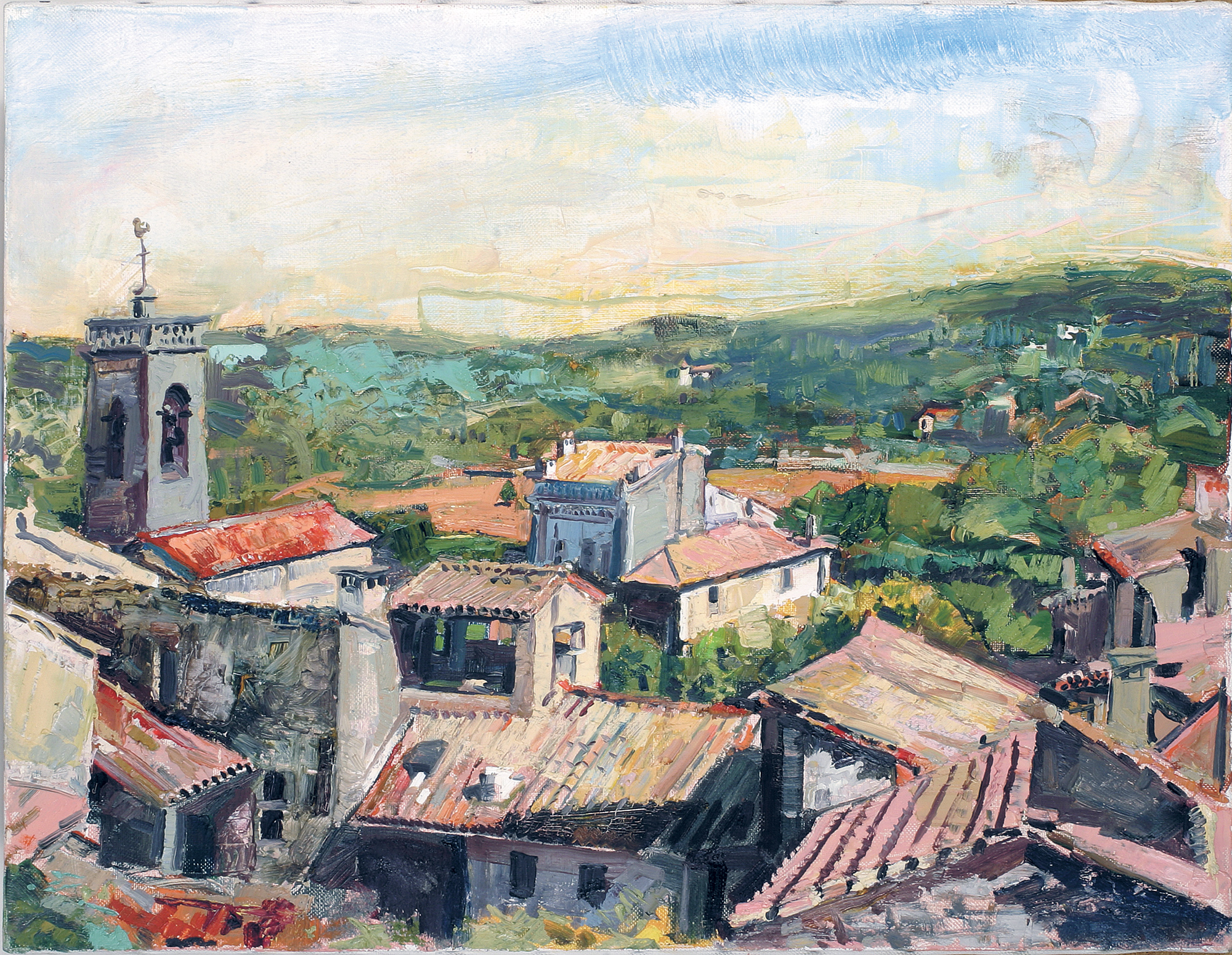
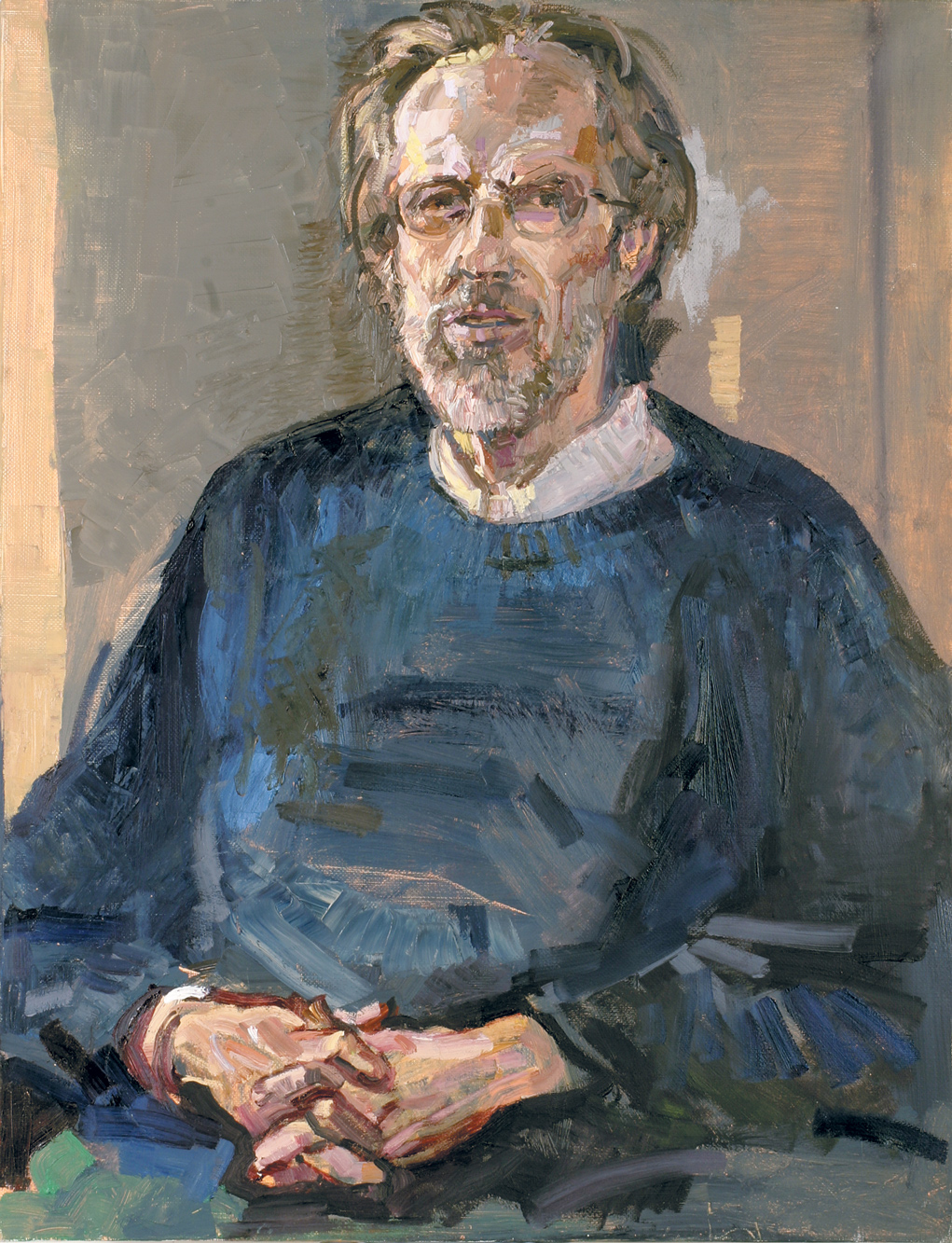
In 2025, at the annual Comic-Con in San Diego, the Will Eisner Comic Awards inducted Stack into its Hall of Fame. He couldn’t attend because of his fragile health, so Joan and Stack’s grandson William accepted the award on his behalf.
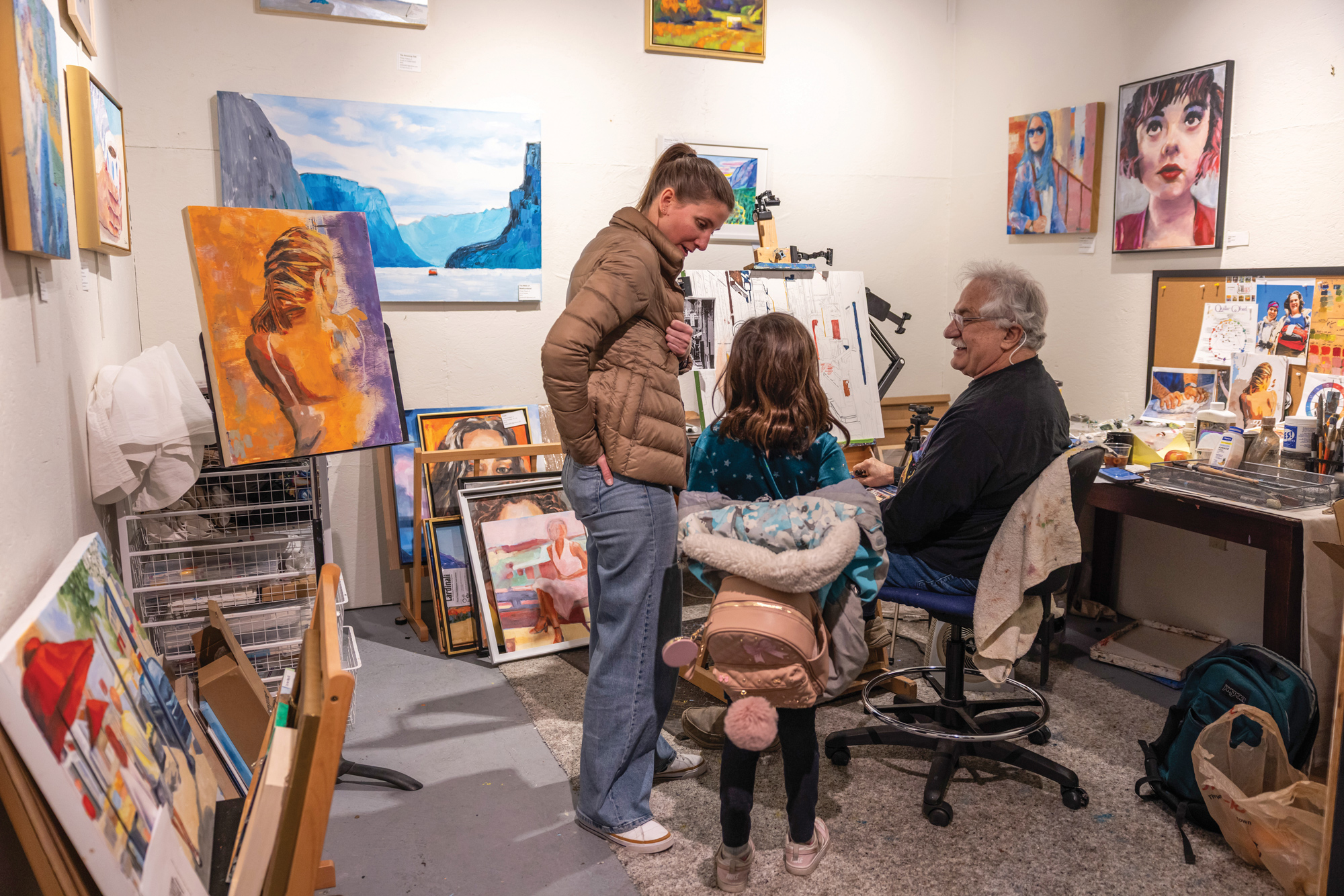
Also last year, Stack swung by a sale of his work in his studio and private gallery at the Balsamic Warehouse just north of Orr Street Studios. The space overflowed with hundreds of framed and unframed pieces, many scarcely larger than a greeting card, with walls displaying larger works. From a sofa to the side, Stack greeted friends and quietly watched people appreciate his work. Many smaller drawings and paintings were born of his daily ink-and-watercolor ritual, and each felt like a moment seized by a meticulous, restless hand.
Stack’s family says his true passion remained the same. “He wanted to be remembered mostly as a painter and a great draftsman,” Joan says. “He was also a phenomenal colorist who enjoyed the problem of drawing and painting directly from nature.”
See more of Stack’s work below.
To read more articles like this, become a Mizzou Alumni Association member and receive MIZZOU magazine in your mailbox. Click here to join.