By Ainur Aibyek
Feb. 23, 2025
Photos by Ainur Aibyek
Contact: Janese Heavin, heavinj@missouri.edu
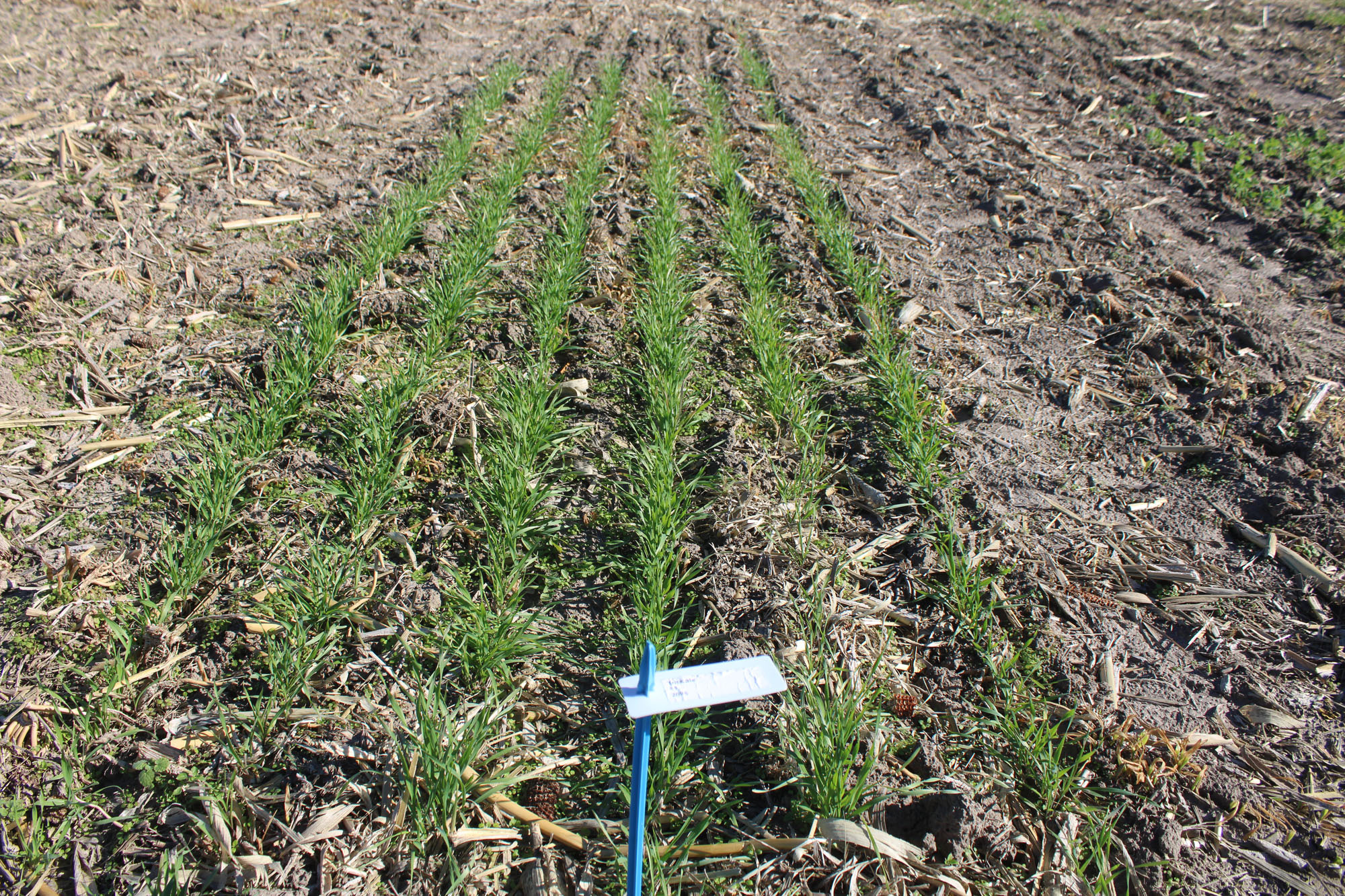
Morning light spills across rows of tiny green seedlings at the University of Missouri’s Bradford Research Farm.
These small plants hold huge promise for the future of agriculture. Cover crops — plants that enrich soil and hold it in place — are important tools for sustainable farming. Right now, most seeds for these crops are grown in the Willamette Valley in Oregon or purchased from overseas.
As demand for cover crops increases, Mizzou’s Center for Regenerative Agriculture is leading the National Cover Crop Variety Improvement and Seed Production Project, a $10 million effort to develop cover crop varieties and provide new markets for farmers nationwide.
“The ultimate goal of this project is to empower farmers to protect and improve their soil, laying the groundwork for a more resilient food system and thriving, stable farming businesses across the country,” Robert Myers, director of Mizzou’s Center for Regenerative Agriculture, said.
A collaborative home for research, education and extension efforts that support healthier land, the Center for Regenerative Agriculture currently administers a $45 million portfolio supporting cover crop adoption nationwide. Launched in 2023 through funding from the National Institute of Food and Agriculture within the USDA, the National Cover Crop Variety Improvement and Seed Production project is part of that broader mission.
At its core, the initiative centers on seed innovation. By integrating eight interconnected areas of work such as research, on-field trials, training and outreach, the program is paving the way towards a more reliable domestic cover crop seed supply.
Growing demand for cover crops
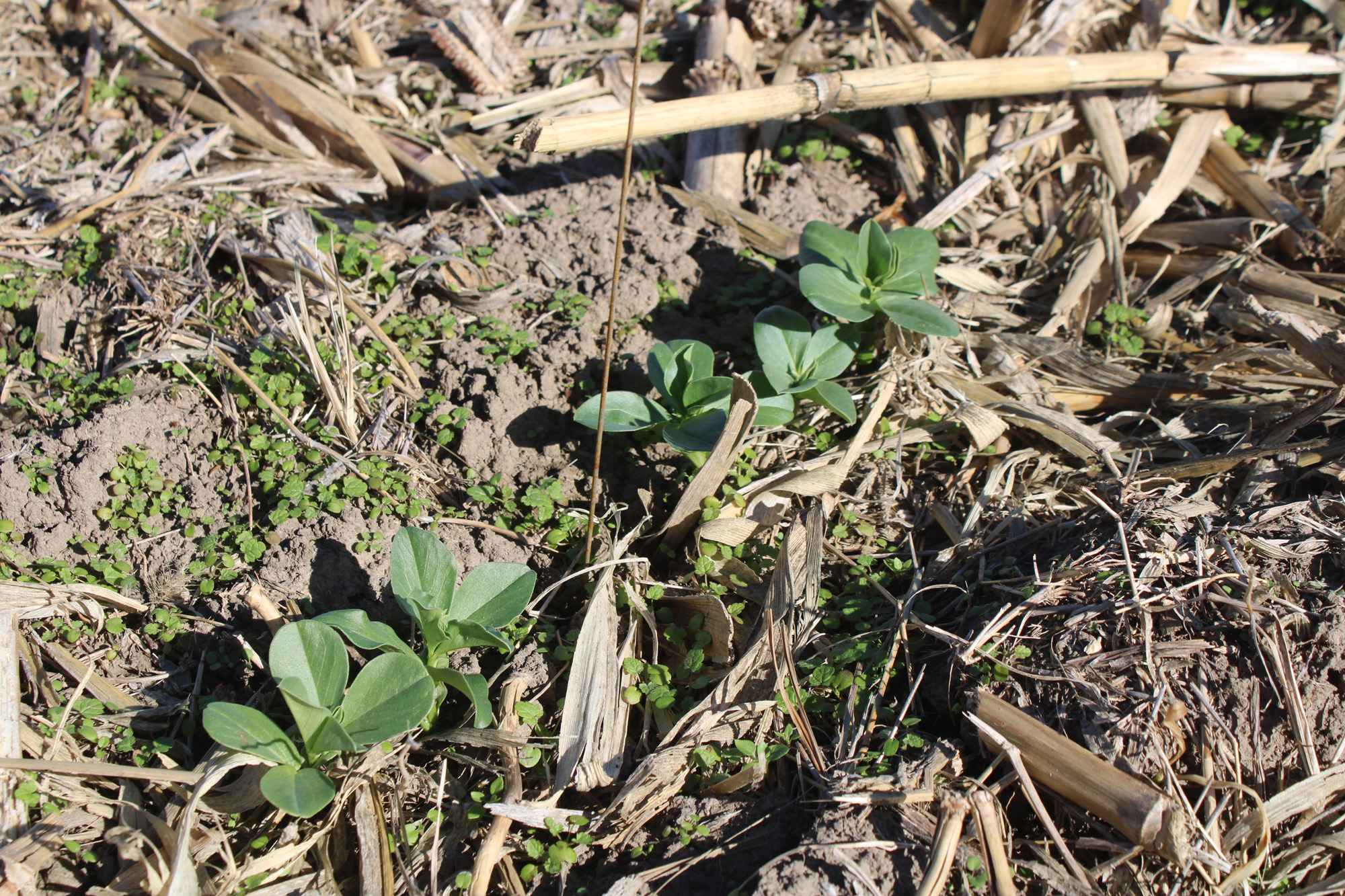
Cover crops include plants such as cereal rye, crimson clover and winter pea. Farmers typically use them to breathe new life into the weary soil after each harvest.
Beneath the surface, cover crop roots weave through the earth like a hidden net, holding the soil in place as wind and rain move across the field. As the plants grow and break down, they add rich organic matter, helping the ground hold more water and nutrients for future crops.
As farmers recognize these benefits, cover crop adoption continues to grow. Nationwide cover crop acreage climbed 17% between 2017 to 2022, reaching 17.9 million acres, with experts projecting continued growth. Today, the primary location cover crop seeds are grown in one small area in Oregon that produces two-thirds of the total cool-season grass seeds.
At the same time, imports of cover crop seed have surged, doubling between 2019 and 2023, according to a study by the Mizzou Center for Regenerative Agriculture.
To ensure that the U.S. has a reliable seed supply to keep pace with this rising demand, the program is fostering partnerships among scientists, seed companies, farmers and universities across the country.
“If we’re going to have this rapid increase in demand over the next five years, how do we make sure there are varieties appropriate for each farmer’s situation, and how do we help seed companies ensure there’s enough available to sell? That’s what’s really important about this project — we have all of these different players involved,” Mizzou program manager Etienne Sutton said.
Under Mizzou’s leadership, more than 40 partners from 20 organizations across 16 states have joined this national collaboration. Each contributes their expertise toward the shared goal of adding millions of acres of cover crops by 2030.
What the first-year trials show
Just 11 miles from the Mizzou campus lies the Bradford Research Farm, where the national effort takes shape in neat rows of seedlings stretching across the trial plots. Here, newly developed cover crop seeds are tested for their potential.
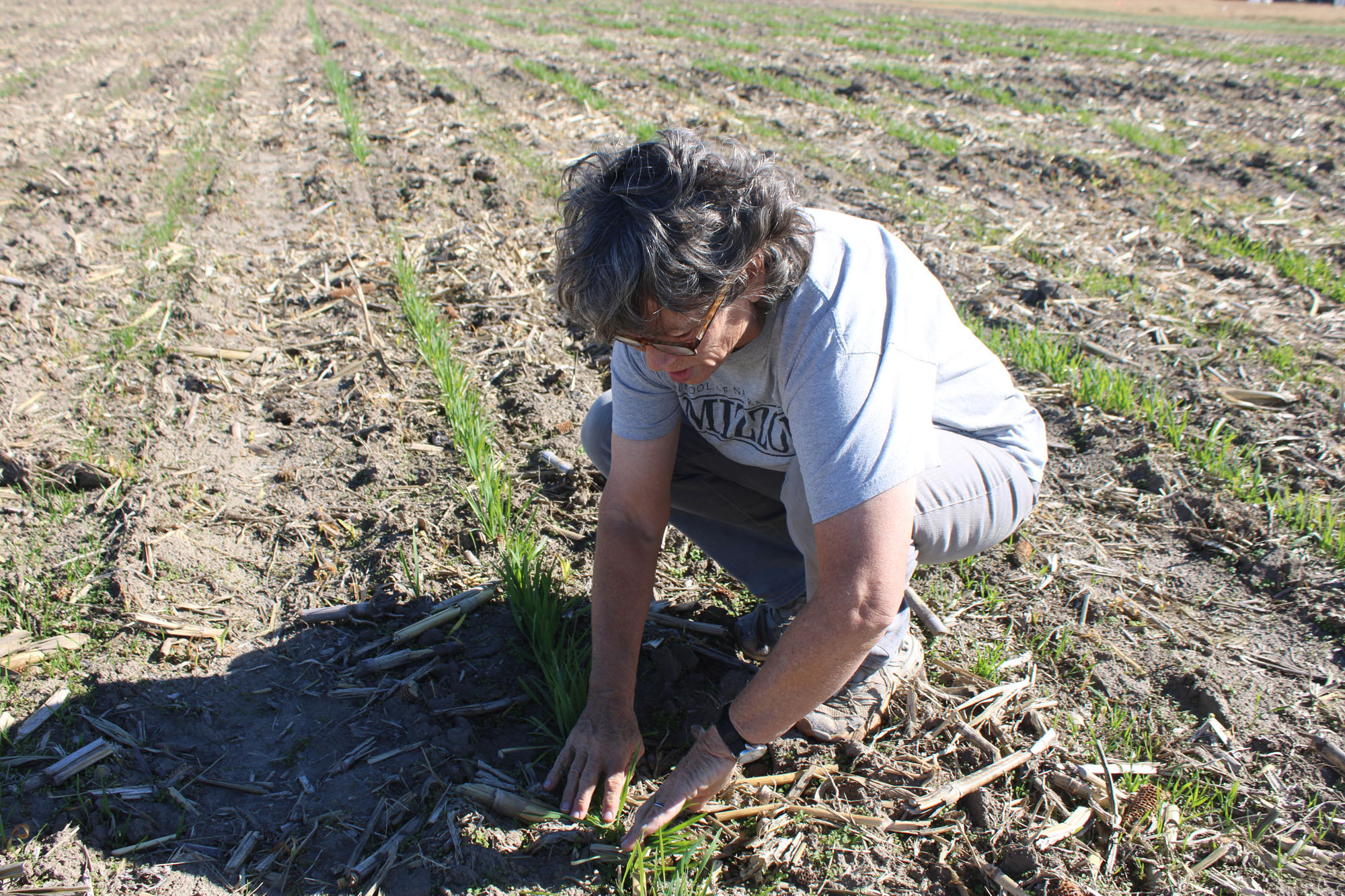
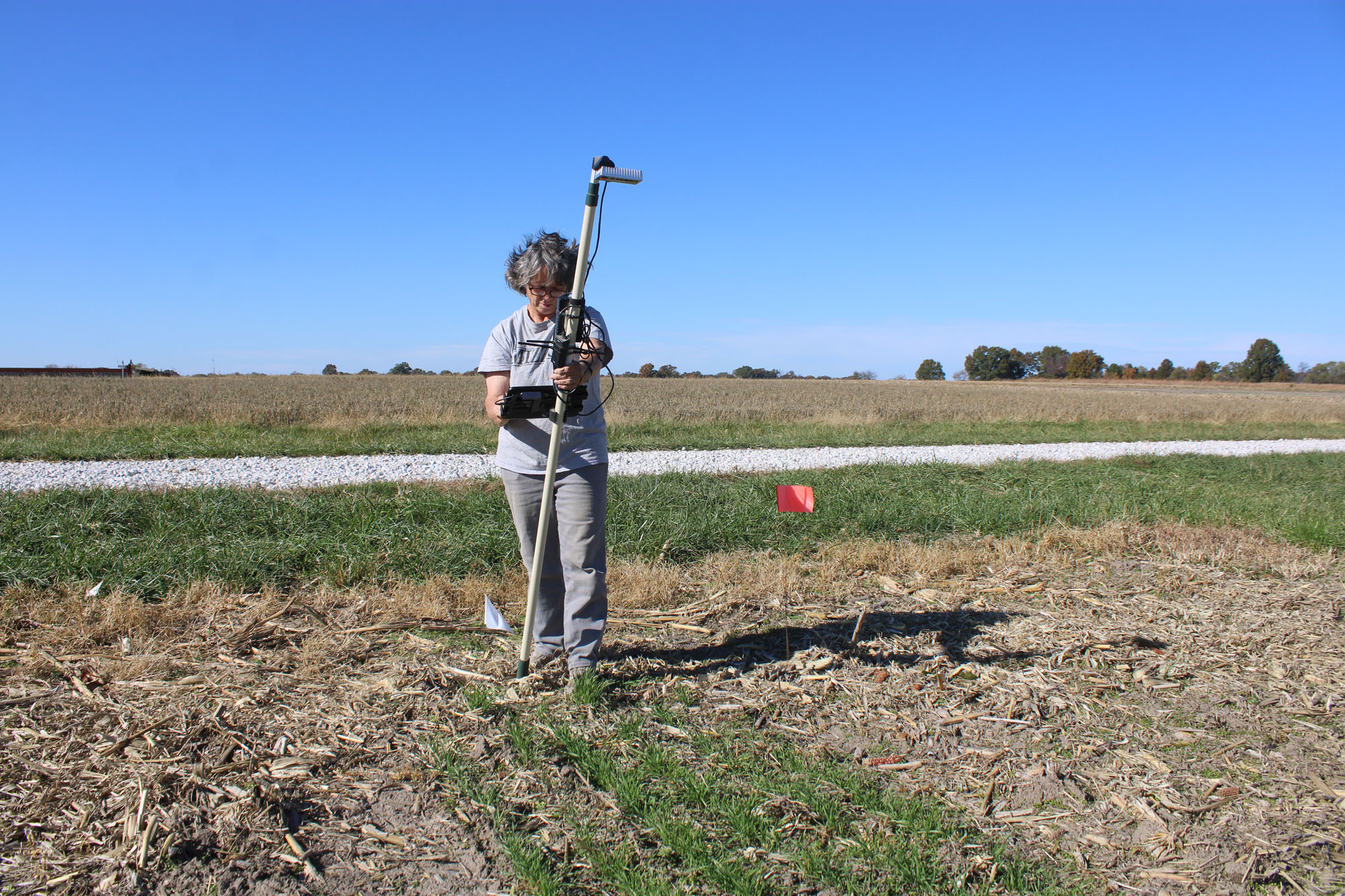
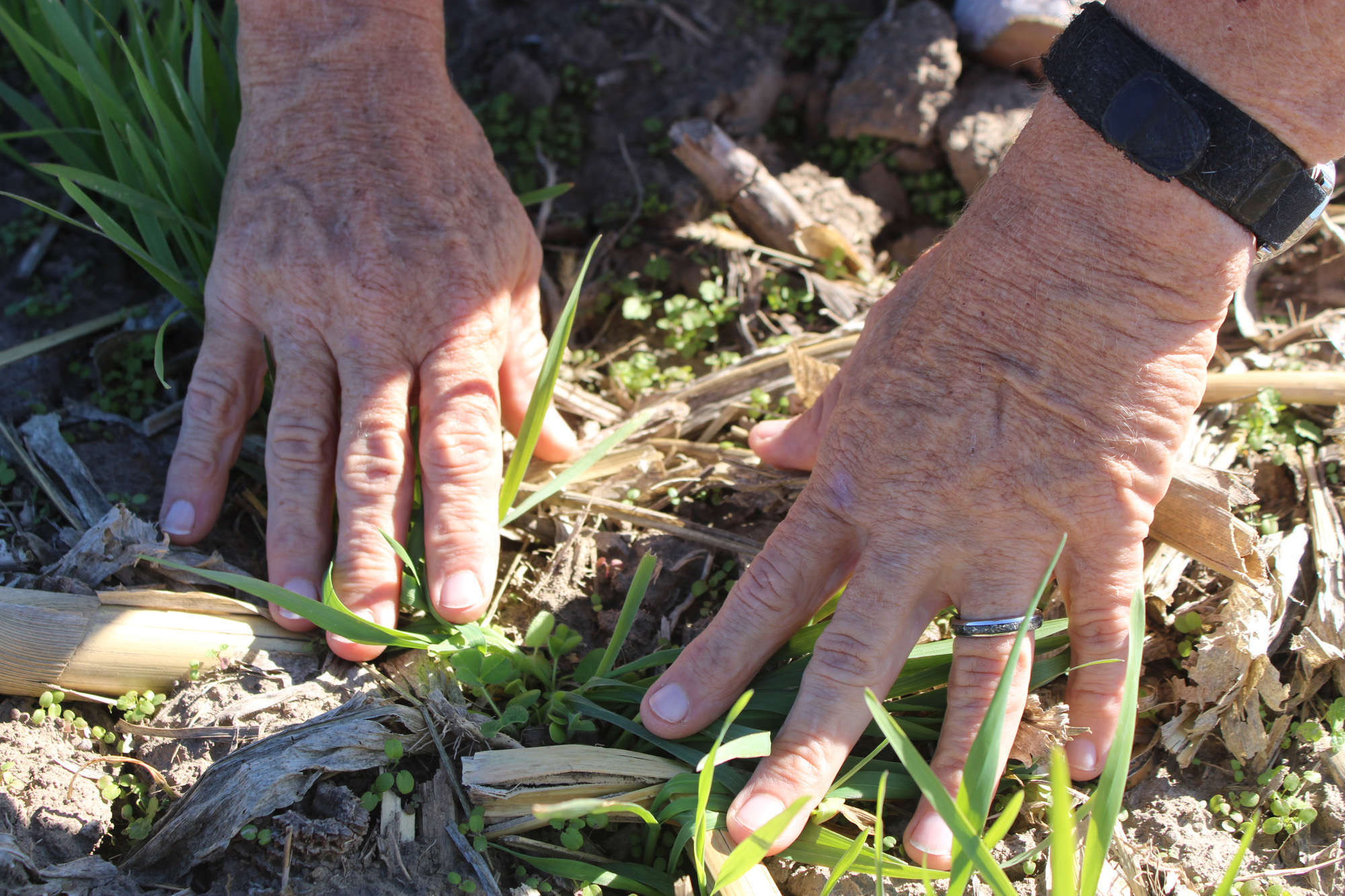
Moving slowly between the rows, Mizzou researcher Kerry Clark carefully observes the sprouting seedlings. It’s been about a month since the seeds were planted, so today marks a checkpoint.
In her hand is a camera-based sensor used to measure plant growth. Every now and then, she pauses, uses the device to capture an image, and steps forward again.
“One key trait we examine is winter hardiness. Will they survive freezing?” Clark said as she made her way to the next row.
Cold tolerance is only part of the puzzle. The team also records metrics such as fall growth, spring vigor and timing of flowering to assess how each variety performs over the season. Results are then compared with identical trials in Wisconsin, Oregon, Texas and other partner states.
The 2024–25 planting season marked the first year of the cover crop seed trials, with Bradford Research Farm among 12 participating university sites nationwide. Researchers evaluated 25 varieties across six cover crop species in 11 states and released a report summarizing the findings.
As results come in, a clear message is emerging.
“One of the most promising findings so far is that there is strong evidence of regional adaptation,” Sutton said.
In practice, this means a cereal rye variety built for harsh winters may flourish in a state such as North Dakota, while a completely different variety thrives in the humid Southeast. This regional matching will help farmers get seeds built for their specific needs.
The trials are also revealing varieties with special traits. For instance, the researchers identified a variety of cereal rye that is superior at controlling weeds.
Building on the first-year momentum, the trials have expanded beyond university research sites into real farm fields. Seventy-five farmers across the country are now testing the seeds using SeedLinked — a digital app for vegetable testing that has been adapted for cover crops.
“Participatory approaches are what translate research into action or real-world change,” Sutton said.
Testing seeds across different farming styles reveals insights that university plots alone cannot capture. Combined with strategic breeding efforts, this work helps scientists identify cover crop seeds that perform reliably across regions.
Alongside breeding, testing and trials, the program places a strong emphasis on research. Cover crop experts are examining root systems and exploring how cover crops can be used to feed grazing livestock, while a team of social scientists studies adoption barriers, farmer decision-making and market dynamics.
At the same time, the initiative is allowing universities to develop curricula to shape the next generation of cover crop experts.
Turning promising varieties into seed supply
Once promising varieties are identified, the next priority is making sure there is enough seed available.
The team is starting to train farmers to produce cover crop seed, beginning with cereal rye. As demand for cover crops continues to rise, this training will be crucial to ensuring seed supply. It also opens new doors for local businesses.
“Farmers have this opportunity to enter a part of the agricultural market that’s expanding rapidly right now,” Sutton said.
The trainings aim to not only deliver practical skills but also empower farmers with opportunities to diversify their operations. From breeding and testing new and improved seed varieties to training and building the market, the Mizzou-led team is strengthening the cover crop system from the ground up.
Back at Bradford, Clark finished her walk through the plots and lowered the sensor at her side. The seedlings were still small, but the data they collect now will help decide which seeds farmers use in the future.
By rethinking what a single seed can do, Mizzou researchers are helping ensure that the growth of cover crops is matched by a seed system built to support it.