May 18, 2026
Contact: Brian Consiglio, consigliob@missouri.edu
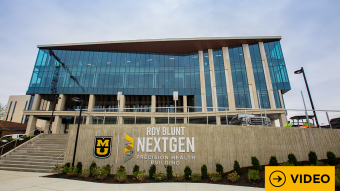
Photo by Abbie Lankitus
Researchers at the University of Missouri, Cancer Targeted Technology (CTT) and Isotherapeutics Group (ITG) discovered an innovative method to speed production of a cancer-fighting drug candidate.
The breakthrough means the prostate cancer drug candidate, known as CTT1403, could be produced more efficiently and reliably, and could lead to the production of more doses for larger clinical trials.
CTT1403 has two main components: lutetium-177, one of the life-saving radioactive isotopes produced at the University of Missouri Research Reactor (MURR), and a targeting molecule. The lutetium-177 kills the cancer cells, while the targeting molecule selectively binds to proteins found on prostate cancer cells, leaving healthy cells largely unaffected.
Because the targeting molecule is highly sensitive to heat and acid, the traditional production method is complex. It involves attaching lutetium-177 to a carrier molecule called a DOTA chelator under high heat, then cooling the compound before connecting it to the targeting molecule. This process, called radiolabeling, can take up to six hours of meticulous manual labor.
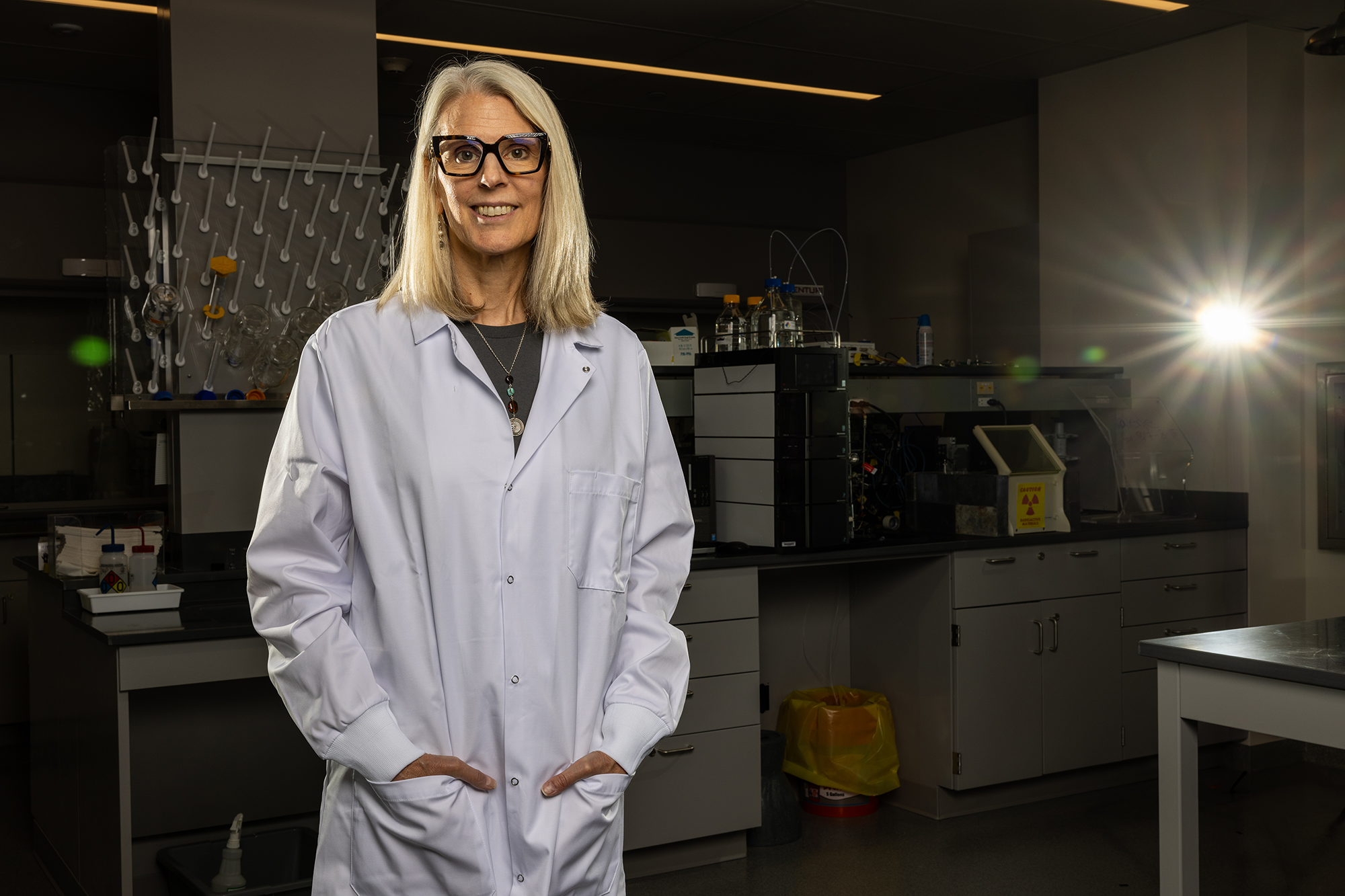
In the new study, researchers at Mizzou’s Molecular Imaging and Theranostics Center, led by Meltem Ocak and Carolyn Anderson, and a team from CTT led by Bea Langton-Webster in collaboration with Jim Simón from ITG, developed a faster, automated approach. They designed a compound in which the targeting molecule and DOTA chelator are already connected. By setting the temperature to 60 degrees Celsius, they found a balance that allows lutetium-177 to bind to the chelator without damaging the sensitive targeting component.
Using a commercially available automated synthesis system housed at MURR, the radiopharmaceutical can now be produced in just 38 minutes with the push of a button.
The team demonstrated in a preclinical model that the automated process is just as effective as the traditional, more time-consuming process when it comes to treating prostate cancer.
“Not only does the new process take less time, it also is much safer because the operators no longer have to physically handle the radioactive drug as much,” Ocak said. “To produce treatments for large clinical trials, it’s crucial that processes are automated and easily reproducible so that operations can scale up in a standardized way. We proved this concept is possible moving forward if this drug candidate were to proceed to larger clinical trials.”
A blueprint for efficiency
While the CTT1403 drug candidate is only being used in early-stage clinical trials to treat advanced-stage prostate cancer, this proof-of-concept study provides a roadmap for other potential cancer treatments to be produced faster, safer and more efficiently.
And because the machine used in this study to automate the drug production process is portable, this process, or one similar to it, may one day enable some cancer treatments to be produced onsite within hospitals and radiopharmacies, increasing accessibility for patients.
“With MURR producing the lutetium-177 and our expertise in both chemistry and radiopharmaceuticals, Mizzou is the perfect place for our research to thrive,” Anderson said. “Moving forward, perhaps this protocol or something similar can be used for other cancer diagnostics or treatments involving the lutetium-177 produced at MURR.”
Anderson is the Steve and Karen Ellebracht Professor in Medicinal Chemistry in the College of Arts and Science, a professor of radiology and associate director of the Ellis Fischel Cancer Center. She was recently selected as the recipient of a Drs. Jane & Abass Alavi Mars Shot Research Award from the Society of Nuclear Medicine and Molecular Imaging’s Mars Shot Research Fund.
The study, “Development of an automated one-step radiolabeling procedure for a PSMA-targeted radiotherapeutic for prostate cancer,” was published in Nuclear Medicine and Biology and funded by the National Cancer Institute.