By Eric Stann
 Associate Professor Noel Aloysius (left) and graduate student Moussa Theodore Yatta conducted the study. Photo by Abbie Lankitus

May 5, 2026
Contact: Eric Stann, StannE@missouri.edu
University of Missouri researchers are exploring ways to grow sweet corn more efficiently to help American farmers cut costs.
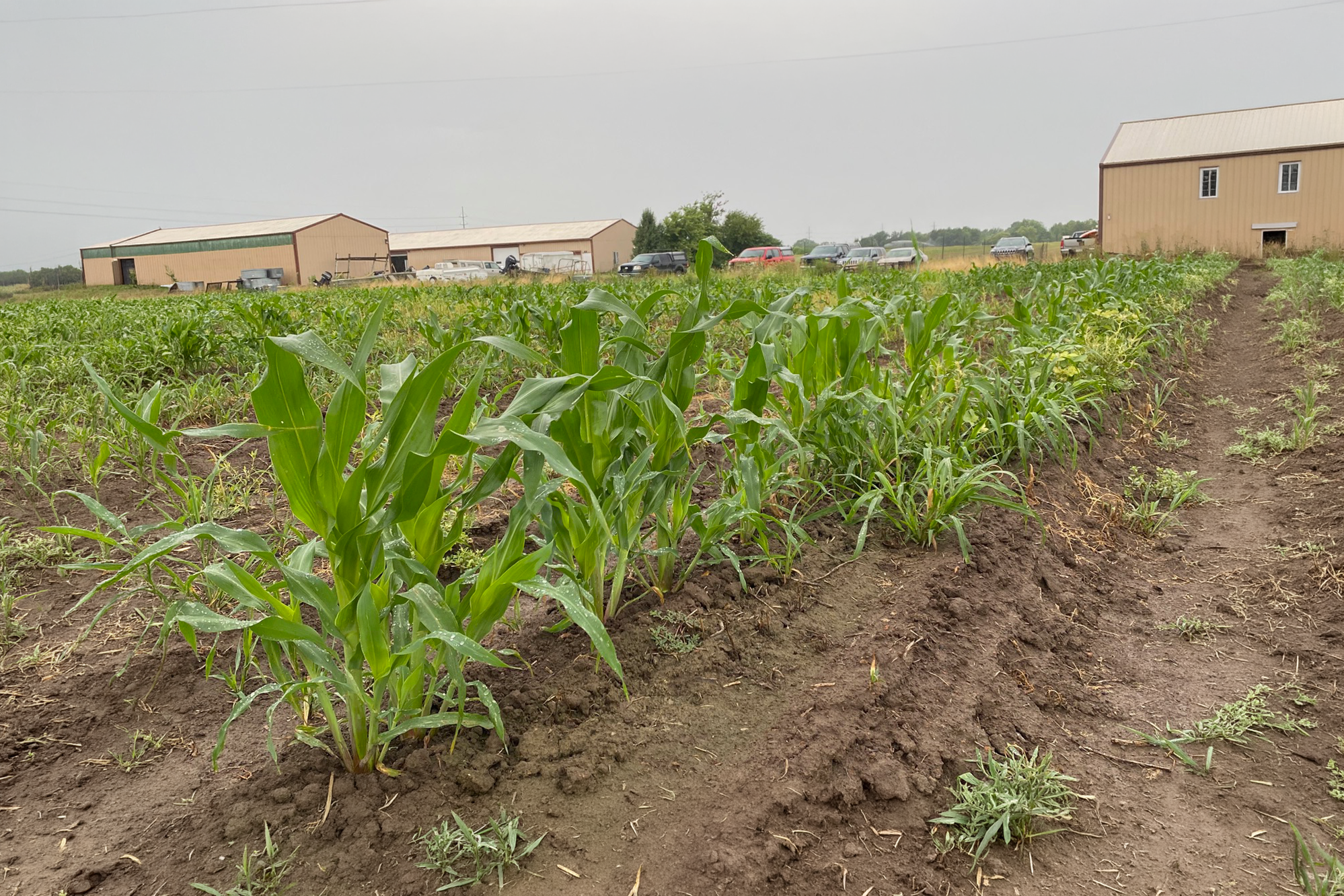
In a recent study, scientists from Mizzou’s College of Agriculture, Food and Natural Resources and College of Engineering found sweet corn can be grown using less water without sacrificing the flavor that consumers have come to expect.
Sweet corn relies more heavily on water than other vegetables during the growing process. To determine the most effective irrigation strategy, Associate Professor Noel Aloysius and graduate student Moussa Theodore Yatta compared three different ways of watering sweet corn.
One approach relied on rainfall alone, resulting in the lowest crop yield.
Another method — potential evapotranspiration — relied on weather data such as solar radiation, air temperature, humidity and wind to estimate water use. In most of those cases, more water was applied than the plants needed.
The third method, known as crop-specific evapotranspiration, tailored the amount of water based on how much the corn needs at each stage of growth. Because sweet corn requires relatively little water in early stages, but demand rapidly rises as the plants begin reproduction, Mizzou researchers adjusted irrigation schedules accordingly. This targeted approach proved to be the preferred method, helping conserve water without hurting crop quality.
“We saw a clear difference in plant water use,” Aloysius said. “When farmers rely only on weather to guide irrigation, they often apply more water than the crops truly need. By watering based only on what the plant needs as it grows, we found farmers can use water more efficiently.”
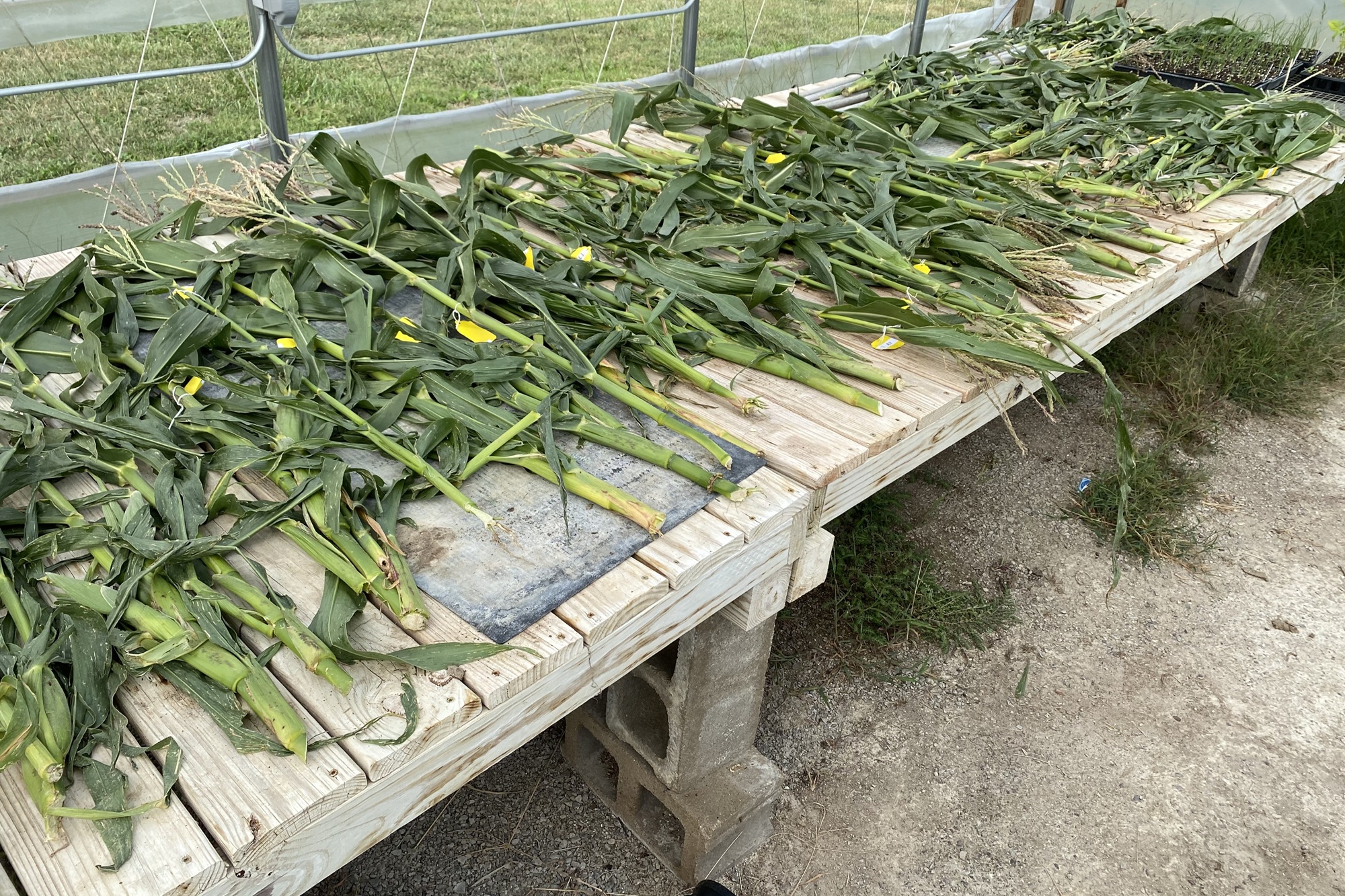
Because sweetness is key to sweet corn’s value, the researchers also measured its sugar content.
“We found little difference in sugar content across the different watering strategies, showing us that farmers can still conserve water while delivering a quality product that consumers expect,” Yatta said.
These findings are significant given sweet corn’s unique role in American agriculture.
Unlike field corn, sweet corn is harvested early, when a genetic interruption in starch formation produces tender kernels and signature sweetness. Beyond its distinctive taste, sweet corn is also a major economic driver. It ranks second in farm value in the U.S. among processed vegetables and consistently places in the top 10 for fresh vegetable production nationwide. Grown primarily in the Midwest and Northeast, the crop generates billions of dollars each year.
Future goals
Aloysius hopes smaller growers can take advantage of these improved irrigation practices.
“Large commercial farms often have the resources to invest in advanced irrigation systems,” Aloysius said. “Smaller producers don’t always have that option, so identifying strategies that reduce water use and costs without sacrificing quality can make a real difference for their success.”
This work supports the Aloysius lab’s broader research goals, which include developing automated, data-driven tools to help small-scale farmers use their resources more effectively while also supporting long-term sustainability.
Yatta plans to continue this work as part of his doctoral research. He will expand the research to better understand how varying conditions — especially unusually wet or dry seasons — affect soil moisture and crop growth over several seasons. The work will focus on major grain crops such as corn and soybeans.
“If we can see how these approaches perform over time and at larger scales, farmers could apply water even more precisely,” Yatta said. “That helps build more resilient farming systems.”
The study, “Comparative yield response and sugar contents of four sweet corn varieties under different shallow subsurface drip irrigation treatments,” was published in Irrigation and Drainage, an international water management journal. Additional Mizzou contributors include Allen Thompson, Tim Reinbott, Anthony Lupo and Kerry Clark.