Date: Sept. 14, 2026
Contact: Cary Littlejohn, carylittlejohn@missouri.edu
University of Missouri researchers are giving physicians clearer guidance for treating patients after a mini stroke, helping standardize care during the period when patients face the greatest risk of a major stroke.
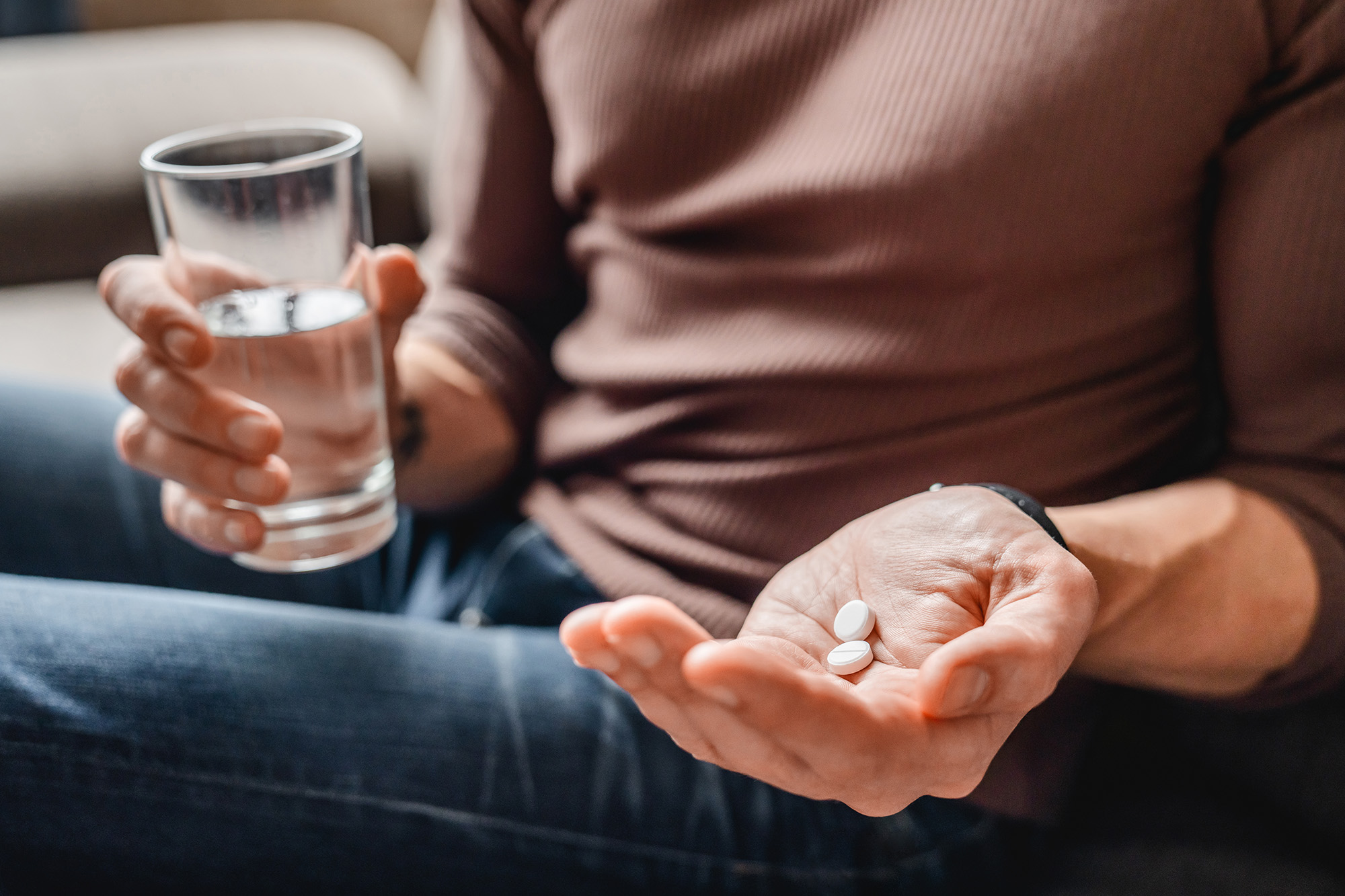
Researchers found that patients taking a two-drug antiplatelet therapy after a mini stroke do better on a lower dose of aspirin than they do on a higher dose. The findings resolve a long-standing question for physicians, allowing them to confidently prescribe the lower dose without sacrificing effectiveness.
Transient ischemic attacks, or “mini strokes,” are temporary interruptions of blood flow to the brain that affect between 350,000 and 400,000 people every year. While symptoms often resolve themselves quickly and may not cause permanent brain injury, mini strokes are an important warning sign that a major stroke could follow.
“The risk of a major stroke is frontloaded,” Adnan Qureshi, professor of clinical neurology at the University of Missouri School of Medicine, said. “A person is at maximum risk in the first 90 days after having a mini stroke, so the most important thing that physicians can do is to mitigate cardiovascular risk factors.”

Physicians typically treat mini-stroke patients with two antiplatelet agents: the drug Plavix and aspirin.
“Plavix and aspirin work in different ways to block platelets from coming together and forming a blood clot,” Qureshi said. “It wasn’t long before physicians combined them because they actually give better protection than either of the medications alone.”
While physicians widely agree that combining Plavix and aspirin is the best approach, they have long disagreed about how much aspirin patients should take. Qureshi and his team found that the lower dose provides equal — or even better — protection, giving physicians clearer guidance for treating patients.
“We divided the patients into two groups: those who were given less than 100 milligrams of aspirin a day (the ‘low dose’) and those who were given more than 100 milligrams a day (the ‘high dose’),” Qureshi said. “We followed these patients for a year to track their risk of another stroke, a myocardial infarction or dying from something vascular-related, and we found that the patients on the low dose of aspirin had better protection than those on the higher dose.”
Qureshi’s findings have already changed how he treats his own patients.
“I personally used to favor the higher dosage in combination with the Plavix,” he said. “But I’m now favoring the lower dosage because we’ve shown it’s more effective.”
The findings will provide patients with a greater sense of confidence in their own treatment.
“The dose of Plavix has been relatively fixed over the past 20 years or more, and it’s 75 milligrams a day,” Qureshi said. “Aspirin is an interesting drug because it’s available over the counter, which places the burden of compliance on the patient. Nobody’s going to call from the pharmacy to keep tabs on the patient’s aspirin use. We don’t want patients walking away with a false impression that simply taking a higher dose is going to put them in a better position. Instead, patients should take aspirin exactly as prescribed.”
While the study answers one important clinical question, Qureshi and team have more to investigate.
“There’s another group of patients — those who need Plavix, aspirin and a stent in a blood vessel in the neck or brain — and we still need to explore which aspirin dosage is appropriate for this population,” he said. “That’s something we will be looking into going forward.”
“The effect of dose of aspirin in high-risk TIA and minor ischemic stroke patients receiving dual antiplatelet medication” was published in the Journal of Stroke and Cerebrovascular Diseases. Co-authors are Yilun Huang, Nived Jayarag Ranjini, Kamran Zahoor, Brandi French and Camilo Gomez from Mizzou; M. Fareed K. Suri from Aspirus St. Luke’s Stroke Center in Duluth, Minnesota.