By Eric Stann
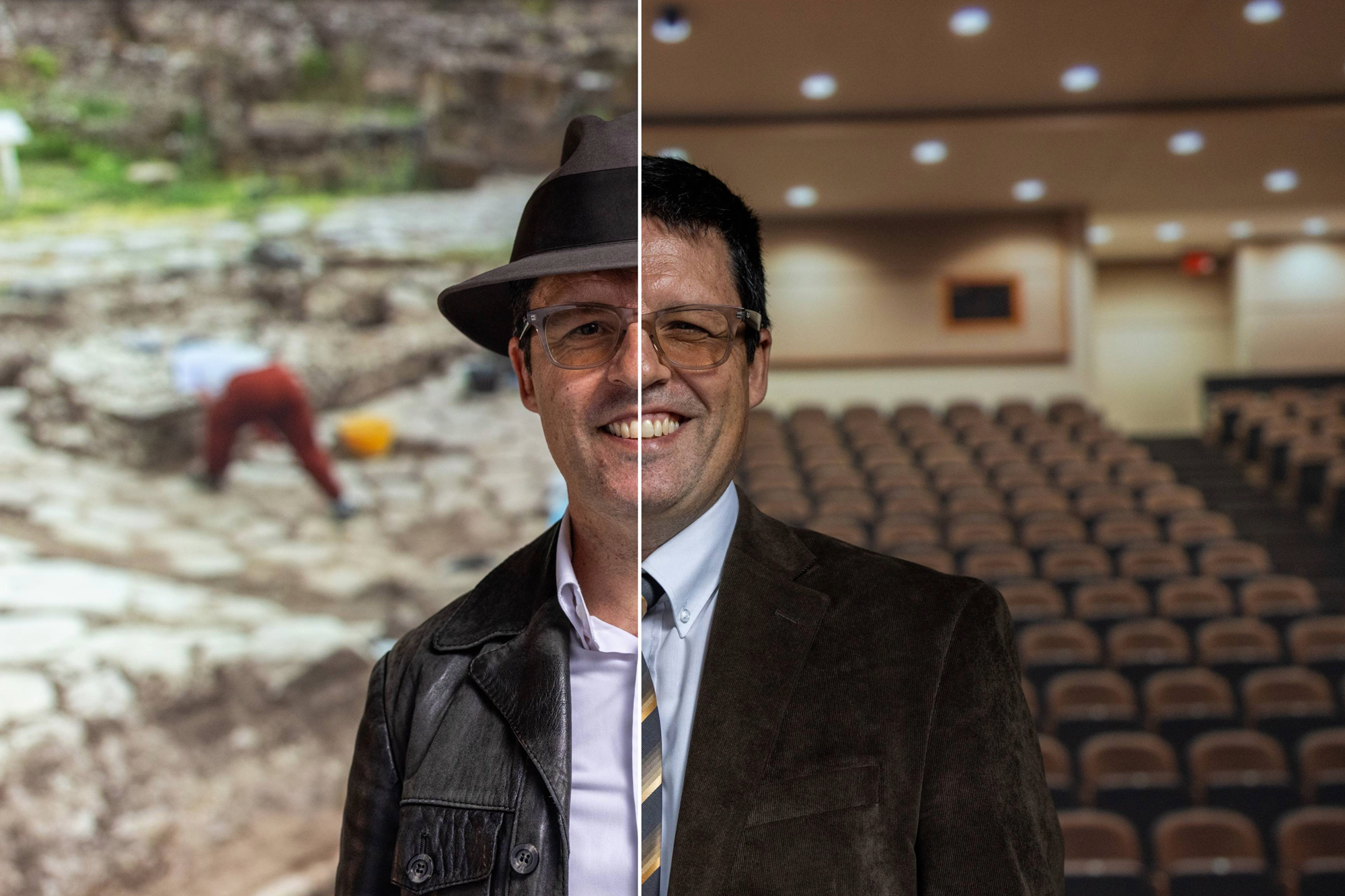
In the summer, Marcello Mogetta is an explorer, leading students on excavations of ancient cities in Italy. During spring and fall semesters, he's back in the classroom at Mizzou, teaching students about the ancient world.
April 27, 2026
Contact: Eric Stann, StannE@missouri.edu
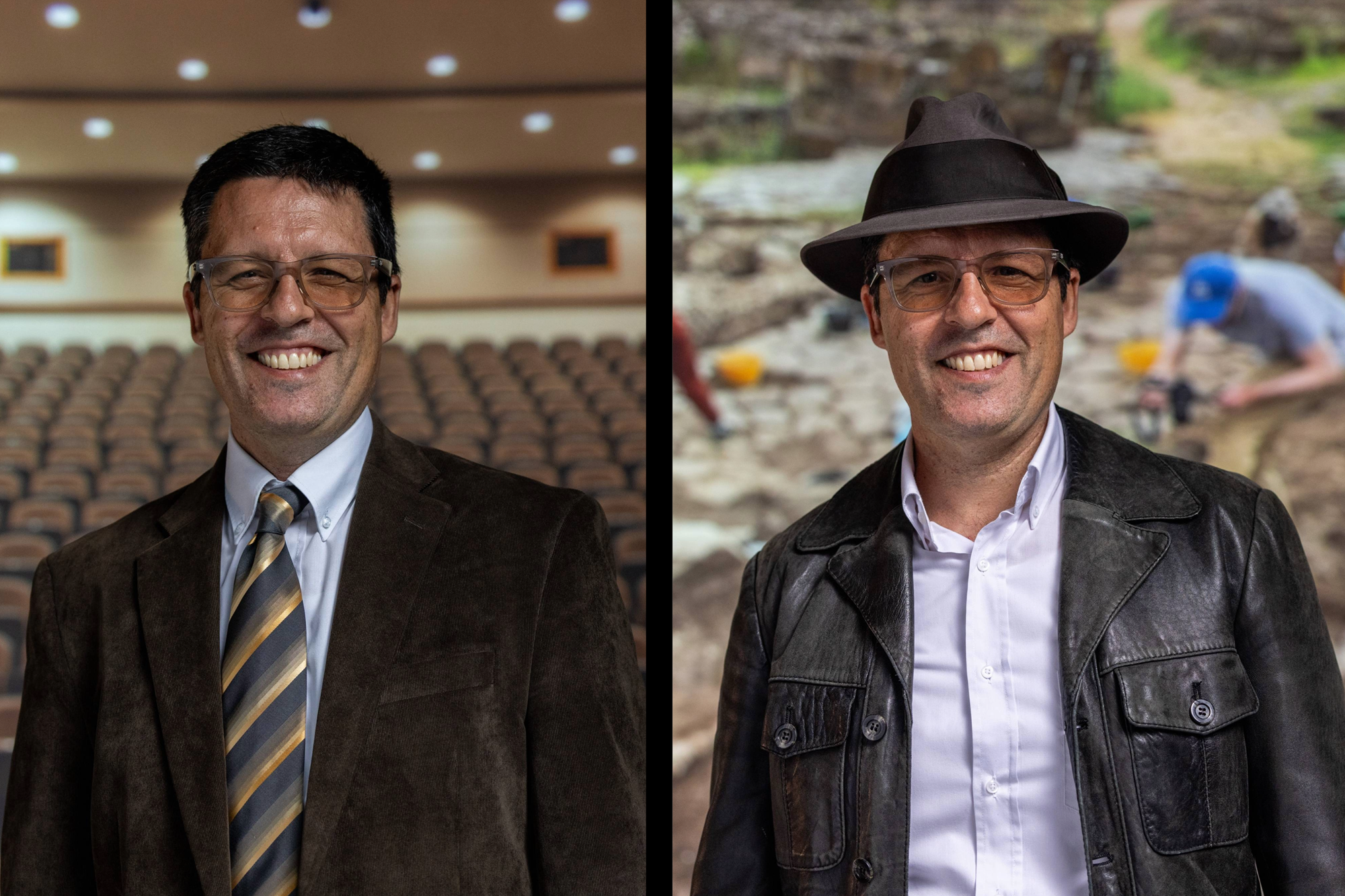
Photo by Abbie Lankitus
On a warm summer morning, 11 miles outside Rome, a group of University of Missouri students gathers around an excavation trench. Dust hangs in the air. A mixture of anticipation and caffeine fuels the team as they prepare for another day of exploration of the ancient city of Gabii.
In the center of the group stands Marcello Mogetta, offering direction and encouragement before the first trowels scrape against soil. Mogetta is an associate professor of Roman art and archaeology at Mizzou’s College of Arts and Science and director of the Gabii Project, an international archaeological venture.
Scenes like this have become a defining part of the experience for the Mizzou students who spend five weeks studying abroad with Mogetta. For him, archaeology isn’t just an academic discipline. It’s a hands-on way to understand humanity, one layer of earth at a time.
“Archaeology isn’t a spectator sport,” Mogetta, who is also the chair of Mizzou’s Department of Classics, Archaeology, and Religion, said. “You learn by doing — by getting your hands dirty and asking questions.”
Born and raised near Rome, Mogetta grew up surrounded by some of the world’s greatest archaeological treasures. His academic journey took him from Italy’s Sapienza University to the University of Michigan and the Freie Universität Berlin, but he wanted to find a place where teaching, research and student opportunity all carried equal weight.
He found that at Mizzou. Here, Mogetta is both the researcher uncovering ancient cities and the professor who helps students understand what those discoveries mean for the modern world.
Bringing the ancient world to Missouri
On campus, Mogetta’s students learn about Roman art, architecture, history and culture, including creating three-dimensional digital models of pottery vessels on loan to Mizzou’s Museum of Art and Archaeology from the Capitoline Museums in Rome. While contributing to research and preservation efforts, this hands‑on work shows students how artifacts reveal complex stories about power, identity and environmental change.
Then summer comes, and the classroom moves to Italy.
At Gabii, Mizzou students join a 75‑member international research team working at a live archaeological site. They rotate between excavation trenches, collecting, cleaning, documenting and interpreting artifacts that haven’t been touched in thousands of years. Back in Columbia, they continue their research by sorting field data, writing reports and helping build digital reconstructions of the ancient city.
For Mogetta, that continuity — from trench to lab to classroom — is essential to understanding archaeology as both science and storytelling.
“I value close engagement with motivated students and enjoy seeing them build on ideas introduced in class to develop original research,” Mogetta said. “Their work often pushes me to broaden my own scholarly horizons.”
Findings from Mogetta’s efforts at Gabii have helped reshape understanding of early Roman urbanism. In 2008, he and colleagues confirmed that the city’s layout followed a strict orthogonal plan — meaning its streets were arranged in an orderly grid of straight lines and right angles, a major departure from patterns typical of neighboring settlements. The finding prompted scholars to reconsider how early urban planning developed in central Italy.
His contributions at another famous ancient Italian city, Pompeii, have brought their own surprises. Mogetta first worked at the Temple of Venus as a student in 2004, and in 2017, the site director invited him to return and continue that early work. His analysis of both legacy and newly collected data showed that the sanctuary’s first major construction phase occurred later than previously believed. The finding significantly reshapes the site’s cultural and historical interpretation.
Ancient methods, modern solutions
At the heart of his research, Mogetta explores why Roman concrete has outlasted many modern forms. Recently, this search has become one of his most innovative collaborations.
Through a partnership with Sarah Orton, a civil and environmental engineering professor at Mizzou’s College of Engineering, Mogetta and his students are recreating ancient Roman concrete at the Materials Science and Engineering Institute. With support from Brandi MacDonald, an assistant professor of chemistry at Mizzou’s College of Arts and Science and assistant research professor at the University of Missouri Research Reactor (MURR), the group compares those mixtures to original samples from Gabii and Pompeii using geochemical analysis.
Together, the group is revealing why Roman concrete has endured for centuries and could inform the development of stronger, more sustainable modern building materials. It’s the kind of interdisciplinary problem‑solving that sets Mizzou apart.
“At Mizzou, we can combine engineering, archaeology, modern technology and teaching in one place,” Mogetta said. “That’s what makes this work meaningful.”
Throughout his career, collaboration has shaped Mogetta’s approach in the classroom, the field and the lab. He adapts his teaching to help students advance their understanding of Roman architecture and urbanism, while contributing to the preservation and interpretation of world heritage. It’s a vision reflected at Mizzou, where faculty connect students to discovery and expand the reach of research far beyond campus.