May 12, 2026
Contact: Cary Littlejohn, carylittlejohn@missouri.edu
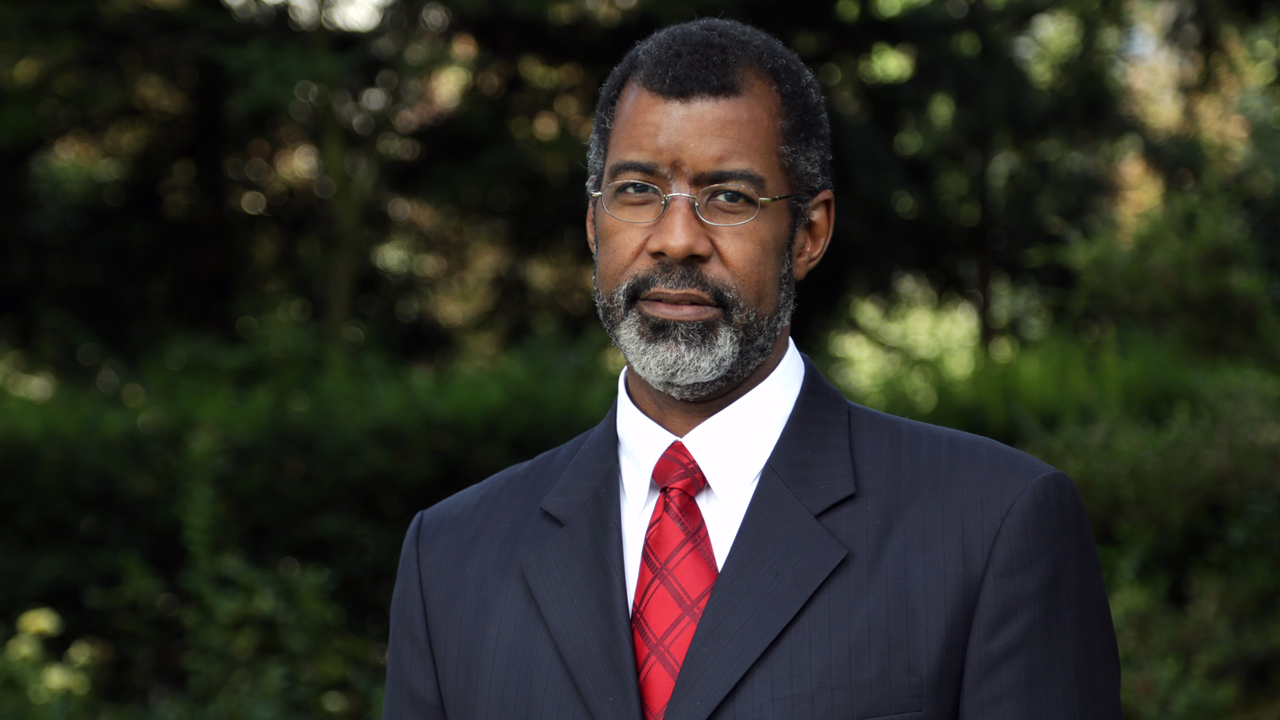
Photo courtesy of William D. Magwood, IV
Mr. William D. Magwood, IV’s long career in governmental service dedicated to nuclear energy originated from his background as a scientist.
He began his career at Westinghouse Electric Corporation doing analyses and programming, which he enjoyed but also found limiting.
“I was interested in a broader perspective, so I looked for opportunities in Washington, D.C.,” Magwood said. “That led me to the Edison Electric Institute, where I managed nuclear fuel policy, research management and other programs. There, I became involved in national policy and realized the impact one could have working in Washington.”
Now, Magwood is in his 12th and final year as the Director-General of the Nuclear Energy Agency (NEA), which is headquartered in France as part of the Organisation of Economic Co-operation and Development. He draws on rich and varied expertise in the field of nuclear energy to support NEA members and partners, the nuclear sector and educators around the world as they navigate complex energy and policy choices.
Magwood entered government service during Bill Clinton’s presidency, and he was eventually appointed to lead the U.S. Department of Energy’s Office of Nuclear Energy. He served in that role for seven years, across both presidents Clinton’s and George W. Bush’s administrations. He helped rebuild the U.S. nuclear energy program from scratch, helped reinvigorate university programs in nuclear education, established the Idaho National Laboratory and launched major initiatives such as the Generation IV International Forum and U.S. Nuclear Power 2010.
After 11 years of government service, he stepped away to act as an advisor and consultant across the nuclear energy sector, but when President Barack Obama took office, Magwood was asked to serve as a commissioner on the U.S. Nuclear Regulatory Committee. His time on the committee was largely defined by the Fukushima Daiichi accident, and in its aftermath, Magwood noticed a need for someone to support principles of regulatory independence around the world. He assumed that role and spent a lot of time in post-Fukushima Japan providing input and advice.
When the opportunity arose to expand his international leadership responsibility at the NEA, Magwood stepped into the role of Director-General.
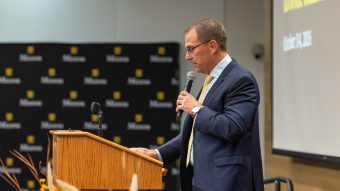
As a University of Missouri President’s Distinguished Lecture Series speaker, Magwood will present “The Next Nuclear Energy Era: Opportunities and Challenges” at 10 a.m. on Wednesday, May 13, in Monsanto Auditorium at the Bond Life Sciences Center.
Read on for a Q&A with Magwood.
Can you provide an overview of your upcoming lecture at Mizzou?
My lecture will focus on what I describe as the next era of nuclear energy and why it is unfolding now with such momentum. We are seeing the most active resurgence of nuclear energy interest since the Atoms for Peace period in the 1950s, driven by urgent needs related to energy security, environmental targets and economic development. Importantly, this resurgence is no longer limited to a small group of traditional nuclear countries but involves a much broader range of nations, technologies and stakeholders.
I will also address the realities that accompany this renewed interest. While the opportunities are significant, the nuclear sector faces a number of difficult challenges that must be confronted head-on: financing, workforce development and supply chain readiness, among others. Drawing on my experience leading the Department of Energy’s nuclear energy program, serving as an NRC commissioner, and now as Director-General of the Nuclear Energy Agency, I will discuss the challenges that must be overcome if this new phase of nuclear energy is to be successful, safe and sustainable.
How would you characterize the progress in the field of radiopharmaceuticals over the course of your career, and what is the potential for medical radioisotopes going forward?
Over the course of my career, progress in the use of radiation and radioisotopes in medicine has been both remarkable and deeply impactful. When I first began working in the nuclear field, nuclear medicine was already an important diagnostic tool, but its therapeutic potential was far more limited and, in many cases, poorly understood outside the medical community. Today, nuclear technologies are central to diagnosing and treating disease, with 40 million patients each year benefiting from procedures that rely on medical radioisotopes.
One of the most striking changes has been the shift from primarily diagnostic applications to highly targeted therapies. Advances in nuclear science and medicine have made it possible to deliver radiation directly to tumors, saving lives and dramatically improving quality of life for patients with conditions that were once considered untreatable. This progress has been especially powerful because it often becomes real to people only when they or someone close to them faces serious illness. The idea that nuclear technology can cure cancer is no longer abstract — it is a daily reality in hospitals around the world.
Looking forward, the potential of medical radioisotopes is promising. New therapeutic approaches are expanding rapidly, and the integration of diagnostics and therapy is enabling more personalized and precise treatment. However, this scientific and clinical progress also exposes serious systemic challenges. Many of the radioisotopes needed for modern nuclear medicine are difficult and costly to produce, with production concentrated in a small number of facilities. As demand grows, this creates vulnerabilities in supply and limits access for patients and clinicians.
This is where the work of the Nuclear Energy Agency is focused. The NEA brings together governments, producers, medical experts and researchers to analyze supply chains, assess vulnerabilities and develop strategies to ensure reliable and equitable access to medical radioisotopes. Through our techno-economic analyses and frameworks for international cooperation, we help countries understand what is needed to scale production, strengthen resilience and reduce the risk of disruption.
Ultimately, the promise of medical radioisotopes is not just scientific; it is human. Even incremental improvements in availability, reliability and access translate directly into lives saved somewhere in the world. Ensuring that these technologies can reach patients safely, affordably and sustainably is one of the most immediate and meaningful ways nuclear technology contributes to society today.
What opportunities are available to students and faculty when they have access to a research reactor on campus, such as the University of Missouri Research Reactor (MURR)?
This is a passion for me that I have harbored since my Department of Energy days. University-based reactors are very precious assets and only a handful exist; it is essential that we protect and support them. Access to a research reactor on campus, especially one as capable as MURR, is an exceptional asset for both education and research. University research and training reactors give students and faculty direct, hands‑on experience in nuclear operations and research, bridging the gap between theory and real‑world application in ways that are far too rare.
For students, these facilities provide invaluable practical training in reactor operations, radiation safety and nuclear science. It supports learning across disciplines, from nuclear engineering and physics to radiochemistry, and allows students to participate directly in research projects with tangible societal impact. In particular, involvement in medical radioisotope production helps students see how their work impacts the lives of people around the world, making the benefits of nuclear technology both immediate and personal.
For faculty, a research reactor significantly expands the scope of what can be achieved on campus. It enables advanced research in nuclear science, materials science, chemistry, biology and related fields, while also supporting irradiation, testing and analysis capabilities that are difficult to access elsewhere. These capabilities strengthen collaboration with industry, national laboratories and international partners, and position the university as a key contributor to innovation, workforce development and applied research.
What advice would you give to STEM-focused students who are interested in careers related to nuclear science?
It is essential to point out that we are entering a unique era. People in my generation came into the workforce after the heyday of Atoms for Peace. For decades, while aspirations were high, there were few actual advances in nuclear science and technology. But the groundwork established during those dark and quiet years set the stage for the new nuclear era that is beginning now. Students coming into the field today have the opportunity to change the world.
The breadth of the nuclear technology enterprise is awesome. It provides the chance to push medical treatment to places that seemed like science fiction just a few years ago. It offers a path to bring light, heat and water to underserved people around the planet and avoid the calamity of growing population and shrinking opportunity. It offers the chance to meet our generation’s environmental goals while still assuring economic development and growth. It offers the roadmap to take our species to Mars and beyond.People in the nuclear sector are by nature optimists. We believe in the future. We believe in the human adventure. We believe that the lives of succeeding generations will be better and more exciting than today. Students today have the opportunity to be leaders of this great undertaking. What could be more rewarding?