Sept. 17, 2026
Contact: Cary Littlejohn, carylittlejohn@missouri.edu
Photos by Jordan King, Andy Ramirez and University of Missouri Archives
For four decades, the University of Missouri System’s groundbreaking partnership with the University of the Western Cape in Cape Town, South Africa, has stood as a global model of bold, cross-continental collaboration. It demonstrates that when institutions unite around a shared purpose, distance doesn’t diminish impact — it accelerates it.
Since the two institutions formally aligned in 1986, more than 1,000 faculty members have crossed the roughly 9,000 miles between them, helping build powerful research collaborations while giving generations of students opportunities to learn on another continent.
“We are proud to celebrate 40 years of our transformative partnership with the University of the Western Cape,” University of Missouri President Mun Choi said. “These historic exchanges have produced important research breakthroughs and close friendships that benefit each institution and both countries while also strengthening our mission to serve Missourians. We look forward to many more years of growth, collaboration and shared success.”
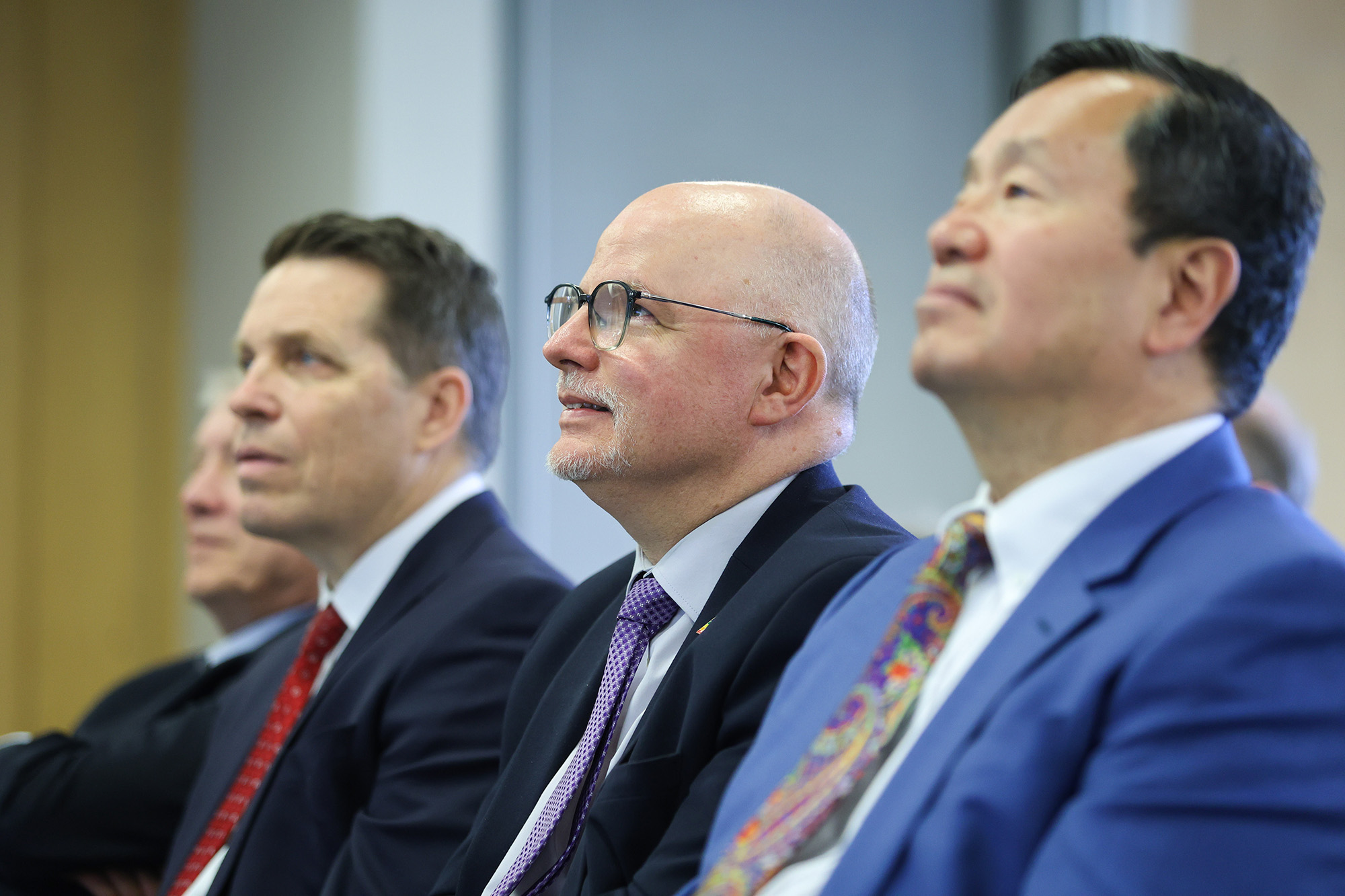
This week, President Choi and the University of Missouri Board of Curators welcomed representatives from UWC, including Rector and Vice-Chancellor Robert Balfour and numerous deans, to Missouri to commemorate the partnership.
The trip, which included stops in St. Louis, Columbia and Kansas City, mirrored one President Choi and Board of Curators Chair Todd Graves made to Cape Town in March.
“Our strong partnership with the University of the Western Cape continues to foster a sharing of knowledge across teaching, research, engagement and innovation that deeply impact Missouri, U.S. and South African communities,” Graves said. “Together we are advancing solutions to the world's most pressing issues, and we can't wait to see the achievements made in the next 40 years.”
Warm regards for the partnership did not come only from Mizzou and its leaders; University of the Western Cape leadership also praised four decades of collaboration and all of the benefits that flowed from the universities working together.
“Over the years, the partnership has shown, in practical ways, what a strong international academic relationship can look like,” Balfour said in March. “Universities are not ivory towers or singular institutions in their own rights; everything we do here together ultimately makes a difference in the millions of people who live around and with us.”
His message mirrored the words Nelson Mandela, South Africa’s first democratically elected president, wrote in a 1996 letter to the Board of Curators.
“It is our hope that this relationship will grow from strength to strength and that it will be maintained for a very long time to come,” Mandela wrote.
Thirty years later, that hope has endured.
An unlikely pairing
The partnership began during one of the most turbulent periods in South Africa’s history.
Apartheid, South Africa’s institutionalized system of racial segregation, led to UWC being established in 1959 as a school for people from multiracial backgrounds.
By 1982, the university had formally rejected apartheid ideology, establishing itself as the vanguard of the political, social and educational transformation in South Africa.
At the same time, protests against South Africa’s apartheid regime were being held across America, especially on college campuses.
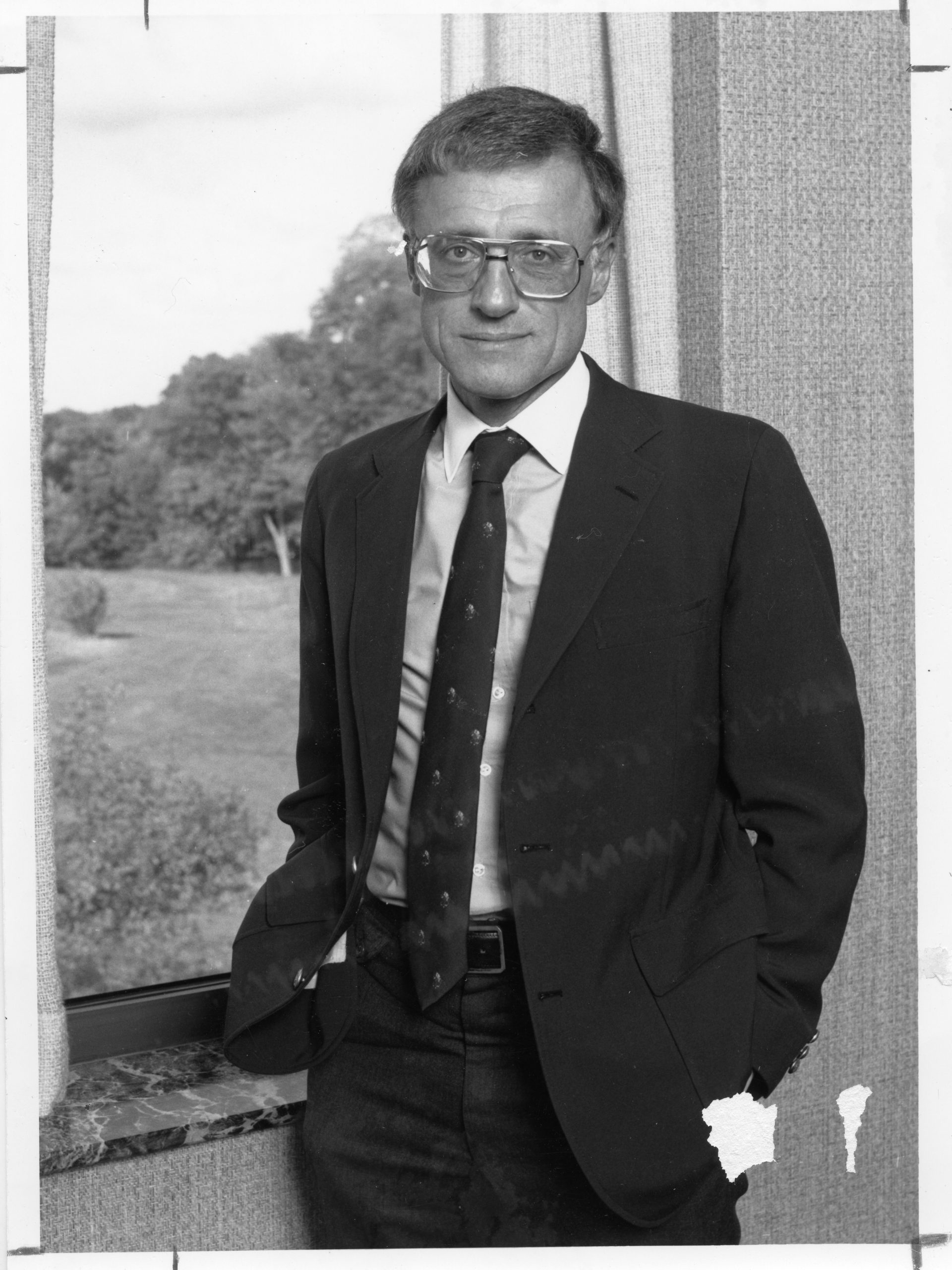
Mizzou students joined a nationwide anti-apartheid movement aimed at forcing divestment of companies doing business in South Africa. They wanted the University of Missouri Board of Curators to divest its retirement and endowment funds and first made such demands in 1978. By 1985, protests were a regular occurrence at board meetings.
“There were a lot of demonstrations going on at that time,” said Ed Turner, who served on the Board of Curators from 1985 until 1991. “They were putting a lot of pressure on the board. They were very well organized, I might add. And they were very persistent.”
C. Peter Magrath, who’d recently been appointed as president of the UM System, agreed to set up a commission to study divestment.
After hearings were held across the state, the task force returned a recommendation for divestment. But that wasn’t the only recommendation.
“We also said, if the university wants to have an impact on South Africa, we should do what we do best,” said UM System Executive Vice President Emeritus Ron Turner, then-special assistant to Magrath and member of the task force. “Not making symbolic economic decisions for the right reasons but engaging in education.”
The board approved the recommendation, and Magrath created the UM South African Educational Program (UMSAEP) Committee. One of its first tasks was identifying an institution to partner with.
“Everyone we consulted said if there’s any university with potential to operate in a post-apartheid manner, it’s UWC,” said Ron Turner, who was director of the UMSAEP for its first 20 years.
Richard van der Ross, who was UWC’s rector at the time, welcomed the initial delegation of four, including Ron Turner, to explore the possibility of a formal partnership.
“van der Ross said, ‘We have had a long train of American educators come to visit,’” Ron Turner said. “He said, ‘They have tea, offer to help and we never hear from them again. I think there is something different about Missouri. First, you sent four delegates. Second, you stayed here for two weeks and tried to get to know us; you did not fly about the country. I think we can work with Missouri.’”And they have, ever since June 1986, when Magrath and UWC Rector-Designate Jakes Gerwel met in Columbia to sign the first-ever agreement between a historically disadvantaged South African university and an American university.
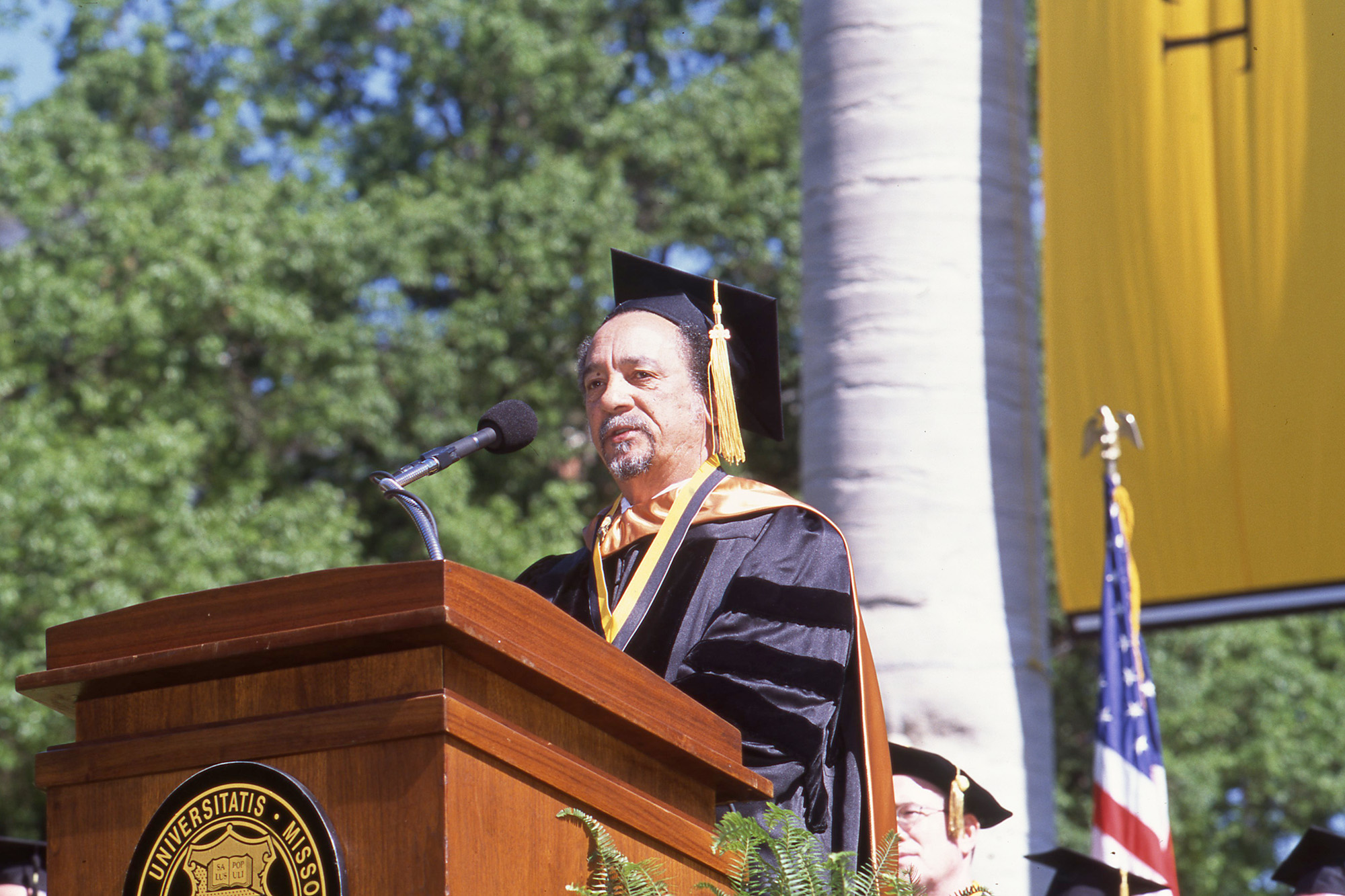
Gerwel acknowledged the immediate benefit of the partnership.
“A university like ours is in a difficult position,” he said that summer. “We have open opposition against apartheid. Links with other international universities support us and have incalculable value.”
Magrath wasted no time in assuring the partnership would be mutually beneficial.
“I’m a great believer that exchanges are exchanges,” Magrath said. “This is not a one-way relationship.”
From faculty exchanges to once-in-a-lifetime experiences for students, the relationship between the UM System and UWC that was formalized that day continues to deliver a wealth of benefits on both sides of the Atlantic.
An ongoing legacy
The 40th anniversary of Mizzou’s partnership with UWC isn’t merely a cause to celebrate the past; it’s an occasion to recognize the present and hope for the future.
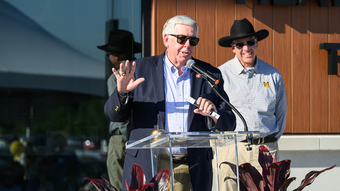
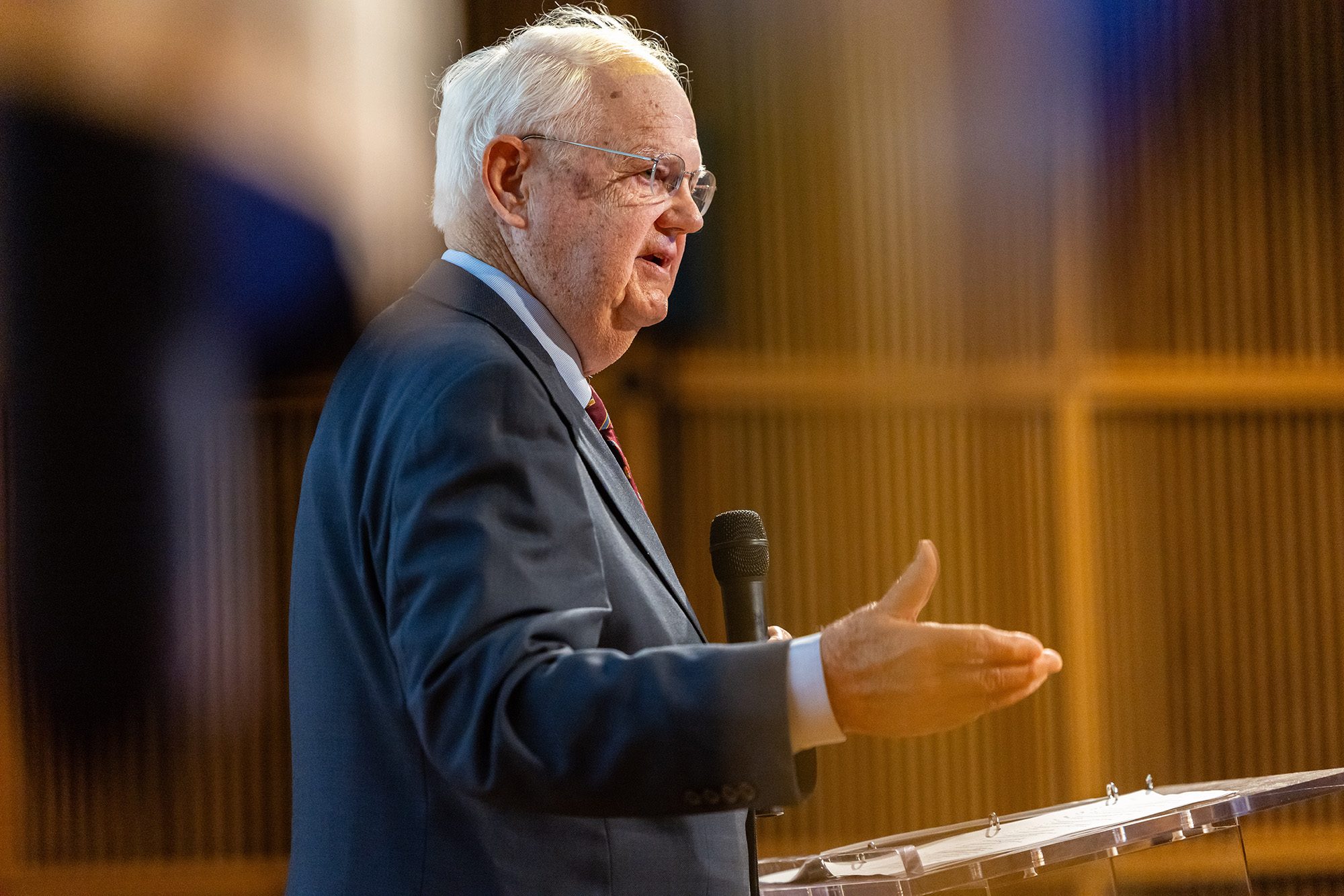
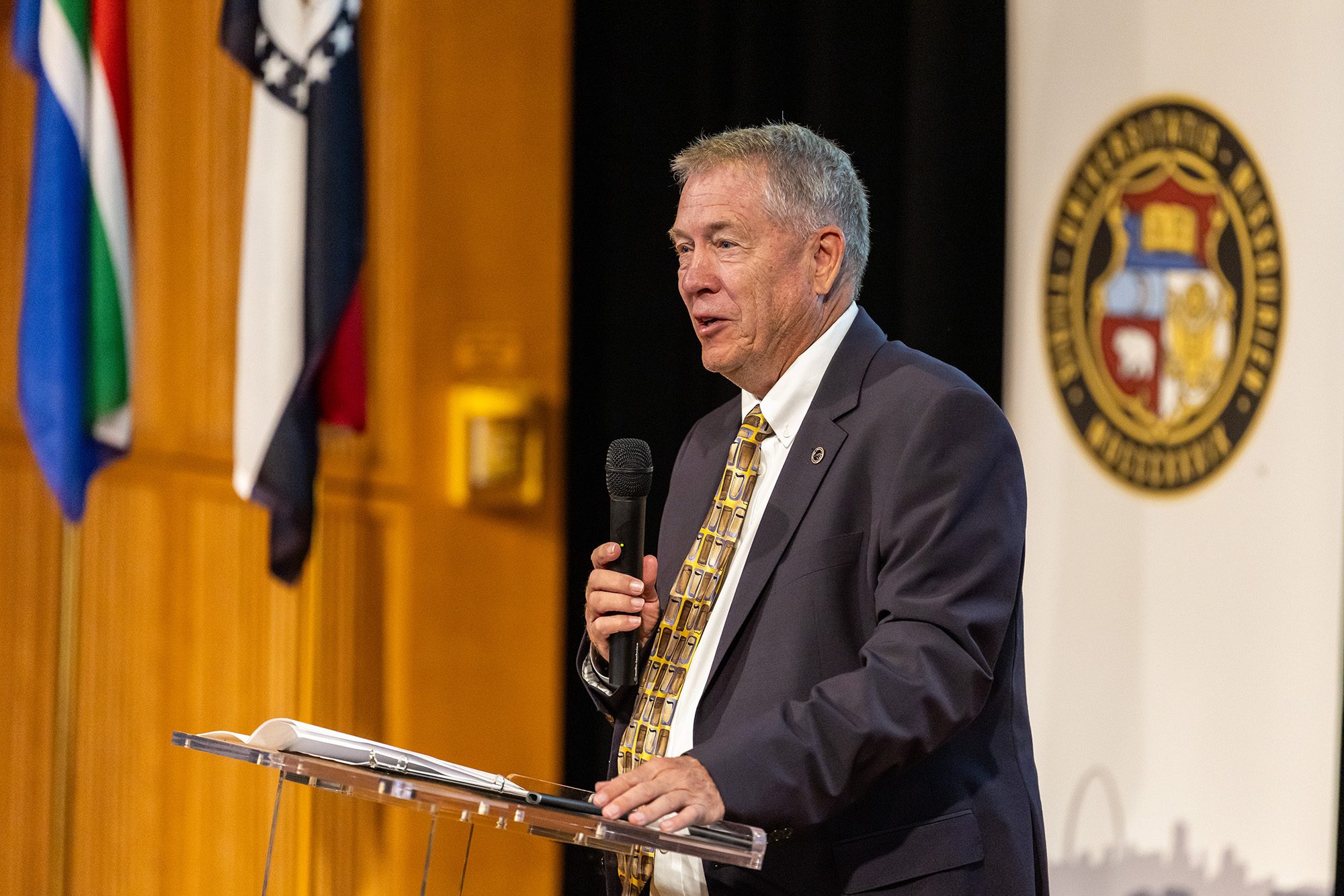
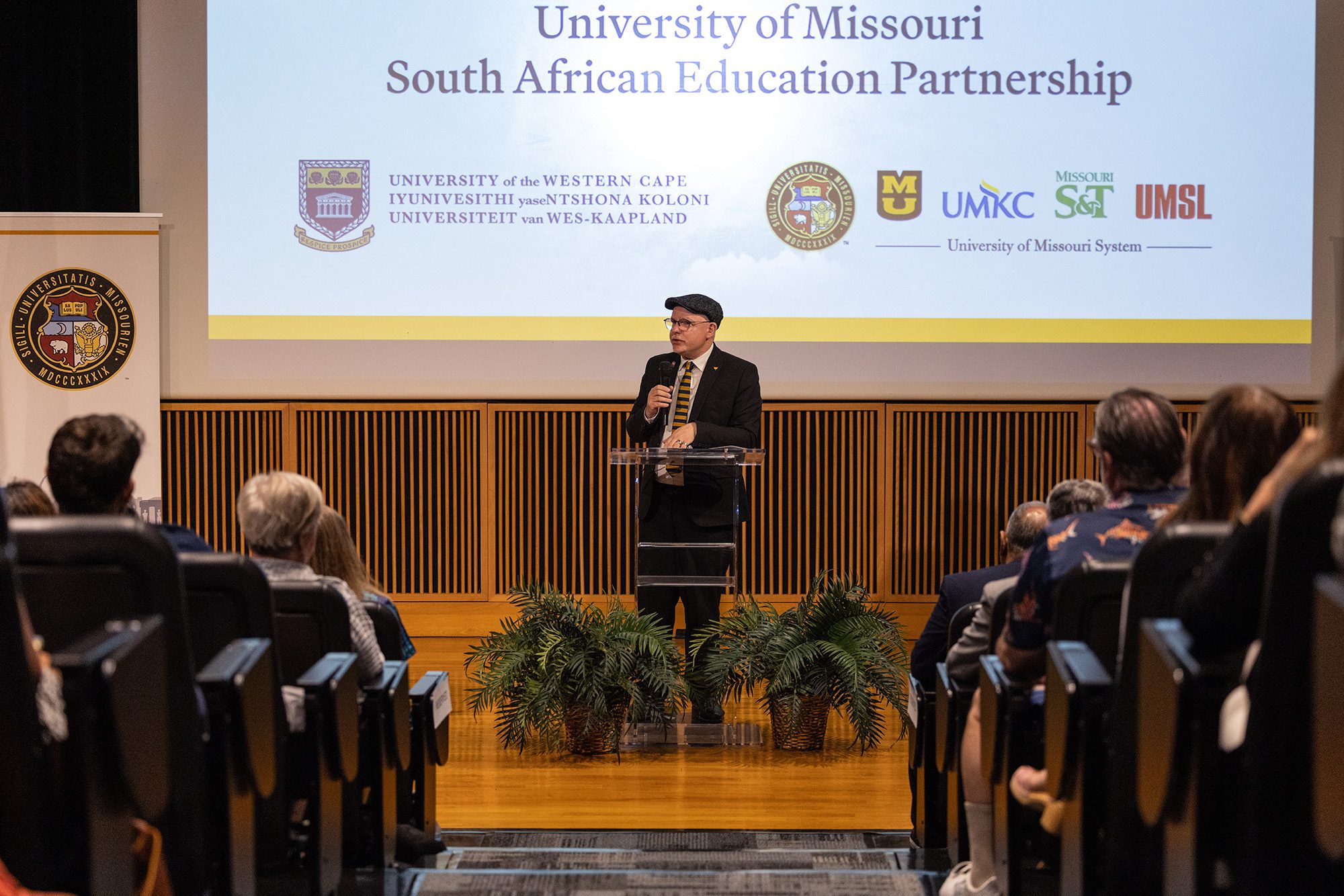 UWC Rector and Vice Chancellor Robert Balfour speaks during 40th anniversary celebration event.
Each year, the UMSAEP committee awards approximately $120,000 in grants to UM System and UWC faculty.
Those collaborations have helped researchers secure more than $26 million and more than 37 million South African rand since 2003 and have led to numerous academic books, chapters and papers published across various disciplines.
“The program has exceeded the expectations of even the original vision, both in its longevity and in the scope of the projects across all four campuses,” former curator Doug Russell said. “I think it’s been great for the University of Missouri and great for UWC, and it’s exciting to see how these two great institutions will continue to collaborate going forward.”
The partnership also provides scholarships and cultural opportunities for both UM System and UWC students.
Rod Uphoff, the Elwood L. Thomas Missouri Endowed Professor Emeritus of Law at Mizzou and director of the UMSAEP since 2006, has led a five-week trip to Cape Town for law students for the past 22 years. He said the number of students who describe the trip as one of the most defining and memorable experiences of their entire educational lives is staggering.
“It’s more of an experience than just being a part-time visitor,” Uphoff said. “They feel a part of the place. They learn a lot about the culture, history and current politics, and it feels more real because they’re here.”
It also gives students a different perspective on their own legal system.
“There are always benefits when you are examining another legal system against your own,” he said. “You learn about the strengths and weaknesses. I teach about the American criminal justice system, and I compare it with the South African system. They learn more about the strength of our system. And some of the failings of our own system, by looking at it through a different lens because they’re debating and discussing it with the South African students in their class.”
Those experiences extend far beyond the law school. Students in medicine, health sciences, dentistry, pharmacy, nursing, social work and journalism have benefited from the global perspectives that studying in South Africa can provide.
“I’m very proud of the fact that I was involved,” former curator Ed Turner said. “It’s the type of thing we ought to be doing worldwide, and I’m very happy to have played a small part in that.”
For the past four decades, the partnership between the UM System and UWC has facilitated cultural and educational exchanges that have helped reduce the distance between global citizens.
“We’re still energized,” President Choi told the audience at UWC earlier this year. “We’re still excited. There’s so much more to do.”
One significant project will ensure the partnership history is preserved for future generations. Ron Turner and Xuhan Zhang, a Mizzou doctoral student in the College of Education and Human Development, have compiled an archive of oral history videos, audio recordings from the divestment task force hearings, photographs and other materials documenting the early years. The collection will give future researchers a firsthand look at how the partnership took shape during a period of profound change in South Africa.This enduring collaboration grew out of a simple notion that remains as true today as it was 40 years ago: Universities are a force for good that transcends curricula, continents and cultures.