Nov. 17, 2026
Contact: Sara Diedrich, diedrichs@missouri.edu
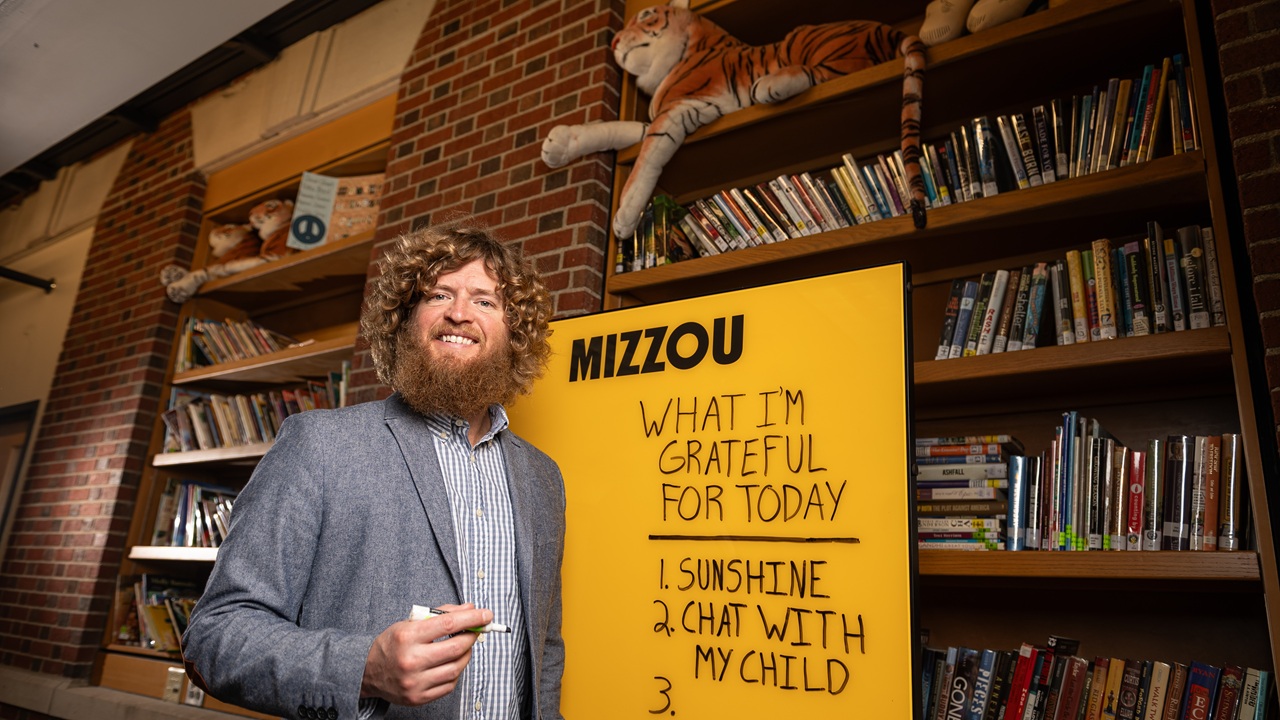
Photo by Vincent Hsiao
The table is crowded with family favorites, the smell of roasted turkey fills the room, and someone asks the familiar Thanksgiving question: What are you grateful for?
It's a holiday tradition that reminds us to appreciate the good things in life. And according to a University of Missouri expert, that simple act of gratitude can improve our moods, strengthen our relationships and boost our overall well-being.
Sam von Gillern, an associate professor in Mizzou’s College of Education and Human Development, says those benefits are reason enough to keep practicing gratitude long after the Thanksgiving turkey is gone.
“Gratitude is like a muscle,” he said. “The more you use it, the stronger it gets, the easier it is to use and the more natural it will become.”
Make gratitude a daily habit
von Gillern brings that philosophy to the classroom as an affiliate faculty member in Mizzou’s Honors College, where he teaches a course in positive psychology.
One way he encourages students to practice gratitude is by keeping a journal. He asks them to write down three things they're grateful for each day. The key is to be specific.
“If you keep writing ‘family, friends and food’ over and over, it can lose its meaning,” he said. “Instead, you might write, ‘I’m grateful for the woman who held the door open for me when it was raining’ or ‘I’m grateful that my roommate took care of the dishes today.’”
The same approach can help anyone develop a greater appreciation for everyday life. When we look for specific things to be grateful for, we become more aware of the small moments we might otherwise overlook. Over time, that can lead to a brighter outlook.
It also helps to make gratitude part of a daily routine, such as journaling while brewing coffee in the morning or just before bed.
“Creating a routine makes the practice more likely to stick rather than hoping you'll find time for it somewhere in an already busy day,” von Gillern said.
Changing the way we think
The benefits of gratitude extend beyond a daily writing exercise. With regular practice, it can influence what we notice and where we direct our attention.
“Humans have evolved with a negativity bias, which means the things that threaten us — or that we perceive as threats — tend to occupy a disproportionate amount of our mental energy,” von Gillern said. “But we live in a time when many of the threats we face are different from those our ancestors encountered. Gratitude can help counter that negativity bias.”
Gratitude also can benefit our physical health by helping quiet the thoughts that keep us awake at night.
“Replacing negative rumination with a mental list of the things we're grateful for can help us relax and get the restorative sleep our bodies need,” von Gillern said.
Making others feel appreciated
This Thanksgiving, von Gillern suggests taking gratitude a step further by telling the people around you exactly what you appreciate about them.
“Rather than saying, ‘I like your shoes,’ tell someone, ‘You've been a tremendous friend to me because you were there when I really needed someone, and I appreciate that,’” he said.
And while the holidays are a good time to tell people how much they mean to us, there's no reason to save those conversations for special occasions.
“Ultimately, gratitude is for everyone,” von Gillern said. “Regardless of your background, circumstances or disposition, it's something you can practice. It’s free — and it’s good for you.”