Oct. 6, 2026
Contact: Eric Stann, StannE@missouri.edu
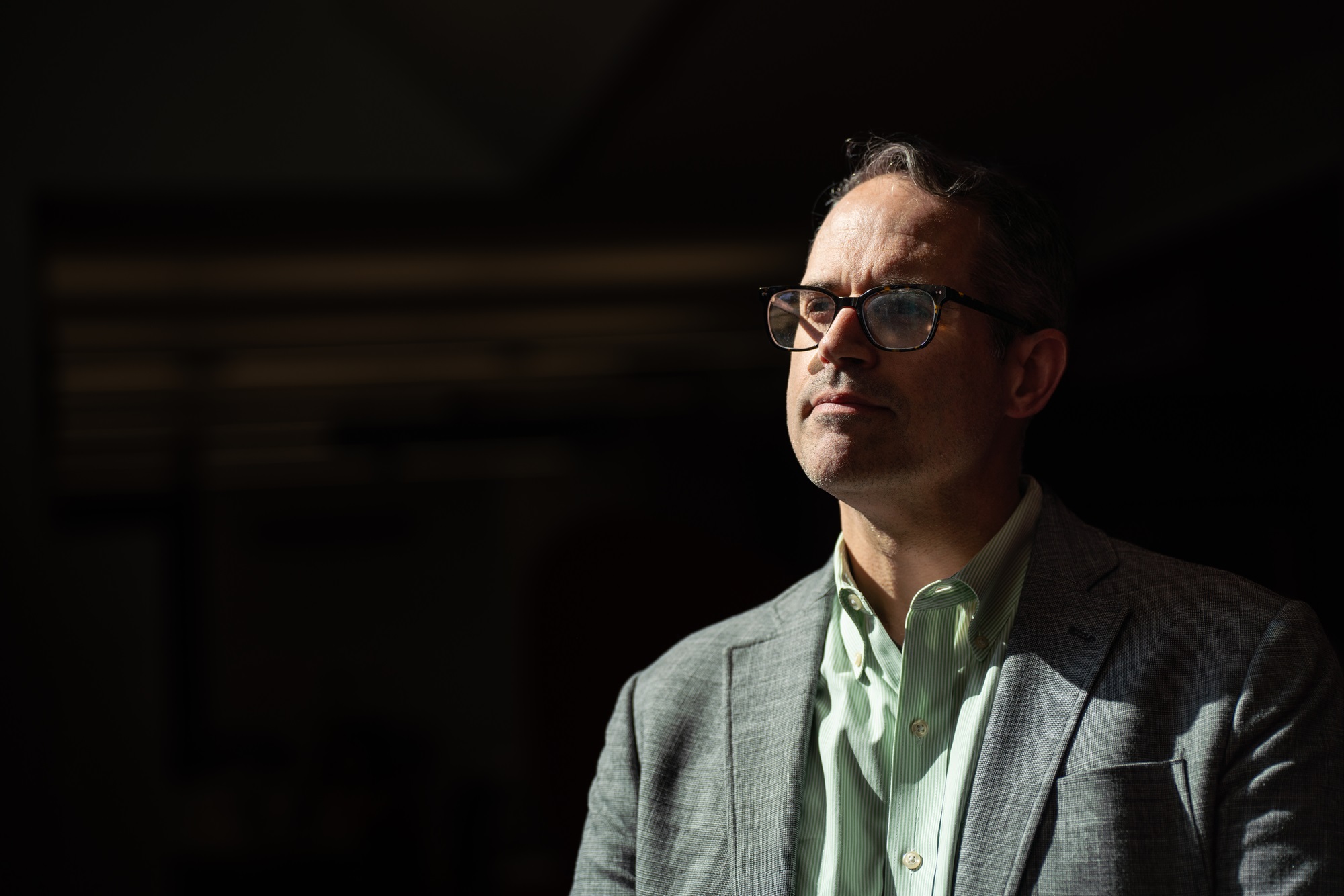
Photo by Sam Cox
Artificial intelligence is making it easier than ever to create convincing fake political content and harder to tell what’s real. Now, a University of Missouri expert is helping voters navigate that changing information landscape ahead of this year’s midterm elections.
Jared Schroeder, the Lee Hills Chair in Free-Press Studies and a professor at the Missouri School of Journalism, explains what voters should know about AI-generated content and how they can better recognize misinformation.
How is AI changing what voters see online during election season?
Schroeder: We’re seeing a rise in deepfakes — AI-generated videos, images or audio — that make it appear as though someone said or did something they never actually said or did. It’s adding to a growing amount of AI-generated political content that’s false but still persuasive to voters.
In addition to deepfakes, voters may see AI influencers, or realistic AI-generated personalities discussing political issues; AI-created campaign materials such as advertisements, graphics and written content produced with AI tools; and AI-generated content from outside the United States that’s designed to spread false or misleading information about elections.
AI is also shaping how people discover information. Many search engines now provide AI-written summaries, giving technology companies an influential role in what information is shared about candidates and issues.
How easy is it today to create fake photos, videos or audio with AI?
Schroeder: It’s remarkably easy. For generations, people relied on photos and recordings as evidence of what was real. As AI technology continues to improve, however, the visual clues that once helped identify manipulated content, such as unusual lighting, odd shadows or distorted details, are rapidly disappearing.
Today, people no longer need coding skills, expensive software or specialized training to create convincing fake content. The tools that were once available only to experts are now accessible to almost anyone with an internet connection.
Why can false or misleading AI content be so convincing?
Schroeder: People naturally trust what they see and hear. And individuals are more likely to believe AI-generated content when it reinforces their existing beliefs, biases and assumptions.
This influence isn’t limited to trying to change someone’s vote. Misleading content can shape how people view candidates and issues, discourage participation or reinforce existing beliefs.
How can voters check whether something is real before sharing it?
Schroeder: Seek verification from trusted news organizations and reputable fact-checking groups. For centuries, journalists have helped people make informed decisions by gathering, vetting and explaining the political information they received directly from campaigns, candidates and public officials. If a claim is legitimate and important, multiple credible sources should be able to confirm it.
Is there a way to fight election misinformation without limiting free speech?
Schroeder: It’s extremely difficult to regulate false election information without raising free-speech concerns. No government should have the authority to decide which political ideas are true and which are false. Efforts to restrict misinformation can also affect legitimate forms of expression, including satire, parody, memes and political cartoons.
What advice do you have for voters who see political information online?
Schroeder: Be skeptical. AI is a rapidly evolving technology developed primarily by private companies, not as a public service designed to inform voters. Before making important decisions, seek information from multiple sources and rely on reporting that’s been independently verified.