Oct. 12, 2026
Contact: Cary Littlejohn, carylittlejohn@missouri.edu
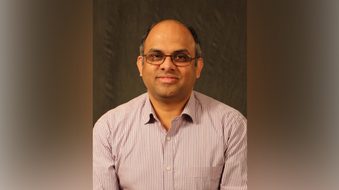
Photo courtesy of Cameron Lee
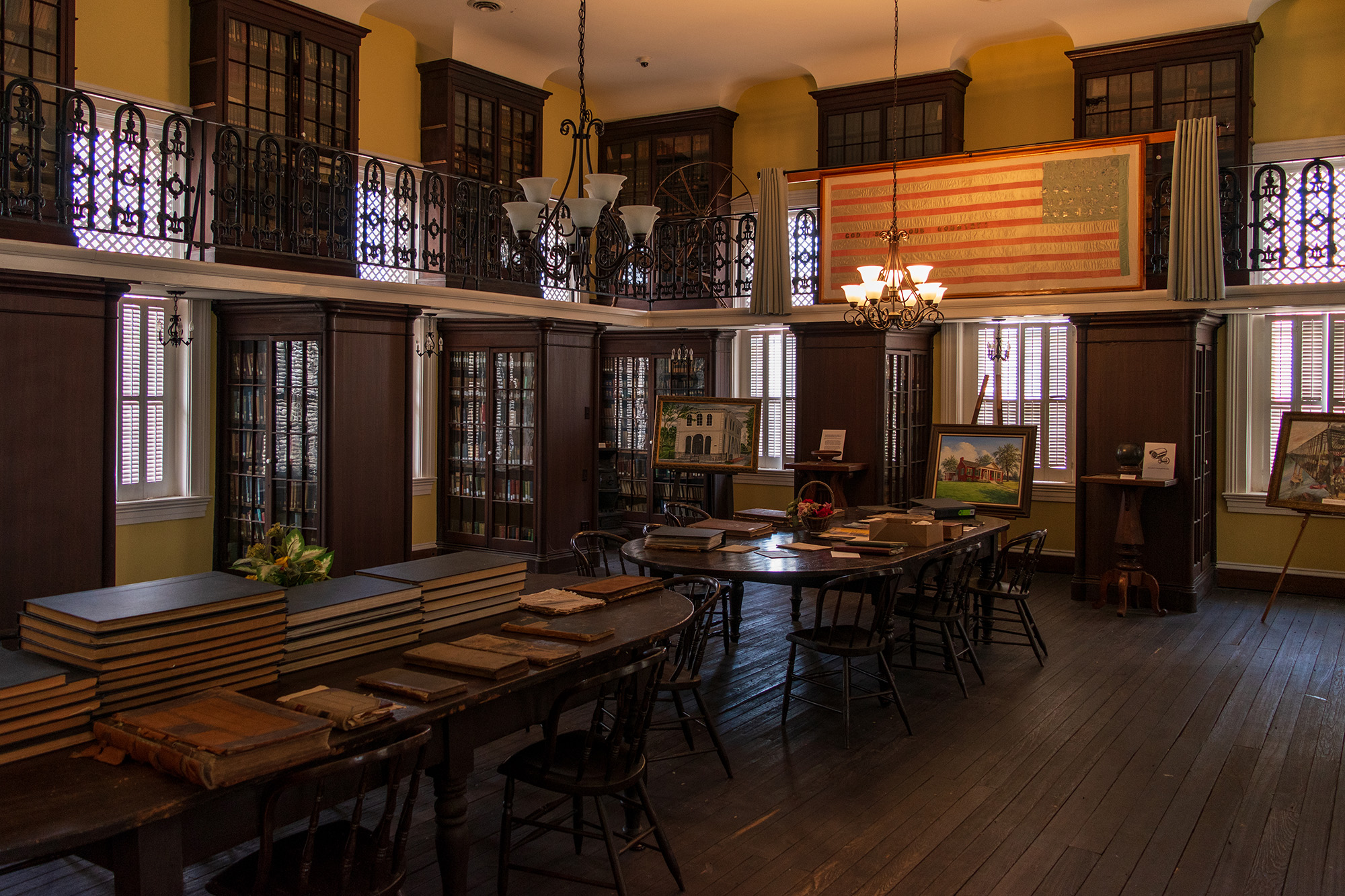
Somewhere inside a Glasgow, Missouri, Civil War-era library may be a metal box no living person has ever seen. The community wants to find it, so they turned to the University of Missouri for help.
That’s where graduate student Cameron Lee comes in. With the Mizzou Department of Anthropology’s expertise and resources behind him, Lee answered the call and investigated a mystery that is more than a century and a half in the making.
The story dates back to 1866, when the Lewis Library was dedicated. Historical records indicate a metal box filled with artifacts was sealed inside the building’s cornerstone as part of the ceremony. Now, during the year of the library’s 160th anniversary, the community wants to know whether the box is there and what it might reveal about Glasgow’s past.
For Lee, the search offered an opportunity to put the research skills he learned at Mizzou to work on a real-world question.
Lee, who’s pursuing a master’s degree in archaeology, first wanted to determine where the cornerstone might be and what it might contain. He scoured historical newspapers and architectural records and talked with local historians and the Grand Lodge of Missouri to learn more about Masonic dedication ceremonies, cornerstones and the history of Glasgow.
With that information in hand, Lee and his team began an exploratory dig at the library. But they soon ran into a problem: a hidden retaining wall blocked their path and kept them from getting close to where the cornerstone might be.
The setback forced the team to rethink its approach. Instead of digging deeper, Lee began looking for a way to see inside the building without damaging it.
That search led to an unexpected solution: ground-penetrating radar designed to scan concrete and masonry.
Lee spent a week learning, calibrating and testing the equipment before returning to Glasgow with anthropology department faculty members Todd and Christine VanPool and fellow students to help him resume the search. The handheld system scanned about 10 to 12 inches into the library’s walls, allowing the team to map layers of brick, concrete and reinforcement without immediately resorting to destructive investigation.
The scans revealed new details about how the 160-year-old building was constructed, but no clear sign of the capsule.
Lee was disappointed he couldn’t give the townspeople a definitive answer. But the project provided him with valuable insights. It changed how Lee thought about the object he was searching for. The term “time capsule” can be misleading. Masonic cornerstone deposits were not necessarily meant to be recovered generations later. Instead, the objects became part of the building, a symbolic dedication to its future and its community.
More than that, the project gave him experience using a new technology to solve an unusual research problem. He learned how to evaluate unfamiliar equipment, work with manufacturers and determine what tools could help answer a specific question.
“I now have a technical skill,” Lee said. “I have a certification in using ground-penetrating radar. I’m able to put that on my resume.”
Lee’s role in the search is now coming to an end, but the mystery continues.
Descendants of Benjamin Lewis, the library’s namesake, have offered to help fund further investigation. The State Historic Preservation Office has also connected the library with preservation experts who specialize in historic masonry and have investigated similar cases in Washington, D.C., and St. Louis.
Any future search will have a head start. Lee is preparing a report documenting his research, sources, methods and photographs for the anthropology department, which is housed in the College of Arts and Science, and he recently presented his findings at the Missouri Archaeological Society’s fall symposium.
“This kind of project could be restarted by other researchers or even dedicated residents of Glasgow,” Lee said. “They just might need help with where to start.”
Thanks to Lee and the expertise and resources he found at Mizzou, they now have it.