By Ben Stewart
Sept. 15, 2026
Contact: Ben Stewart, ben.stewart@missouri.edu
John Ruth learned something as a walk-on linebacker at the University of Missouri: Don't be intimidated by a problem just because the odds aren't in your favor.
Nearly two decades later, that lesson would take on a meaning he never could have imagined.
Ruth’s daughter, Kamdyn, was born in 2013 with what doctors would eventually identify as Baker-Gordon Syndrome, an ultra-rare neurodevelopmental disorder caused by a random mutation to the SYT1 gene (aka SYT1-Associated Neurodevelopmental Disorder). The family’s search for answers ultimately brought Ruth back to Mizzou as an advocate helping researchers pursue treatments for families like his.
Today, that work has helped spur a $10 million state investment in research and the creation of the university’s Center for Translational Neurogenetics.

Lessons learned on and off the field
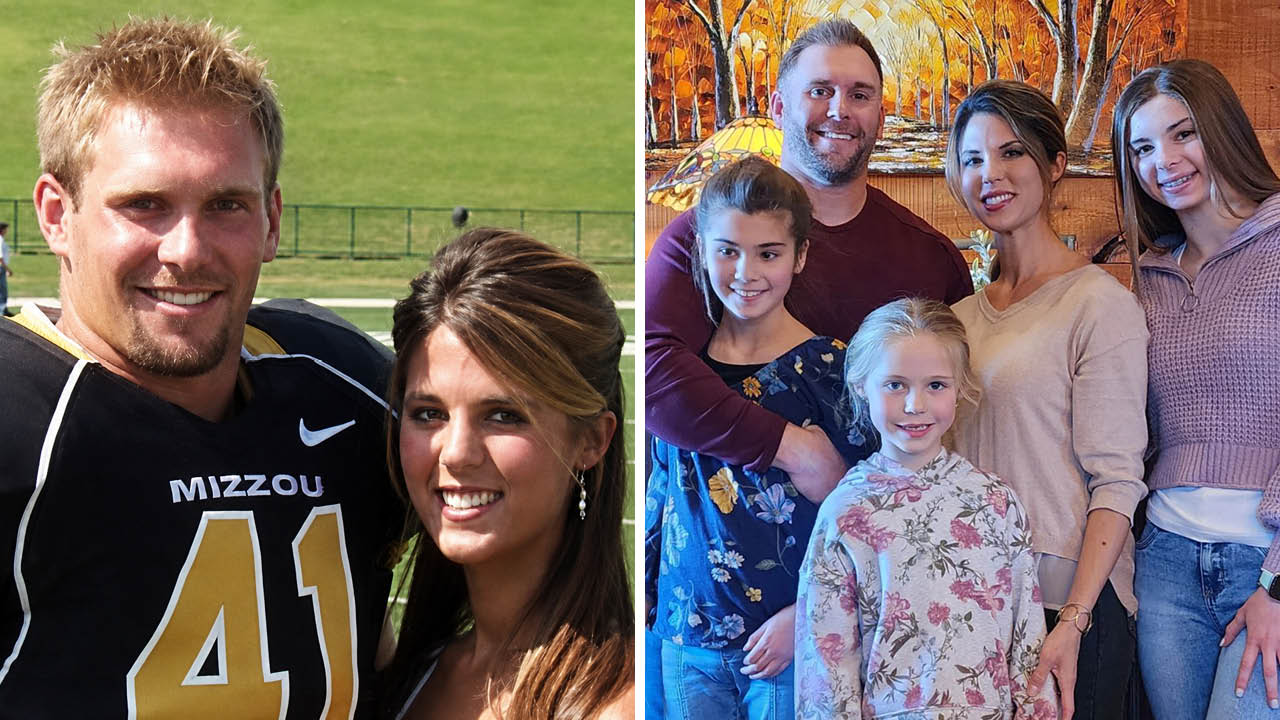
Ruth knows something about long odds. As a walk-on linebacker in the 2005 and 2006 seasons, he learned to trust his coaches and trainers, recovered from a torn ACL, and played his way to a scholarship.
“Being a walk-on just means you don’t understand what ‘no’ means,” Ruth said.
In 2007, his senior year, the team went 12-2 and took home the Field Scovell Trophy at the Cotton Bowl.
He and his future wife, Kasey, earned their degrees that spring, not realizing how much they would someday draw on that persistence.
No ‘easy button’
When Kamdyn Ruth was born, she appeared perfectly healthy, but John and Kasey Ruth soon noticed milestone delays. At five weeks, it was clear she was struggling to breathe, and she needed surgery to remove tissue from her airway. At six months, Kamdyn’s eyes were still crossed, and she received corrective surgery on her eye muscles. Her developmental delays continued, along with troubling behaviors like self-harm, until she was ultimately diagnosed with hypotonia and later, autism.
The Ruths’ search for answers sent them on a diagnostic odyssey. Like so many parents in their position, they felt constrained by the limits of standard genetic testing panels and endured repeated rounds of tests that yielded no answers.
“If you gave me an easy button with an opt out, I'd have smashed it,” Ruth said. “But we feel called by our faith to attempt to not only help Kamdyn, but many other patients and families struggling with the adversity inherent to rare and genetic diseases.”
The Ruths’ struggle is one shared by millions of families. So-called “rare” diseases are actually quite common, with one in 10 people affected.
The turning point finally arrived in 2015, when advanced genetic testing through MU Health Care and a diagnosis from the Thompson Center for Autism and Neurodevelopment gave the family clarity: Kamdyn’s condition was caused by an SYT1 gene mutation. Baker-Gordon Syndrome was first described in an academic paper only a few months before, and the condition was still in its earliest stages of research. At last, though, the Ruths knew what they were up against.
Rather than accepting the limitations of current medical knowledge, they recognized a unique opportunity to drive scientific progress for Kamdyn, along with many other children born with the same condition.
"This is actually a pretty awesome time to be living with such a condition," he said. "Why? Well, because it’s a time when we can actually do something about it. That wasn’t true two decades ago."
Asking ‘what will we be known for?’
After connecting online with dozens of other families navigating the same agonizing uncertainty, Ruth established the Genetic Autism Alliance. The independent nonprofit organization focuses on accelerating therapeutic research for genetically linked autism and related neurodevelopmental disorders.
Through the GAA, Ruth took his advocacy to the state Capitol in Jefferson City. He recognized that rare disease communities often lack the collective voice needed to secure critical research dollars, and private industry has little profit incentive to develop treatments for conditions with relatively few documented cases.
"We've shoved this rare disease cohort into a corner, because those communities are not strong enough by themselves," Ruth said. “The families feel like they're in the shadows."
Those efforts culminated in the state of Missouri awarding $10 million to the Genetic Autism Alliance to fund SYT1 research at Mizzou, standing up the new center in the process. The investment positions Missouri to become a national hub for the development of new therapies for genetic disorders.
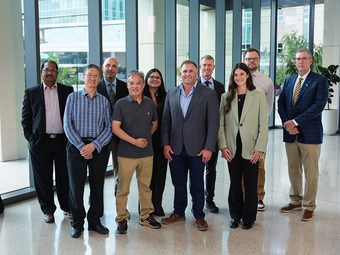
The Center for Translational Neurogenetics brings together experts from across campus, uniting Mizzou’s strengths in basic science, translational research and clinical practice to take advantage of significant new advances in gene editing and gene therapy.
“This is exactly what a land-grant university is meant to do,” Ruth said. “Take a problem that matters to families and society where private investment can’t or won’t go and bring together the expertise to take action. We need shots on goal.”
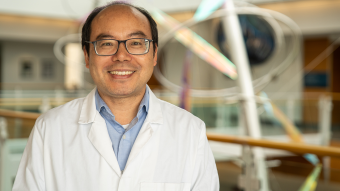
Led by Mizzou physician and researcher David Arnold, director for the CTN and executive director of the NextGen Precision Health initiative, the center will spearhead the development of new therapies while creating valuable educational and research opportunities for the next generation of scientists.
“Our vision is for Missouri to become a place where we accelerate the pipeline for new treatments,” Arnold said. “Clinical research is kind of like a team sport, where you have basic scientists and clinicians who demonstrate a therapy can work, industry and government partners who provide regulatory support and investment, and altruistic patients and advocates — like John Ruth — who aren’t intimidated by a hard challenge.”
“Hard doesn't scare me as much as not trying," Ruth said.
Breaking down barriers
For many families, finding answers takes much longer. On average, people with rare diseases wait more than six years for an accurate diagnosis, and 95% of rare diseases have no FDA-approved treatment.
Those families often report feeling like outsiders to the world of medical research, without a clear path for getting involved. Even after receiving a diagnosis, they can face another daunting barrier: It can cost millions of dollars just to get started on the road to developing a treatment.
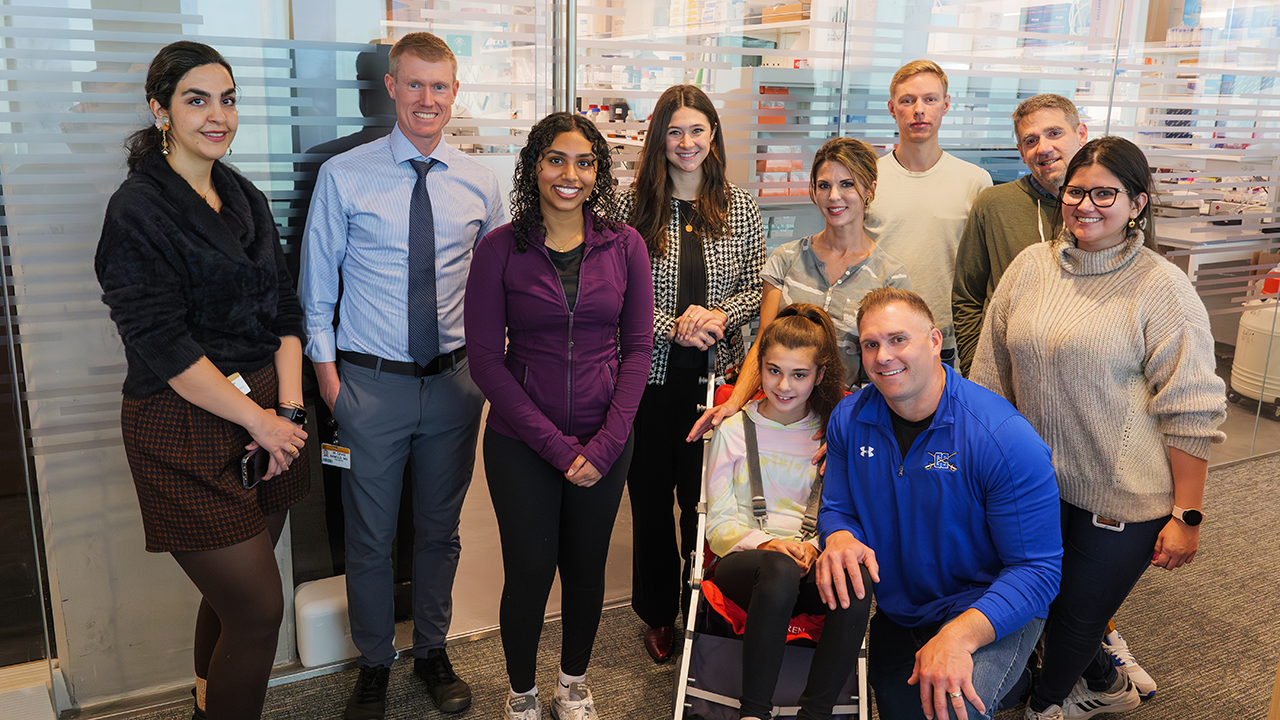
The Ruths have set an example for other families and foundations by putting the patient and caregiver experience at the center of results-driven research. With their input, Mizzou is building a coordinated pipeline that leverages its unique access to genomic expertise, animal models, world-class clinicians and state-of-the-art lab space.
Research supported by Ruth and the Genetic Autism Alliance is already producing results. Mizzou researchers recently developed a gene-editing technique called CRISPR-SWITCH that allowed them to create a preclinical model of Baker-Gordon Syndrome that more closely reflects the genetic condition in people. The advance gives researchers a new way to study the disorder and could eventually help scientists create models for other genetic conditions that have been difficult to reproduce using conventional gene-editing techniques.
For Ruth, the reason for that work is never far away.
At the center of it is Kamdyn, now 13. She enjoys spending time with her special education teachers, paraprofessionals and therapists and loves riding on boats, four-wheelers and golf carts.
“For years, we were just trying to understand what was happening with Kamdyn,” Ruth said. “Now we're at a point where researchers can actually model her condition and begin asking what we can do about it. As her dad, that's incredible.”
To learn how you can get involved, connect with the team at neurogenetics@missouri.edu.