July 22, 2026
Photo by Karen Clifford
Few veterinary training programs offer advanced clinical experience across companion animal, equine and food animal medicine within a single internship.
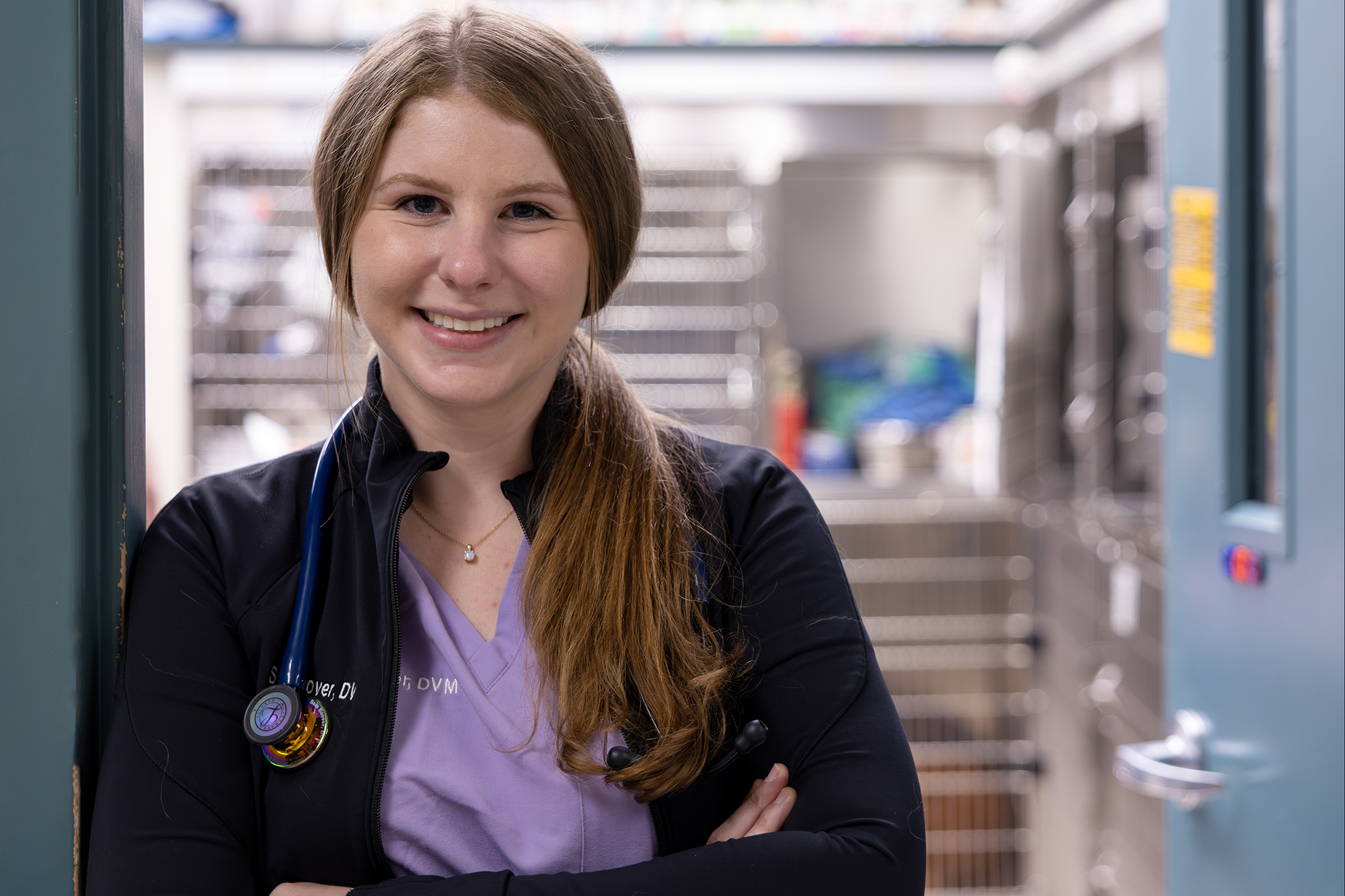
This summer, Sam Hoover became the first veterinarian to complete the University of Missouri College of Veterinary Medicine’s mixed animal rotating internship, which brings together experiences across multiple species in a single year of training. The goal is to prepare veterinarians for careers that require flexibility across species and practice environments, particularly in rural communities where veterinarians are often asked to care for both companion and farm animals.
“I don’t know of any other opportunity that allows you to gain this much experience across species and practice settings in that timeframe,” Hoover said.
The internship is supported through a USDA National Institute of Food and Agriculture (USDA NIFA)-funded initiative led by College of Veterinary Medicine faculty Alisa Hutchison, Pamela Adkins and Kile Townsend.
“In many rural Missouri areas and other rural areas nationwide, there are mixed animal veterinary ‘deserts’ where pets and production animals cannot easily get access to care,” Hutchison, an assistant teaching professor in community practice, said. “At Mizzou, we’re trying to try to bridge that gap by offering an opportunity for an additional year of focused practice and mentorship.”
Building confidence across species
Mizzou’s program combines rotations in small animal medicine and surgery, equine medicine, ambulatory large animal practice and community-based veterinary clinics.
The program’s broad training model means no two rotations are alike. Throughout the year, Hoover cared for patients at the Veterinary Health Center, traveled to farms and rural communities through ambulatory practice, and worked alongside veterinarians in community-based clinics. She saw firsthand how veterinarian medicine can vary from one setting to the next.
“At a university hospital, access to advanced diagnostics and treatment is often readily available,” Hoover said. “But in practice, veterinary medicine requires balancing those options with real-world factors, including an owner’s goals, financial considerations, local resources and the needs of the patient.”
Serving animals, families and communities
Hoover said one of the most valuable takeaways from the internship was a deeper understanding of what mixed animal practice looks like across different communities and settings.
“It’s given me exposure to all the areas I wanted to grow in,” she said. “Whether I was helping a producer whose livelihood depended on the health of their herd, managing a complex referral case, or providing routine preventive care, I was constantly reminded that veterinary medicine is also about supporting families, businesses and communities.”
Read more from the College of Veterinary Medicine