January 6, 2026
Contact: Brian Consiglio, consigliob@missouri.edu
Photo by Brian Consiglio
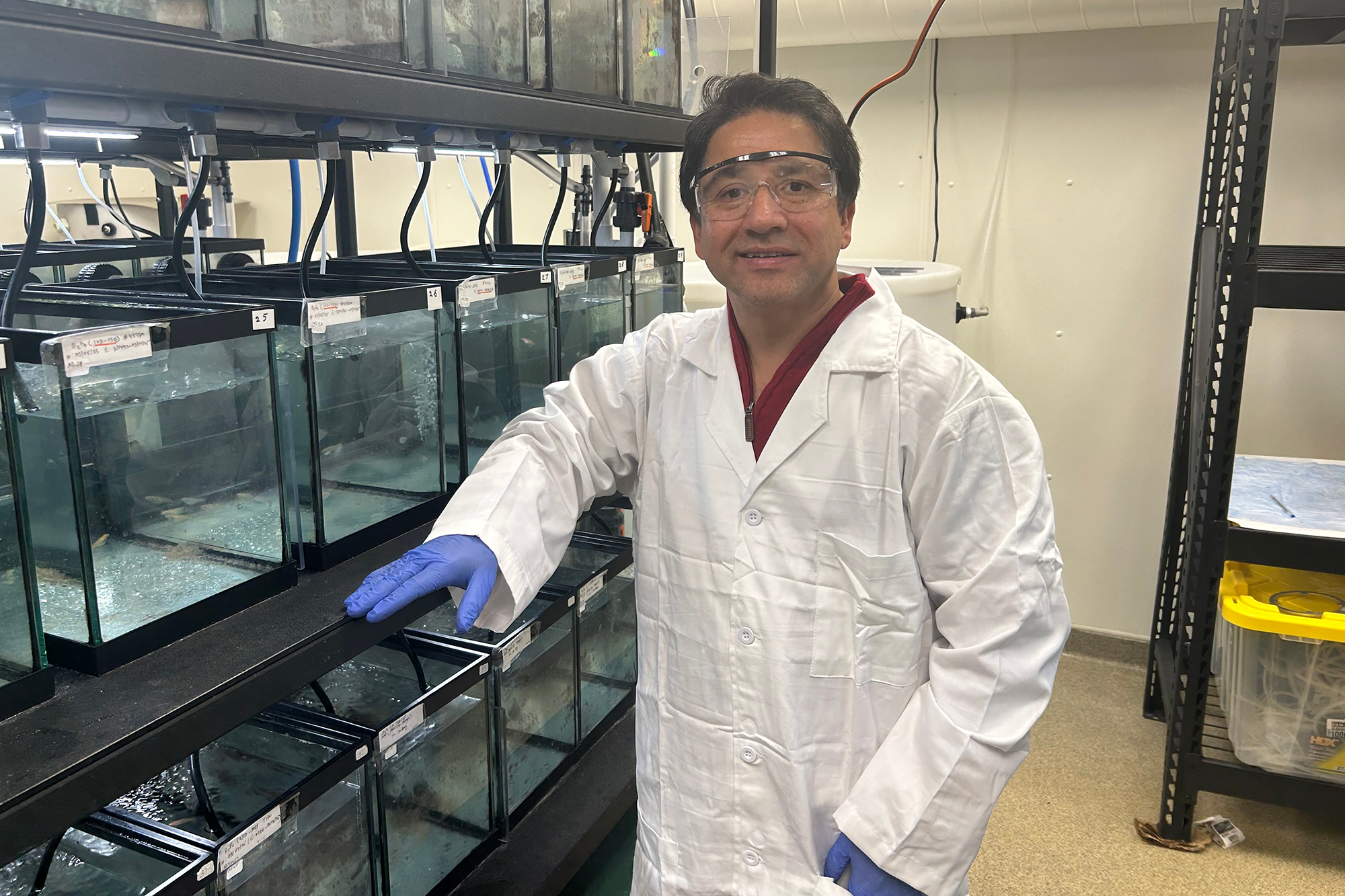
Led by Mizzou’s Ramji Bhandari, an associate professor in the College of Arts and Science, the team used Japanese rice fish, called medaka, to investigate how the chemical affects reproductive health. Researchers found that male fish exposed to potassium perchlorate alone experienced a dramatic drop in fertility and clear damage to their testes. But fish exposed to vitamin C and the chemical at the same time showed improved fertility and less damage to their testes.
“Exposure to chemicals in the environment can have a big impact on reproductive health, but our discovery with a fish model offers hope that vitamin C may play a powerful role as an antioxidant in protecting sperm health against the harmful effect of potassium perchlorate,” Bhandari said. “While more research is needed, fish are good models for studying reproductive health because their reproductive genes and processes are similar to humans.”
Bhandari’s work centers on understanding how environmental contaminants impact the health of humans and wildlife, as well as finding mitigation strategies to protect against those threats. His interest in potassium perchlorate began 10 years ago after a Society of Toxicology conference, where he learned that military personnel face higher infertility rates than the general public. Evidence showed some service members had higher levels of potassium perchlorate in their blood due to their repeated close proximity to explosives.
“I became curious what impact that exposure may have on reproductive health. In our recent study, we discovered potassium perchlorate exposure causes oxidative stress, which interferes with genes and pathways involved in the sperm production process,” Bhandari said. “The good news is we know vitamin C is a powerful antioxidant, and we just discovered it can successfully protect the sperm production process against that oxidative stress by restoring molecular pathways involved in male fertility.”
The research underscores both the potential reproductive risks of potassium perchlorate — considered an emerging environmental contaminant — and the promising potential of vitamin C as a protective intervention. The findings could be especially relevant for people in military, industrial or environmental settings, although more research is needed to better understand how preventative treatments could benefit humans.
“Mizzou is a leader in reproductive biology research, and the opportunities here for interdisciplinary collaboration, especially at the NextGen Precision Health building, set Mizzou apart from other universities,” Bhandari said. “Mizzou’s Advanced Technology Core Facilities and the significant number of experts here in reproductive biology support our efforts to improve human health.”
“Vitamin C mitigates potassium perchlorate exposure-induced disruption of spermatogenesis in medaka” was published in Environmental Science and Technology.