March 5, 2026
Contact: Brian Consiglio, consigliob@missouri.edu
Photos by Sophia Scheller
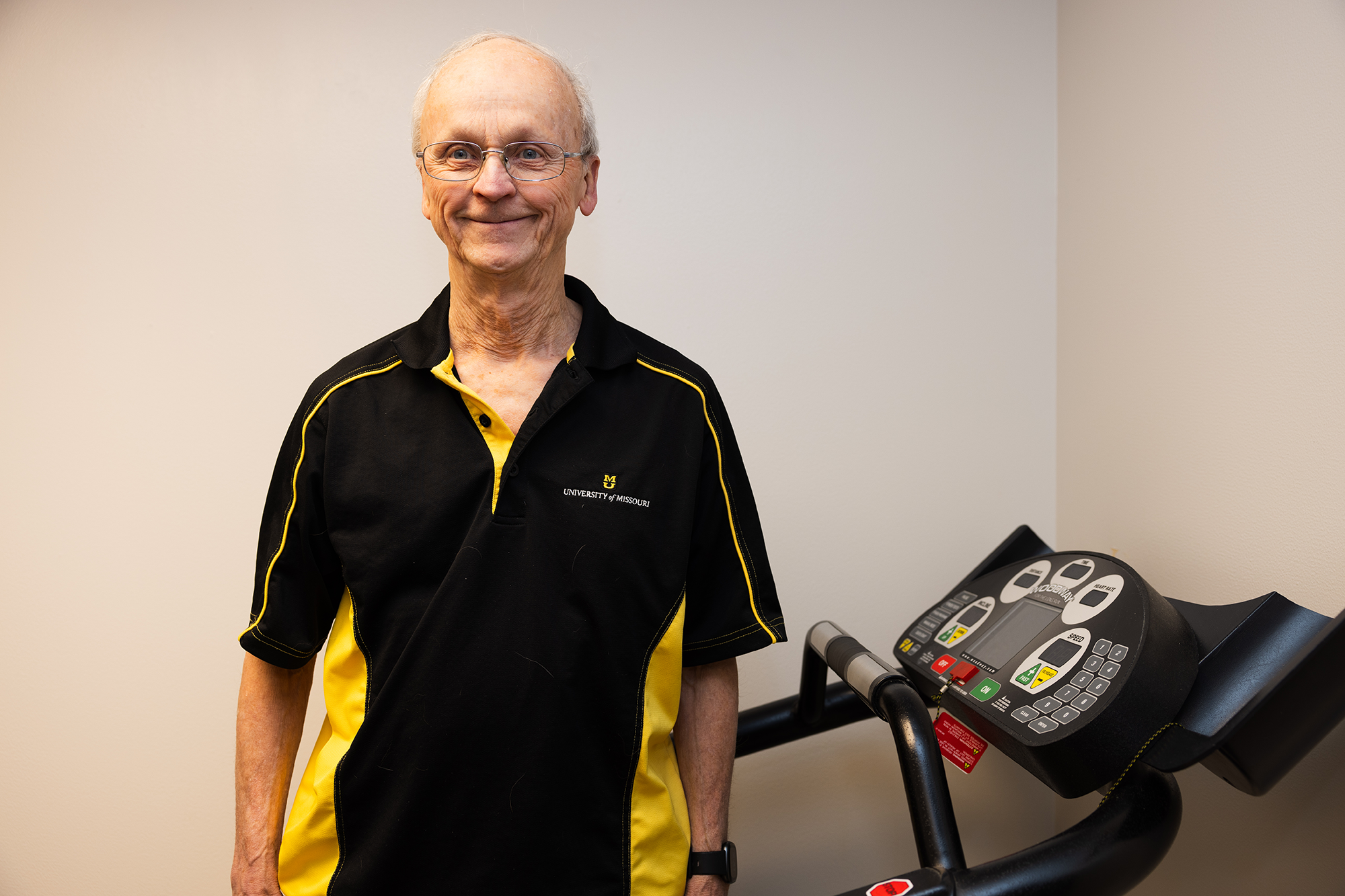
Frank Booth stepped onto the University of Missouri campus in 1999, and he’s been setting the pace ever since. With a treadmill in his office and a habit for taking the stairs two at a time, the 82-year-old professor emeritus encourages active lifestyles, leading by example.
Fittingly, Booth studies the consequences of physical inactivity at Mizzou’s College of Veterinary Medicine. In 2014, he established the Frank Booth Fellowship in Physical Activity and Health with a generous gift.
With Mizzou Giving Day 2026 starting at noon on March 11, Booth recently reflected on the impact generosity can have on others.
“With all the support I’ve received from Mizzou as a faculty member, it inspired me to want to give back to strengthen the institution that allowed my research to thrive,” Booth said. “The atmosphere here is one of camaraderie and interdisciplinary collaboration, and that is an attitude you don’t always see at other places. Not only am I always thinking about helping others, but so many faculty and staff here at Mizzou feel the same way.”
Booth’s gifts have provided fellowship awards for graduate students and postdoctoral fellows researching physical health and exercise. Mentoring the next generation of researchers to follow in his footsteps has been one of the highlights of his career.
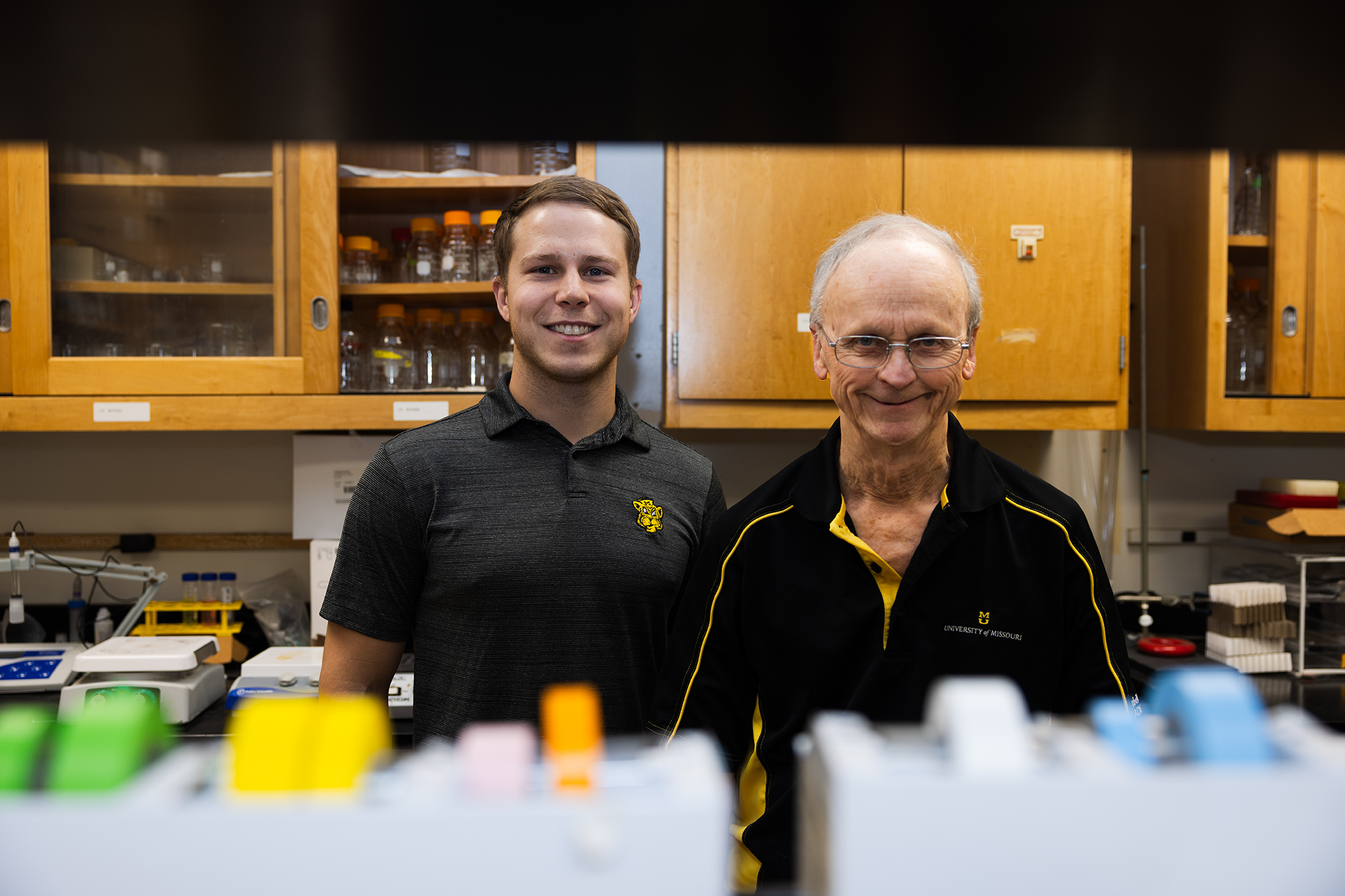
“Enhancing the career development of others has always been very important to me, and giving to Mizzou not only helps faculty researchers but also the graduate students, doctoral students and postdocs who work in their labs,” Booth said. “I want to empower the next generation of Mizzou researchers to help Missourians stay active as they get older so they can still play with their grandchildren and pets when they get to my age.”
Booth’s work is an example of the power of foundational research: laying the initial building blocks of scientific discovery that pave the way for real-world impacts.
For example, he and his team discovered that muscle disuse elevates markers for specific proteins in the brain that are strongly linked with Alzheimer’s disease. The findings show that physical activity can play a key role in preserving brain health, potentially preventing or delaying the development of neurodegenerative diseases.
“Whether financial support is given to the College of Veterinary Medicine, the School of Medicine, the Dalton Cardiovascular Research Center or the NextGen Precision Health initiative, it ultimately helps Mizzou fulfill its land-grant mission to improve the health and well-being of Missourians and their animals across the state,” Booth said. “For the 25-plus years I’ve been at Mizzou, I’ve seen veterinary medicine research rise to a new level, and it’s critical we keep that momentum going as the state’s flagship institution.”
Booth credits the support he has received from Mizzou’s leadership for allowing his research to flourish. He emphasized that a culture of collaboration is something all faculty and staff can contribute to at Mizzou. And that benefits everyone.
“The things we learn to improve animal health may be transferable to humans and vice versa, so the environment Mizzou creates where faculty and staff are so eager to share ideas and work together is what makes this community so special,” Booth said. “I’ve enjoyed training more than 50 graduate students and doctoral students over the years, and any financial support they receive for their research can ultimately help Missourians and their pets live happier, healthier lives together.”
Join fellow Tigers in support of Mizzou Giving Day.