June 1, 2026
Contact: Sara Diedrich, diedrichs@missouri.edu
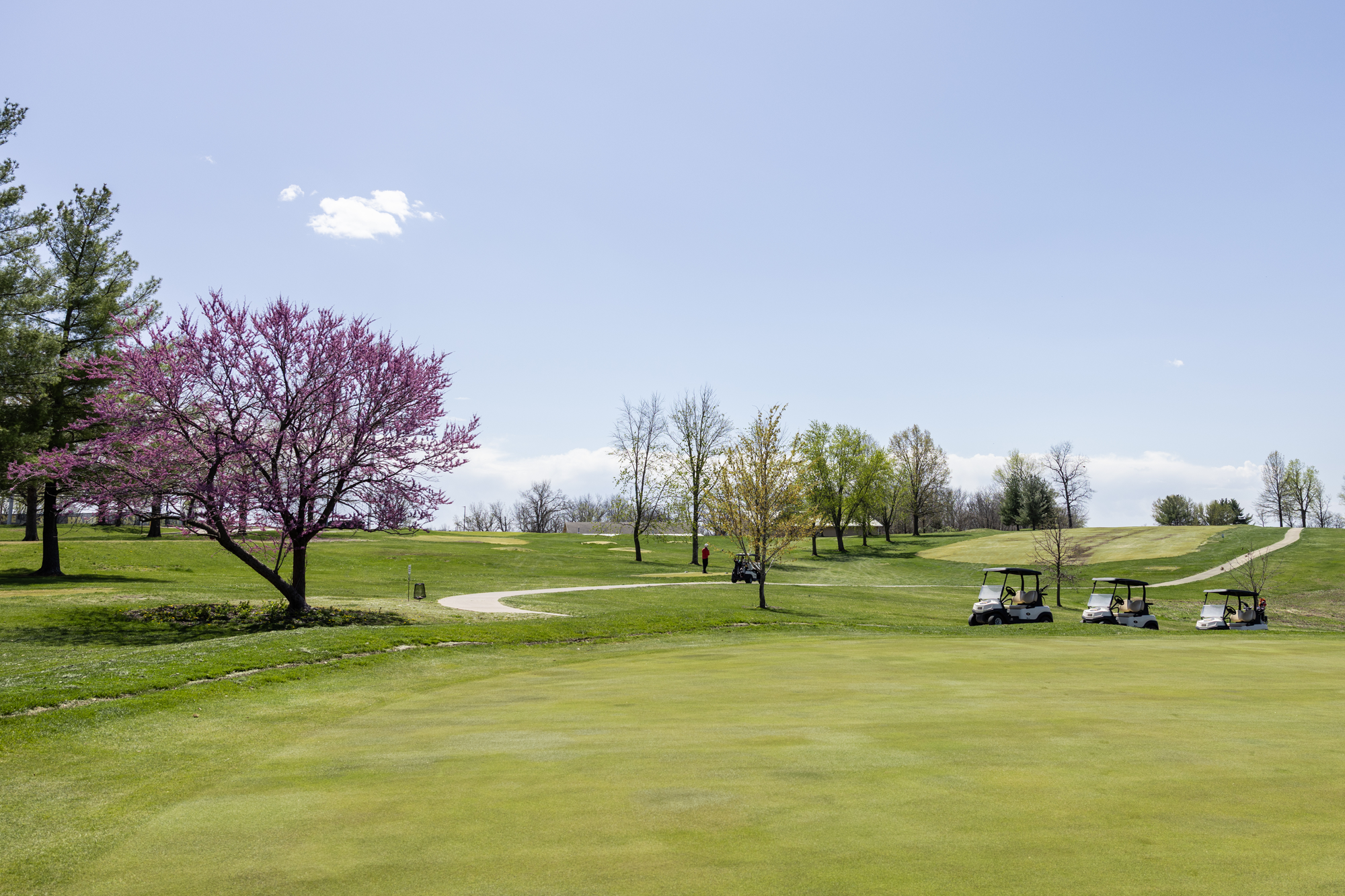
Just west of Memorial Stadium in the heart of Columbia lies a 127-acre University of Missouri oasis where golfers share the landscape with butterflies and birds flitting through pockets of native plants. Tall birdhouses stand throughout the course while beehives tucked off the path hum quietly with activity.
A.L. Gustin Golf Course doubles as a living laboratory where recreation and environmental stewardship come together to create a uniquely Mizzou experience.
The 18-hole course is both a showpiece and outdoor classroom for Mizzou. The land — once native prairie — was donated to the university by A.L. Gustin Jr. of Kansas City, and the course opened in 1959.
Blending natural beauty with a nationally recognized commitment to conservation, Gustin Golf Course was the first college golf course in the United States certified by Audubon International. It earned designation as a certified Audubon Cooperative Sanctuary in 1997 and has maintained that status ever since.
While hosting about 27,000 rounds of golf annually, Gustin has long been recognized for excellence in wildlife habitat management, water conservation and environmentally responsible turf practices.
Isaac Breuer, golf course superintendent, leads up to 15 tours each year for civic and school groups interested in Gustin’s wildlife habitat and stewardship.
Here are three ways the course is used beyond the game.
Bird sanctuary
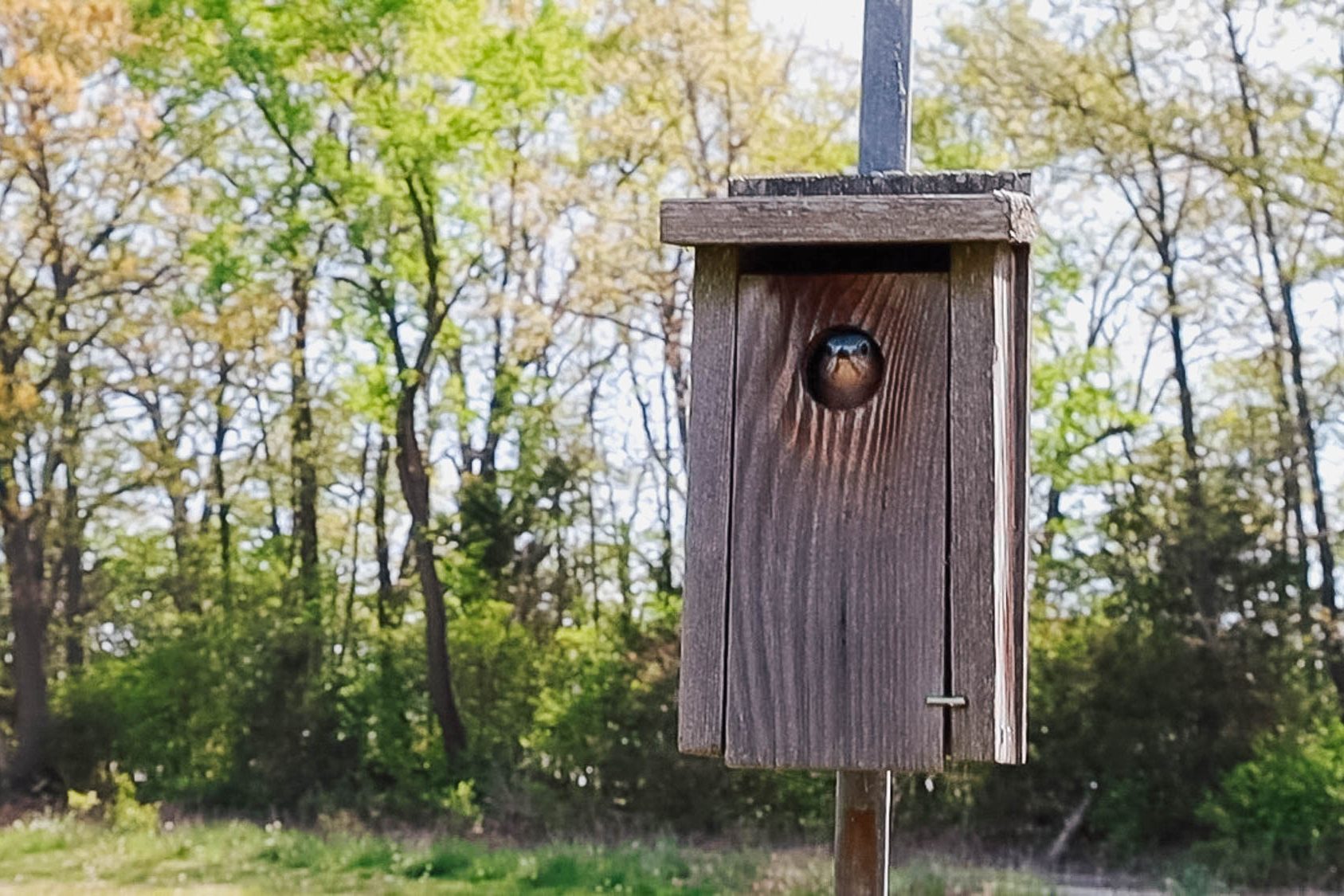
Gustin Golf Course is home to 26 carefully maintained bluebird nesting stations, anchoring a thriving conservation success story that has produced nearly 4,400 fledglings along its bluebird trails since the program began in 1995. Each spring, Eastern bluebirds — Missouri’s state bird — return in waves to their breeding grounds in March and April, filling the course with promise of a fruitful spring before their seasonal migration south in October and November.
For more than three decades, Breuer has played an integral role in restoring and sustaining the bird population at Gustin.
That commitment extends well beyond bluebirds. More than 300 purple martins have successfully fledged at the course, supported by thoughtfully placed houses and gourds near the clubhouse that encourage a growing colony.
The results speak for themselves: Members of the Columbia Audubon Society regularly visit Gustin to observe its thriving bird populations and experience a rare blend of recreation and conservation in action.
“This property is much more than a golf course,” Breuer said. “It’s a sanctuary for Missouri’s iconic birds, bees and plants that we are fortunate to manage for the University of Missouri, and we are very proud of it.”
Beekeeping
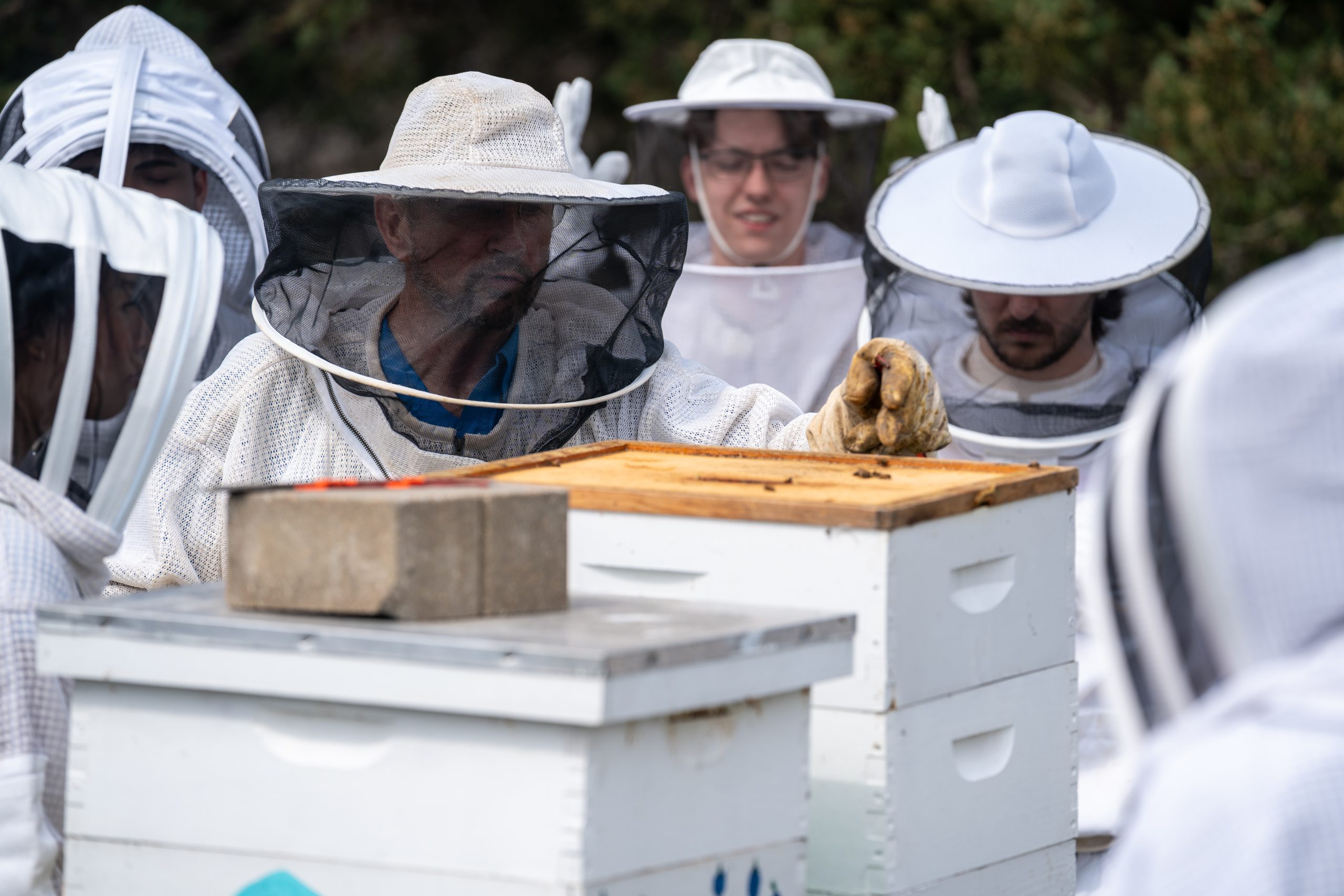
Six beehives call Gustin home, forming a dynamic teaching apiary developed in partnership with the Boone County Beekeepers Association. In collaboration with students and local beekeepers, swarms and hives are carefully collected and relocated to the course, where each hive supports an estimated 30,000 bees. Together, they create a vibrant on-site habitat that advances pollinator education, conservation and hands-on learning.
Sabrina Michael, an assistant teaching professor in biological sciences in the College of Arts and Science, teaches the Honors College course What’s the Buzz About Bees?, which explores the biology, behavior, ecology, conservation and management of honeybees and other pollinators.
As part of the course, students regularly visit Gustin to observe active honeybee colonies in a real-world setting and study hive management, bee behavior and pollinator conservation firsthand.
“Gustin Golf Course has been an incredible partner and educational resource for our program,” Michael said. “Many people may think of it simply as a golf course, but it is also a remarkable example of how university spaces can support teaching, outreach and environmental stewardship.”

Pollinator plots
Gustin has reimagined its out-of-play areas into nine pollinator plots that now serve as a growing habitat for native plants and insects. More than ecological enhancements, the plots function as outdoor classrooms, offering local schools and community groups an opportunity to learn about practical land management and witness its benefits up close.
Each plot operates as a self-sustaining ecosystem, attracting bees, butterflies and birds of many varieties to the course.
The pollinator plantings also deliver meaningful operational savings by eliminating the need to water and mow, reducing maintenance costs by an estimated $500 per acre a year, Breuer said.
“We seed them in January, ideally on top of snow,” he said. “They have been a great addition to a beautiful property in the middle of town. Gustin is quite the sanctuary.”
Learn more about Gustin Golf Course.