Nov. 9, 2026
Contact: Brian Consiglio, consigliob@missouri.edu
Photos courtesy of Amaris Vazquez and Jennifer Boyd
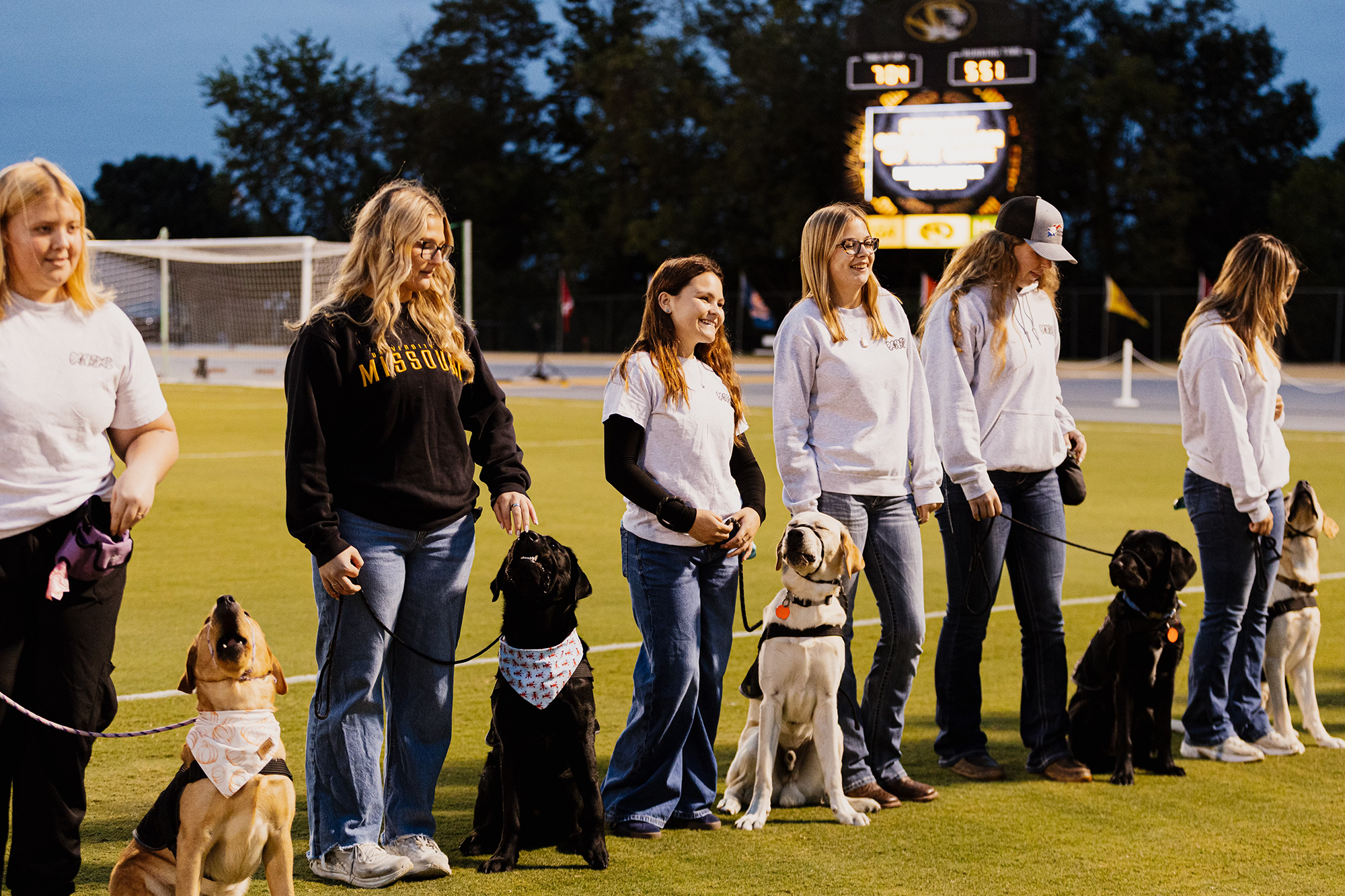
A puppy’s journey to becoming a life-changing companion begins with students at the University of Missouri, where future service dogs are learning the skills to help veterans live more independently.
Through Mizzou's Service Dog Club, students spend up to a year raising and training puppies for future service while developing leadership skills of their own.
For veterans with post-traumatic stress disorder, mobility challenges or service-related disabilities, service dogs can provide critical assistance, responding to signs of distress, retrieving dropped items or providing comfort in stressful environments. They can also push buttons to open doors and flip switches to turn lights on or off.
Founded in 2024 with about a dozen students, the Mizzou Service Dog Club has grown to more than 100 members. Working with Retrieving Freedom, a Sedalia, Missouri-based nonprofit that trains service dogs for veterans and children with autism, club members prepare puppies for the next stages of training.
Just two years after its founding, at least four of the club’s earliest dogs have already been paired with their lifelong partners, giving students a firsthand look at the importance of their work.
That impact is what makes the experience so meaningful for club president Amaris Vazquez, a Mizzou student studying social work in the College of Health Sciences.
“We get the puppies when they are roughly 12 weeks old and train them for up to a year through our club, and then some of the dogs eventually continue their training with students in Mizzou’s Army ROTC program,” Vazquez said. “After some final training with Retrieving Freedom, they eventually get placed with a veteran or child with autism, where they thrive by helping a person who is truly in need of support.”
The experience requires commitment from students, who form close bonds with the dogs even as they prepare to eventually say goodbye.
“We build bonds with these dogs, even though we know they are not going to be with us forever,” Vazquez said. “Knowing they will go to someone in need reminds us how life-changing this work is.”
Wagging with potential
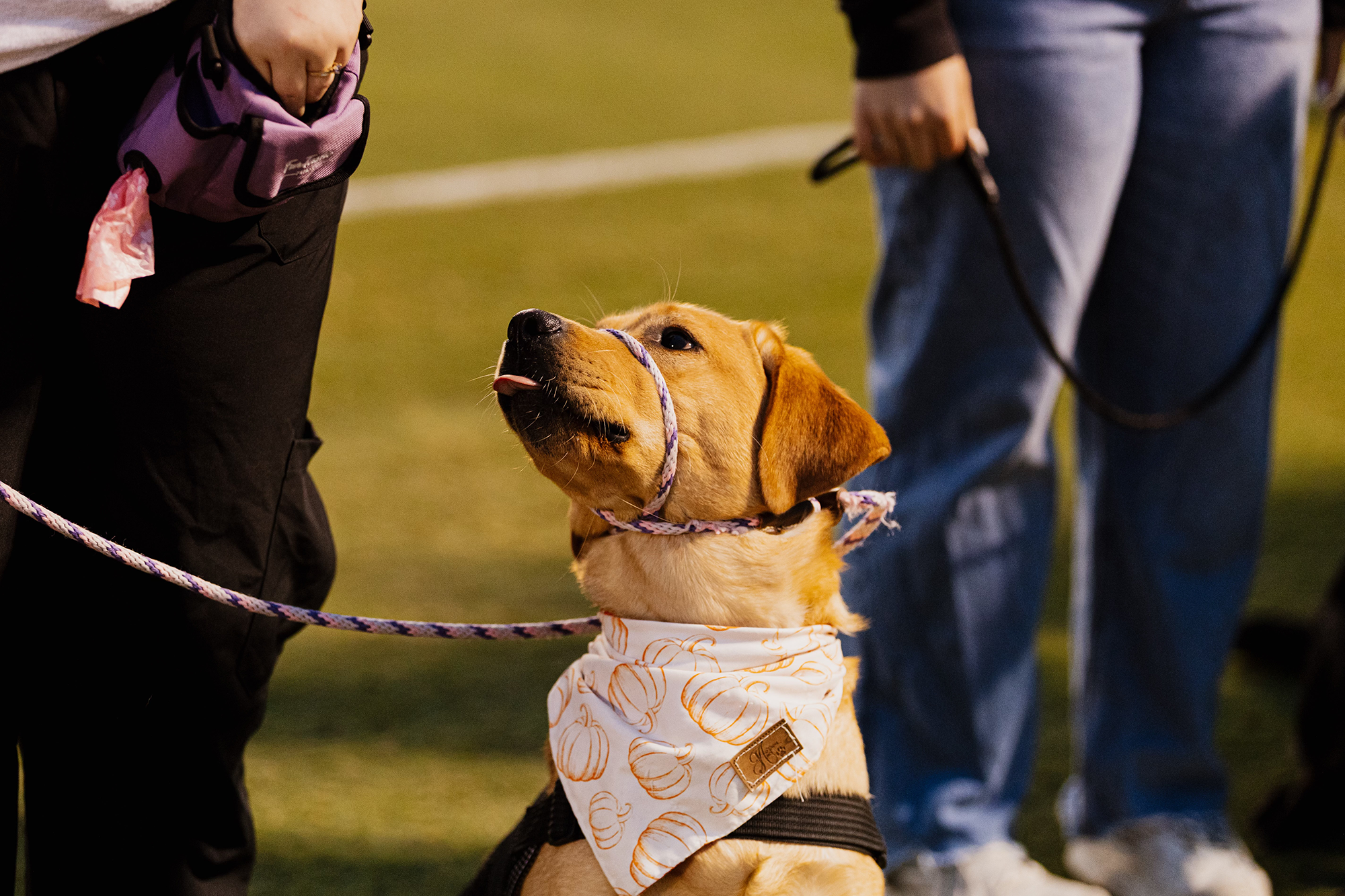
Vazquez has spent the past several months raising Newt, an 11-month-old yellow Labrador retriever. While the pair share a special bond, the training journey hasn’t always been smooth sailing.
As a puppy, Newt whined loudly, struggled with patience, disliked his crate and sometimes became frustrated when handled. Vazquez jokingly called him a “sassy boy.”
But with consistency and support from Vazquez’s fellow club members, Newt steadily improved.
Every Tuesday, a trainer from Retrieving Freedom travels from Sedalia to Columbia to work with club members and their dogs. The trainer reviews progress reports, identifies common challenges and helps students develop strategies to strengthen each dog’s skills.
Recently, the dogs navigated an obstacle course filled with distractions — food on the ground, toys on stairs and leashes in the hallway — while their handlers worked to keep their attention focused.
The exercises help prepare the dogs for future service work while teaching students adaptability, patience and leadership under pressure.
Newt recently provided another reminder of how far he has come. Every two weeks, club members vote for a “Top Dog” to recognize significant progress. Earlier this semester, Newt earned the honor.
The recognition was especially meaningful because the same dog once received a less flattering club distinction: “Biggest Drama King.”
“To read all those messages from the people who voted for him saying he’s improved so much — it meant a lot to me,” she said.
Serving those who served
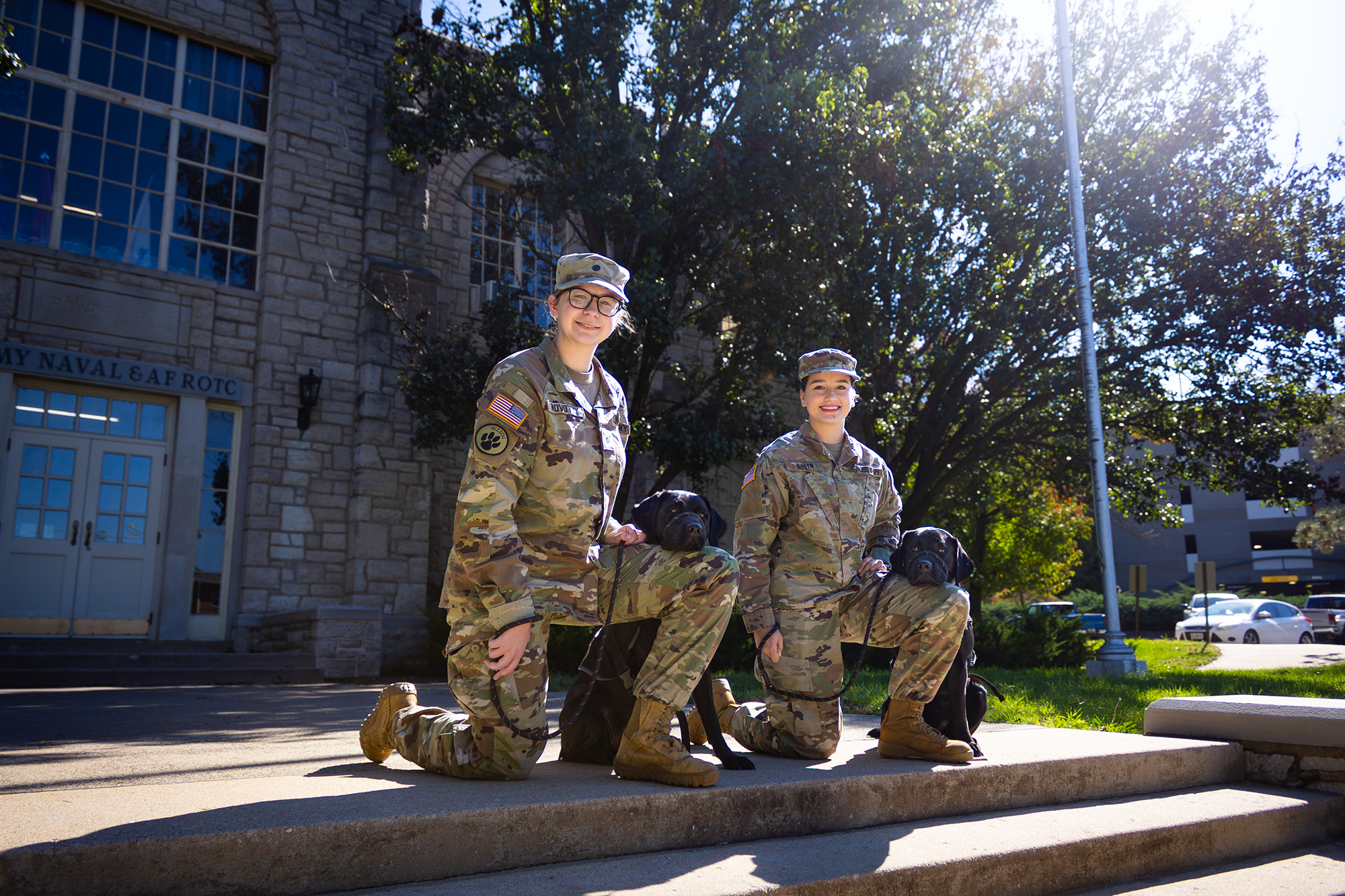
After their time with the Mizzou Service Dog Club, some dogs continue training under the guidance of cadets in Mizzou’s Army ROTC program, which is housed in the College of Arts and Science. Cadets Joey Novotny and Logan Bolin are getting the opportunity to support veterans while preparing for military careers of their own.
As they help the dogs build confidence and navigate different situations, they’re also strengthening leadership skills that will serve them well as future officers.
“I think it’s incredible that Mizzou has this program because it gives cadets the chance to help the soldiers that served before us,” said Novotny, a senior studying animal science in the College of Agriculture, Food and Natural Resources who trains a black Labrador retriever named Lovie.
Bolin, a sophomore studying hospitality management who trains a black Labrador retriever named Valley, was drawn to the opportunity to provide service dogs at no cost to the people who need them.
“Being able to provide help to someone for free is empowering and truly moving,” Bolin said. “It not only helps the heroes who came before us, but it also creates better heroes of ourselves.”
Newt's time with Vazquez is scheduled to end in January 2027, after a full year together. Although saying goodbye won't be easy, she knows the training could prepare him to make a lasting difference in someone's life.
“Hopefully he makes it all the way,” she said. “Seeing him grow this year has been so rewarding, and I feel like I’ve grown as a person through this process, too.”