Oct. 15, 2026
Contact: Eric Stann, StannE@missouri.edu
A University of Missouri astronomer is leading a team of 130 researchers from 62 institutions — including NASA, the California Institute of Technology, Princeton University and Harvard University — on an ambitious mission to capture an unprecedented view of the early universe.
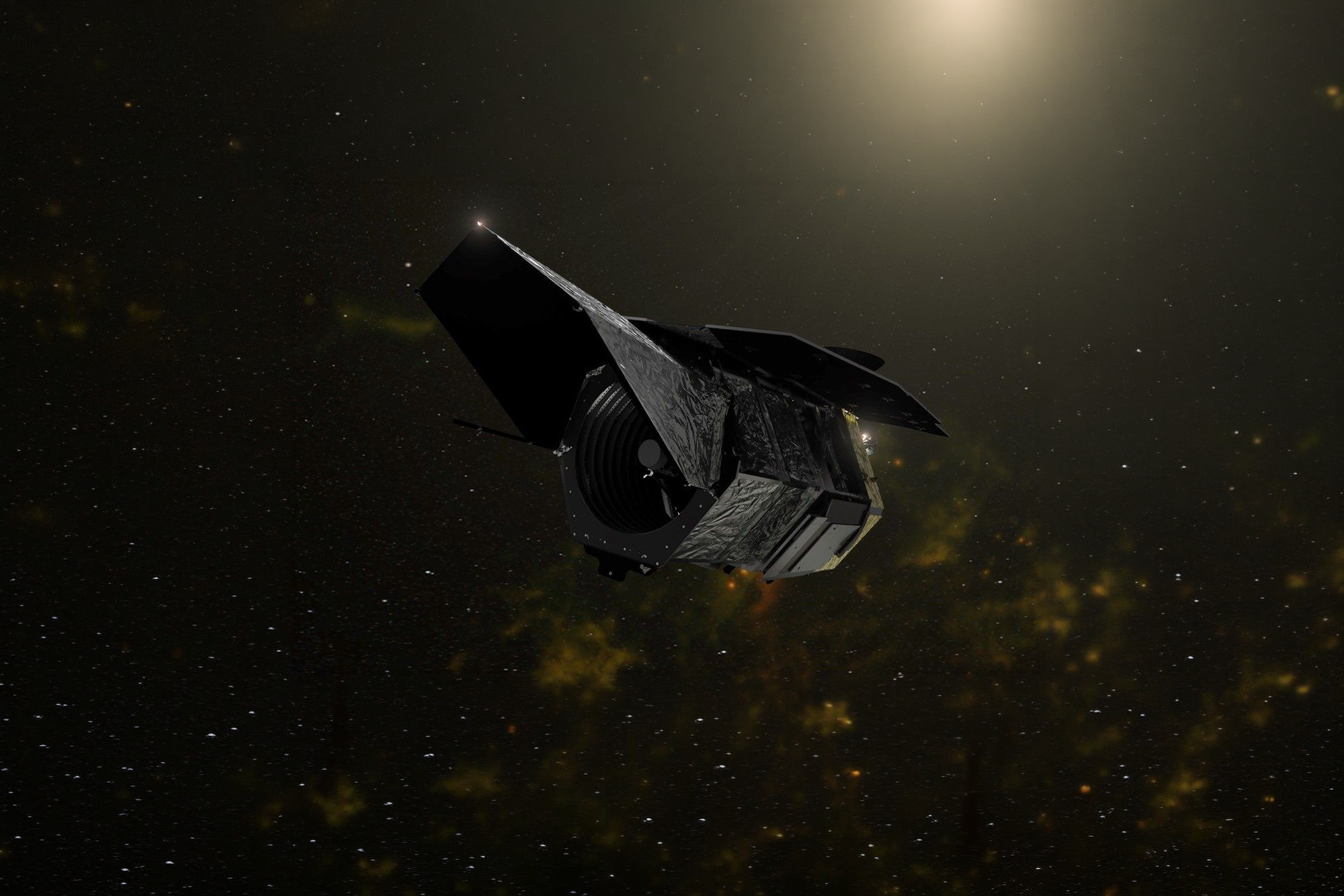
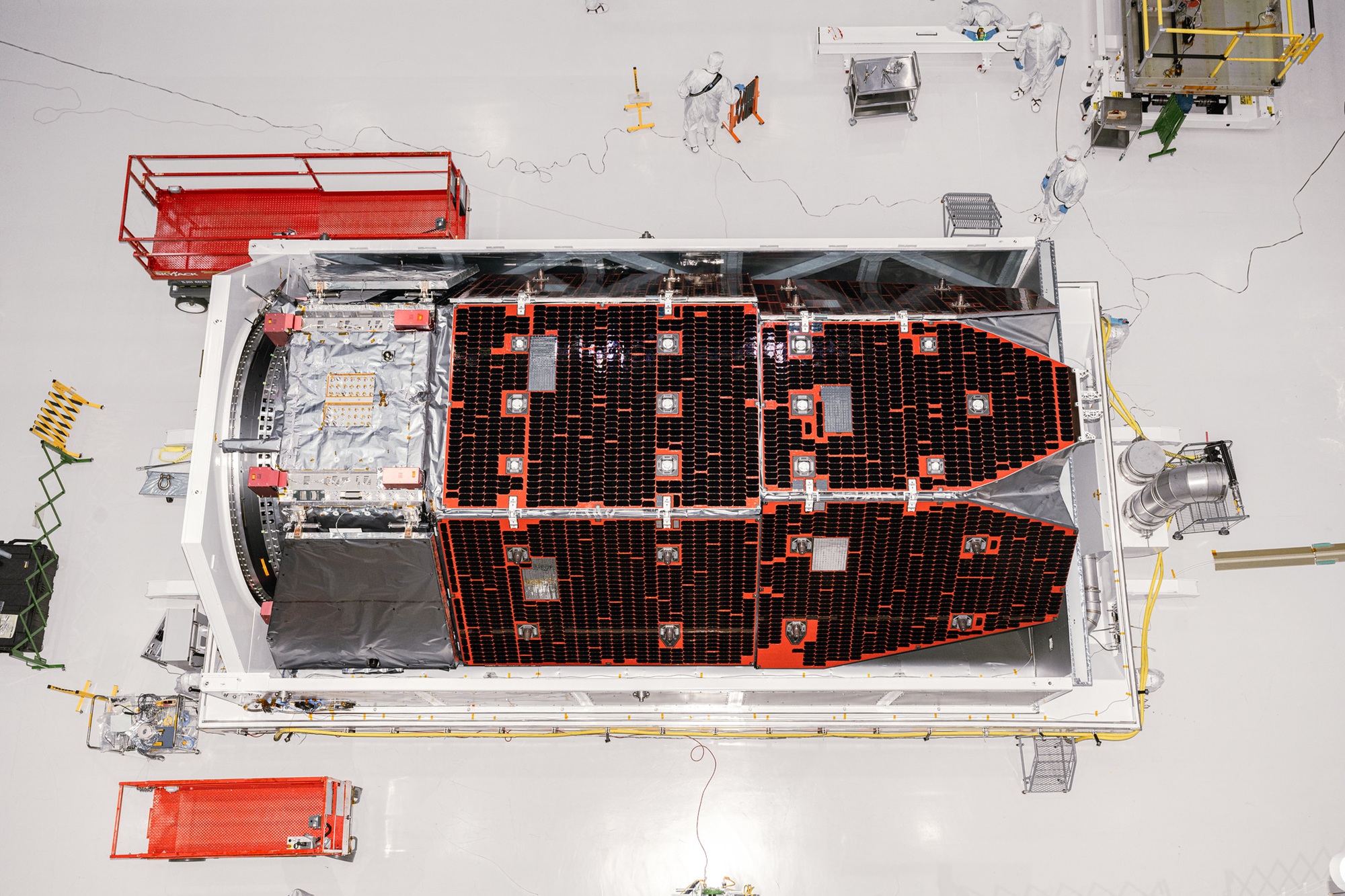
Haojing Yan, a professor of physics and astronomy in Mizzou’s College of Arts and Science, heads the international team behind the Roman eXtreme Deep Field (RXDF), a project that will use NASA’s newest flagship space observatory, the Nancy Grace Roman Space Telescope, to create one of the deepest and widest views of the early universe ever made.
And NASA is giving Yan and the team 386 hours of observation time to do it.
Their goal is to help answer one of astronomy’s most fundamental questions: How did the universe evolve from its earliest moments into the vast collection of stars, galaxies and planets we see today?
By looking billions of years into the past, the team expects to study thousands of early galaxies, exploding stars, giant black holes and other cosmic mysteries. Together, these observations could help scientists reconstruct a clearer picture of what the universe looked like during its first 100 million years — and potentially reveal things no one has thought to look for yet.
“Historically, the most revolutionary outcomes from these deep-field observational campaigns over the last 30 years have been discoveries that were not part of the original plans or expectations,” Yan said. “That's what makes a dataset of this scale so exciting and valuable.”
Searching for cosmic clues
To understand what Yan and his team are searching for, it helps to understand one of astronomy’s strangest realities: Looking deeper into space means looking further back in time.
Because light travels at a fixed speed through space, when astronomers observe objects billions of light-years away, they are seeing light that began its journey billions of years ago.
“For example, when we look at the Sun, we see it as it appeared about eight minutes ago because that’s how long its light takes to reach Earth,” Yan said. “As we look farther out into space, we're seeing objects at earlier stages of their history. That gives us a chance to study how the first galaxies, black holes and other cosmic structures took shape after the universe began.”
This ability has transformed scientists’ understanding of the cosmos.
NASA’s James Webb Space Telescope has already revealed galaxies and other objects that appear to have formed much earlier than scientists expected. But astronomers still do not know whether these surprising objects are anomalies or part of a broader pattern across the cosmos.
That’s where Yan’s team comes in.
Once the Roman Space Telescope reaches its orbit, about 930,000 miles from Earth, it will offer views of the distant universe comparable to those captured by the James Webb and Hubble space telescopes. But Roman brings something different: an extraordinarily wide field of view.
Its 300-megapixel infrared camera, known as the Wide Field Instrument, can capture a single image of an area that would otherwise require hundreds of separate James Webb or Hubble observations.
For Yan and his collaborators, that combination of depth and scale creates an unprecedented opportunity. Instead of examining a relatively small patch of the distant universe, researchers can search for patterns in a much larger cosmic landscape.
They plan to investigate how quickly some of the earliest galaxies formed stars and assembled into larger cosmic structures. They’ll search for distant exploding stars known as supernovae, which could offer clues about some of the universe's earliest generations of stars. And they’ll tackle one of astronomy’s biggest mysteries: how giant black holes formed and grew so rapidly in the universe’s infancy.
And then there are the little red dots. First spotted by the James Webb Space Telescope, these mysterious objects have puzzled astronomers, who are still trying to determine exactly what they are. Roman’s enormous field of view could allow Yan and his team to find more of them, providing the larger sample scientists need to begin solving the mystery.
But some of Roman’s biggest discoveries may be the ones Yan and his collaborators aren’t looking for at all.
That’s the promise of surveying an enormous piece of the early universe at a depth and scale never before possible. Scientists know some of the questions; they just don’t know yet what else might be waiting in the data.
For Yan, that search is part of something bigger: understanding humanity’s place in the cosmos.
“By stretching today’s instruments to their limits, we can help pave the way for future generations to build even more capable observatories and continue exploring the universe,” he said.