Feb. 25, 2026
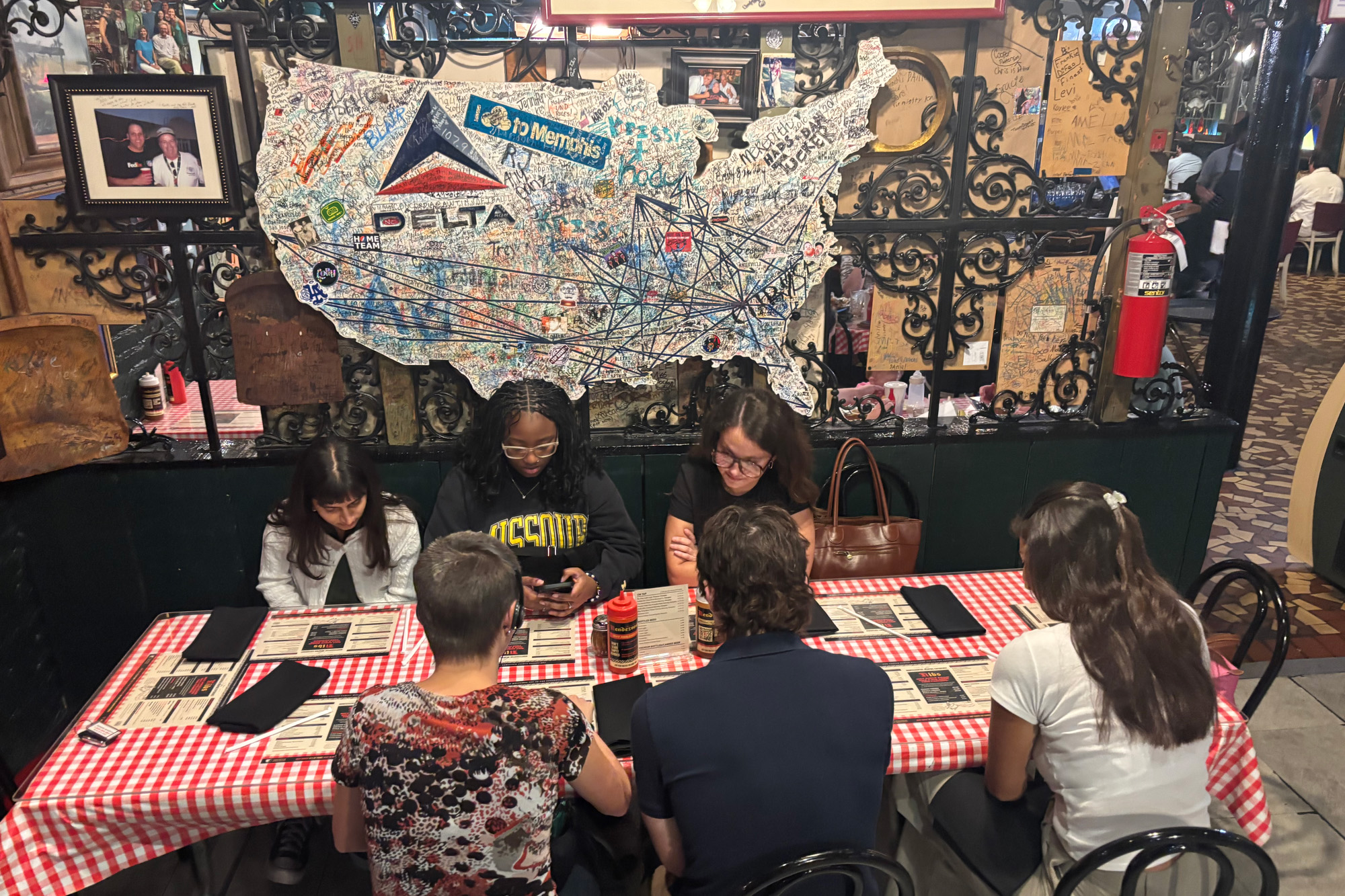
Seniors in Professor Ron Stodghill’s capstone Journalism Reporting Projects course lived the lives of travel writers last fall, embarking on a tour of New Orleans, Memphis and The Hill neighborhood of St. Louis. After speaking to acclaimed chefs and barbecue pitmasters, the University of Missouri School of Journalism students produced a three-part podcast with additional written supplements called “Who Owns the Flavor?”
The series explores how the history and culture of food in three renowned “foodie” destinations intersect with gentrification and economic upheaval. Each episode also tackles thorny questions about authenticity and who “owns” the flavors that shape these vibrant culinary communities.
“Food is so interesting to me because it’s a place where identity politics converge with capitalism, with the court system,” Stodghill said. “It’s a rich playground for a journalist to be able to start trying to understand a market that a lot of cities hang their hat on.”
Drawing on his years as an author and journalist for publications such as The New York Times and Time, he connected students with sources for the project.
Regardless of the subject matter, students in Stodghill’s class gain experience producing content across a variety of mediums, from podcasting to magazine writing. But to properly investigate the phenomenon of local food cultures properly, Stodghill knew his students needed to set foot in these cities and speak with people in person. So, he rented a van and took them on a 1600-mile round trip with stops at culinary institutions in New Orleans and Memphis. The students also visited St. Louis’ The Hill, an historic Italian-American community known for its Italian food and its status as the hometown of several notable professional sports players.
The podcast grapples with the questions that arise from the spread of these flavors beyond their place of origin. In the tradition of great audio storytelling, it focuses not on division, but on conversation. In fact, Stodghill’s favorite memory of the experience comes from the culinary institute in New Orleans, where an interview opportunity turned into an enlightening conversation between two giants of their respective industries.
“We were all in this educational center with a famous food writer and a famous chef, and they just wound up in a very thoughtful riff,” Stodghill said. “You could feel that they were highly engaged, that the students had sparked the right questions. It was a moment when I knew we had made a mark with the project. We took a photo because you could tell at that moment that it felt historic.”
Read more from the Missouri School of Journalism