May 19, 2026
Researchers from across the University of Missouri recently collaborated to develop a new soft, flexible material that adheres securely to living tissue, making it ideal for customized biomedical devices, wearable sensors and patches to help close wounds or support healing.
The novelty of the work, described in Chemical Engineering Journal, lies in a new material synthesized by the Mizzou researchers. This material enables the creation of adhesive platform that adheres to wet tissue and solidifies quickly under UV light.
The material can be 4D printed — a process in which 3D printed materials change shape over time when exposed to heat or other stimuli. This allows it to be bent, stretched or twisted while still returning to its original shape when warmed, making it useful in two complementary ways.
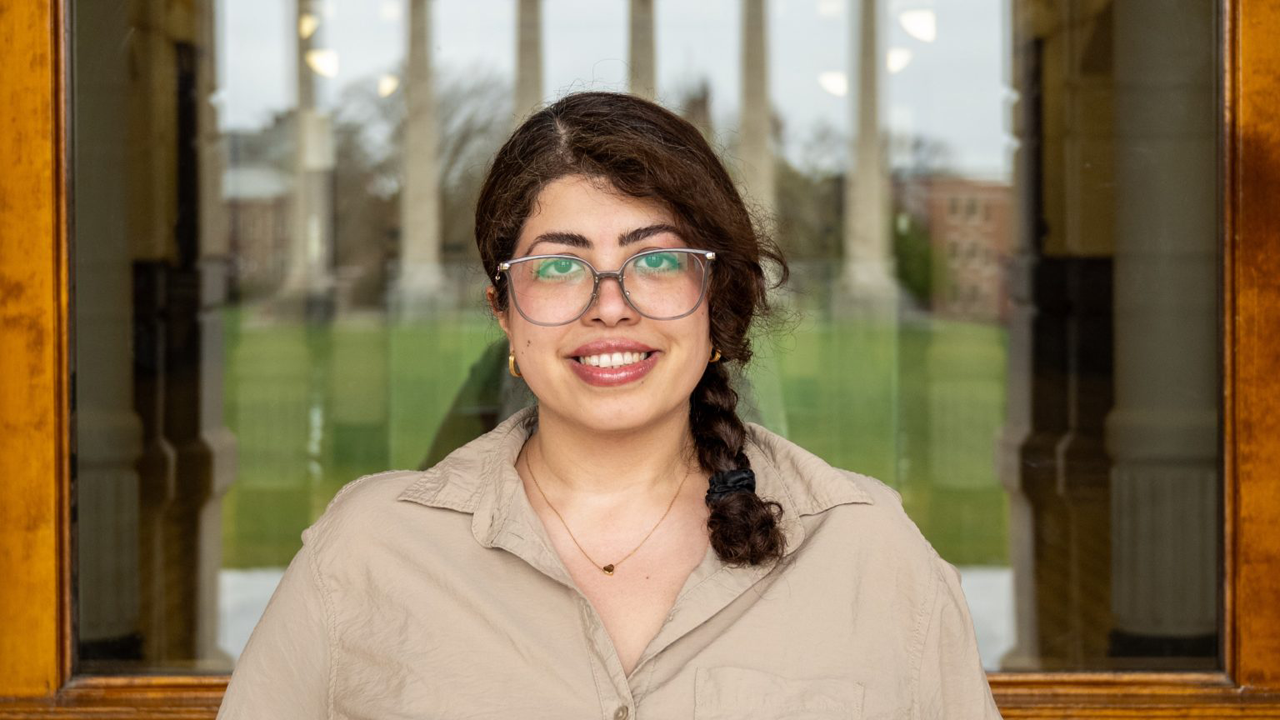
“For wearable sensors and other on-skin applications, heating the material allows it to soften and conform very closely to the skin,” Sonia Norouzi Esfahany, a doctoral student in mechanical engineering who worked on the project, said. “As the material cools, it stiffens and maintains that intimate contact. Reheating the material again softens the material and makes it easy to remove.”
For wound-healing or tissue-closure applications, the adhesive can be programmed into a temporary shape before application.
“After it is placed on the injured tissue, body temperature triggers recovery to its original shape, allowing the material to gently contract or reposition itself while remaining adhered, which can help close or stabilize the wound,” Esfahany said.
While the concept originated in the Department of Mechanical and Aerospace Engineering in the College of Engineering, collaboration expanded to include researchers from the departments of biomedical and chemical engineering and the School of Medicine.
“The institutional culture at Mizzou encourages materials scientists, engineers and clinicians to work together from early-stage material design through biological validation and device integration,” Esfahany said. “When it comes to development of new materials with health care applications, that ecosystem gives Mizzou the advantage.”
Read more from the College of Engineering