Oct. 12, 2026
Contact: Michelle Enger, engerm@missouri.edu
Photos by Scott Schafer
The College of Agriculture, Food and Natural Resources at the University of Missouri hosted a day of celebratory ribbon cuttings on Friday, Oct. 9, for four facilities for research, teaching and outreach.
“We are thrilled to open four new spaces to support the No. 1 economic driver in our state — agriculture,” said CAFNR Vice Chancellor and Dean Christopher Daubert. “It is remarkable to have the opportunity to unveil this many impactful projects in one day — and was only possible thanks to the support and investment by our state and our agricultural partners.”
“Friday's celebrations represent significant advancements in Mizzou's agricultural education, research and engagement," Curator John Raines said. "The value of these facilities cannot be overstated. They reflect Mizzou’s enduring commitment to our land-grant mission by strengthening Missouri's workforce, expanding access to research innovation and serving every Missourian."
The projects leveraged collaborations across MU Extension, Missouri commodity partners and state agencies, and were funded by state appropriations, in addition to individual and industry donors.
“Each of these state-of-the-art facilities is a transformational investment in our land-grant mission and the future of Missouri agriculture,” University of Missouri President Mun Choi said. “With the support of elected leaders and our state’s ag industry, we are turning groundbreaking discoveries into innovations that grow Missouri's economy and prepare a new generation of ag leaders."
The newly opened spaces span agronomy and crop production, beef production, meat processing, and grape growing and wine making — top agricultural industries in the state and prime opportunities to add value to what is already a $93-billion industry.
“The four facilities unveiled today are a tremendous victory for Missouri agriculture,” Chris Chinn, director of the Missouri Department of Agriculture, said. “I would like to thank the University of Missouri and the supporters of each of these facilities for the commitment to our state’s farmers and ranchers. All four of these entities will help Missouri producers compete on a regional, national and global level.”
The ribbon cuttings included:
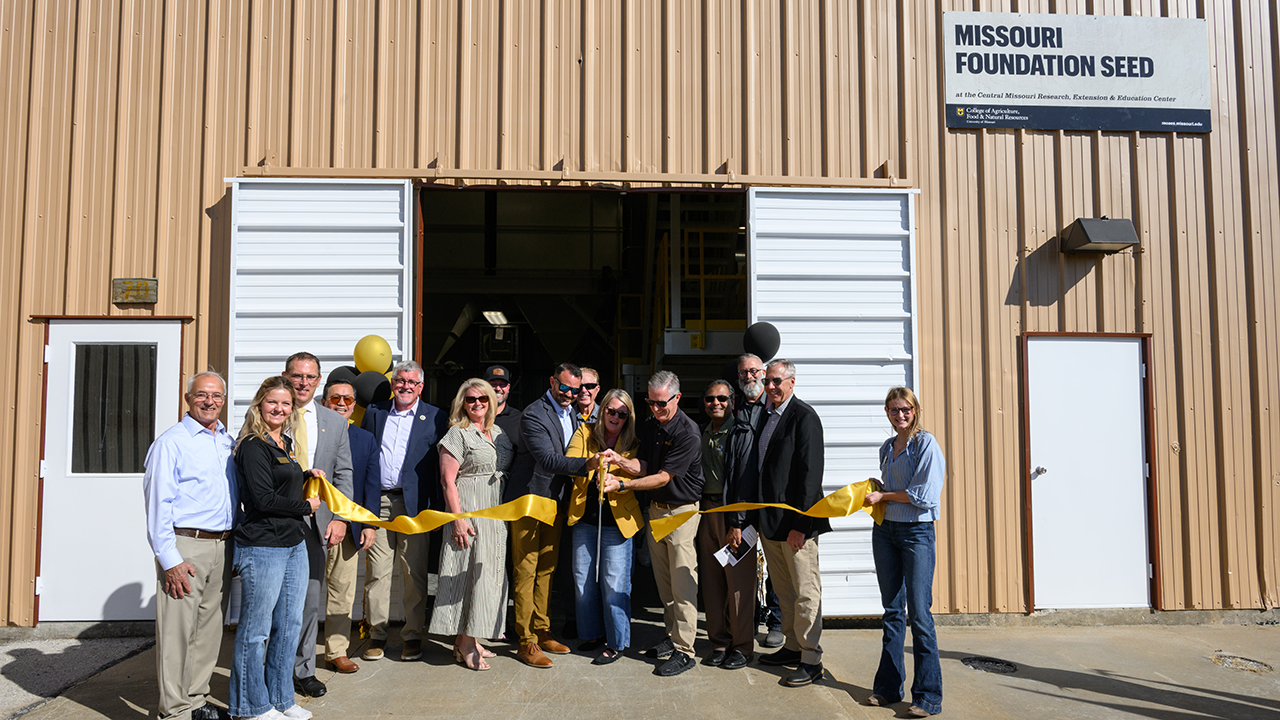
Missouri Foundation Seed, located at South Farm and part of the Missouri Agricultural Experiment Station’s Central Missouri Research, Extension and Education Center. Foundation Seed provides pure seeds for Missouri farmers through extensive variety testing. Through a $3.25 million appropriation by the state and an additional $1 million from the university, upgrades to these facilities have included modernizing the seed processing plant and new machinery made specifically for foundation seed operations, bringing them up to and beyond industry standards.
“This investment by our state helps advance Mizzou research from concept to fields across the world, all while maintaining the highest quality crop seeds,” said Shibu Jose, CAFNR associate dean for research and director of the Missouri Agricultural Experiment Station. “We could not have secured this appropriation without the support and partnership of the Missouri Soybean Association. Missouri Foundation Seed is a wonderful example of collaboration between agricultural entities in our great state.”
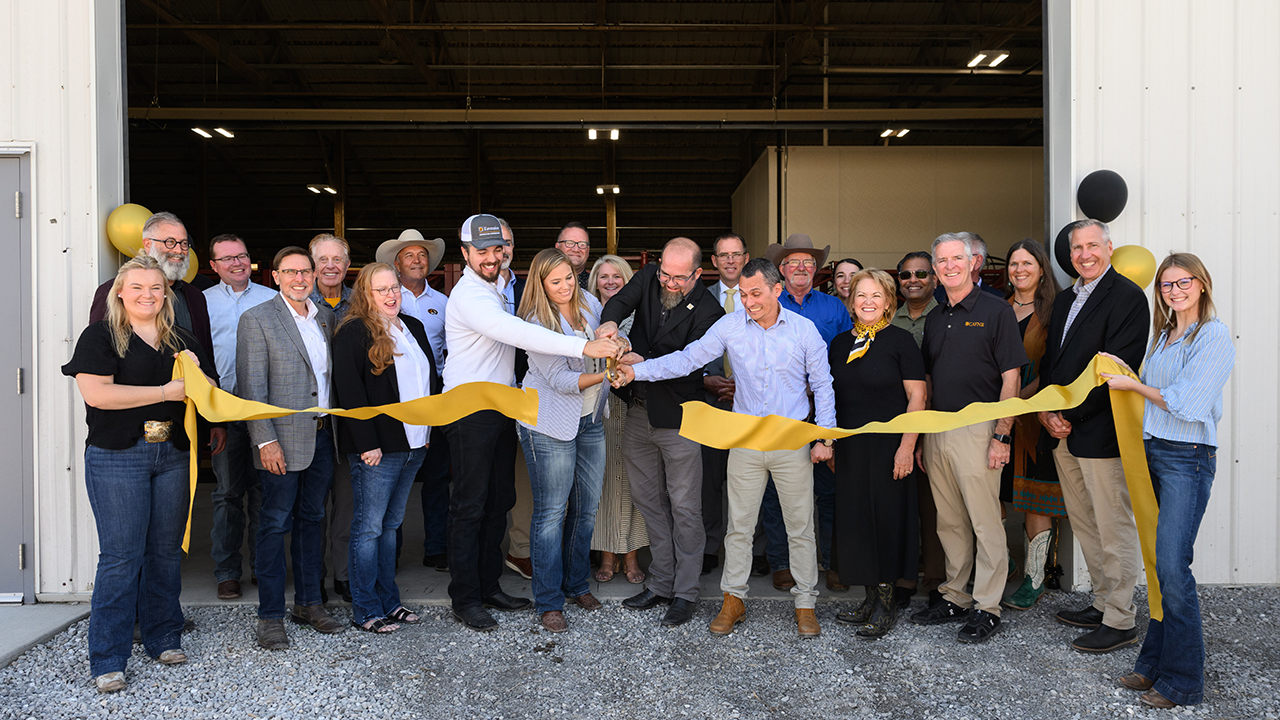
The National Center for Applied Reproduction and Genomics (NCARG), part of South Farm’s Beef Research and Teaching Farm, provides continuing education to veterinarians on the most up-to-date technology for quality beef genetics. The farm’s Creed Barn was remodeled for NCARG, providing state-of-the-art equipment and space to foster these vital training programs. The project was completed thanks to a $2 million investment from the State of Missouri.
“NCARG is about much more than a new facility — it is about creating a place where collaboration can turn innovative ideas into solutions that work in the real world,” said Jamie Courter, director of the center. “The opportunity to bring together researchers, industry partners, producers and veterinary students around reproductive and genomic technologies is incredibly valuable. NCARG will not only support research and the development of new technologies, but also provide an important training environment for the next generation of veterinarians and animal scientists. The partnerships that helped make NCARG possible are also what will allow us to maximize its impact, connecting research, education and technology with the people and industries who can ultimately put those innovations to work.”
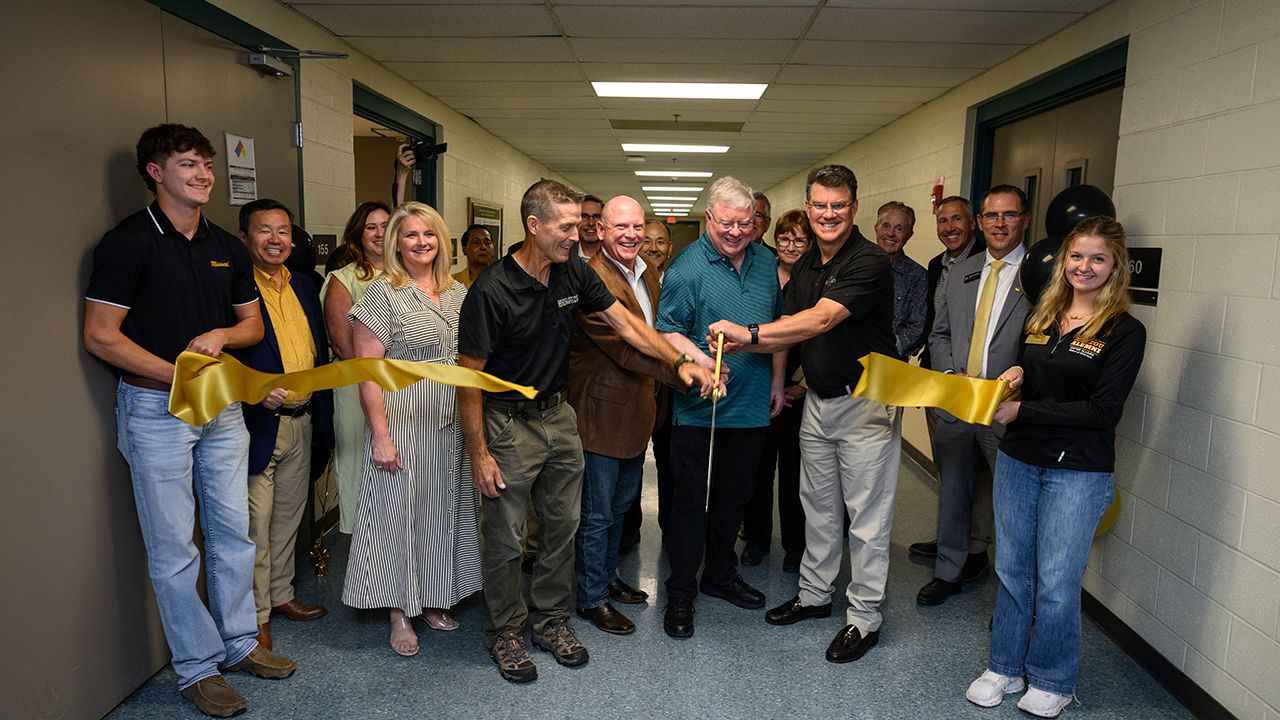
The Grape and Wine Institute’s Fermentation Center remodel, located in the Agricultural Engineering Building on campus, ramps up Mizzou’s ability to conduct research and testing on new grape and wine varieties, while exposing students to the latest processing technologies and advancements. The new center, funded by a $3 million state investment, helps guide the industry on best practices and new opportunities, reducing financial risk to grape growers and winemakers.
“The Fermentation Center provides an educational environment that mirrors a commercial wine production facility, greatly enhancing opportunities for experiential learning among traditional students and within extension workshops,” said Dean Volenberg, viticulture extension leader of Mizzou’s Grape and Wine Institute. “The Fermentation Center will expand workforce development opportunities and provide the Missouri grape and wine industry an experienced workforce. The Grape and Wine Institute greatly appreciates the State of Missouri for making the Fermentation Center a reality.”
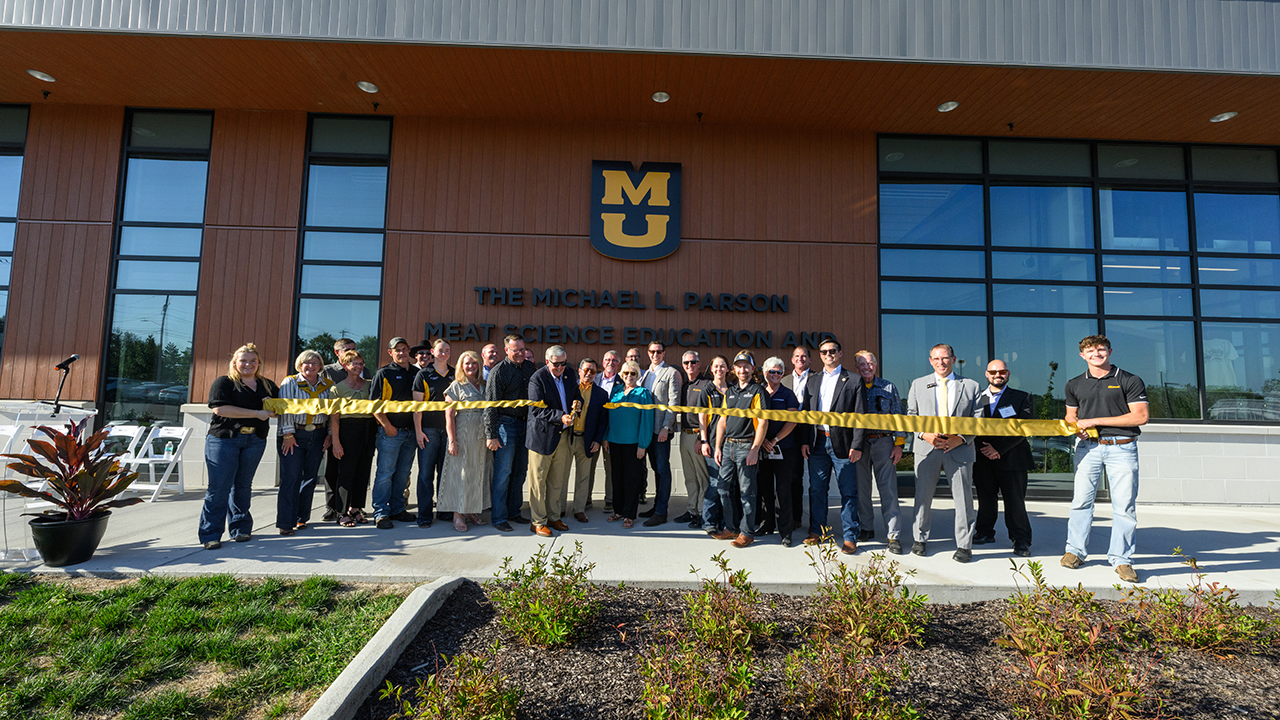
Finally, The Michael L. Parson Meat Science Education and Training Laboratory supports both students and Missouri’s meat processing industry — the facility consolidates and updates meat processing facilities on campus. The 25,000-square-foot building houses the American Foods Group Meat Market at Mizzou’s new and larger location and also features modern classrooms, workforce training areas and research laboratories focused on meat processing, food safety and innovation in meat science.
“Opening this building means promoting innovation in meat processing through research, providing training to the state’s workforce on the latest technology and best practices, and informing communities across the state on food sourcing,” said Bryon Wiegand, director of the lab. “This laboratory, devoted entirely to meat processing, also expands our capabilities at Mizzou for farm-to-fork research collaborations and enhancing animal models for human medical research.”
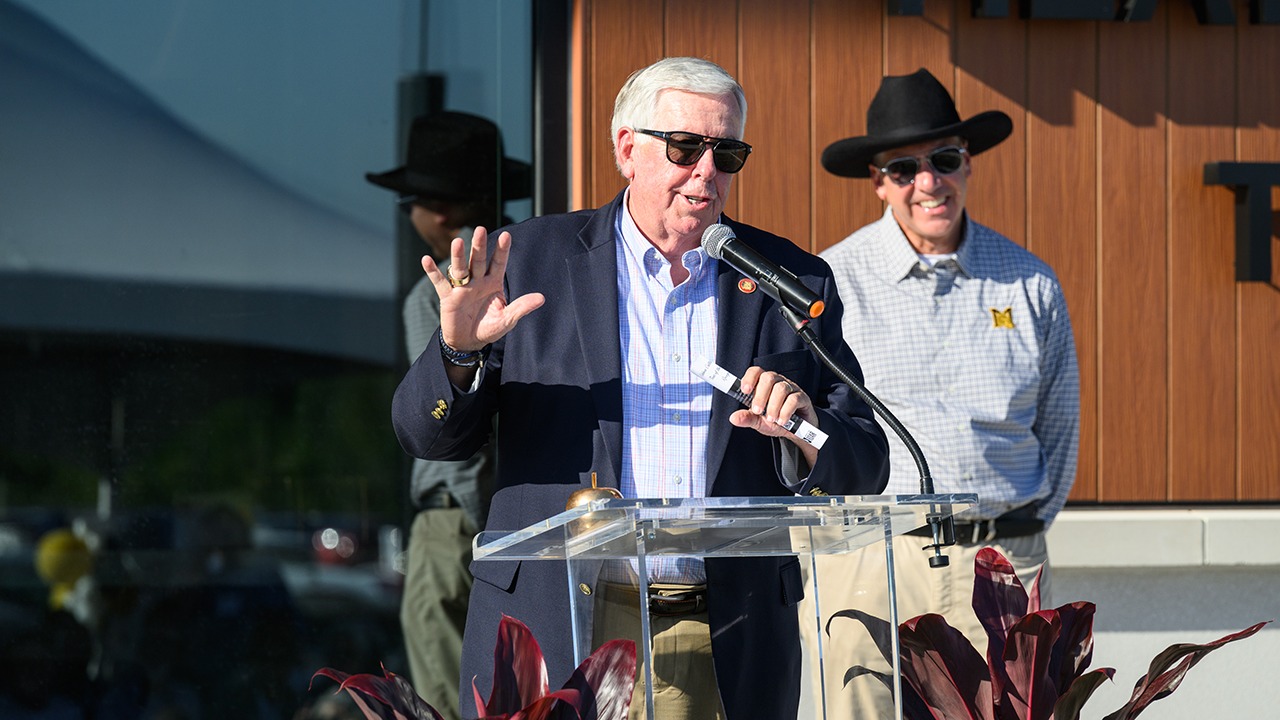
Former Gov. Mike Parson joined for the ribbon cutting at his namesake building and took the podium. Richard Fordyce, USDA undersecretary for farm production and conservation, also was a featured speaker.
In 2023 and 2024, Parson signed budget bills that included a combined $35 million for the facility now bearing his name. The University of Missouri Board of Curators honored Parson with the naming in February 2025.
“There are a lot of people who worked together to make this happen,” Parson said of the building’s opening. “I appreciate a meeting I had early on with President Choi — he shared his vision, we built a trust and in six and a half years, the things we accomplished are incredible. In the Governor’s office, you might see an image or a chart of a project, but when you come here today and see the finished product — it’s amazing. Someday, not everyone who sees this building will know my name, but students will still come here and learn and take that knowledge across the state, the country and the globe. That’s the legacy I’m proud of.”