March 18, 2026
Contact: Eric Stann, stanne@missouri.edu
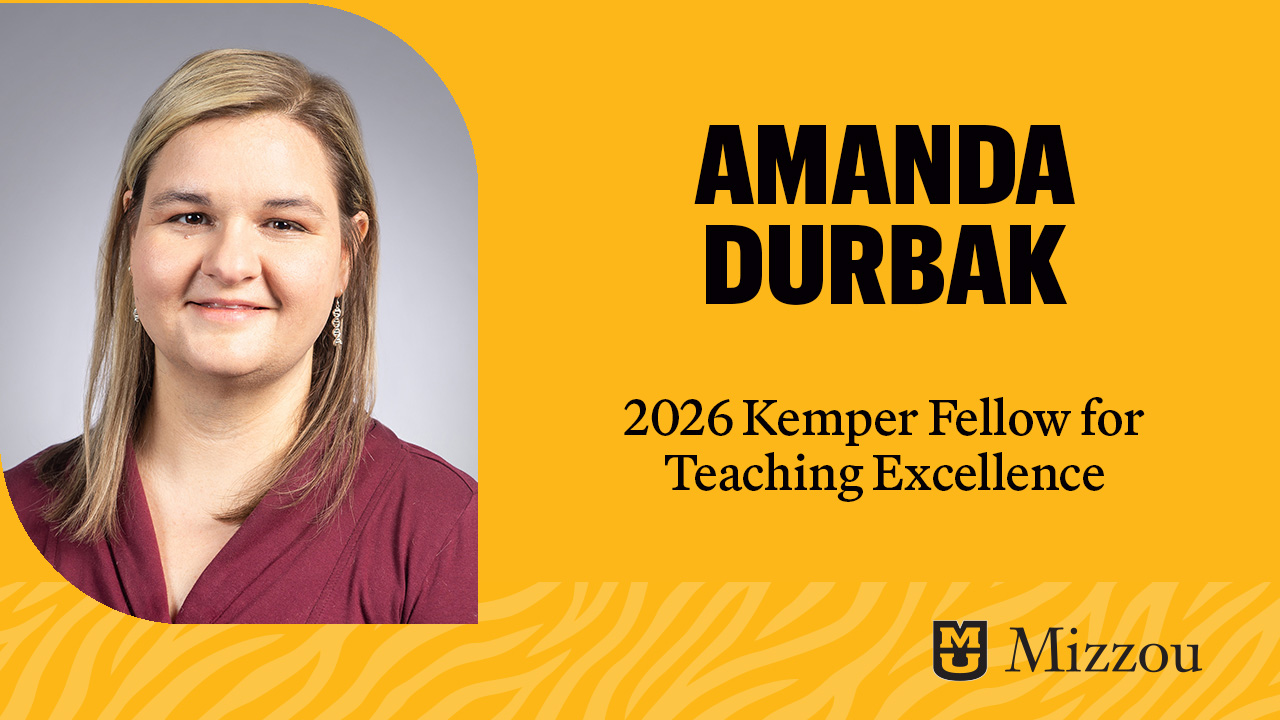
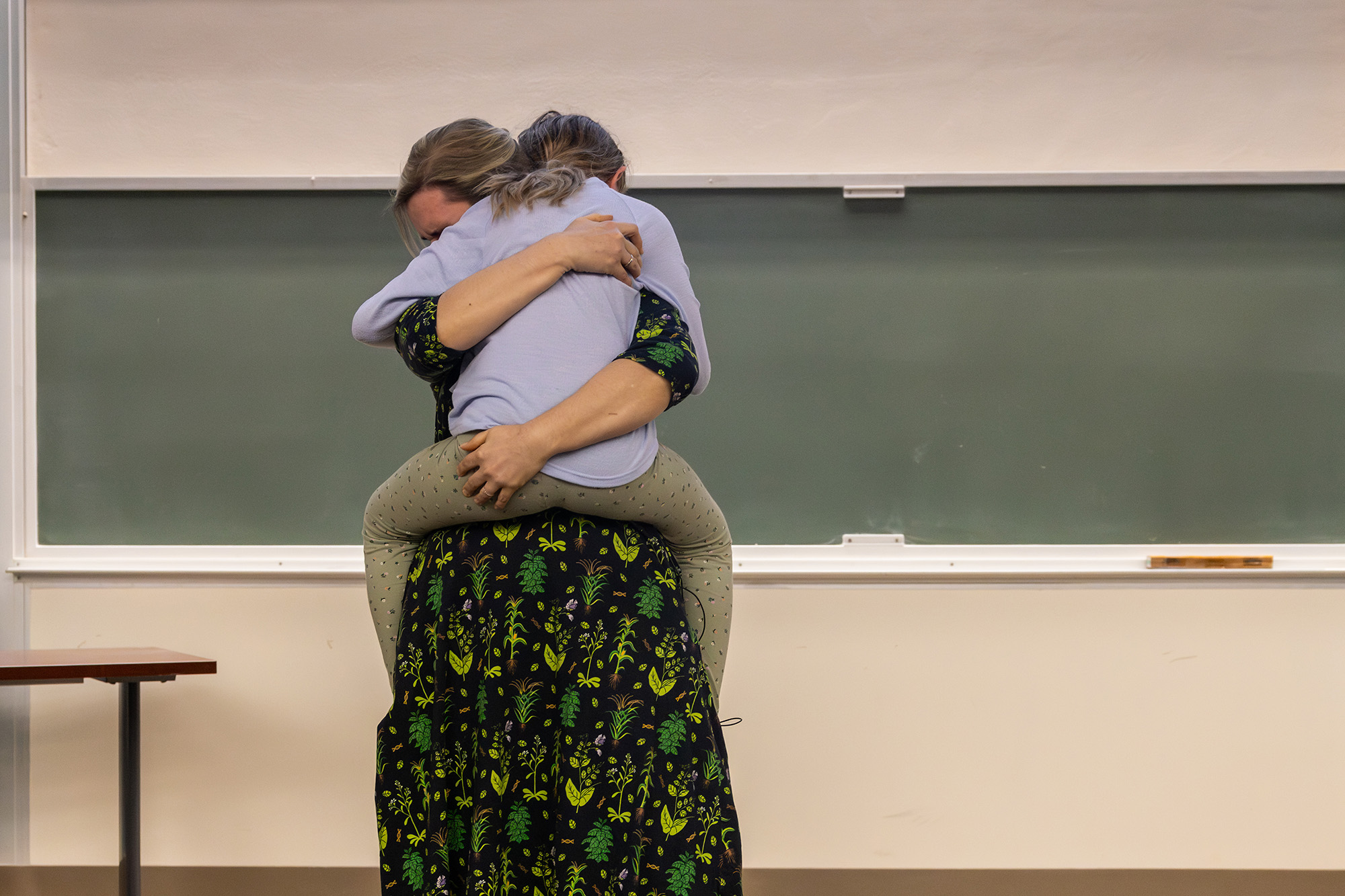
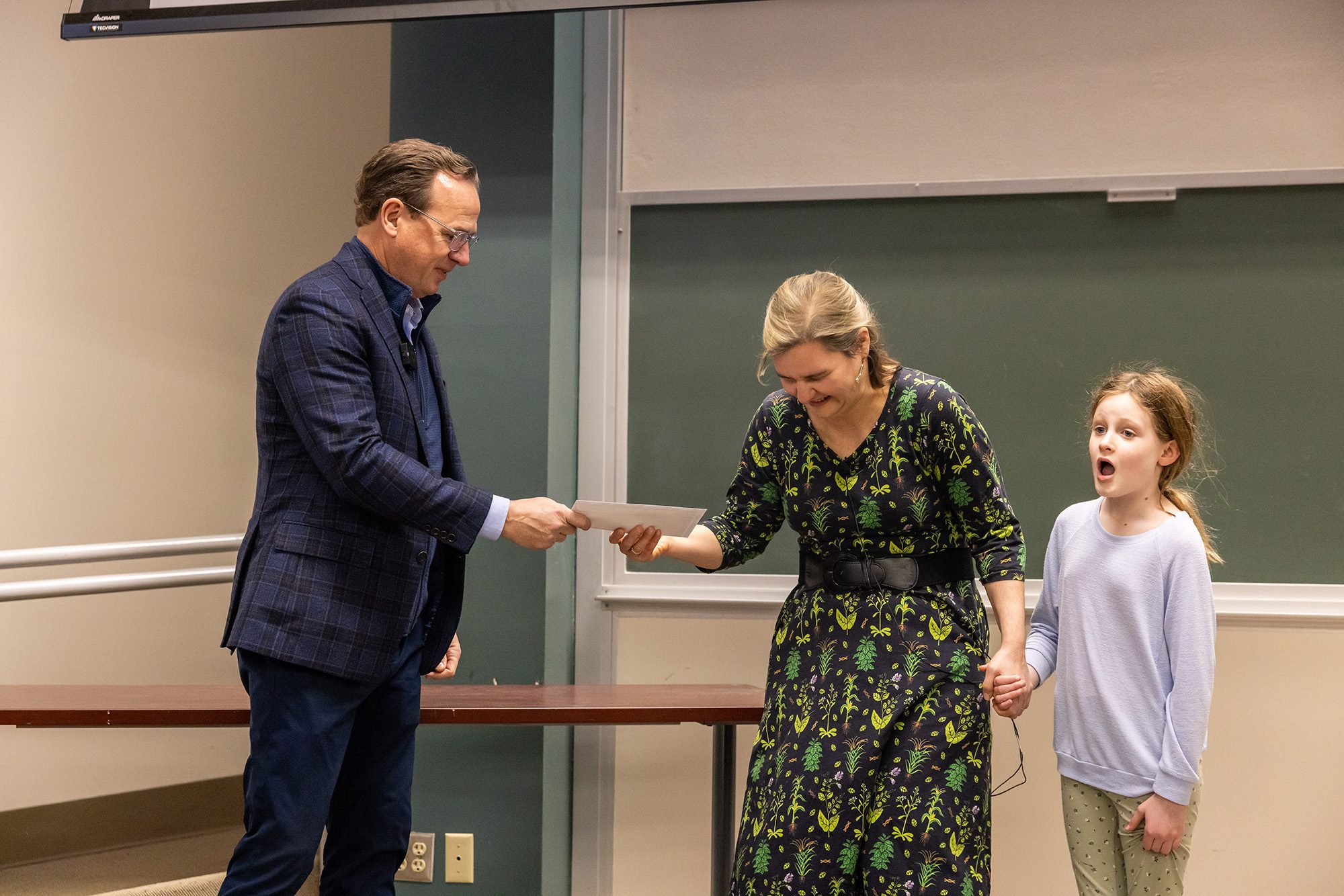
Matthew Martens, provost and executive vice chancellor for academic affairs at the University of Missouri; Steve Sowers, chief executive officer of Commerce Bank’s Missouri community markets; and Sarah Dubbert, president of the Columbia market for Commerce Bank, awarded a 2026 William T. Kemper Fellowship for Teaching Excellence to Amanda Durbak today. Durbak is an associate professor of biological sciences in the College of Arts and Science.
Cooper Drury, dean of the College of Arts and Science, joined other leaders in surprising Durbak by honoring her with the fellowship, which includes a $15,000 stipend. Kemper Fellowships are awarded to five outstanding teachers at the University of Missouri each year.
The William T. Kemper Fellowships for Teaching Excellence were established in 1991 with a $500,000 gift. Kemper, a 1926 Mizzou graduate, was a well-known civic leader in Kansas City until his death in 1989. His 52-year career in banking included top positions at banks in Missouri, Kansas and Oklahoma. Commerce Bank manages the trust fund.
Amanda Durbak biography
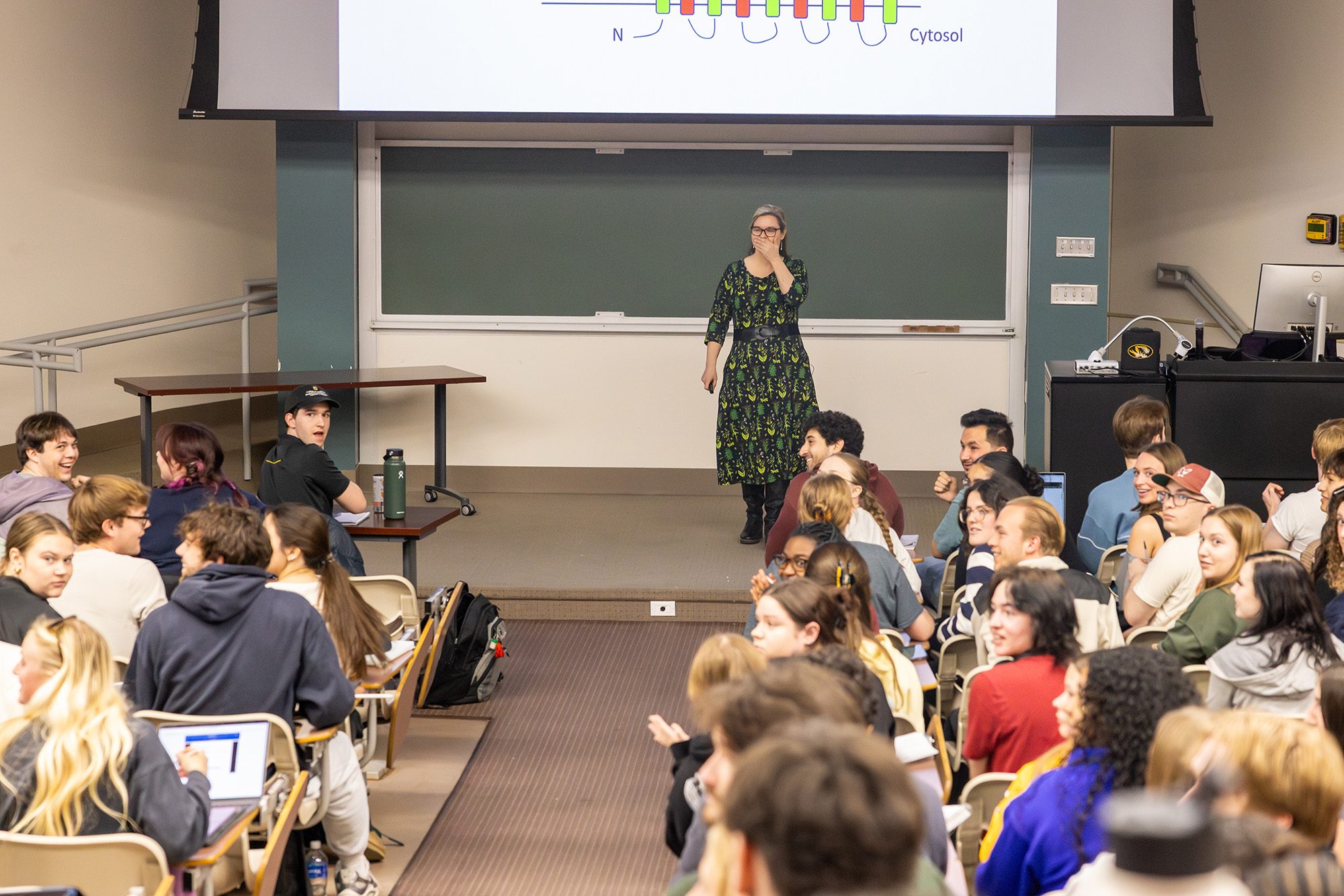
In Amanda Durbak’s classroom, biology is never abstract. It is acted out with demonstrations students can see and touch. That hands-on approach has transformed how students understand the subject.
“In genetics, a topic that once seemed impossible to master — meiosis — suddenly became clear,” Ella Catlett, a former student, wrote in a letter supporting Durbak’s nomination. “I will always remember how Dr. Durbak used pool noodles to represent chromosomes, transforming a difficult concept into something tangible and engaging. It was one of the most creative and effective demonstrations I have experienced in any class.”
Since joining Mizzou in 2013, Durbak has left a lasting imprint on thousands of students, from large introductory lectures to intimate upper-level courses. No matter the classroom or the major, she makes biology relevant, emphasizing curiosity, understanding and the lasting value of learning beyond the exam.
“From the first day I met Amanda Durbak, she preached to me and my peers that when you focus on genuinely learning a topic, you won’t have to worry about your grade; it will take care of itself,” Mathew Kimaku, another former student, wrote in a letter supporting the nomination.
Durbak’s teaching model allows students to work at their own pace as they prepare for class. They’re given foundational material through videos and guided resources, then Durbak reinforces key concepts in class, leaving time for questions and discussion.
“To make the most of our time together, I use a range of active learning techniques that let students practice applying what they’ve learned,” Durbak wrote, describing her teaching philosophy. “In most classes, I adopt a flipped format to focus on the most challenging aspect of learning — connecting facts to real-world applications. This approach includes activities ranging from clicker questions to ethics debates, case studies and data analytics.”
And, she stressed, she provides space for students to know it’s OK to make mistakes as they actively learn new concepts. That helps students master content while building critical-thinking and problem-solving skills needed for research, medical school and careers.
The result is deeper learning.
“This structure helped me move beyond memorization to truly understand how to analyze and evaluate biological concepts,” Catlett wrote in her letter supporting the nomination.
Durbak’s mentorship extends well beyond the classroom. Durbak champions students’ ambitions, helping them grow not only as biologists, but as confident professionals and future leaders.
“This mentorship has profound impacts, as evidenced by students who gained confidence to pursue tough professional goals because of Dr. Durbak’s influence,” her nominator, Curators’ Distinguished Professor Bethany Stone, wrote in the nomination letter. “She transforms not only how students understand biology, but how they understand themselves and their potential to impact the world.”
In addition to the Kemper fellowship, Durbak has been honored with Mizzou’s Kathleen and Robert Unrath Excellence in Visionary Teaching Award, the Win Horner Award for Innovative Writing Intensive Teaching and other awards for outstanding teaching. She is a member of the Society for the Advancement of Biology Education Research, the National Science Teachers of America, the National Association of Biology Teachers, American Society of Plant Biologists, and Society of Developmental Biology.
Durbak earned her doctorate in plant sciences from the University of Arizona and a bachelor’s degree in biology from New College of Florida.