March 18, 2026
Contact: Eric Stann, stanne@missouri.edu
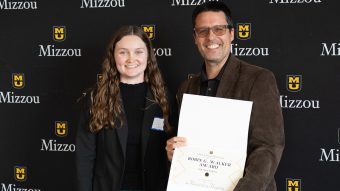
Each year, the University of Missouri honors five exceptional educators with the distinguished William T. Kemper Fellowship for Teaching Excellence. Selected through peer nominations, each recipient receives a $15,000 stipend. This week, university leaders and Commerce Bank representatives are making surprise visits to present the awards.
The William T. Kemper Fellowships for Teaching Excellence were created in 1991 through a $500,000 gift. Kemper, a 1926 MU graduate, was a prominent Kansas City civic leader until his death in 1989. During his 52-year banking career, he held top roles at financial institutions across Missouri, Kansas and Oklahoma. Commerce Bank oversees the trust that funds the fellowships.
Karthik Panchanathan
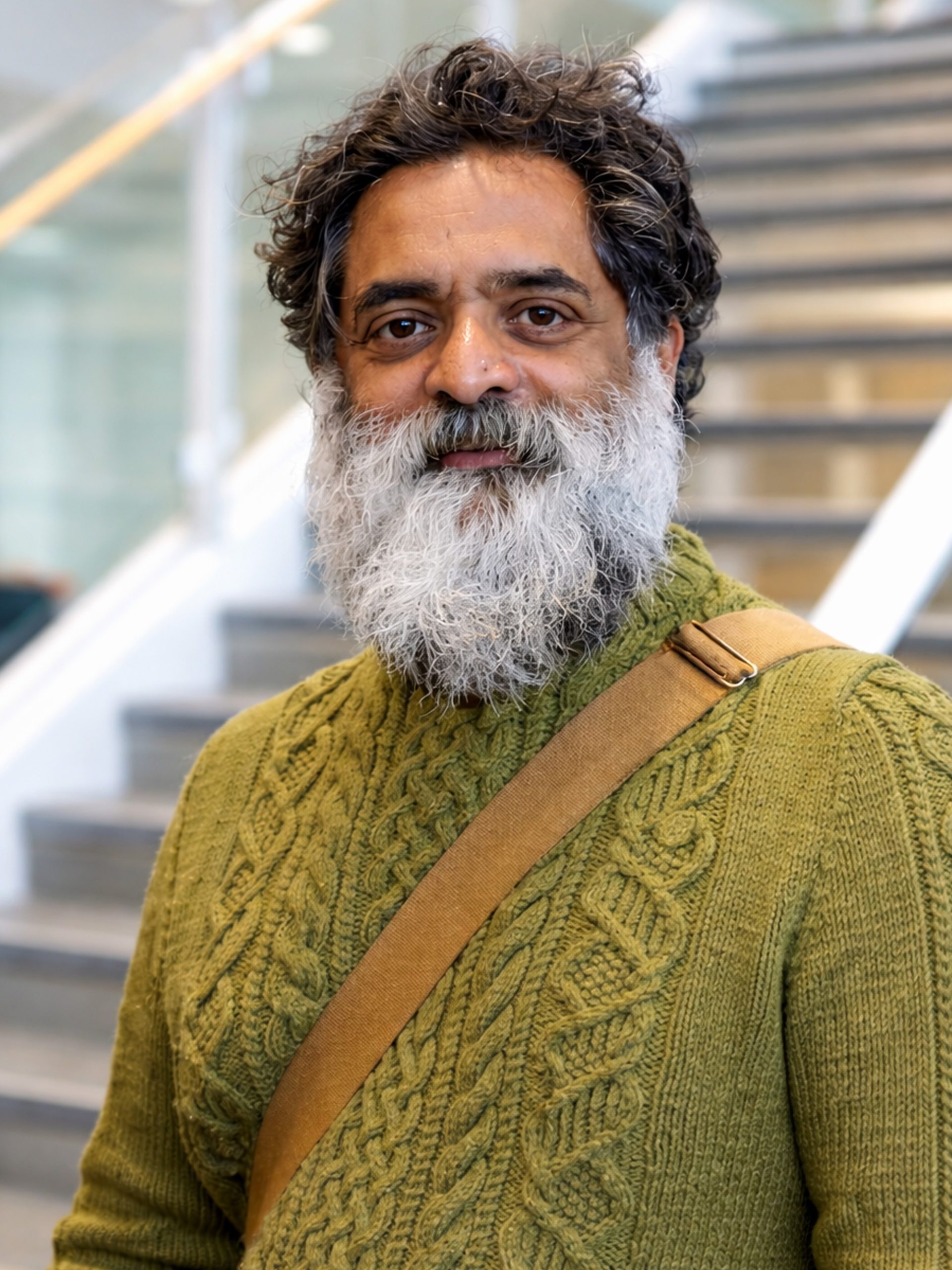
Karthik Panchanathan is an associate professor of anthropology in the College of Arts and Science.
Panchanathan’s research on evolutionary anthropology is inherently interdisciplinary, and he draws on numerous disciplines, such as biology, psychology, economics and sociology, to connect his research to his lectures.
It's no surprise he would approach his lectures this way; those are the kind that inspired him when he was a student.
“With patience and hard work, most people can become effective teachers,” Panchanathan wrote of his teaching philosophy. “Add in passion and personalization, and they can become excellent teachers, making a profound impact on students — both in the classroom and beyond. I am who I am because of those kinds of teachers. Most of us are.”
Panchanathan’s patience, hard work, passion and personalization have won over students and colleagues alike.
“Karthik is quite simply the best teacher I have ever encountered in over 50 years in academia at institutions ranging from Rutgers, Princeton and The University of Chicago, to the University of California, Irvine and the University of Missouri,” Theodore Koditschek, professor emeritus from the Department of History, wrote in a letter in support of Panchanthan’s nomination.
Karthik Panchanathan's full biography
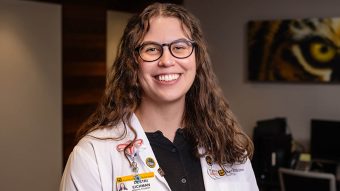
Jenna Wintemberg

Jenna Wintemberg is an associate teaching professor in the College of Health Sciences.
Wintemberg teaches numerous courses related to public health and contemporary health issues and fosters inclusive learning environments that enhance students’ experiences in the classroom.
“Her passion for public health, her engaging and inclusive teaching style, and the energy she brings to every class made her course one I looked forward to each week,” graduate student Ethan Greenblatt wrote in a letter in support of Wintemberg’s nomination. “By the end of the semester, I had not only found my academic home — I changed my major because of her influence. Dr. Wintemberg is the rare educator who makes students feel both inspired and supported from the moment they walk into her classroom.”
Wintemberg has mentored many students, providing guidance and writing more than 300 letters of recommendation to help them pursue their next steps. This is just one of the many ways in which Wintemberg demonstrates her dedication to her students.
“She is not only a gifted educator but also a trusted mentor, a collaborative leader and a tireless advocate for academic innovation and student success,” Department of Health Sciences Chair Botswana Blackburn wrote in a letter supporting the nomination. “Her influence extends far beyond the classroom, shaping programs, guiding faculty and inspiring students to reach their full potential.”
Jenna Wintemberg’s full biography
Amanda Durbak

Amanda Durbak is an associate professor of biological sciences in the College of Arts and Science.
For more than a decade, she has challenged Mizzou students to think critically about the world around them.
She stresses the importance of engagement as a core tenet of her teaching philosophy as a way to prepare them to apply concepts from the classroom to their lives and careers.
“Active learning provides opportunities to practice even when uncertain and normalizes mistakes as part of learning,” Durbak wrote of her teaching philosophy.
She also considers joy to be key to effective teaching. She finds joy in learning about the natural world and in sharing her enthusiasm with her students.
“Research on joy-centered pedagogy shows that joy flourishes in supportive, welcoming classrooms and fosters learning, resilience and persistence,” Durbak wrote.
“Dr. Amanda Durbak exemplifies teaching excellence through her creative pedagogical approaches and genuine caring for students,” Bethany Stone, a Curators’ Distinguished Teaching Professor, wrote in a letter of support. “She transforms not only how students understand biology, but how they understand themselves and their potential to impact the world.”
Amanda Durbak’s full biography
Eric Aldrich
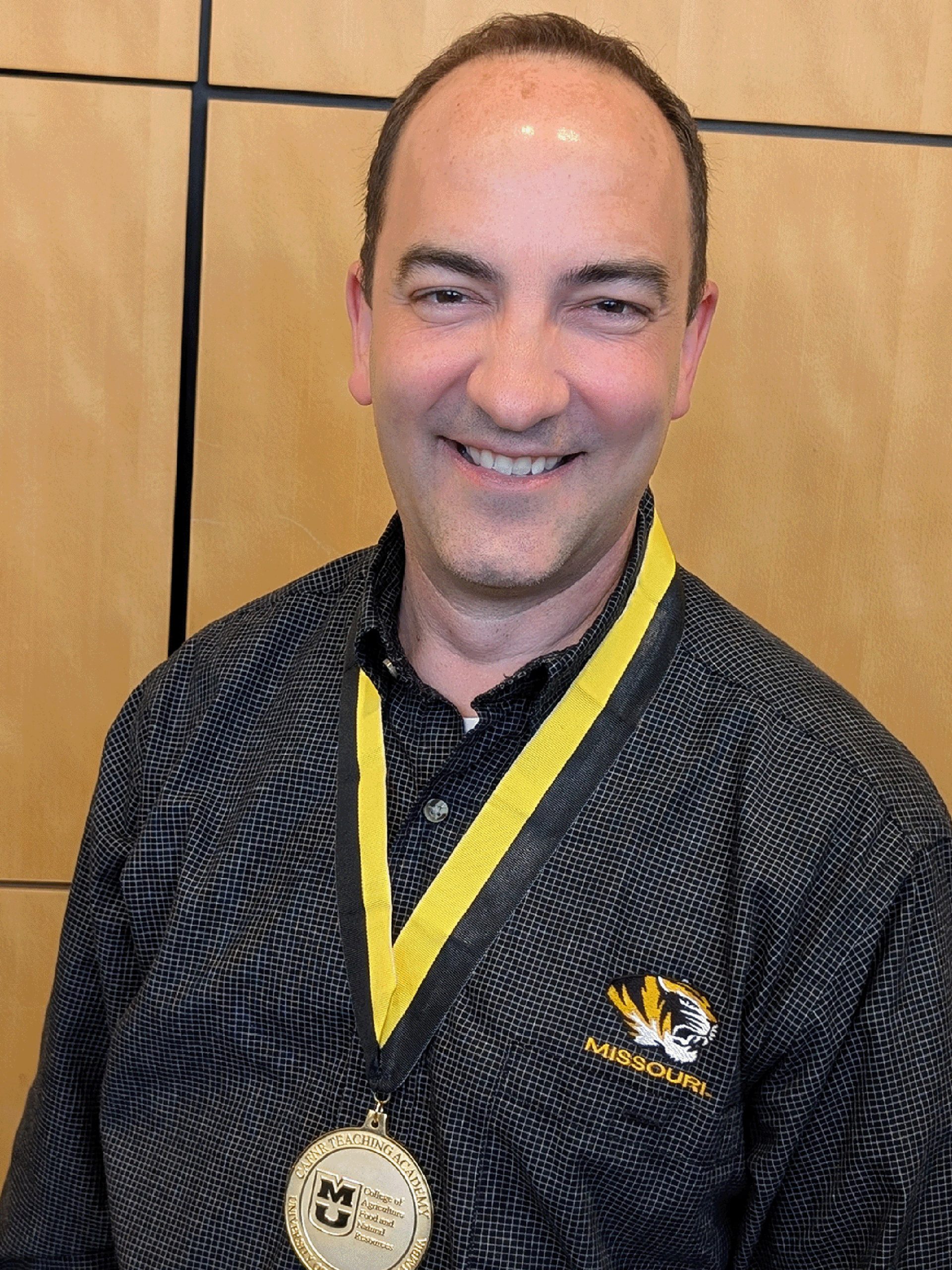
Eric Aldrich is an assistant teaching professor of atmospheric science at the School of Natural Resources in the College of Agriculture, Food and Natural Resources.
He has taught more than 5,500 students since Fall 2021, and his methods stress active learning and the Missouri Method, by which students learn by doing.
“This approach helps bridge the gap between academic learning and professional practice and builds confidence through meaningful, public-facing work,” Aldrich wrote of his teaching philosophy.
Those students noticed the value of Aldrich’s approach and responded to it positively. There were numerous letters in support of his nomination that focused on the same things, namely Aldrich's ability to connect with his students.
“Professor Aldrich’s ability to engage with students is unmatched. In the classroom, he blends informative lectures with light-hearted humor that captures the audience’s attention and makes the room feel relaxed,” Samuel McCurdy, who serves as a teaching assistant to Aldrich, wrote in a letter supporting the nomination. “Because of his background as a broadcast meteorologist, he brings a unique perspective to his teaching. His firsthand experience adds a layer of credibility that enriches his lectures, giving us practical insights that extend far beyond theoretical textbook concepts. He challenges us to be curious about the world around us, and he doesn’t just teach the material; he invests in the people learning it.”
Jim Crozier
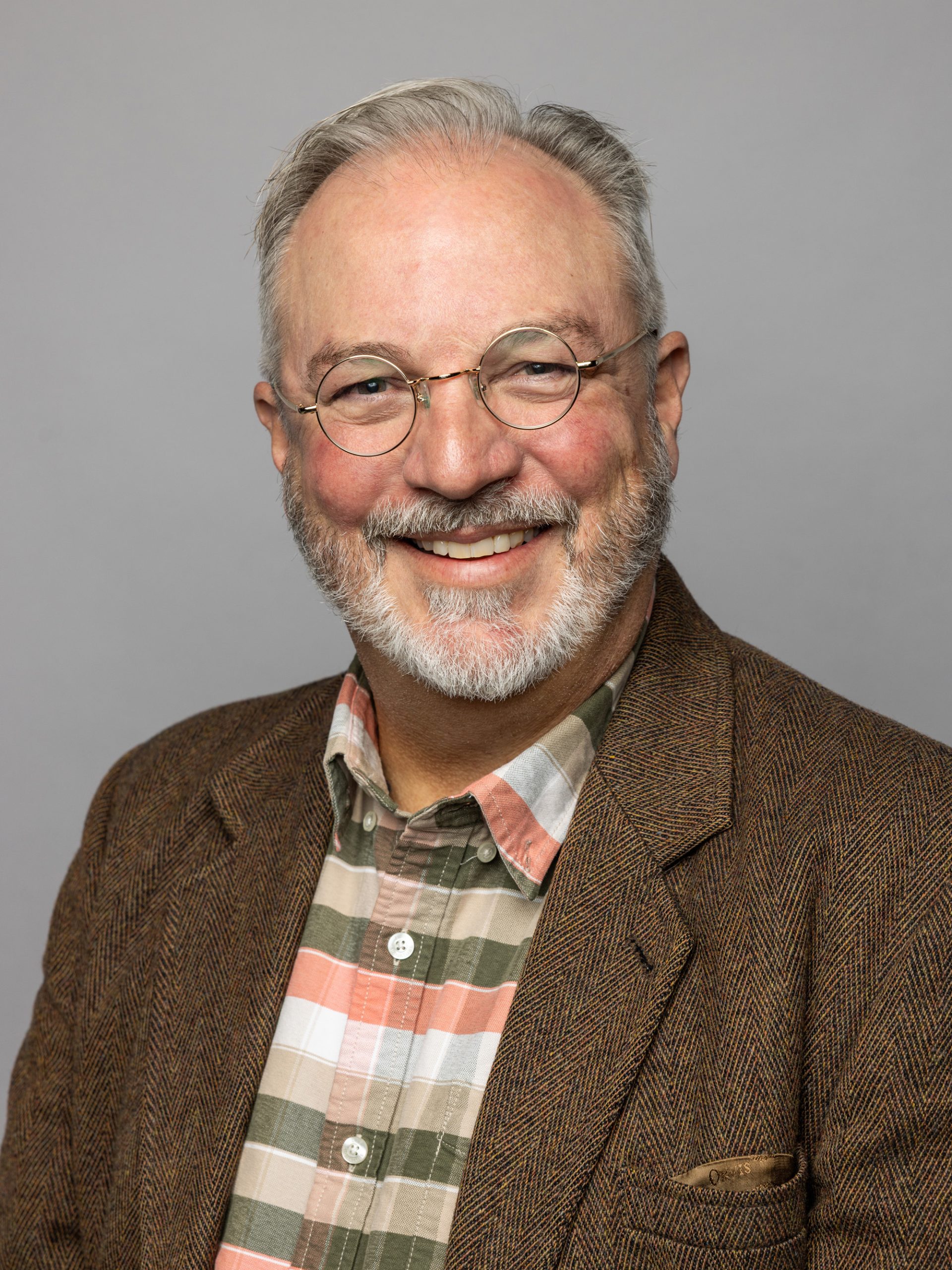
Jim Crozier is an associate teaching professor of classical studies in the Department of Classics, Archaeology, and Religion in the College of Arts and Science.
His contributions to his department are sizeable. Since 2016, he’s taught more than 6,000 students across 127 class sections of nine different course offerings. Four of those course offerings yielded 36 class sections that were writing intensive.
Crozier’s courses don’t merely involve in-person instruction; he has also been instrumental in the department’s online course offerings. Crozier has single-handedly developed at least 13 online courses.
No matter how he delivers lectures and course content, he always finds a way to resonate with the students.
“Dr. Crozier is one of those professors that everyone wants to have in their corner,” Elizabeth Trower wrote in a letter supporting his nomination. “Having taken multiple courses of his, I was always left in awe of how he time and time again creates courses that challenge students to think outside of the box and are ones that students don’t want to miss.”