Published on Show Me Mizzou Dec. 17, 2025
Story by Chris Blose, MA ’03
Photos by Andrew Bailey
A student finds her future career in the stacks at the Library of Congress during a summer program in Washington, D.C. Across the Atlantic at Oxford University, eager learners walk stately halls where Thomas Hobbes, John Locke and others developed foundational political philosophy. Down near the southern tip of Africa, yet another cohort of students explores the space where race and politics met during and after apartheid.
These scenarios have more in common than just being study abroad opportunities. They’re all carefully designed experiences created by the Kinder Institute on Constitutional Democracy. “It’s place-based learning,” says Billy Coleman, the institute’s associate director, “so all the things that they’re learning in the classroom are relevant to the place that they’re in.”
Each Kinder experience provides ambitious students the opportunity not only to analyze and discuss elements of history but also put that history in context by simply being where it happened.
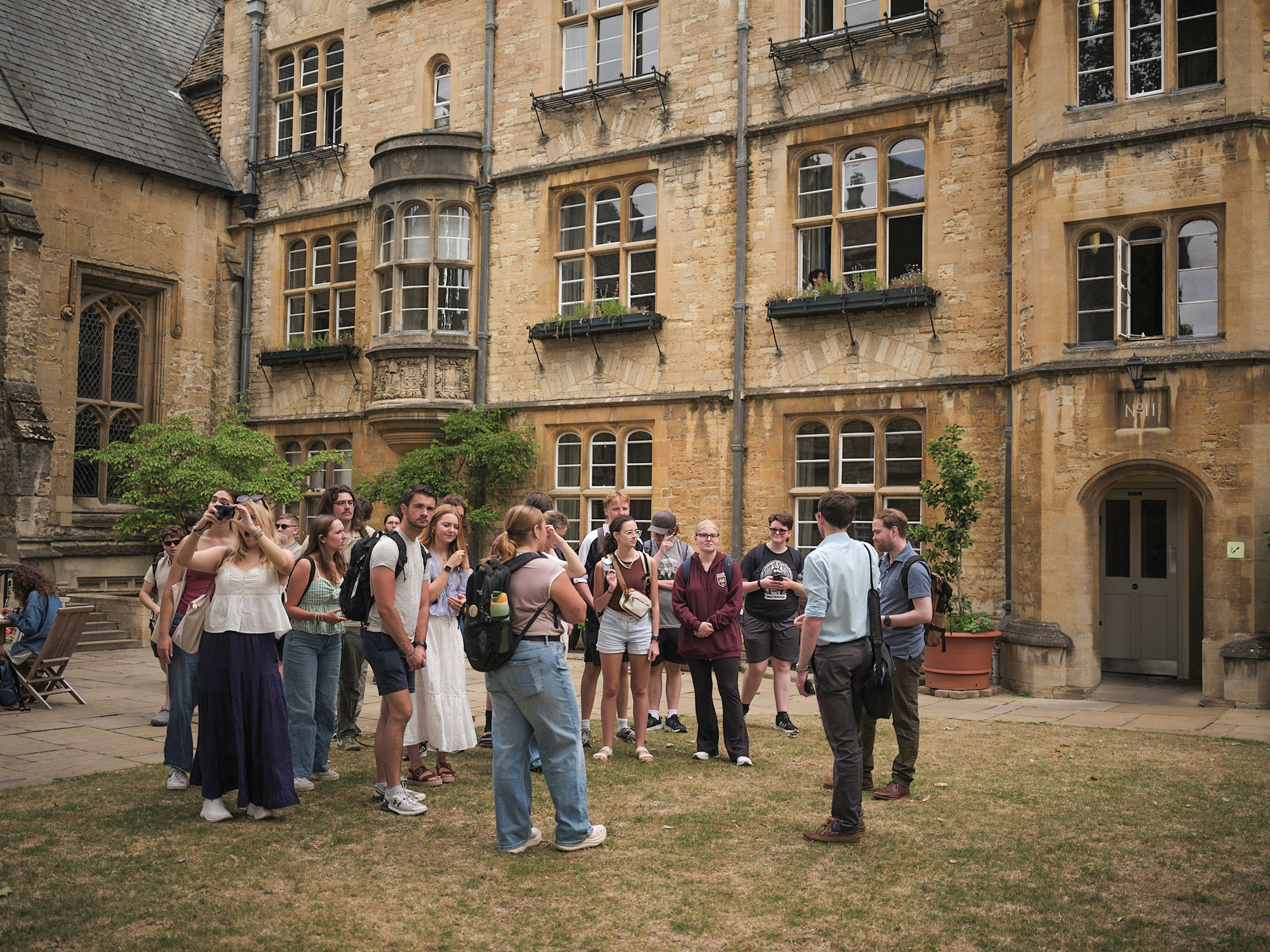
The Kinder Institute’s connection to Oxford is not new. Since 2021, graduate students have spent a month at Oxford’s Corpus Christi College as part of the year-long master’s degree program in Atlantic History & Politics program which begins with a residency each summer.
What is new is offering a similar opportunity for undergraduates, launched in the summer of 2025. The undergraduate Oxford Summer School is open to students who have completed the Revolutions & Constitutions Kinder-Honors sequence, and it complements the Kinder Institute’s Spring Break Oxford program, which runs every other year with the next session in March 2026. “We wanted to be able to create a much more bespoke, immersive experience for our undergraduates,” Coleman says. “And we were able to do that by partnering with the Rothermere American Institute (RAI) at the University of Oxford.”
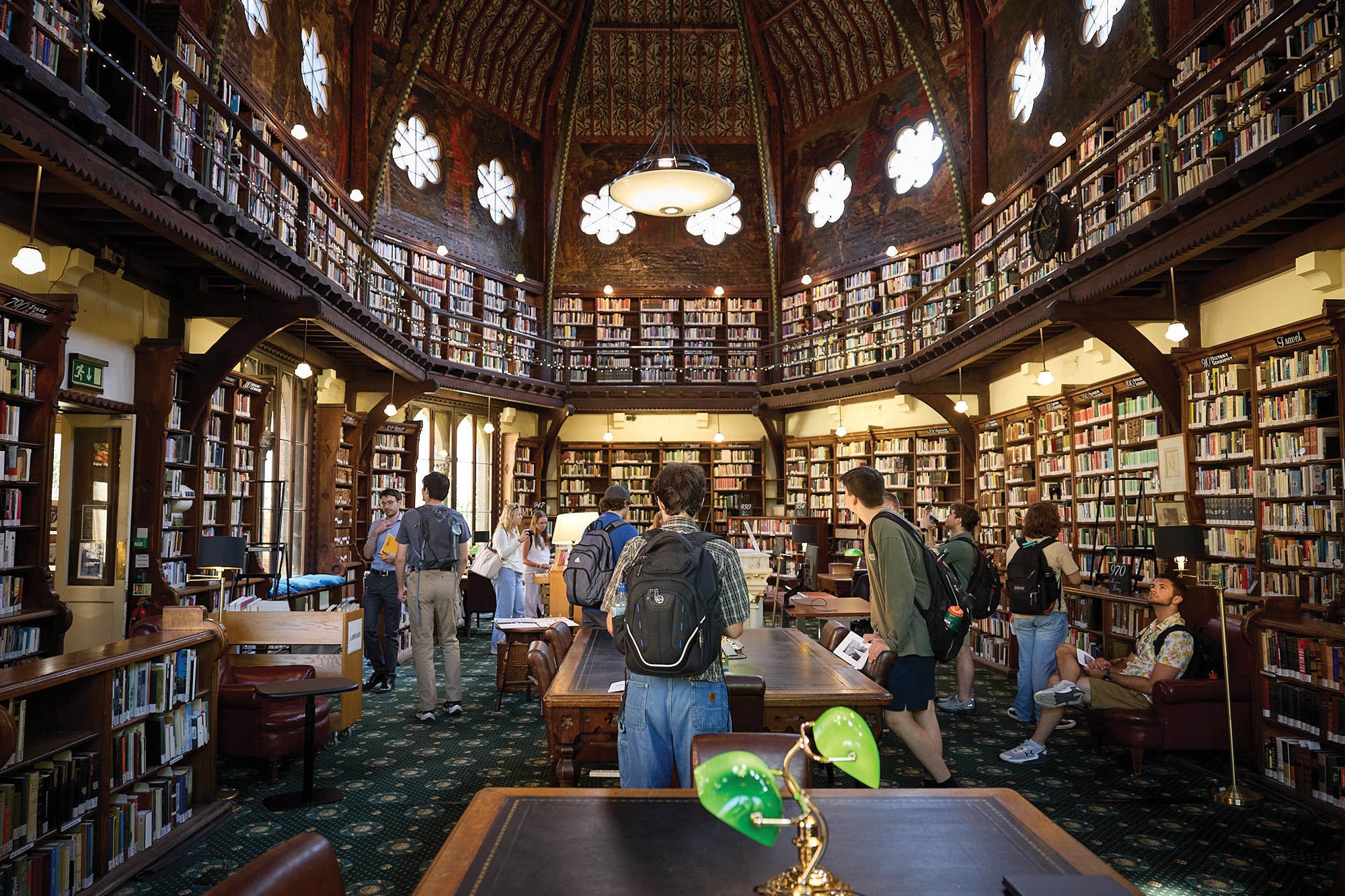
In the first cohort of the new program, 20 undergraduates spent a month learning from Oxford professors, researching in the famed Bodleian Libraries, and dining and conversing in halls that were 500-plus years old.
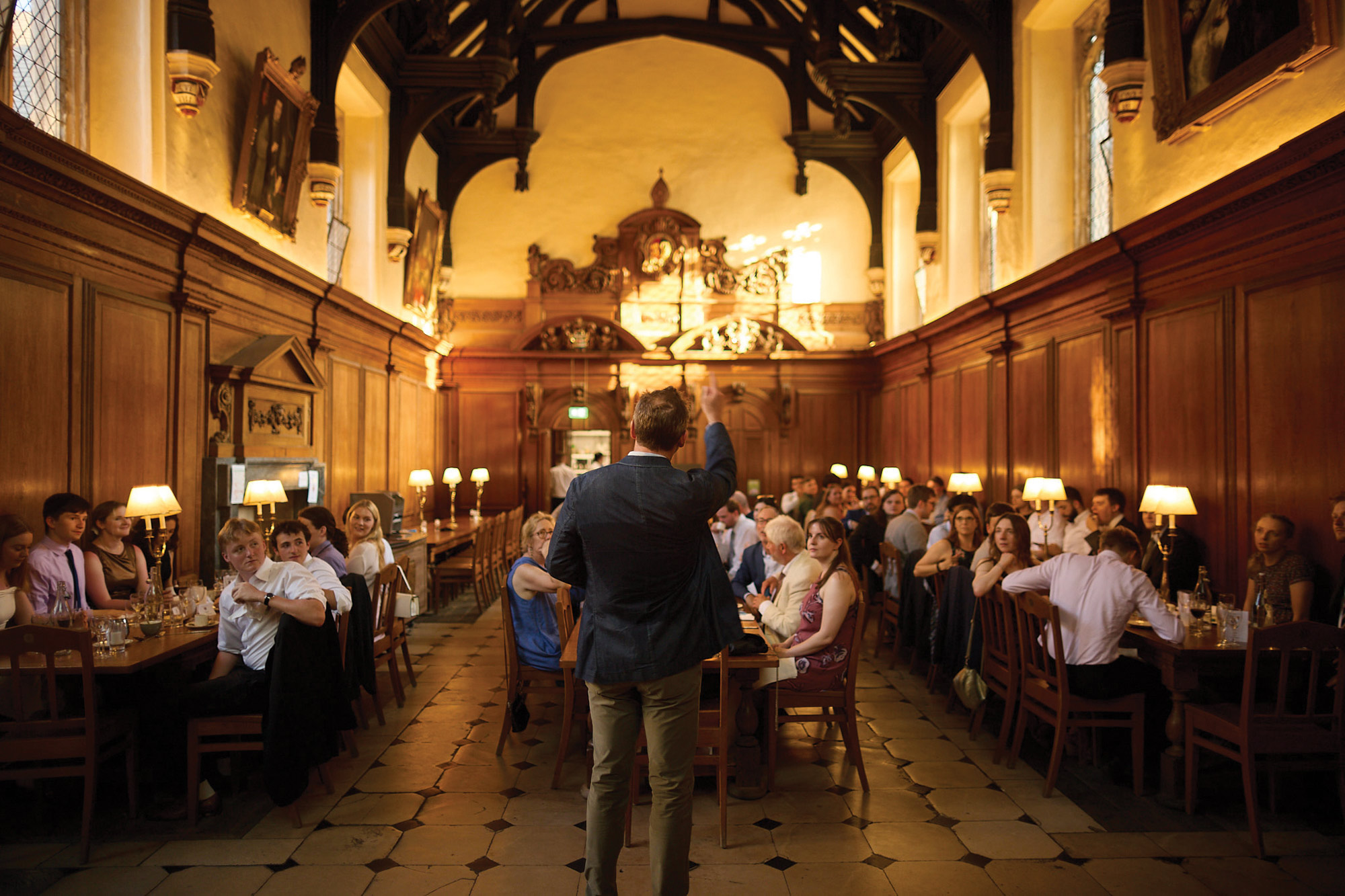
“They studied, through deep immersion in the British Civil Wars of the 1640s, right through to the Glorious Revolution, this fiery crucible in which ideas about liberty and about divisions of power were formed,” says Daniel Rowe, RAI’s director of academic programmes and one of the program’s instructors.
A walking tour of Oxford took students to major sites from the civil wars they were studying. On a field trip to London, they visited the original site of St. Mary Aldermanbury Church. Destroyed first by fire in the 1600s and again during World War II, the church was rebuilt with original stones in Fulton, Mo.
“I would say the highlight for me was the practicums we did about museum studies,” says Carly Riggs, who is majoring in public history and Spanish. “We took tours of all the museums around Oxford. We actually got to go to a muon facility, which talked about carbon dating and how they use that cross-section of science and history to figure out where things come from.” At the end of the practicum, students got to redesign a museum exhibit.
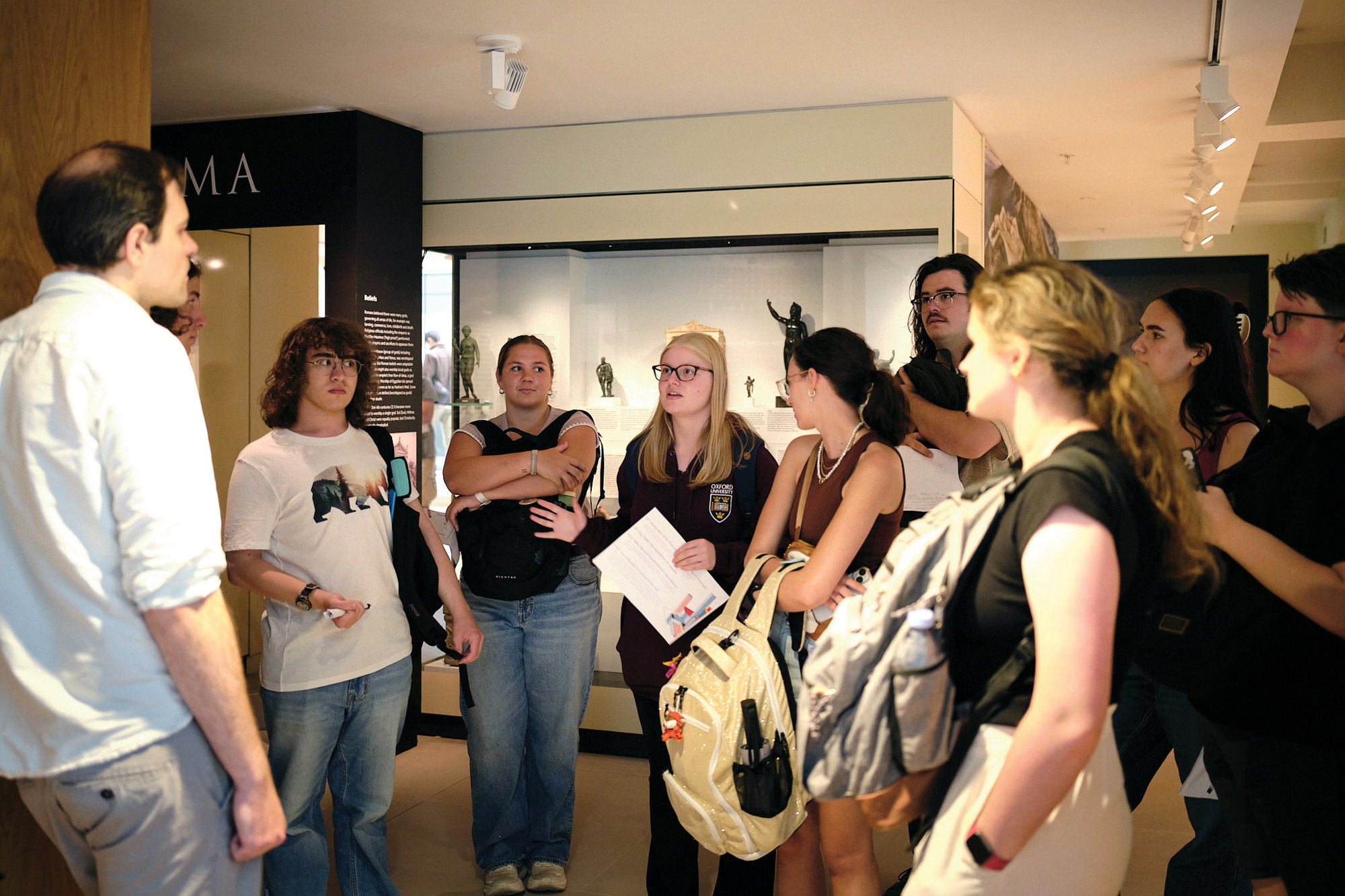
In addition to such field trips, the academic rigor itself was a highlight for strategic communications major Addeline Morlan. From the strenuous reading requirements to the highly personal Oxford tutorial style, she came away from the program both challenged and edified.
“It’s not about memorizing information that we have learned throughout the four weeks,” she says. “It was thinking through the readings and defending our interpretations in real time. And that level of individual feedback completely changed the way that I write and I analyze information now.” Learning and writing styles aren’t all that changed for Morlan. Back at Mizzou, she’s pursuing independent research about misinformation, and she’s pondering constitutional law as a possible future.
Ultimately, the success of the program is reflected in how it changes participants. “I think the links that students are drawing are to think about these big questions, and to realize that these big questions are long-standing,” Rowe says. “They’re perennial, but they have a deep context, a deep history. This is about giving students the tools and the context to make informed judgments.”
To read more articles like this, become a Mizzou Alumni Association member and receive MIZZOU magazine in your mailbox. Click here to join.