March 25, 2026
Contact: Eric Stann, StannE@missouri.edu
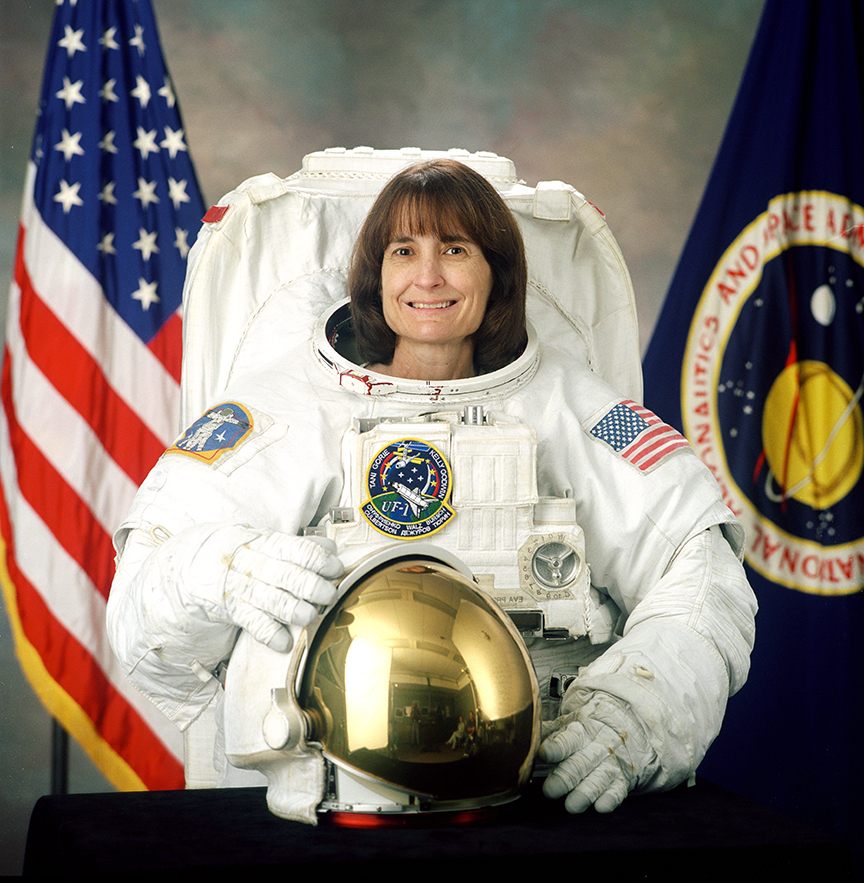
When the first American rocketed into space in 1961, an 8-year-old girl in Jackson, Missouri, looked up at the stars with wonder. At the time, little did Linda Godwin know that she'd one day join that exclusive club of space explorers.
After earning her master's and doctorate from Mizzou, Godwin was selected as a NASA astronaut candidate in 1985. Her remarkable career includes over 915 hours in space across four shuttle missions and two historic spacewalks, including a six-hour spacewalk at the Mir Space Station.
Following her retirement in 2010 from NASA, she became a professor of astronomy in Mizzou’s College of Arts and Science, inspiring the next generation of space enthusiasts. Now, as NASA aims to return humans to the moon with the Artemis program, Godwin, a professor emerita, reflects on a new chapter of space exploration.
Why is it still challenging to go to the moon more than 50 years after the Apollo missions?
Godwin: Traveling to the moon costs more money and is more dangerous than flying to low Earth orbit, where the International Space Station is located. Missions to the moon require larger rockets, more fuel and a special spacecraft called a lunar lander. The lander carries astronauts to the moon’s surface, then lifts off again and returns to lunar orbit so the astronauts can rejoin the spacecraft that will take them back to Earth.
How will future missions to the moon be different than those during the Apollo era?
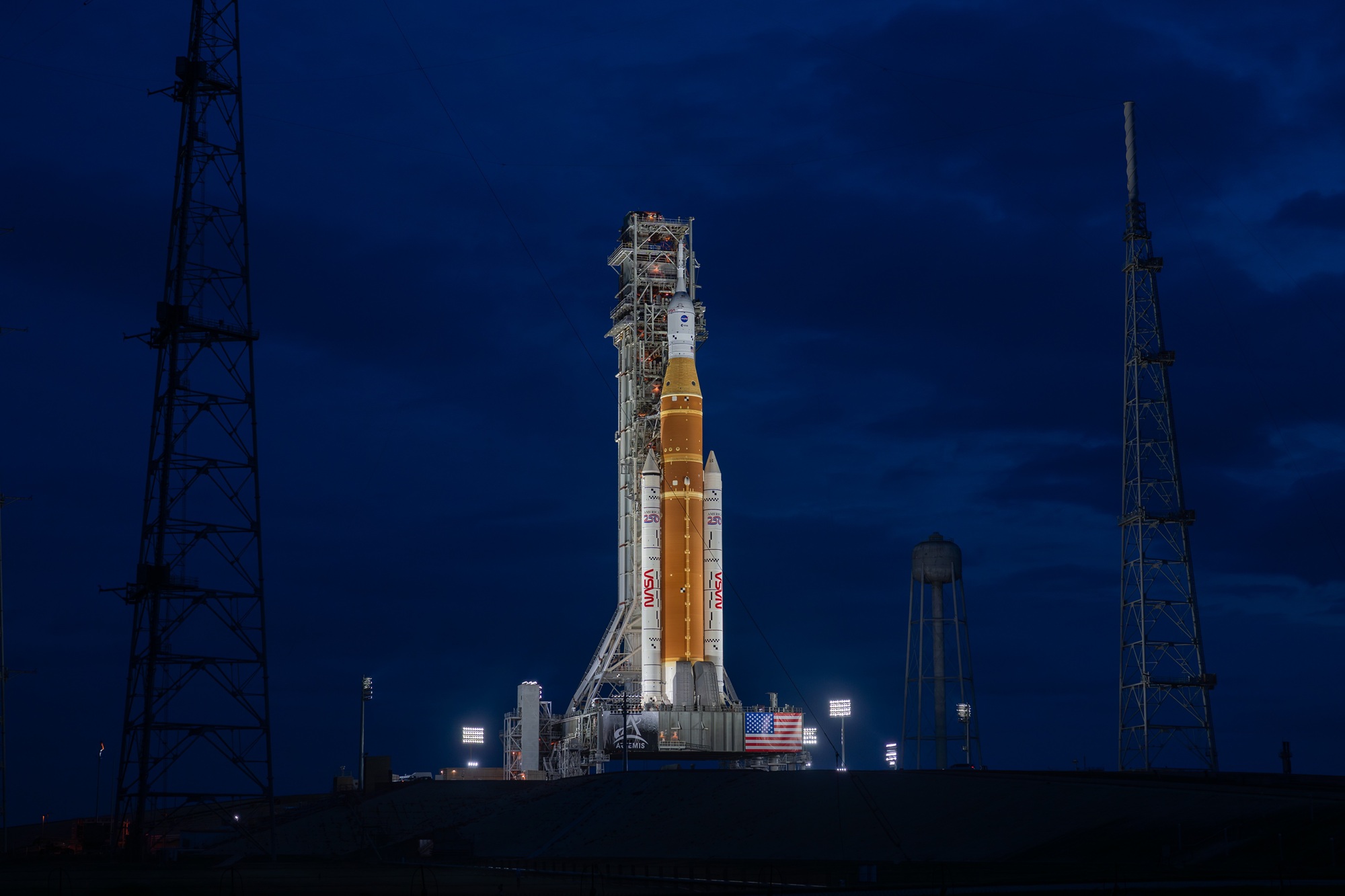
Godwin: Artemis missions will carry a crew of four astronauts, and, beginning with Artemis IV, all of them will land on the moon. This is different from the Apollo era, when one astronaut remained in orbit.
Also, instead of launching the lunar lander with the astronauts, it will go into space first and wait in a special gravity-balanced orbit near the moon until the crew arrives. This reduces the rocket’s weight and could allow the lander to be reused, an ability that does not exist today.
Additionally, the Artemis missions will land near the moon’s south pole, which adds extra challenges due to lighting conditions that alternate between near-total darkness and the harsh glare from low-angle sunlight. Because of this, future missions to the moon may find water ice and other frozen materials hidden inside craters that have never been touched by sunlight.
What are some of the hardest challenges to predict in space?
Godwin: Equipment failures are unavoidable, and no one can plan for every possibility. Crew health is another concern, so astronauts and flight controllers train extensively to handle emergencies, and at least one crew member is trained in medical care. Future missions may also use technologies like 3D printing to make replacement parts in space.
What do scientists still need to learn about the human body in space?
Godwin: Living in microgravity, or any free-fall orbit, can cause bone loss, weaker muscles and changes in body fluids. Thanks to more than 25 years spent on the International Space Station, we now know ways to reduce some of these problems. Researchers have also found other issues, like vision changes and a higher risk of blood clots, but they don’t have solutions yet. The moon’s partial gravity might help, though we don’t know for sure.
How do moon missions help prepare for future missions to Mars?
Godwin: The moon serves as a testing ground for living and working far from Earth. Engineers can try out different habitat designs, power systems and spacesuits that could later be used on Mars. Also, the moon has about one-sixth of Earth’s gravity, while Mars has about one-third. By studying astronauts on the moon, we can understand how the human body reacts to lower gravity compared to both Earth and the weightlessness of space.
How can NASA’s Artemis program inspire future generations?
Godwin: Just as Apollo era inspired earlier generations, the Artemis program can excite people about space today. Watching humans return to the moon shows young people that ambitious goals are still possible.