By Linda Geist
April 1, 2026
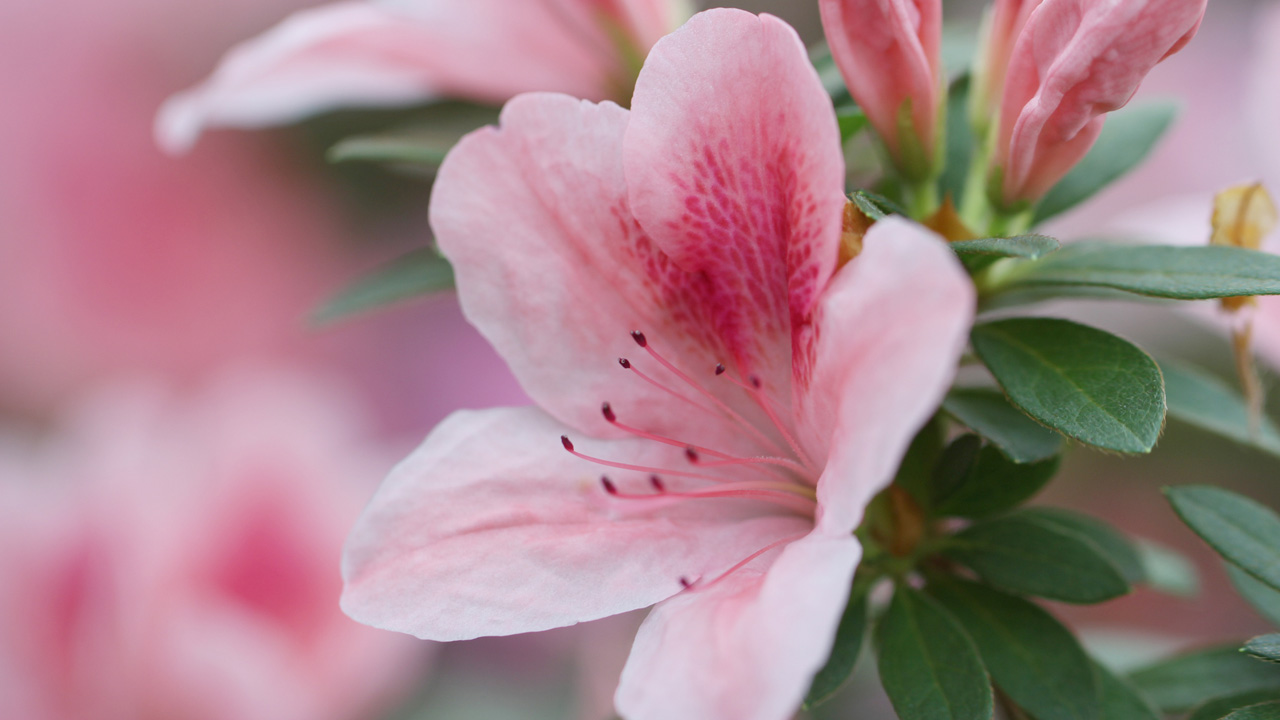
Renowned for their colorful seasonal displays, azaleas are becoming the crown jewel in landscapes nearly everywhere. That’s one reason the National Garden Bureau has selected azalea as its 2026 shrub of the year.
There is no more iconic springtime flowering shrub than azalea, University of Missouri Extension horticulturist David Trinklein said. Advances in hybridization have yielded new cultivars that rebloom, are heat- and cold-tolerant and have compact growth habits, which makes them ideal for small spaces.
Azaleas should be planted in early spring or fall when temperatures are mild. This gives roots time to establish before summer heat or winter chill set in. Most azaleas thrive in partial shade.
Azaleas are a great way to attract pollinators, Trinklein said. Bright pink and red azaleas are hummingbird magnets, while white blooms attract fluttering moths and could even be used in a moon garden. Additionally, early blooming azalea varieties give bees that have overwintered a vital first food source, helping kick-start pollinator activity in the garden each spring.
Azalea belongs to the genus Rhododendron, but it should not be confused with the larger shrub with evergreen, leathery leaves and bell-shaped flowers commonly called rhododendron. In short, all azaleas are rhododendrons, but not all rhododendrons are azaleas, Trinklein said.
There are two main types of azaleas. The Tsutsusi group is evergreen and retain its leaves year-round. Popular members of this group include the Kurume, Girard and Gable hybrids.
In contrast, the Pentanthera group is deciduous. However, they often display brilliant foliage as temperatures fall before shedding their leaves in the autumn. Popular members of this group include the Exbury, Northern Lights, Mollis hybrids and Ghent hybrids.
Read more from MU Extension