January 13, 2026
Contact: Janese Heavin, heavinj@missouri.edu
Photos by Abbie Lankitus, Gretta Cohoon, Sam Cox and Reagan Manis
From a first-of-the-month snow to life-changing research and the excitement of commencement, December at the University of Missouri offered lots of memorable scenes. University photographer Abbie Lankitus shares her favorite photos of the month.
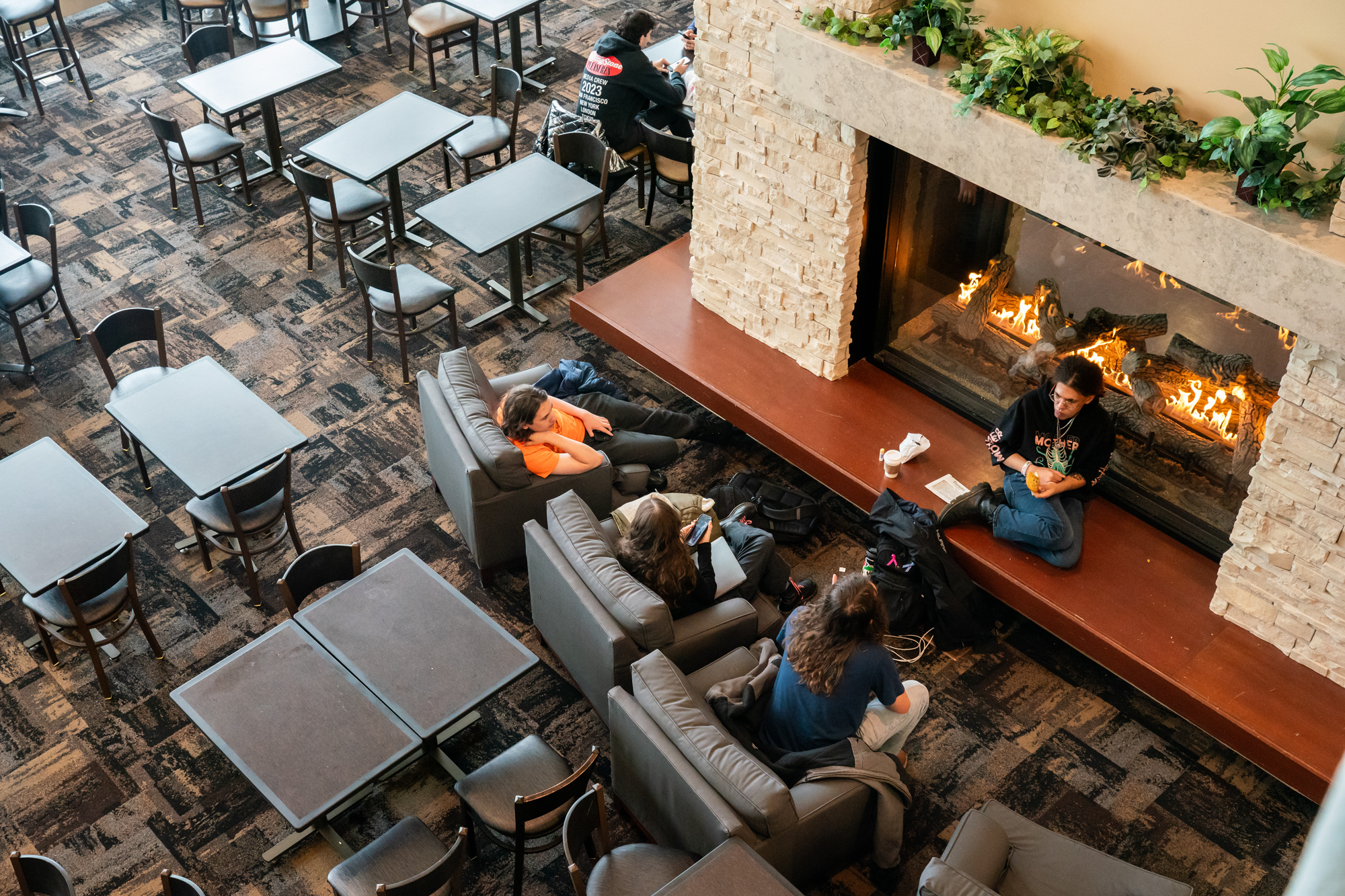
Candid moments of connection are some of my favorite photos to feature, and this one is no exception. What I especially love about the photo is how empty this area of the student center is in this moment. Coupled with the bird’s-eye view, it makes the scene incredibly intimate and cozy.
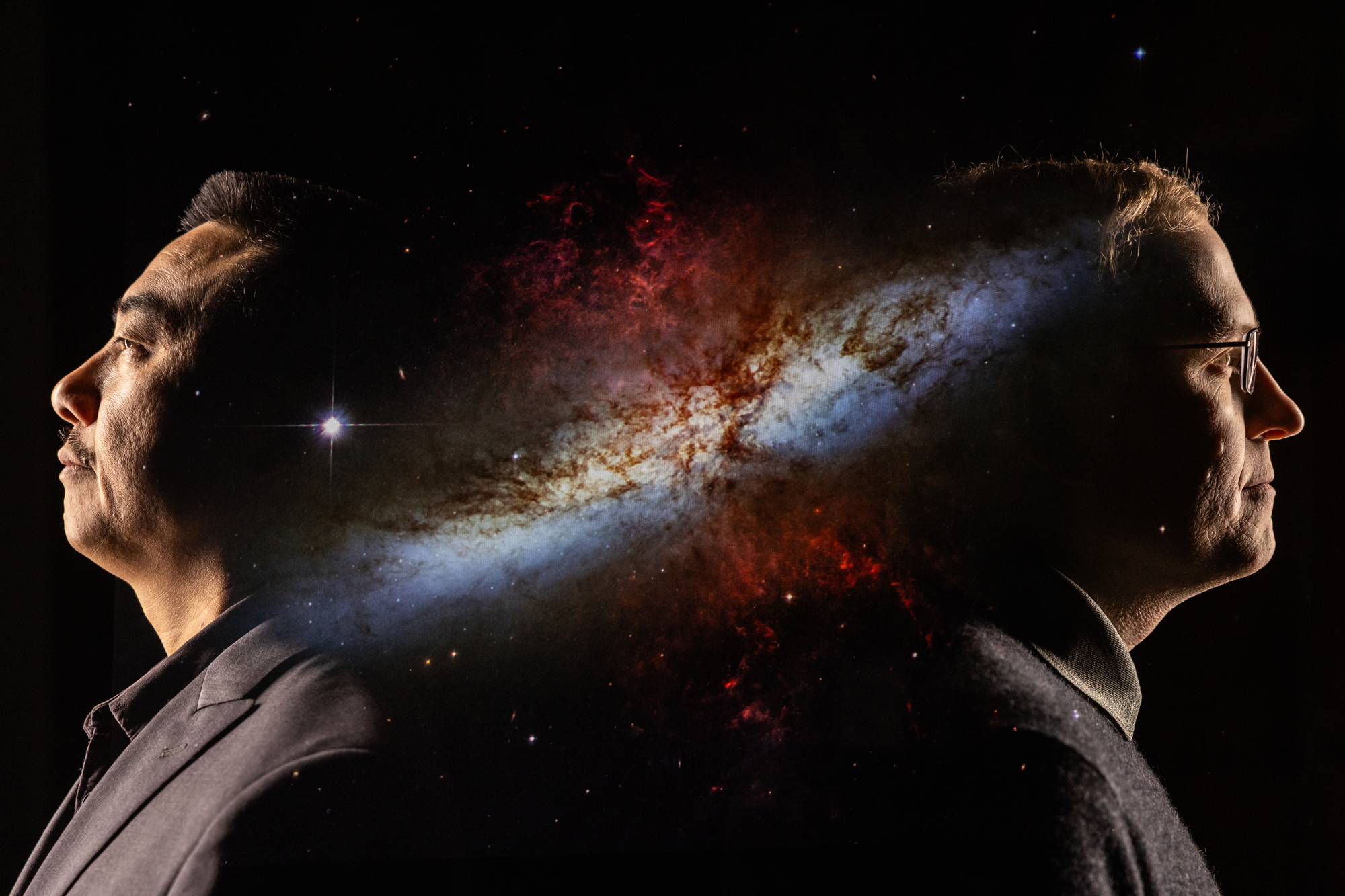
Astronomy professors Haojing Yan and Charles Steinhardt in the College of Arts and Science have some been part of some recent groundbreaking research on the formation of our universe, and I wanted to showcase that great minds think alike.
The entirety of this photo was captured in the studio with in-camera multiple exposures — no Photoshop. Multiple exposure photography was developed in film cameras by layering two or more images onto a single frame by re-exposing the film. Now it’s a (somewhat simple) setting in digital cameras.
First, I took a portrait of Steinhardt that I was happy with. Then I selected it as my base image for my second exposure, Yan’s portrait. Once I was happy with the combination of portraits in the image, I bid farewell to both professors and started playing.
I took several galaxy images from the European Space Agency Hubble website and projected them on a backdrop. With my base image of the two portraits, I started experimenting with different images of galaxies to find the perfect fit as the third exposure. There are several more options (I couldn’t settle on one!), but this was my favorite to share.
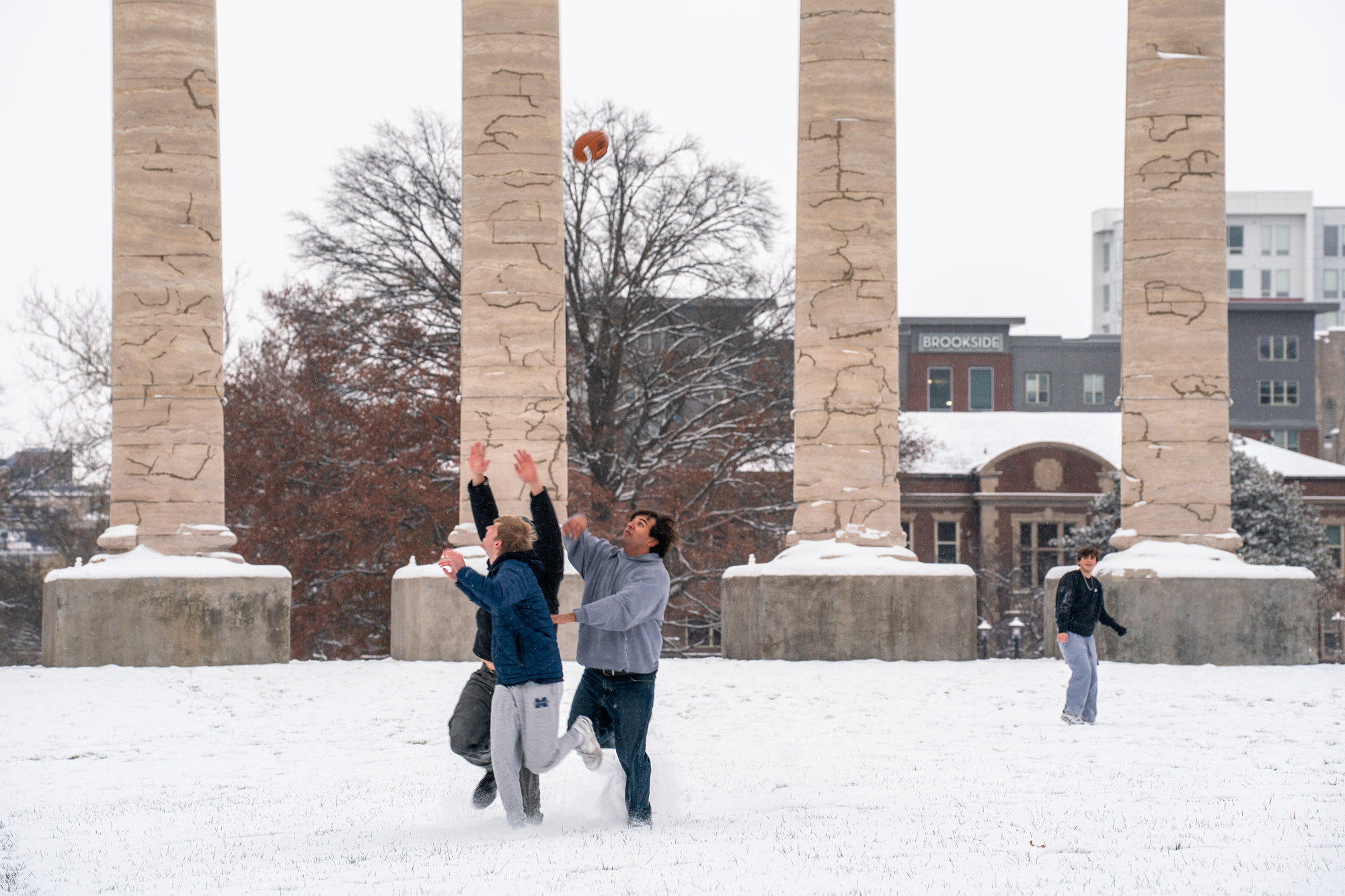
December felt like saying hello right off the bat with a snowfall on the 1st as if to say, “Hey, it’s me! Winter’s here!”
I was sad to see fall go, but snow definitely makes up for it! These students also took advantage of it, which student photographer Sam Cox captured.
Apart from the moment, there are several technical things I love about this image. First, context: I can see the ball, which draws my eye not only to where it’s going, but where it came from. That tells an entire story in one snapshot. Second, movement: Snow is getting kicked up from the shoes, and I can see the race happening. Third, place: The Columns are clearly in the background, so you know this is at Mizzou.
Yeah, it’s cloudy, and the colors are a little moody, but this image tells an excellent story in a place we’re all familiar with. It’s also a moment I’m sure many who attended Mizzou can relate to.
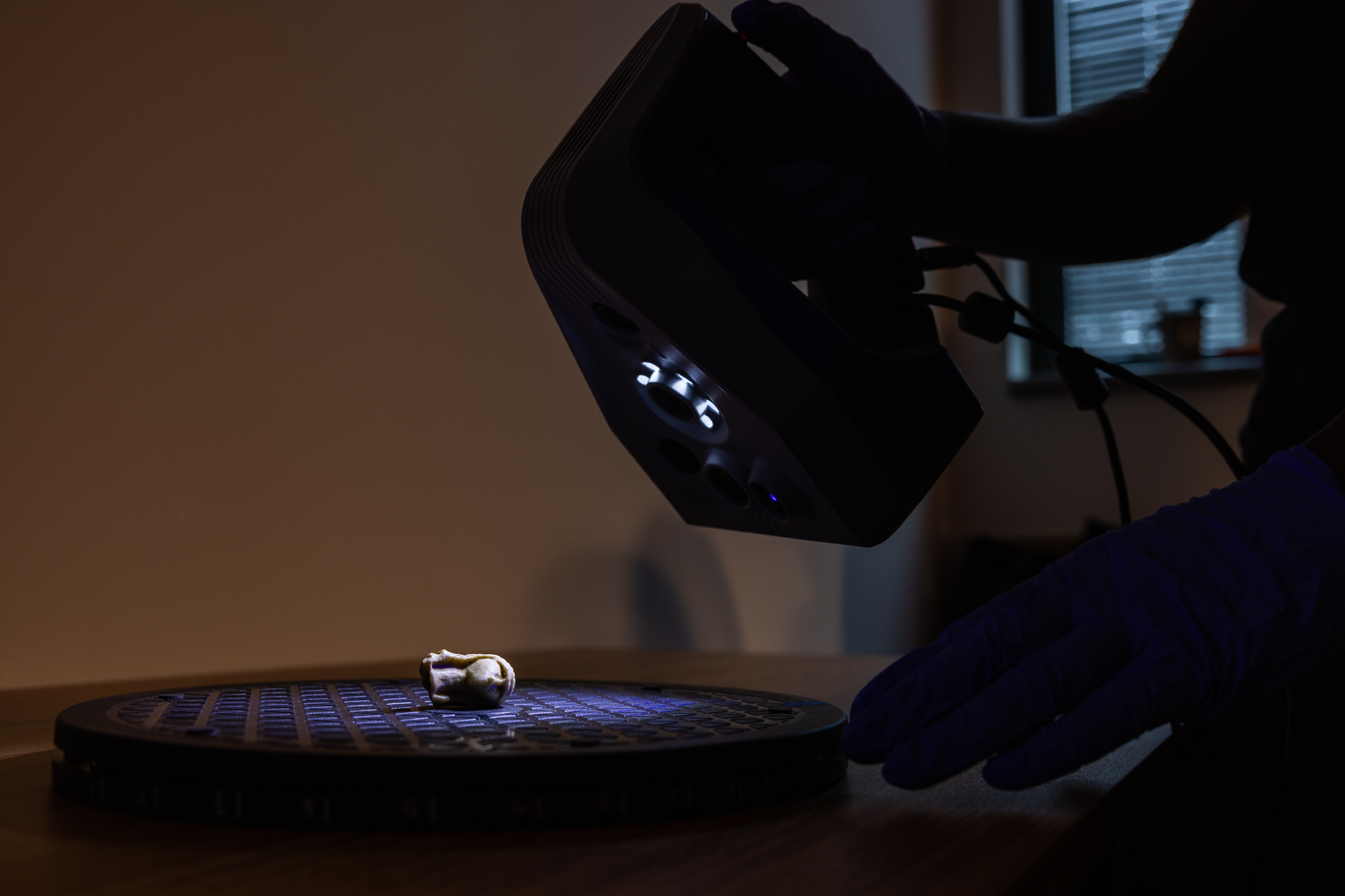
Housed in the Museum Support Center just off campus are an untold number of archaeological and anthropological items. Also housed there is the 3D Digital Heritage Preservation Lab where undergraduate research assistants and Associate Professor Medeia Csoba DeHass work with Indigenous communities on digital preservation projects.
Some of the items aren’t accessible to the public, so an example piece was used for this marketing shoot. This 3D scanner has a flashing light that is somewhat viewable with the naked eye but can’t be seen in a camera with normal shutter speeds. So, after borrowing a tripod from the lab, turning off the lights and slowing my shutter down greatly, I was able to see the scanner light in the photo! I think it made for a cooler image than with the light on anyway. The artifact is spotlighted and tells a better story about what’s going on here.
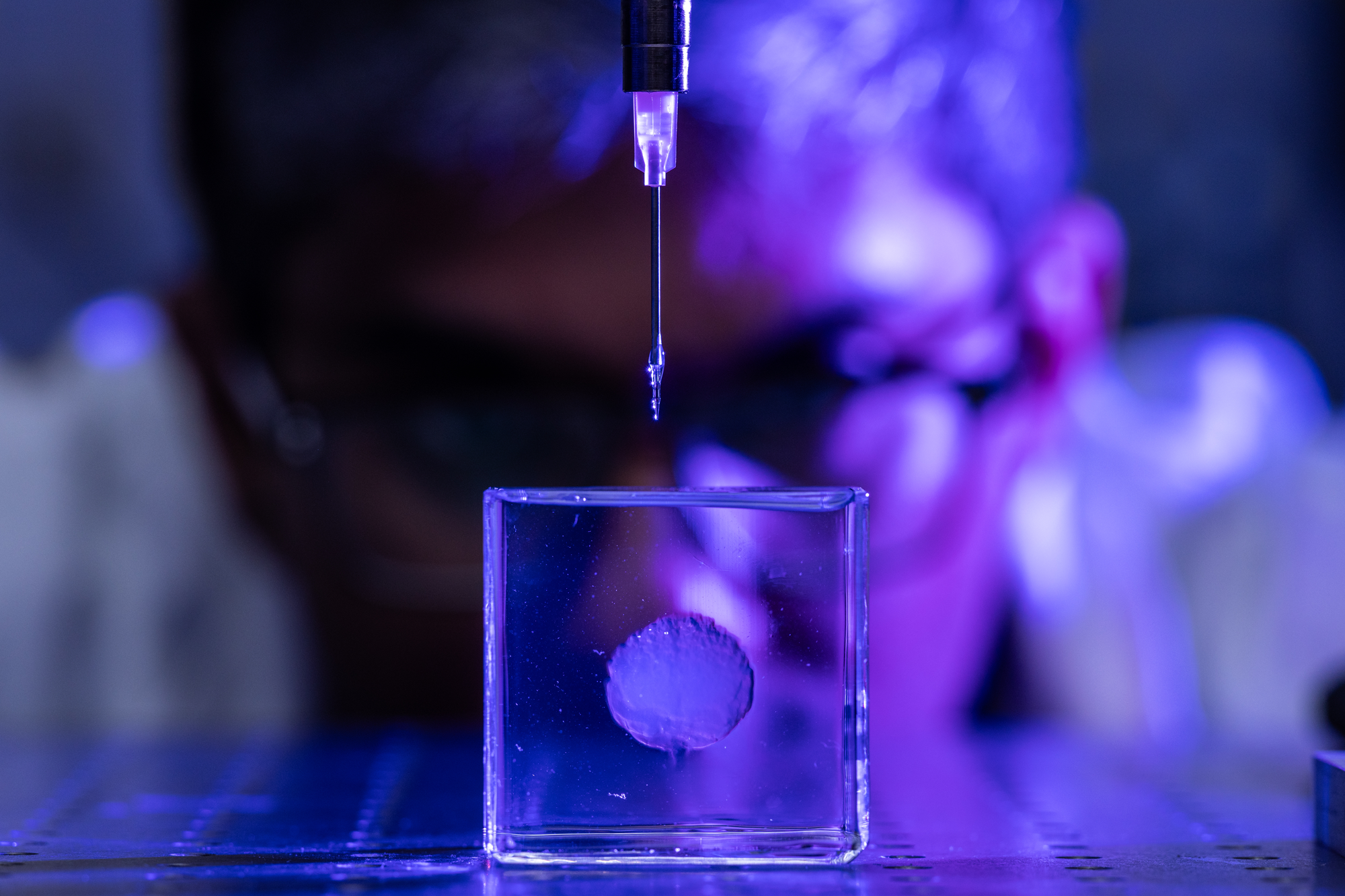
In the College of Engineering in Lafferre Hall, mind-blowing research is taking place in Assistant Professor Christopher O’Bryan’s lab. O’Bryan specializes in soft matter 3D printing and the challenges that come with it. When successful, the 3D-printed models can look and feel more accurate than their real-life counterparts.
You may not know that a brain varies in stiffness and texture. Traditional methods of recreating soft tissue organs are uniform in structure, whereas this method of printing in a jelly-like support bath allows O’Bryan and his students to vary those elements and create a more realistic and accurate print. The full story is coming soon to Show Me Mizzou.
It was quite the information dump leading up to this shoot. That’s one of the coolest things about being a university photographer — there’s always the question of “What am I going to learn today?” I gelled a flash with purple off to the side and then had another on-camera flash to fill in some of the shadows by bouncing the light off the ceiling. The 3D is more opaque than its bath, but still clear, so I wanted to add color for it to stand out. Doctoral student Mujtaba Ghoto is lowered to eye-level behind the print, and I used a macro lens to really highlight as much detail as I could.
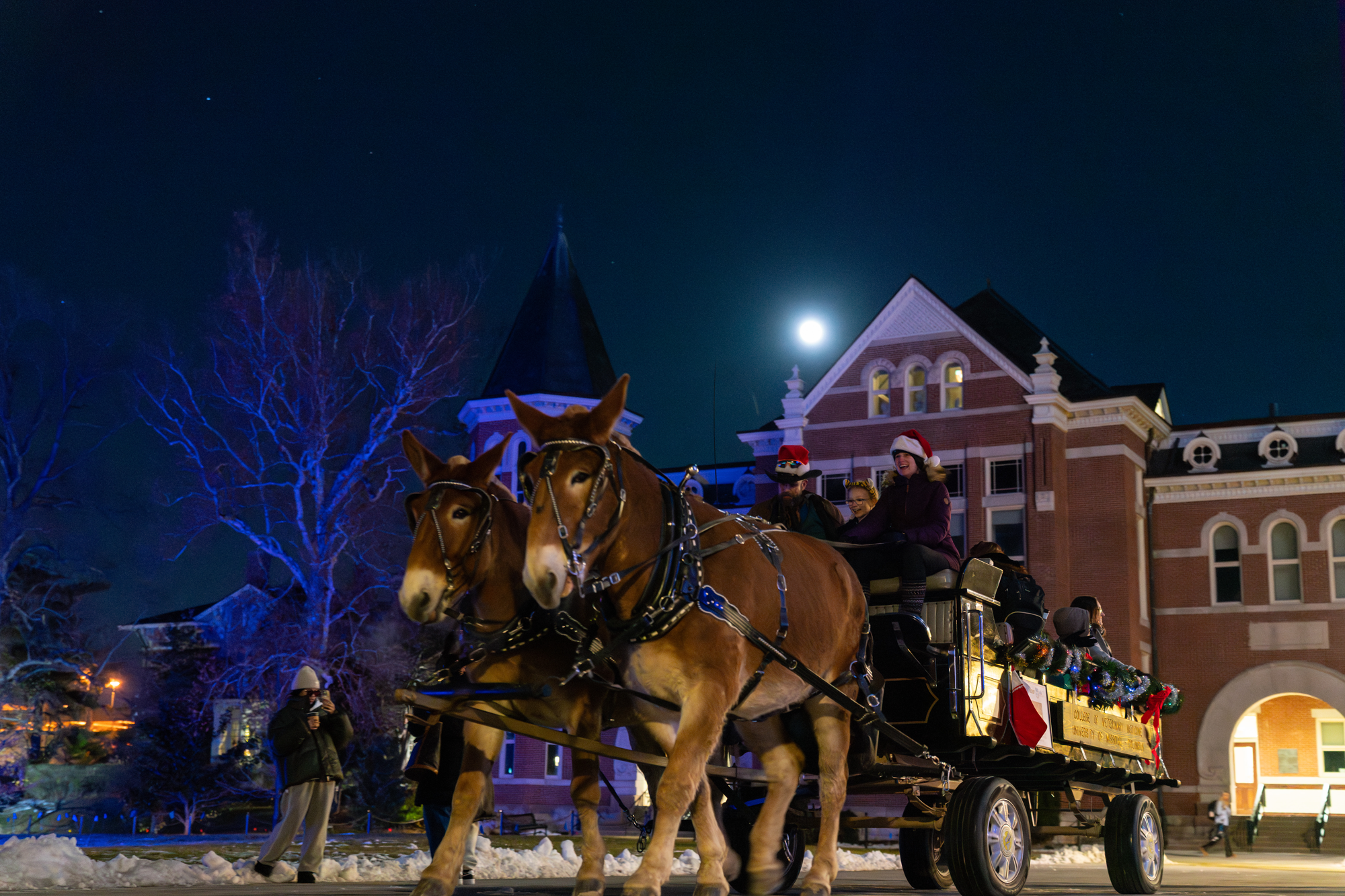
In its fourth year, Deck the Columns has become one of my favorite events, and each time it gets bigger and better. The event was supposed to be held outside this year in front of Jesse Hall and around Francis Quadrangle, but the snow and 20-degree temperatures pushed activities inside.
That didn’t stop the Mizzou Mule Team from coming and giving those willing to brave the cold weather a good time, though. Sam stayed outside for as long as his hands could handle the cold and captured this absolutely magical photo. With the mules pulling the “sleigh,” a little bit of snow on the ground, blue lights highlighting the trees and a full moon illuminating it all, it felt like the holiday spirit truly came to Mizzou.
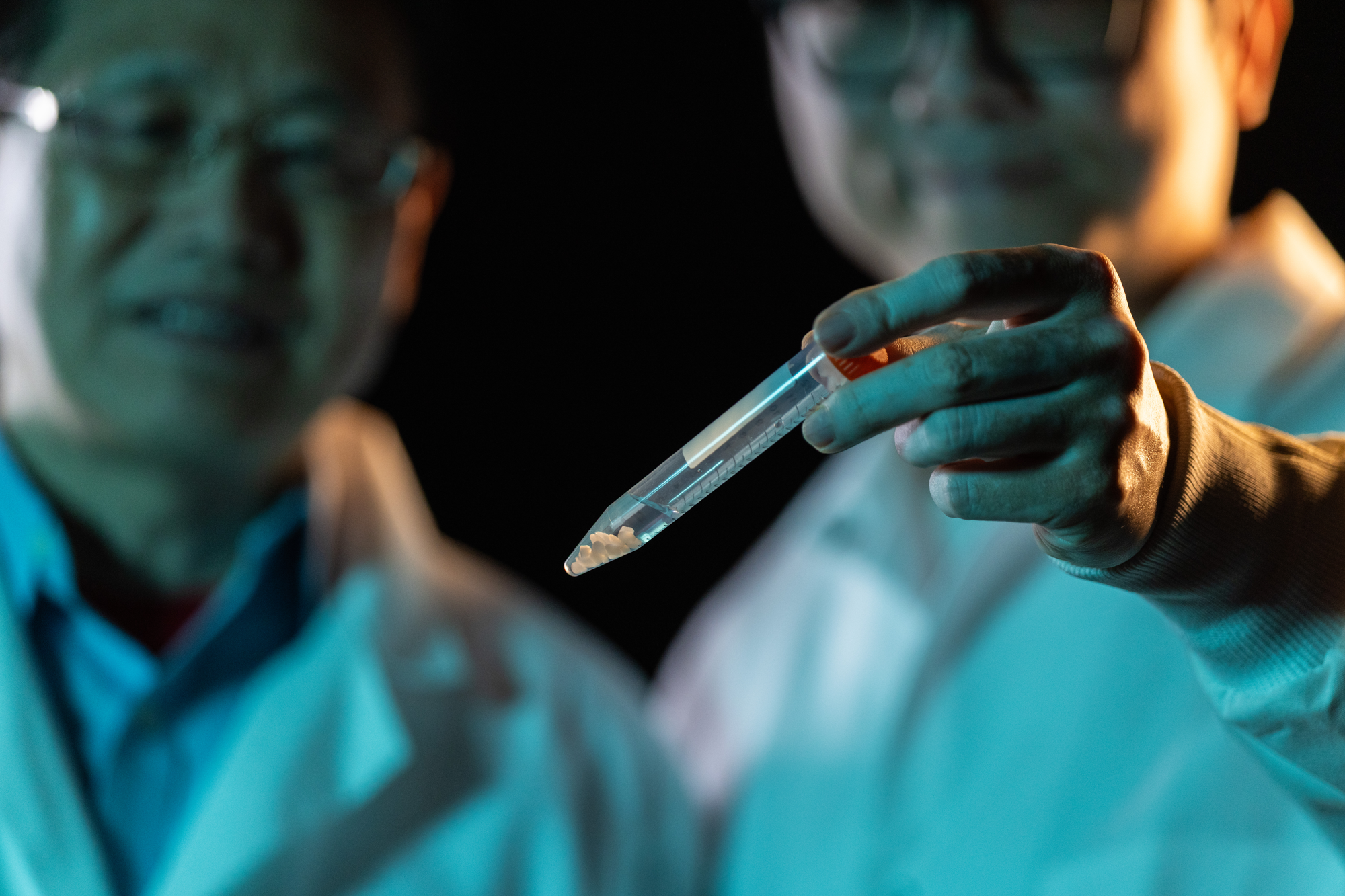
I had a lot of fun in the studio this month with research stories. This shoot centered on the work Baolin Deng, a Curators’ Distinguished Professor, and Pan Ni, a research scientist, do at the Missouri Water Center in the College of Engineering. Ni is holding a test tube of polymers that can attract rare earth elements out of abandoned mining waste. Rare earth elements, or critical materials, power technologies such as electronics, vehicles, national defense systems and more.
I got to touch the polymers and they’re like tiny jellies. It’s incredible the things they can do, thanks to Deng and Ni. I wanted to highlight them and the polymers with some water-like lighting because what they’re doing is critical to the Missouri water sources near these mining waste sites.
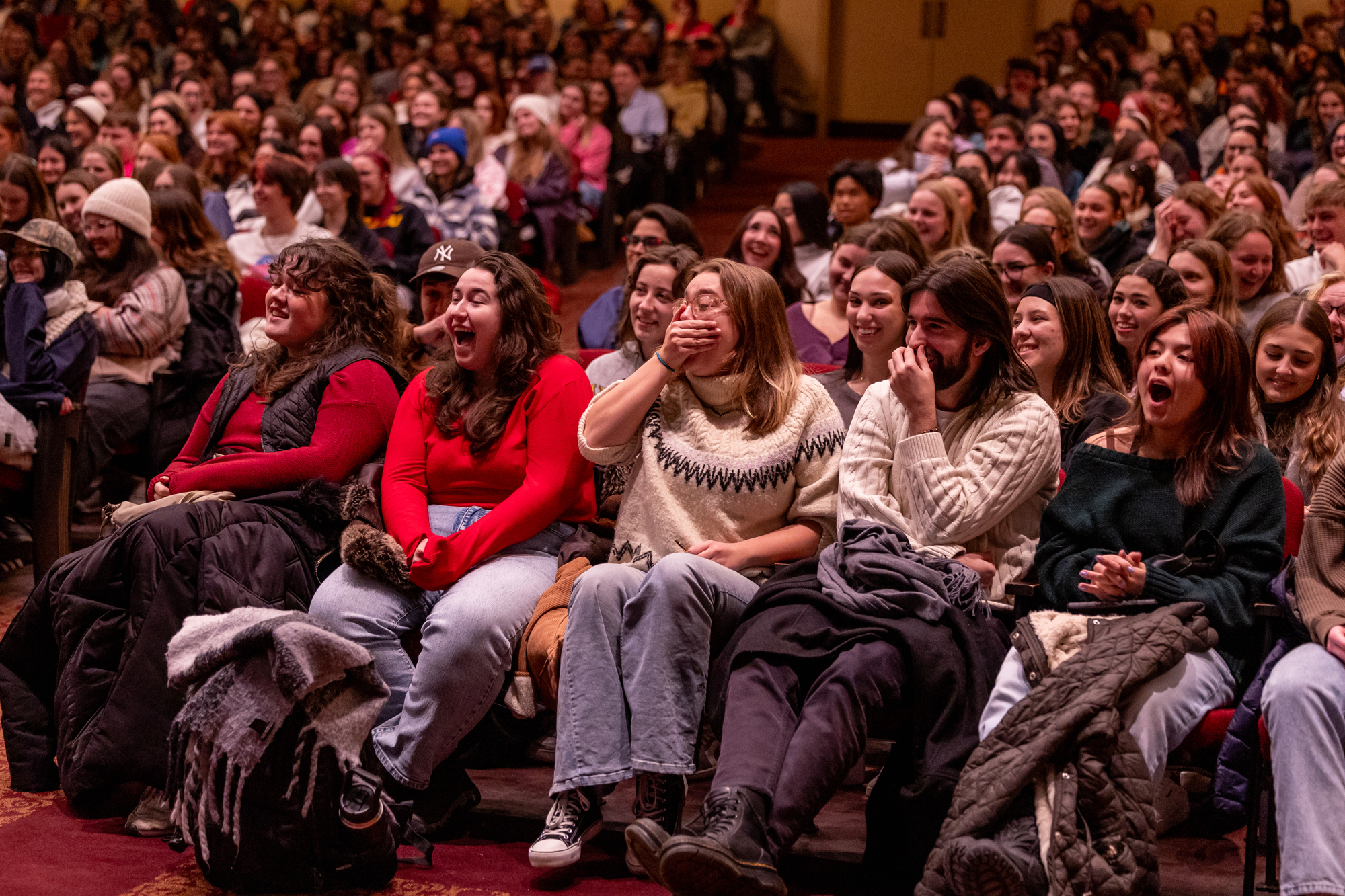
Campus Activities Programming Board (CAPB) hosted A Moderated Conversation with Caleb Hearon in Jesse Auditorium, and it was a packed house. Hearon is a comedian, storyteller and social media personality from Kansas City. He’s also got an incredibly sharp wit that keeps many listening to his podcast rolling with laughter.
That translated to the CAPB event when a time for audience Q&A got this reaction out of the front row. I love seeing how each person’s face is an equal mix of shock and humor. It’s exactly the kind of reaction I’d expect at Hearon’s event, but seeing it captured by university photographer Gretta Cohoon makes it that much better.
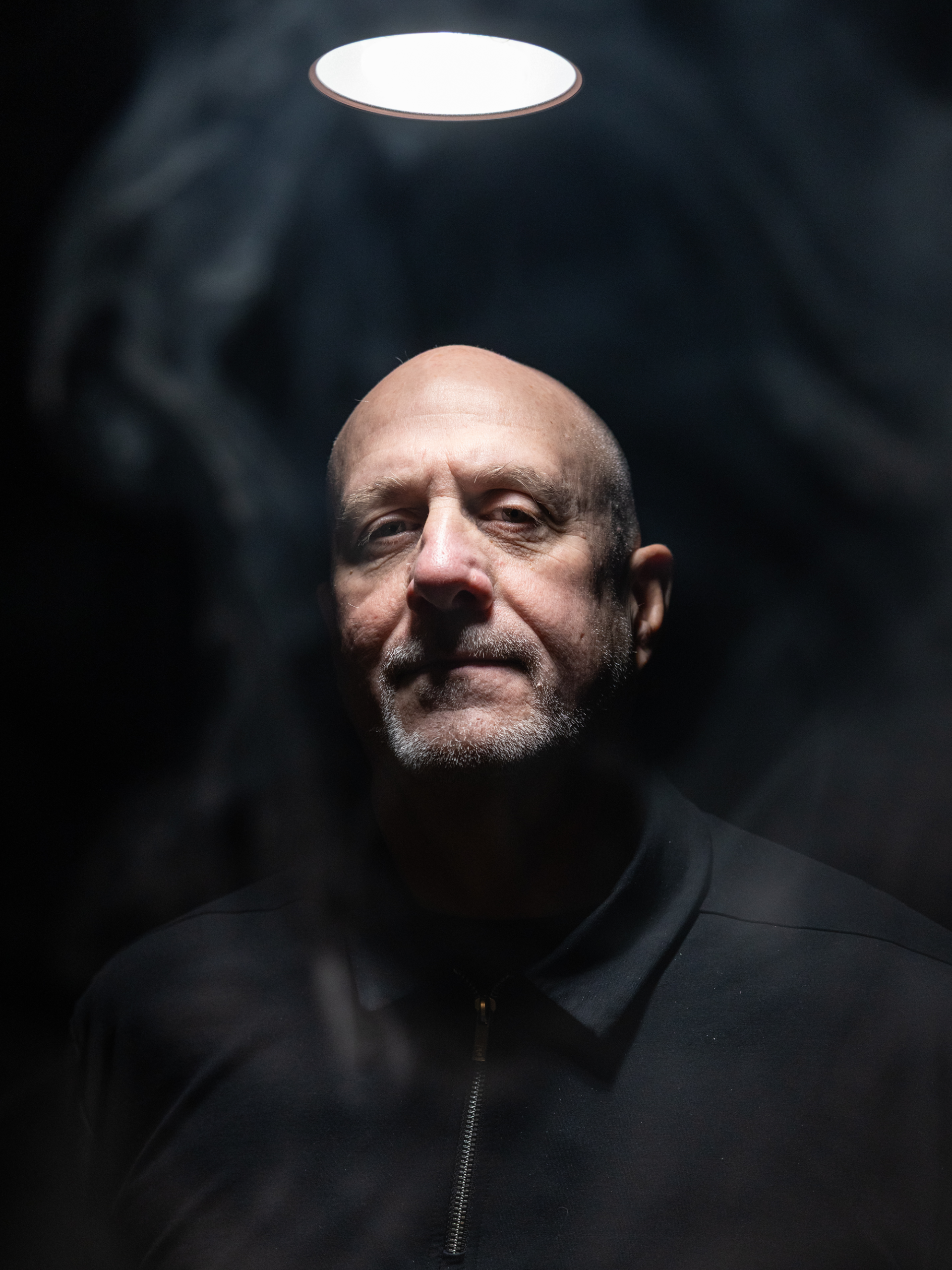
Barry Edwards is an associate professor of biochemistry in the School of Medicine. In a recent study, he worked with a tiny antibody designed to seek out and attach to a protein commonly found in cancerous tumors. He then added a radioactive tag to the antibody, allowing it to light up in a PET scan. This cancer-detecting “flashlight” means doctors can determine which patients might benefit more from a targeted cancer treatment.
To demonstrate this, we decided to focus on the flashlight element of the story. I did get a photo of Edwards shining a flashlight into the camera with some flare, but I was really proud of how this image turned out. I spotlighted one of my lights down onto Edwards and then filled in the area with some artificial smoke. I just imagine cancer cells hanging out in a dark room hoping nobody can catch them, then they’re caught in the spotlight with nowhere to run. Except Edwards looks way cooler, and is the very person catching them.
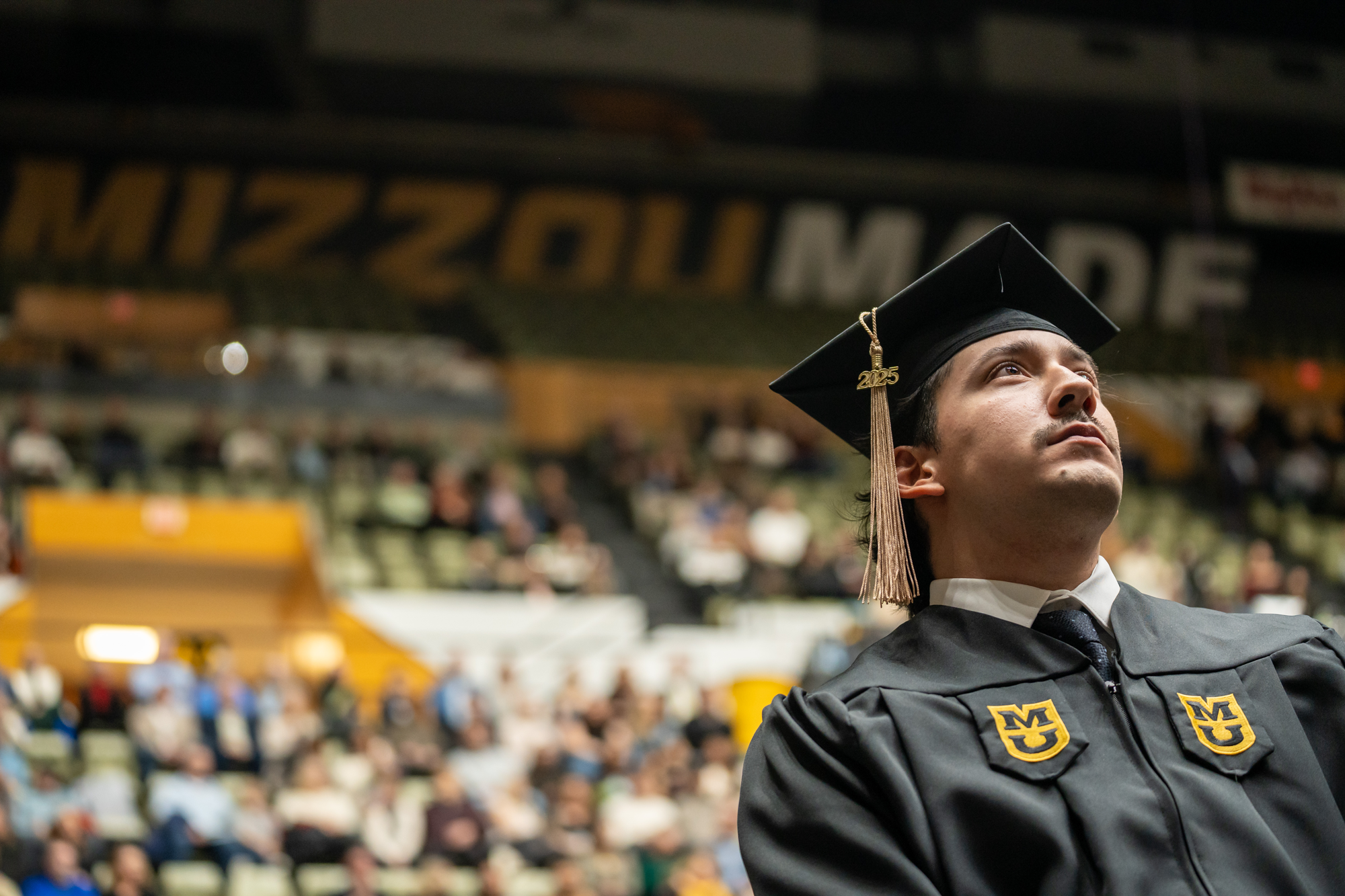
For each commencement weekend, ceremonies take place in either Jesse Auditorium, Hearnes Center or Mizzou Arena. Mizzou Arena has better seating and lighting, but it can’t compete with the Hearnes Center’s signage. It makes for easy framing and powerful shots.
Student photographer Reagan Manis took advantage of that in this photo, lining up the graduate with the MIZZOUMADE sign in the back. Because that’s exactly what they are right? Mizzou made. Especially in this moment — and in every moment moving forward.
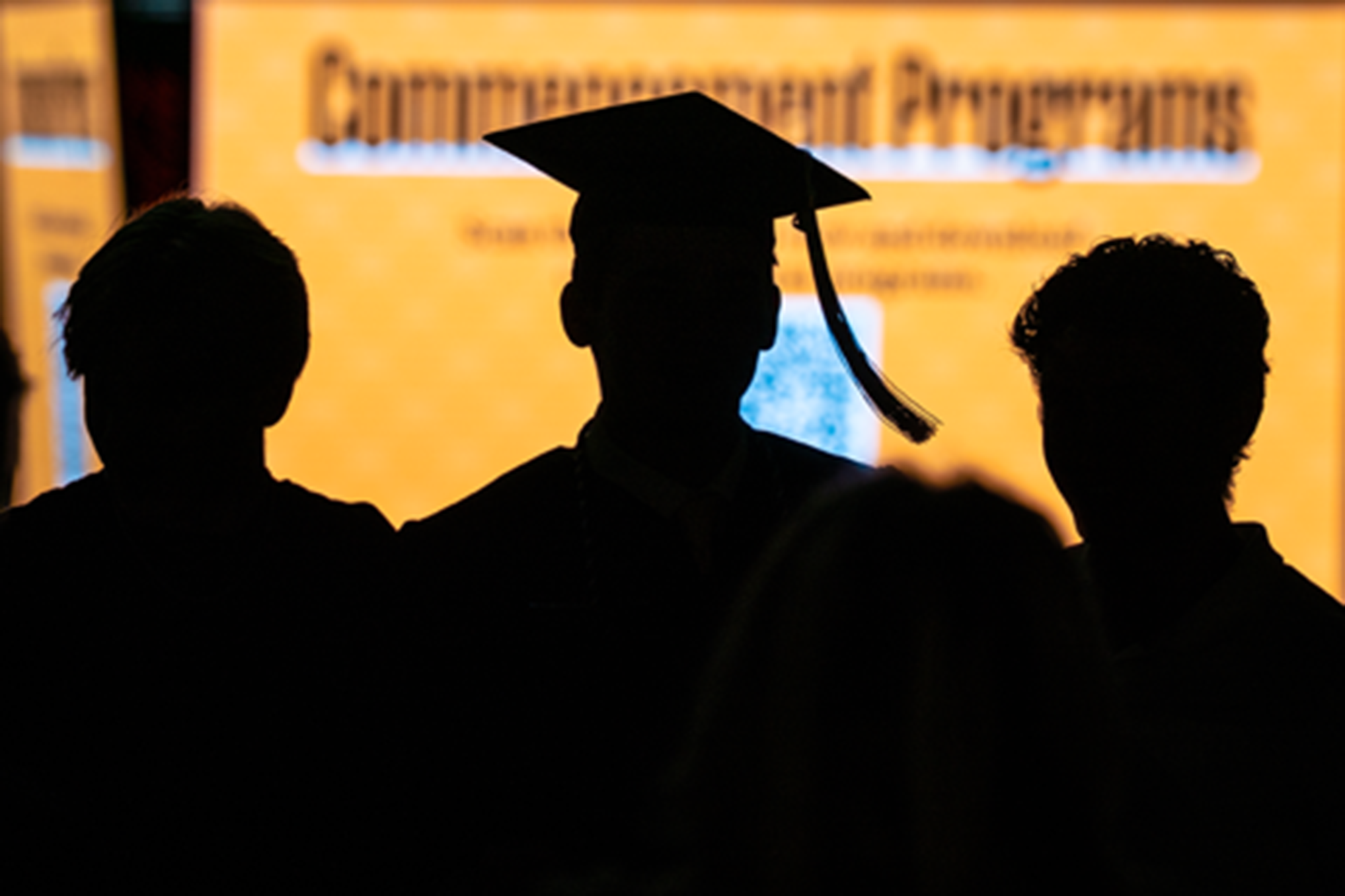
I love silhouetted images! A good silhouette usually has a clear outline of the subject that you’re underexposing. Clearly, we can see the graduation cap and three figures.
Silhouettes can also allow for proper exposure of a brighter background than the subject. Had this been properly exposed for the people, we likely wouldn’t be able to read the background screen or the see the rich gold color. It’d probably be closer to a yellow-tinted white screen with unreadable words.
The combination of both creates not only a rich visual image but excellent storytelling of what’s happening and where.
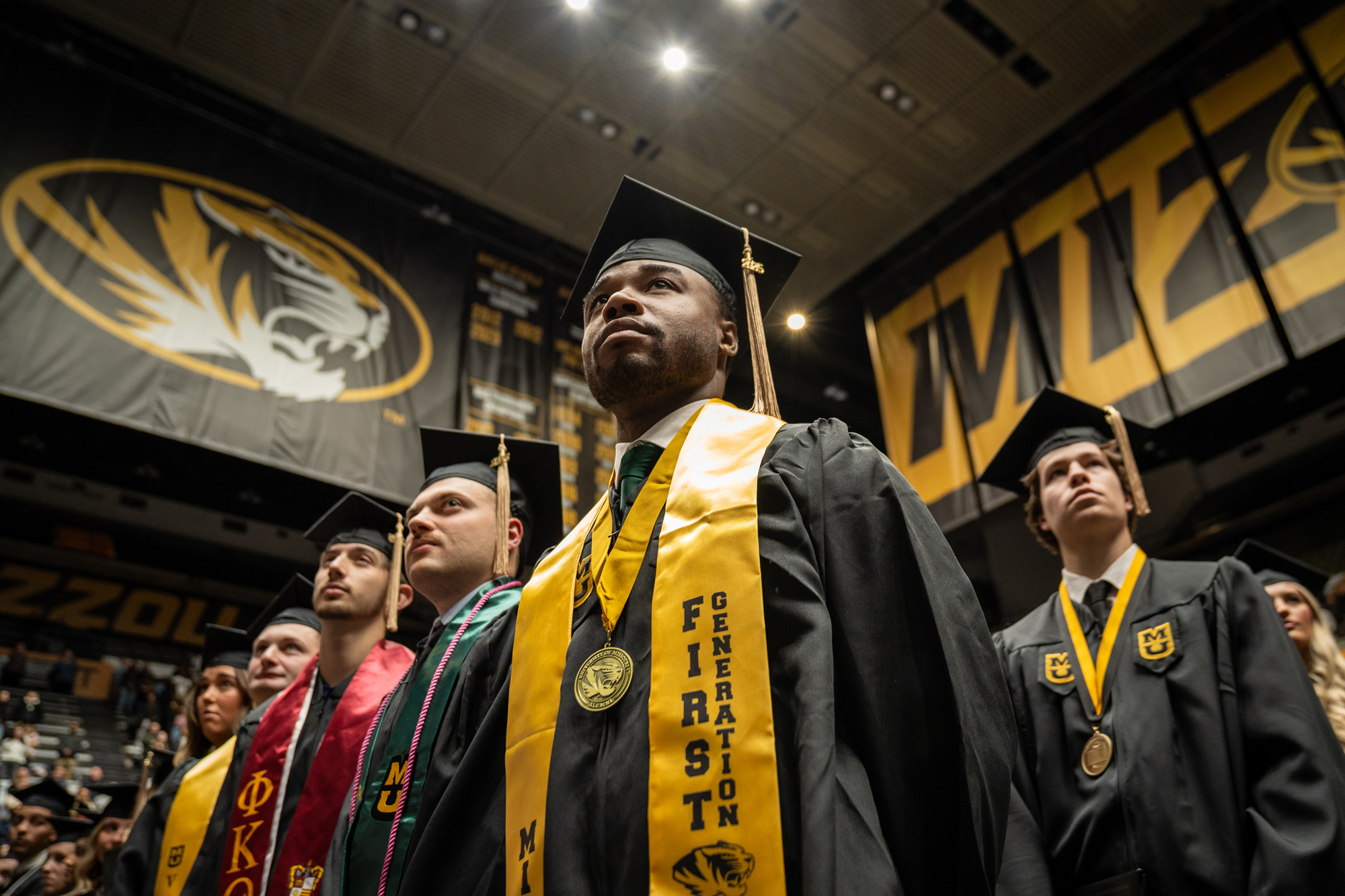
An often-given piece of photo guidance is to not shoot below someone’s eye-level. It can be unattractive at best and distorted at worst — but that’s more of a recommendation, not a rule. As the famous quote from Picasso says, “Learn the rules like a pro, so you can break them like an artist.” Here, Reagan absolutely did the right thing by shooting from a lower angle.
With that lower angle, everything else in this image falls into place. You have the first-generation stole coupled with the graduate’s stoic look, centered between two giant Mizzou branded signs and lights for added pizzaz. I feel something when I look at this image, and I hope you do too.
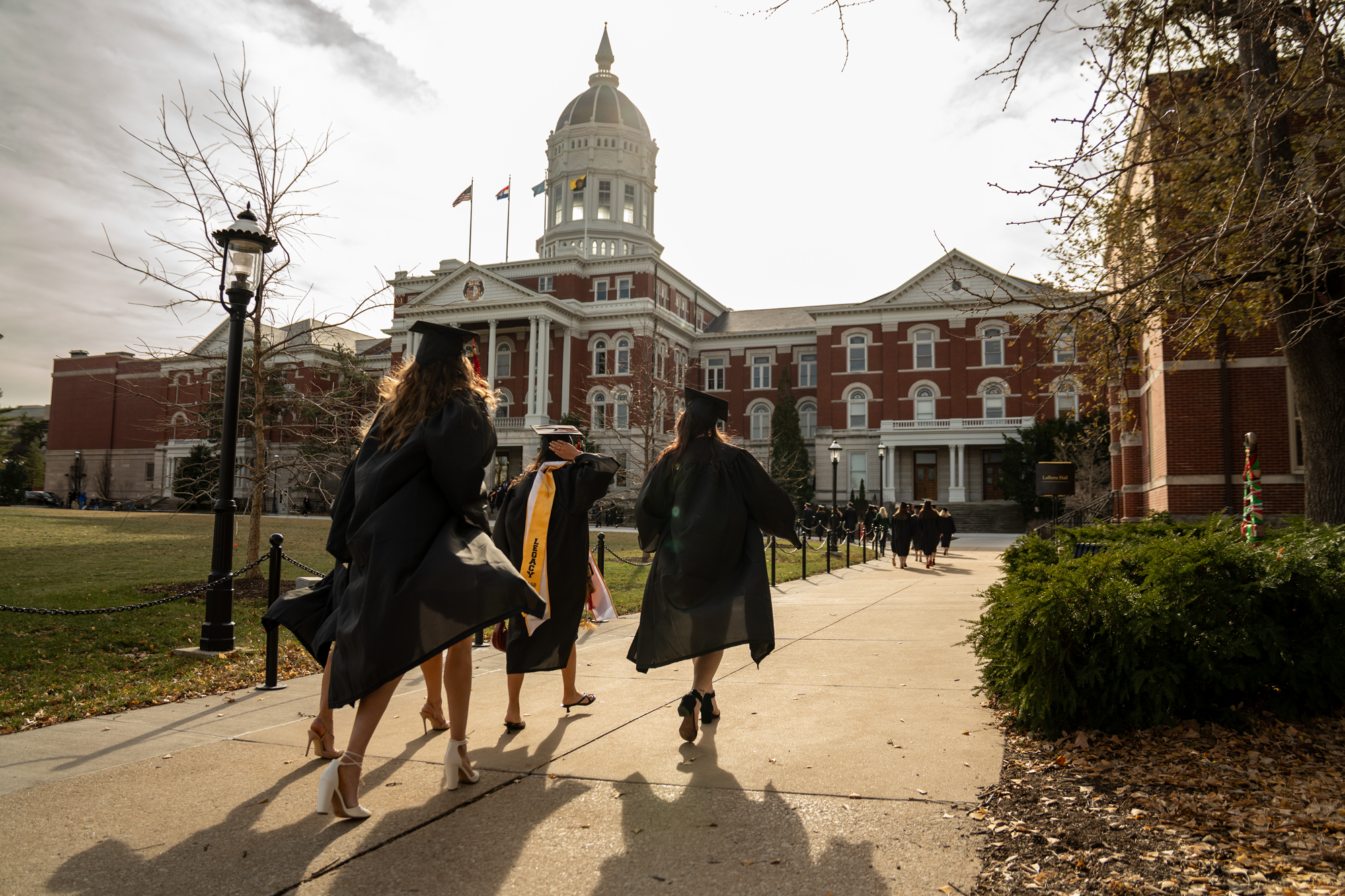
For fall commencement, the Missouri School of Journalism has a tradition of graduates walking from Neff Hall to Jesse Hall for their ceremony. The graduates in this image are a little behind and trying to catch up to the larger group ahead of them, but that’s why I love this shot. I can see movement in the gowns and footsteps. The early morning sun highlights Jesse as the destination and casts long shadows behind the subjects.
It’s also a very nostalgic photo to me. I can almost hear Green Day’s “Good Riddance (Time of Your Life)” over a movie montage as these graduates hurry to their commencement ceremony to start the rest of their lives.
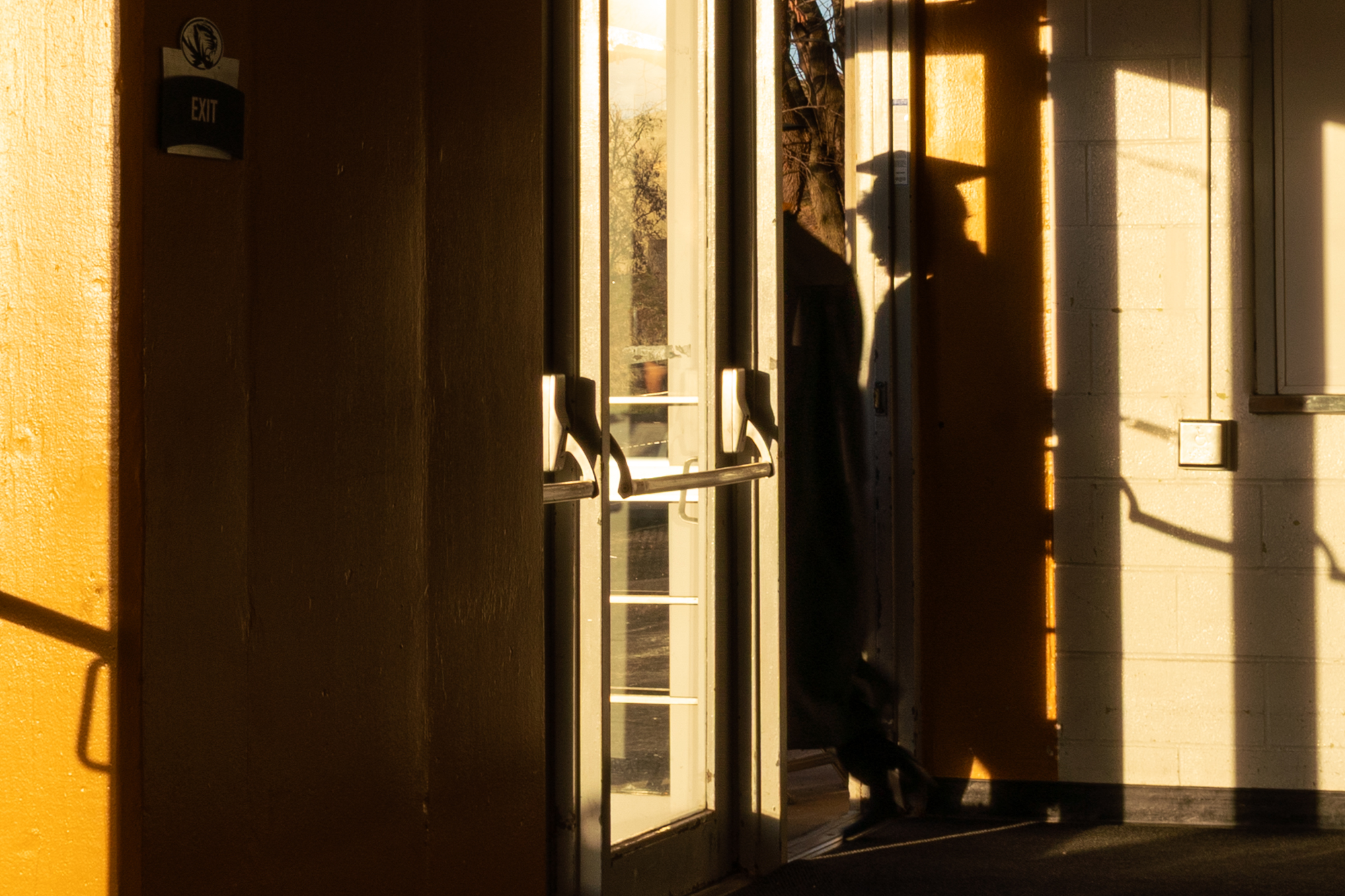
Something I’ve been trying to teach the student photographers is to be patient. If you see a good photo location and no one’s there, just stay put for a while. They’ll come. Sam did just that with this image. He saw the late afternoon sun streaming through the Hearnes Center doors and waited for the right moment.
It feels fitting to end commencement and the month with this image. In one way, it’s a farewell to our forever Tigers who graduated. In another, it brings about a quiet moment of reflection at the end of the year and anticipation of the next.
It’s been a year since I started compiling the photos of the month, and I’m honored to have shared my favorite photos with you this year. I hope you have enjoyed it as much as I have. Here’s to 2026 and more incredible visual storytelling of our great campus and people!