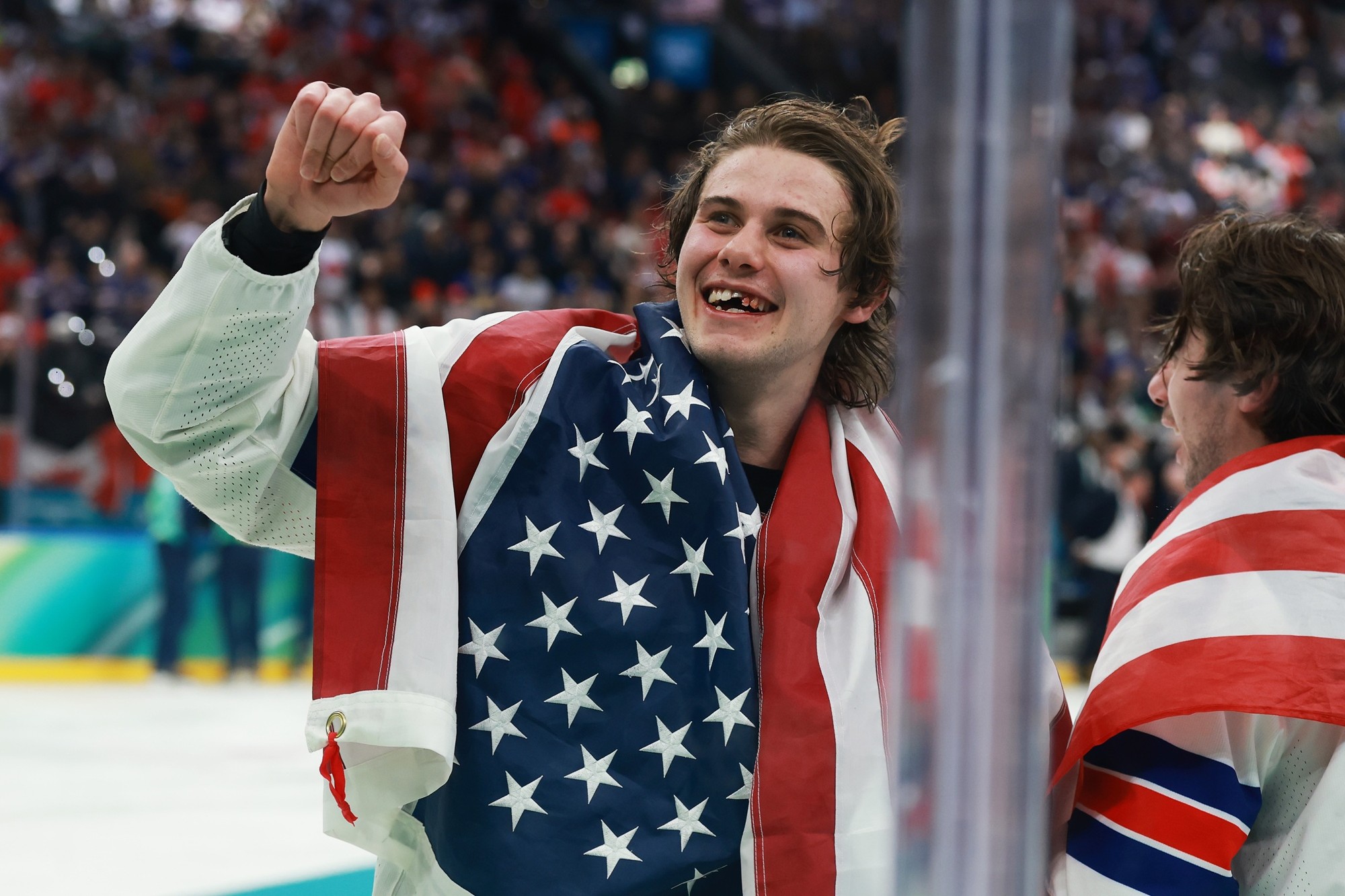
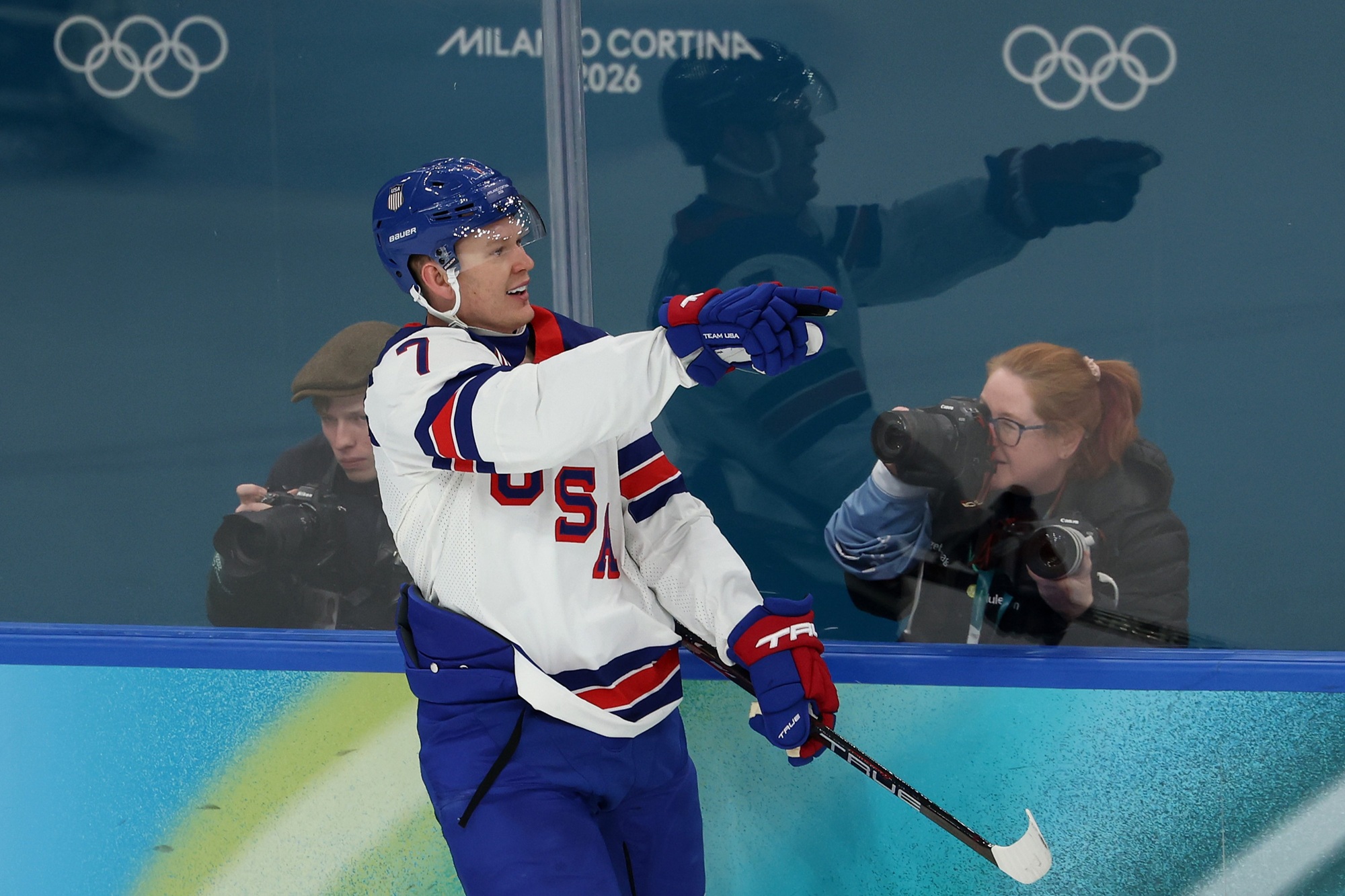
 Jack Hughes flashes a smile after the USA men's hockey team wins the gold medal at the 2026 Winter Olympics.

April 8, 2026
Contact: Eric Stann, StannE@missouri.edu
Photos courtesy of Elsa Garrison/Getty Images
You might not recognize her face, but you’ve likely seen her work.
Her photographs have frozen sports history into fractions of a second: championship celebrations, game-winning goals and raw, human emotions from the world’s biggest sports, including the NCAA Final Four, World Series and the Olympic Games.
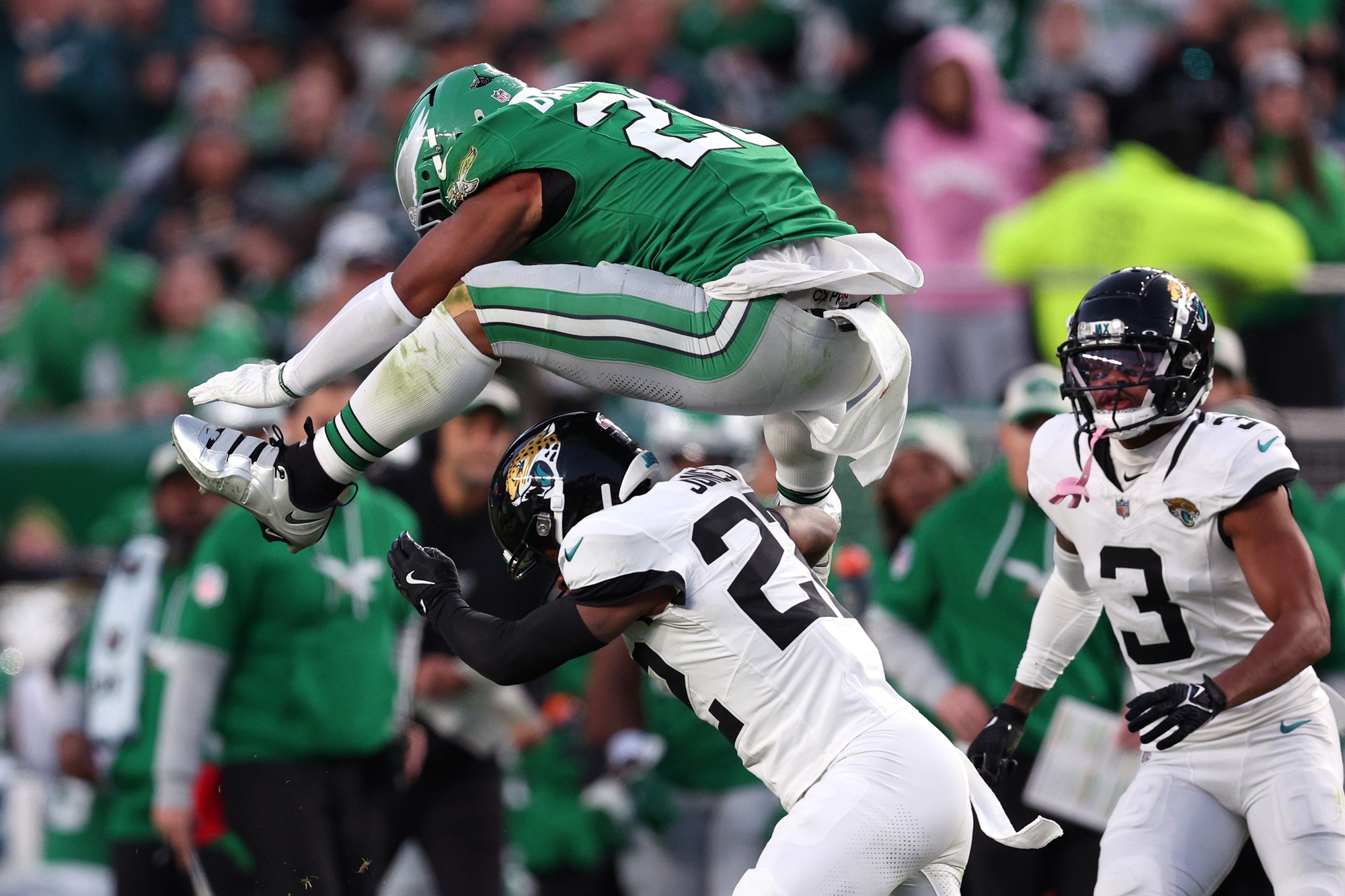
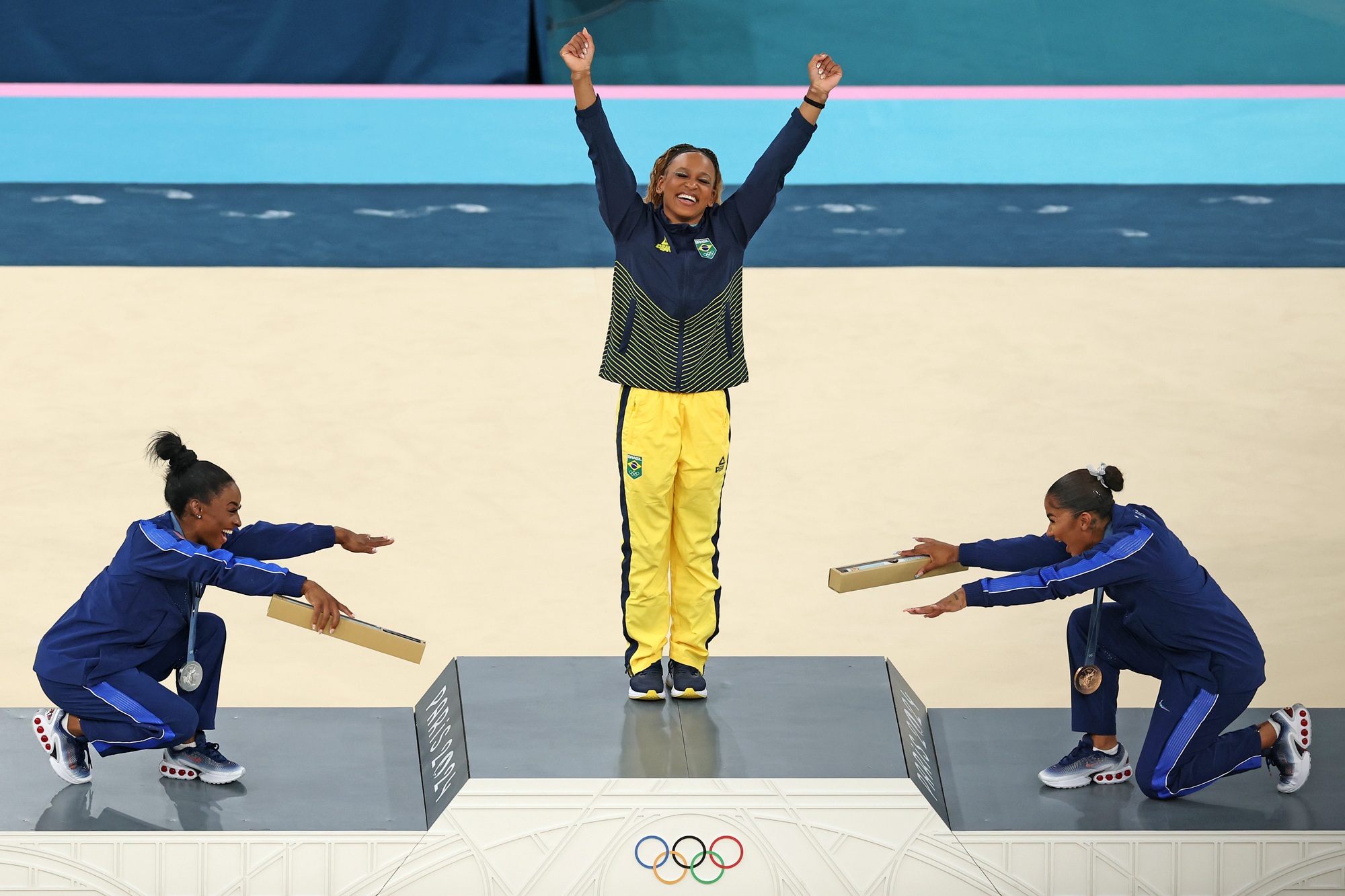
She took an iconic photo of Philadelphia Eagles running back Saquon Barkley’s backward hurdle. She also captured the moment when Olympic gymnasts Simone Biles and Jordan Chiles bowed to gold medalist Rebecca Andrade during the medal ceremony at the 2024 Summer Games.
Long before her images reached a global audience, Elsa Garrison, BJ ’96, walked across the University of Missouri campus with a camera over her shoulder, learning how to tell a complete story in a single frame. The skills she honed at the Missouri School of Journalism would define her career.
Today, Garrison holds a distinct place in her industry as Getty Images’ first female staff photographer.
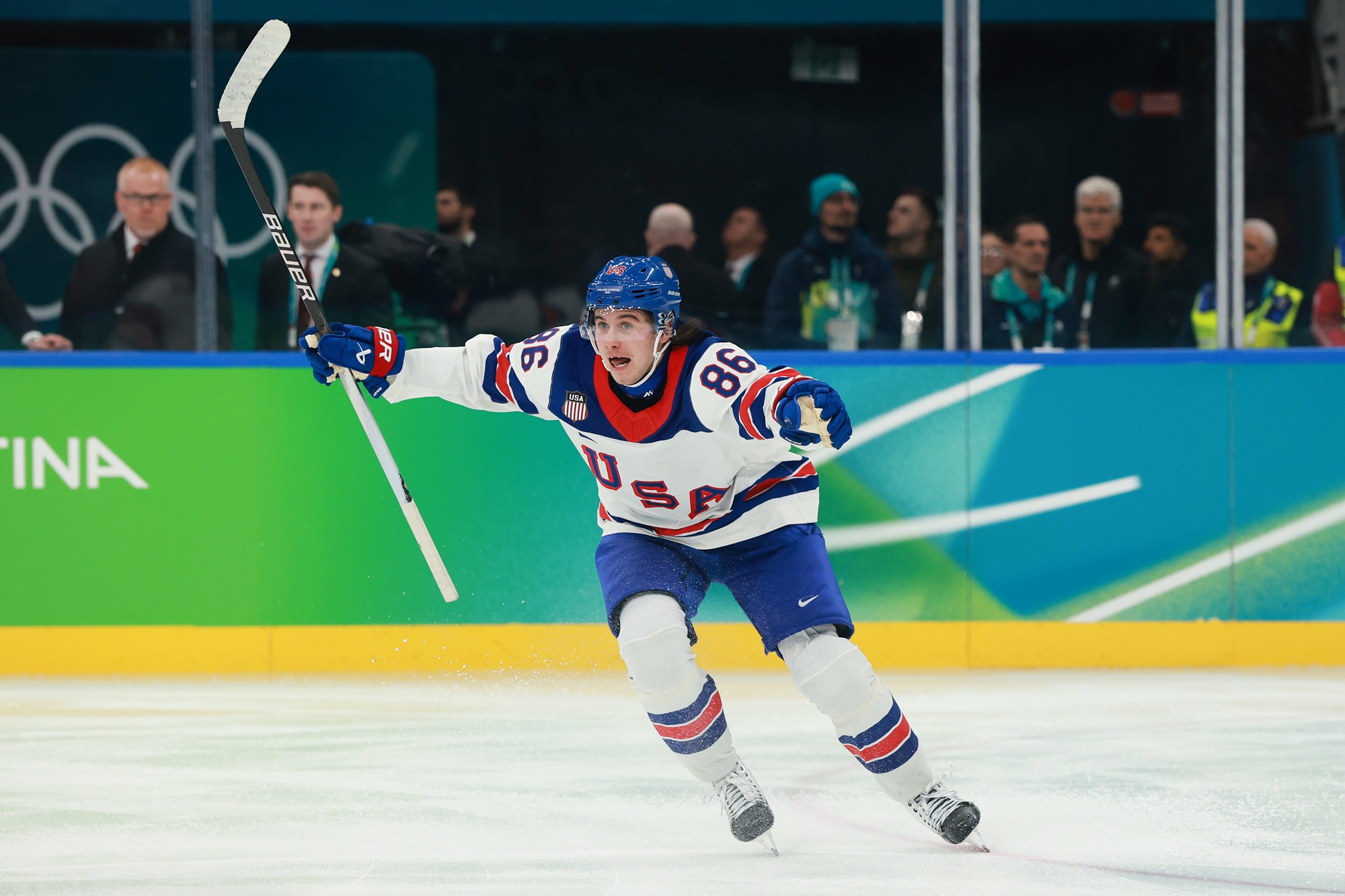
Her extensive portfolio — which also includes signature moments with athletes including Steph Curry, Serena Williams and Megan Rapinoe — now includes one of the defining images of the 2026 Winter Olympics: a bloodied-but-smiling Jack Hughes with an American flag draped across his shoulders after scoring the gold-medal-winning goal in men’s hockey.
Just weeks later, Garrison was courtside for the NCAA Division I Women’s Basketball Championship. The pace of her job rarely slows, and she credits Mizzou for preparing her to keep up.
“The Missouri Method meant I didn’t face a steep learning curve once I became a professional,” she said. “I already knew how to conduct myself, navigate new cities and survive in the field.”
The Missouri Method advantage
As a student, Garrison balanced full-time coursework while shooting assignments for the Missourian, Mizzou Athletics and the Associated Press.
“I always say I entered the industry with a two- to three-year head start,” she said. “I could hit the ground running in environments that overwhelm a lot of first-year photographers.”
That practical training shaped her approach to sports photography, which she describes as equal parts preparation, intuition and mental choreography.
Before every assignment, Garrison studies game notes and identifies potential storylines — milestone moments that could define the night. She builds “if/then” scenarios in her head, mental scripts that allow her to react instinctively when history unfolds in seconds.
Her preparation extends beyond the stat sheet. She studies team dynamics and always notes where players’ families are seated. When everything is finally over, emotional celebrations rarely happen at center ice or midcourt but rather in the stands with loved ones.
Resilience behind the lens
Garrison’s discipline for her craft was forged in the film era, when every frame mattered. Under former Mizzou journalism professor Bill Kuykendall, she learned to shoot for impact — tightening the frame, mastering telephoto lenses and composing precisely in camera rather than relying on cropping.
Developing film on deadline taught her speed and precision. Now, she works in the world of Ethernet cables and instant transmission, voice-captioning images and sending them globally within minutes of taking them. The core of her craft, however, remains unchanged: anticipate, compose and tell the story.
Former Mizzou journalism professor David Rees also played a key role in Garrison’s development. At a time when few students pursued sports photography, he encouraged her to follow that path. He emphasized that sports are filled with deep human stories if you know where and when to look. His focus on research, preparation and player milestones helped Garrison build the anticipatory instincts she relies on today.
Together, their guidance laid the foundation for her confident, story-driven approach behind the camera.
The four-second plan
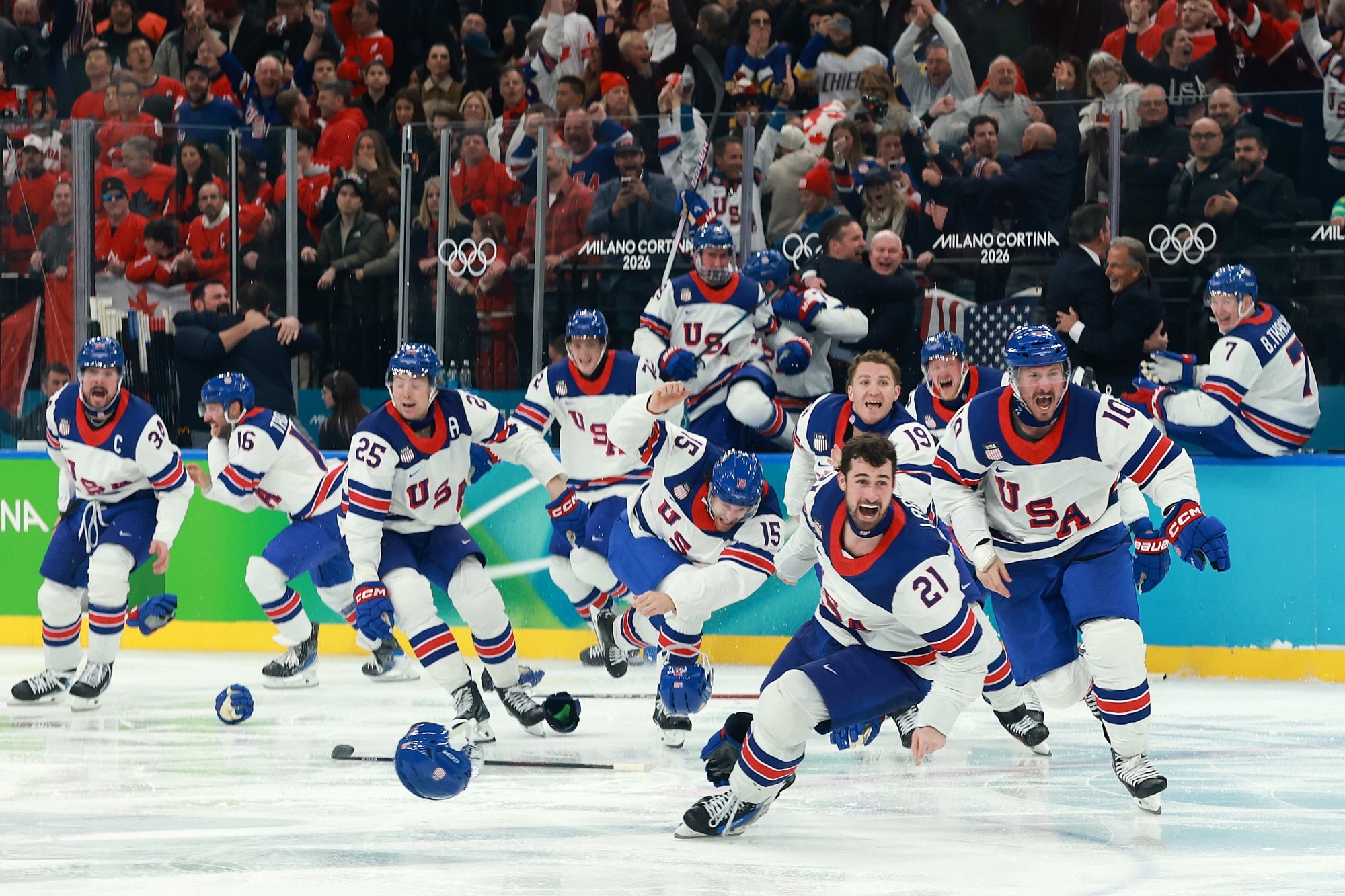
Garrison’s training proved critical during the 2026 Olympic gold medal hockey game. Remembering the iconic “Miracle on Ice” celebration photo from the 1980 Olympic Games, Garrison entered the rink knowing where families were seated, who the potential heroes might be and how players typically react after a win.
Her preparation paid off in a matter of four seconds.
First, she captured Hughes’ reaction to his golden goal moments after the puck crossed the line, his body turning toward her lens. She stayed with him for a beat, then pivoted toward the bench as the team erupted.
After documenting the pileup, she sprinted toward the stands, arriving just in time to capture the now-famous moment of Hughes celebrating the win.
In a world saturated with video, Garrison believes deeply in the power of still imagery. A single photograph can freeze one expression — joy or heartbreak — with an emotional weight that endures. It’s that magic, she said, that has kept her behind the lens for nearly three decades.
Ultimately, she credits Mizzou with giving her the confidence and resilience to sustain a long career in a demanding field.
“Mizzou truly fueled my ambition and drive,” she said. “This university taught me to be strong and resilient, and it gave me the thick skin I needed to take on the challenges of the professional world.