 Susie Dai is on a mission to remove tiny bits of plastic pollution for our water.

Feb. 2, 2026
Contact: Brian Consiglio, consigliob@missouri.edu
Photos by Abbie Lankitus
Mizzou’s Susie Dai recently applied a revolutionary strain of algae toward capturing and removing harmful microplastics from polluted water. Driven by a mission to improve the world for both wildlife and humans, Dai also aims to repurpose the collected microplastics into safe, bioplastic products such as composite plastic films.
“Microplastics are pollutants found almost everywhere in the environment, such as in ponds, lakes, rivers, wastewater and the fish that we consume,” Dai, a professor in the College of Engineering and principal investigator at the Bond Life Sciences Center, said. “Currently, most wastewater treatment plants can only remove large particles of plastic, but microplastics are so small that they slip through and end up in drinking water, polluting the environment and harming ecosystems.”
A three-pronged approach
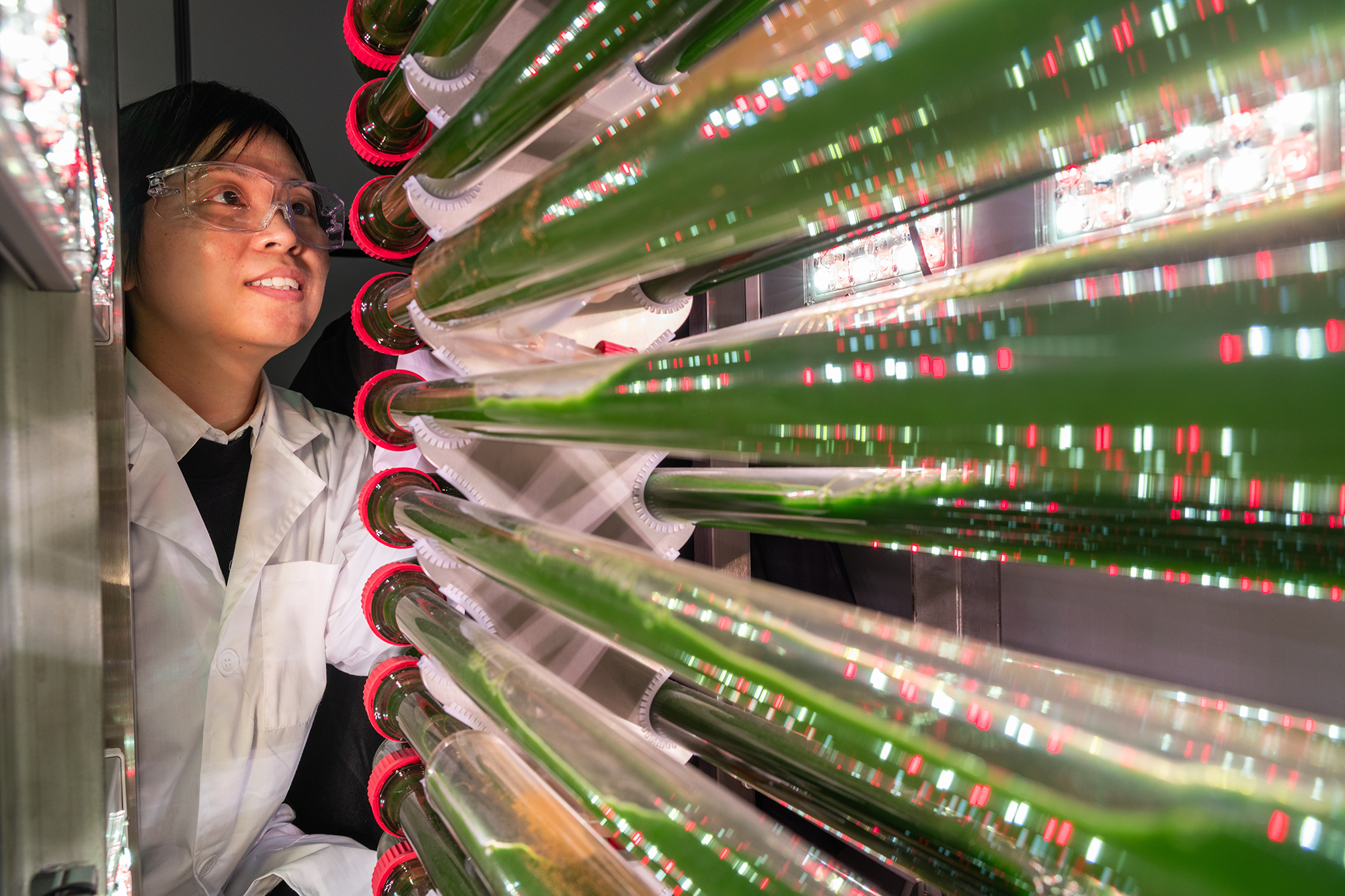
In a recent study, Dai used genetic engineering to create a new kind of algae that produces a volatile natural oil called limonene — the same chemical that gives oranges their refreshing scent.
Limonene makes the new algae water-repellent. Because microplastics are also water-repellent, the two come together like magnets when they meet in water, forming clumps that sink to the bottom and create a solid layer of biomass that is easy to collect and remove.
The specially engineered algae can grow in wastewater, feeding on excess nutrients and cleaning the water as it grows.
“By removing the microplastics, cleaning the wastewater and eventually using the removed microplastics to create bioplastic products for good, we can tackle three issues with one approach,” Dai said. “While our research is still in the early stages, our eventual goal is to integrate this new process into existing wastewater treatment plants so cities can clean their water more effectively and reduce pollution while creating useful products at the same time.”
Scaling up
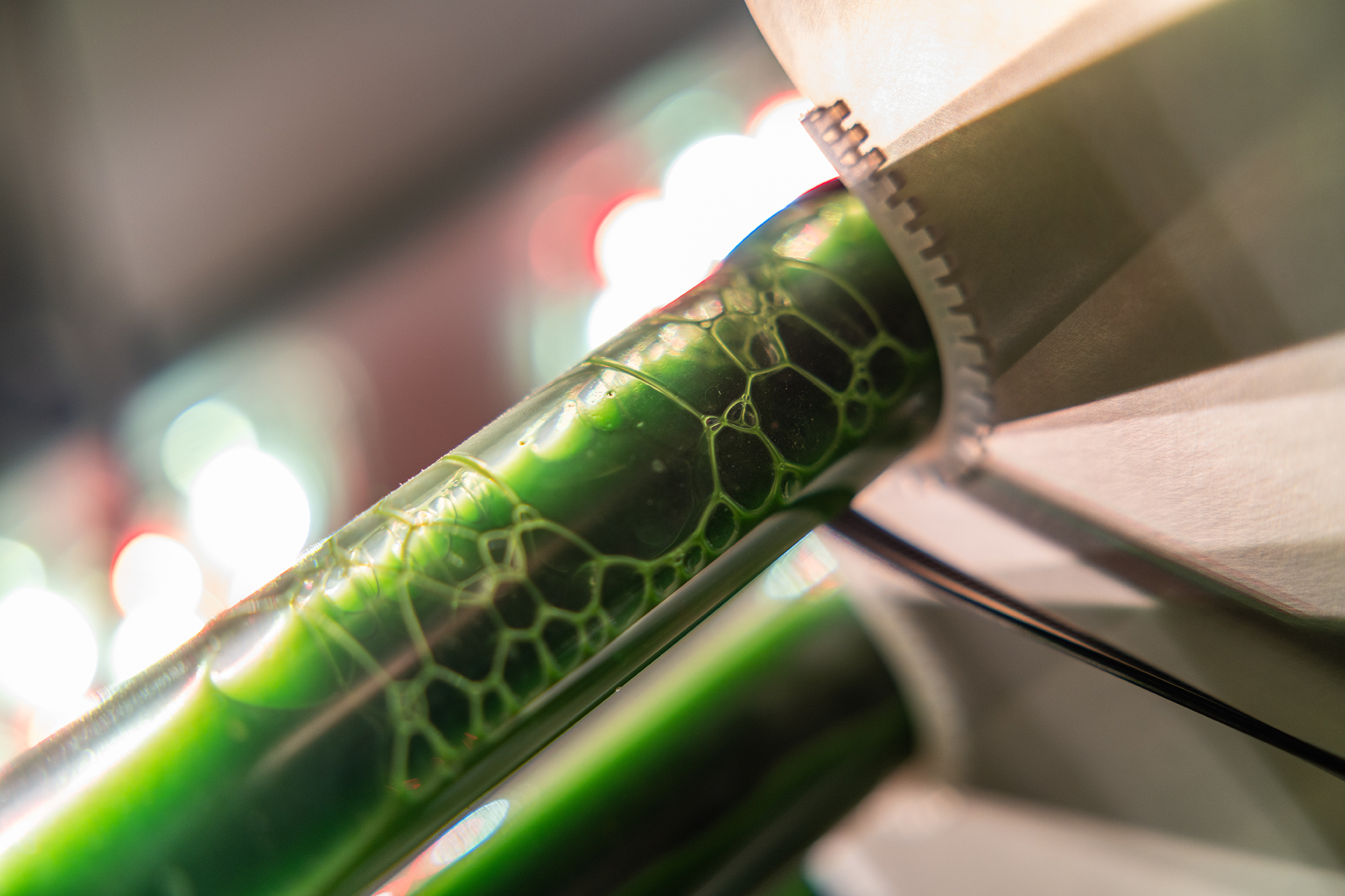
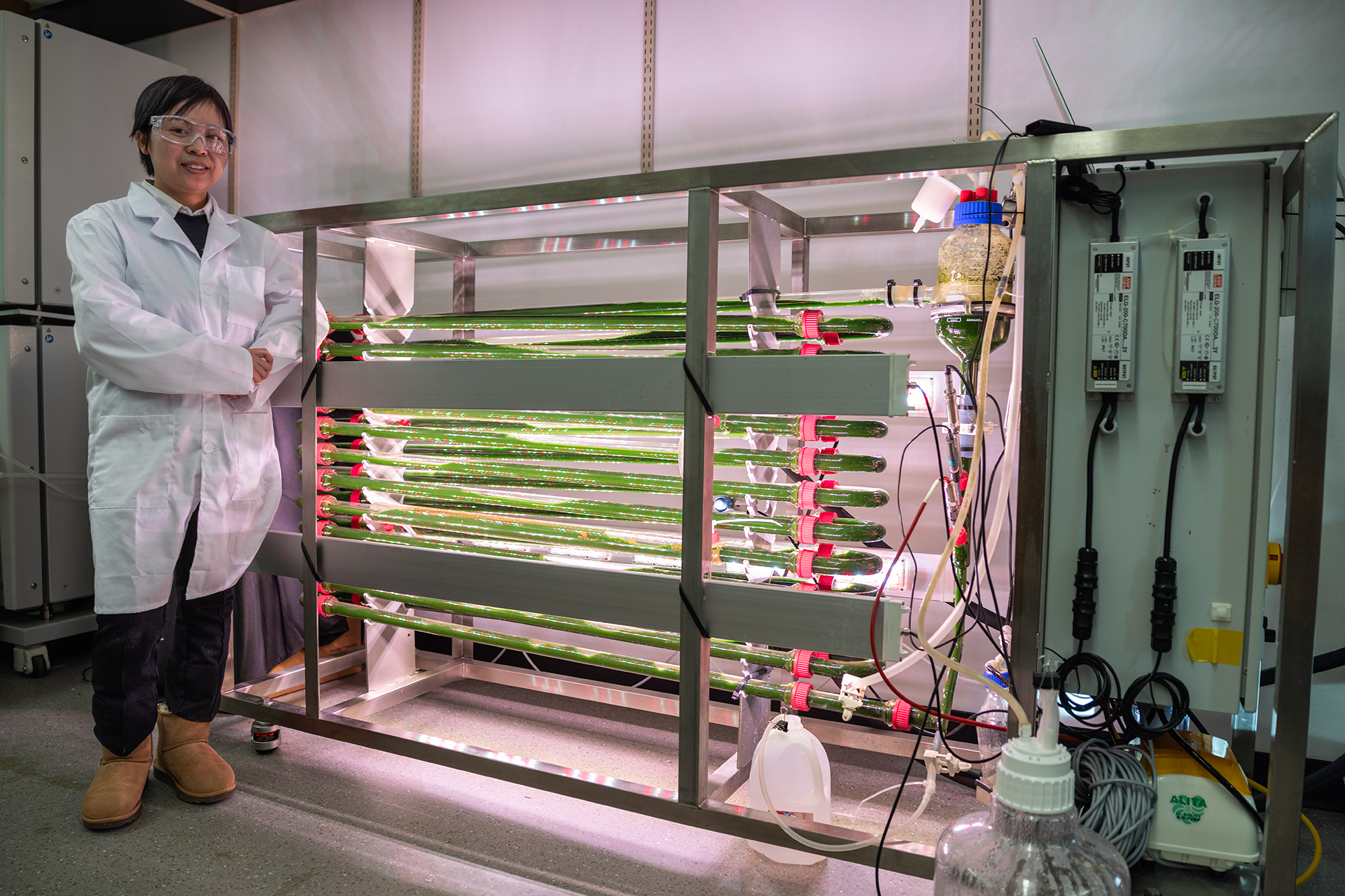
Dai’s lab grows algae in large tank bioreactors. Her lab has built a 100-liter bioreactor named “Shrek” to process industrial flue gas to help clean air pollution. Dai hopes to build bigger versions of Shrek going forward that could be adapted for wastewater treatment and other pollutant removal purposes.
“Remediation and upcycling of microplastics by algae” was published in Nature Communications.