Dec. 1, 2025
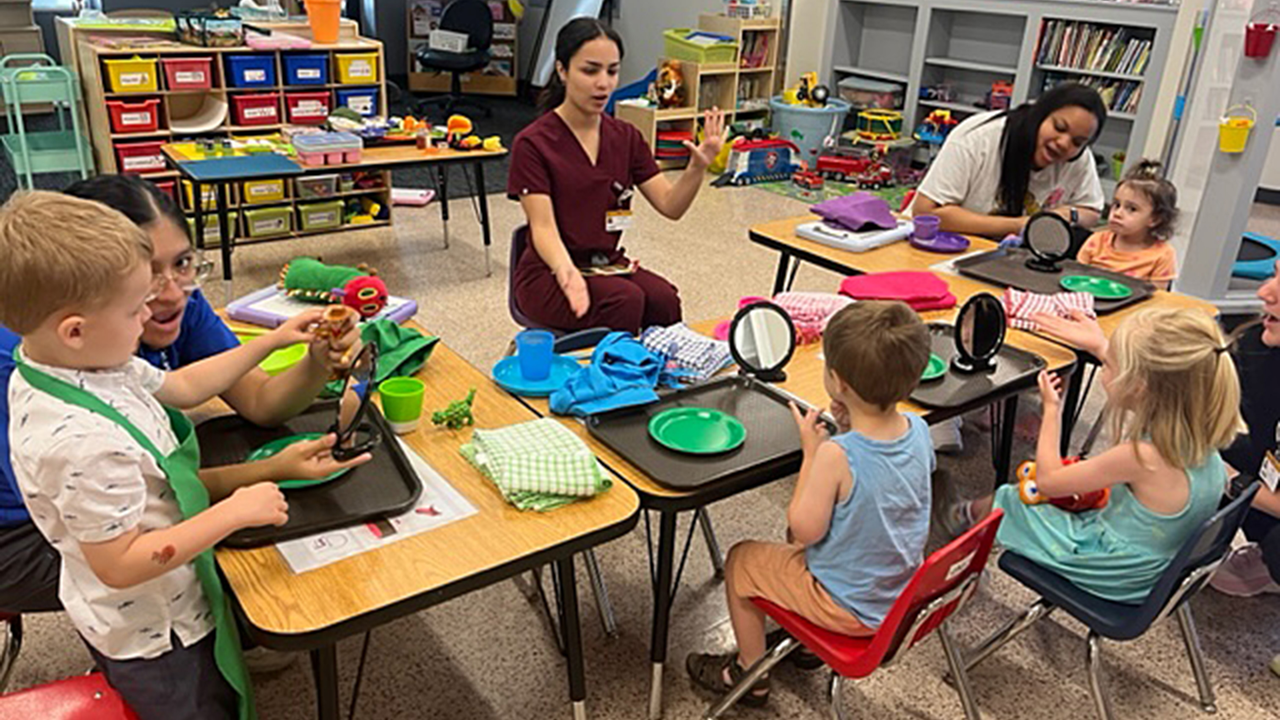
In the cheerful chaos of the Robert G. Combs Language Preschool at the University of Missouri, a pilot program made a monumental difference for families struggling with children who have feeding challenges. Dubbed Project Little Bites, the innovative program used chef hats, kid-safe knives and plenty of patience to turn mealtime battles into moments of fun and discovery.
Christi Baker, director of the preschool and an associate clinical professor with the Department of Speech, Language and Hearing Sciences in the College of Health Sciences, had been considering offering a program focused on feeding issues. Once renovations to the preschool added a dedicated kitchen space this past spring, Baker said the idea finally had a home.
She credited the enthusiasm of speech-language pathology students Ana Dolsky, Kayla Shelby, Claudia Rodriguez and Angela Lopez for helping move the project forward.
“The students really were the push,” Baker said. “They wanted to apply what they had been learning in class to this subcategory that’s become a really niche but more recognized part of our field.”
Project Little Bites is designed to address a spectrum of feeding issues, from extreme picky eating to more complex problems such as avoidant/restrictive food intake disorder. At its core, the program assesses each participant individually and then encourages them to experiment and interact with foods they might otherwise avoid.
The program centers on a concept known as the food hierarchy, a step-based process of exposure and desensitization. Each session begins with a theme: fruits, vegetables, tacos and pizza were all on the menu this summer. After participating in unrelated activities, the children participate in food exploration that involves interacting with foods without any pressure to eat.
This stage of the process is incredibly important for kids who might typically back away from the table and disengage, Baker said.
“Suddenly, they’re touching and playing with sticky things that they’ve never touched or would even tolerate,” she said.
By making these interactions more playful and not pressuring the children to eat but allowing them to choose what they taste, Baker said there are fewer tears and more curiosity. The overall focus is on the process rather than the immediate outcome, she said.
“We’re not looking for them to eat a whole plate of anything,” Baker said. “It’s more about can we break through that barrier to get them to taste, explore and feel comfortable around food.”
Read more from the College of Health Sciences