$2.6 million since 2007.
Published on Show Me Mizzou Dec. 17, 2025
Story by Randall Roberts, BA ’88
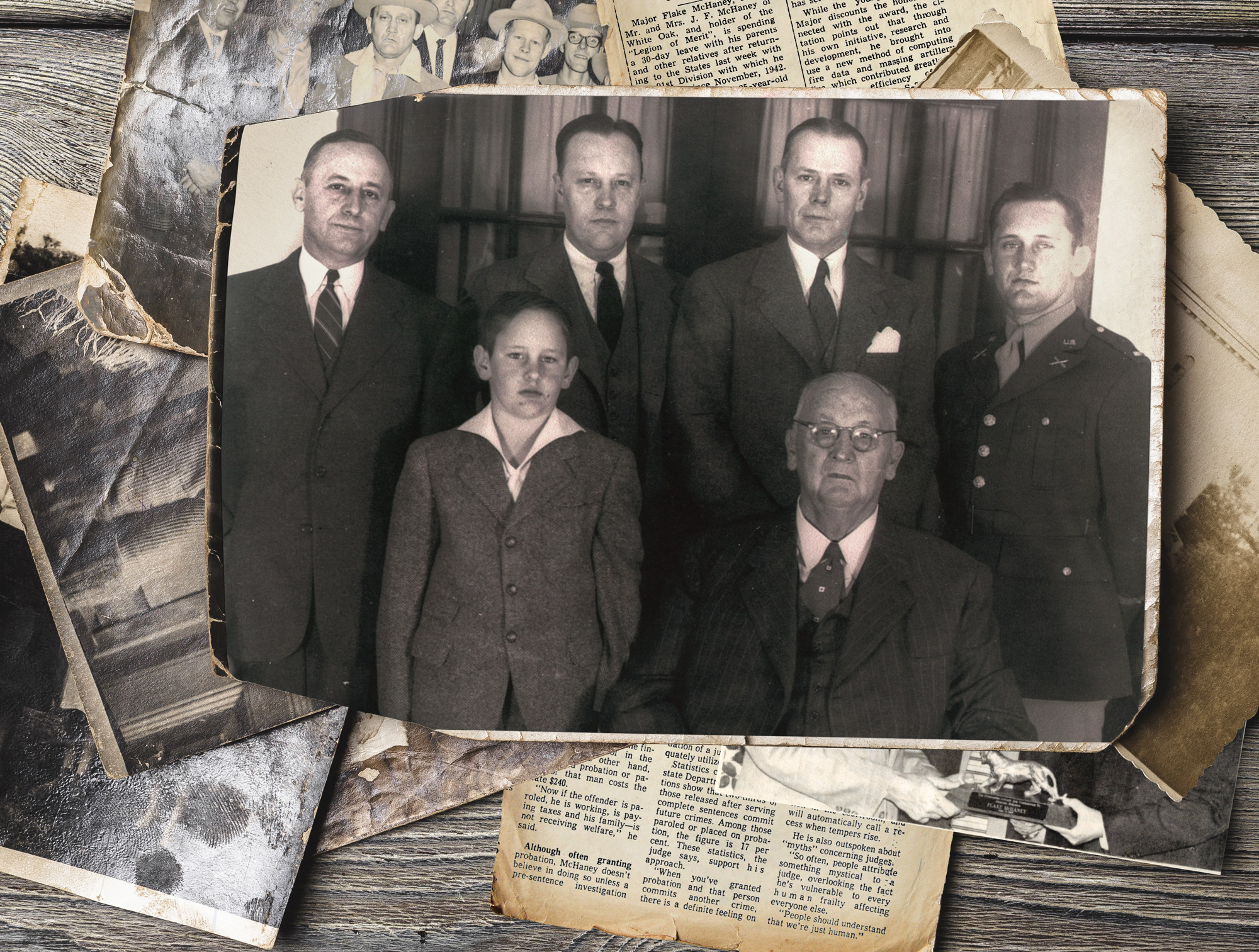
In 1898, in White Oak, a dot of a town near Kennett in Missouri’s Bootheel, Hal McHaney, BA 1919, was born into a family that would leave a lasting mark on Mizzou. His father, James, was a shopkeeper and farmer who lost his first wife young, held on through the Great Depression and remarried, then raised five sons with grit and purpose. All became Tigers.
From the trenches of World War I to the dawn of television, the McHaney brothers — oldest to youngest: Hal, John, Powell, Flake and Robert — stepped onto campus across four decades. They arrived as jazz heated up and stayed through blackouts, booms and the birth of rock ’n roll.
Faurot Field was still a blueprint. Jesse Hall’s dome was staking its claim. Columbia — brick-paved and porch-lined — was starting to pulse like a real college town. Through years of upheaval, there was always another McHaney in line.
“It’s extraordinary,” says Patrick McHaney, Flake’s son. “A small-town merchant holds on to the farm through the Depression and still pays to send all five sons to Mizzou.”
From Hal’s 1919 graduation to Robert’s in 1954, the McHaney name became a quiet fixture on the Quad. This quintet of brothers from cotton country left campus as community leaders and lifelong Mizzou advocates.
“Mizzou was where McHaneys went — it was their school,” says Mary McHaney Bebout, BJ ’83, John’s granddaughter. John, BA 1921, became a doctor in Jefferson City.
Hal, Powell and Flake earned law degrees. Robert built a career in accounting. And they never lost sight of the place that helped launch them.
The Architect of Opportunity
Hal McHaney didn’t seek the spotlight, but his presence in Kennett was hard to ignore. The eldest son returned home after graduating from Mizzou in 1919 and became a principled attorney and civic leader. He served as president of the chamber of commerce and the school board, helped found the Dunklin County Historical Society, and was a pillar in the Presbyterian church.
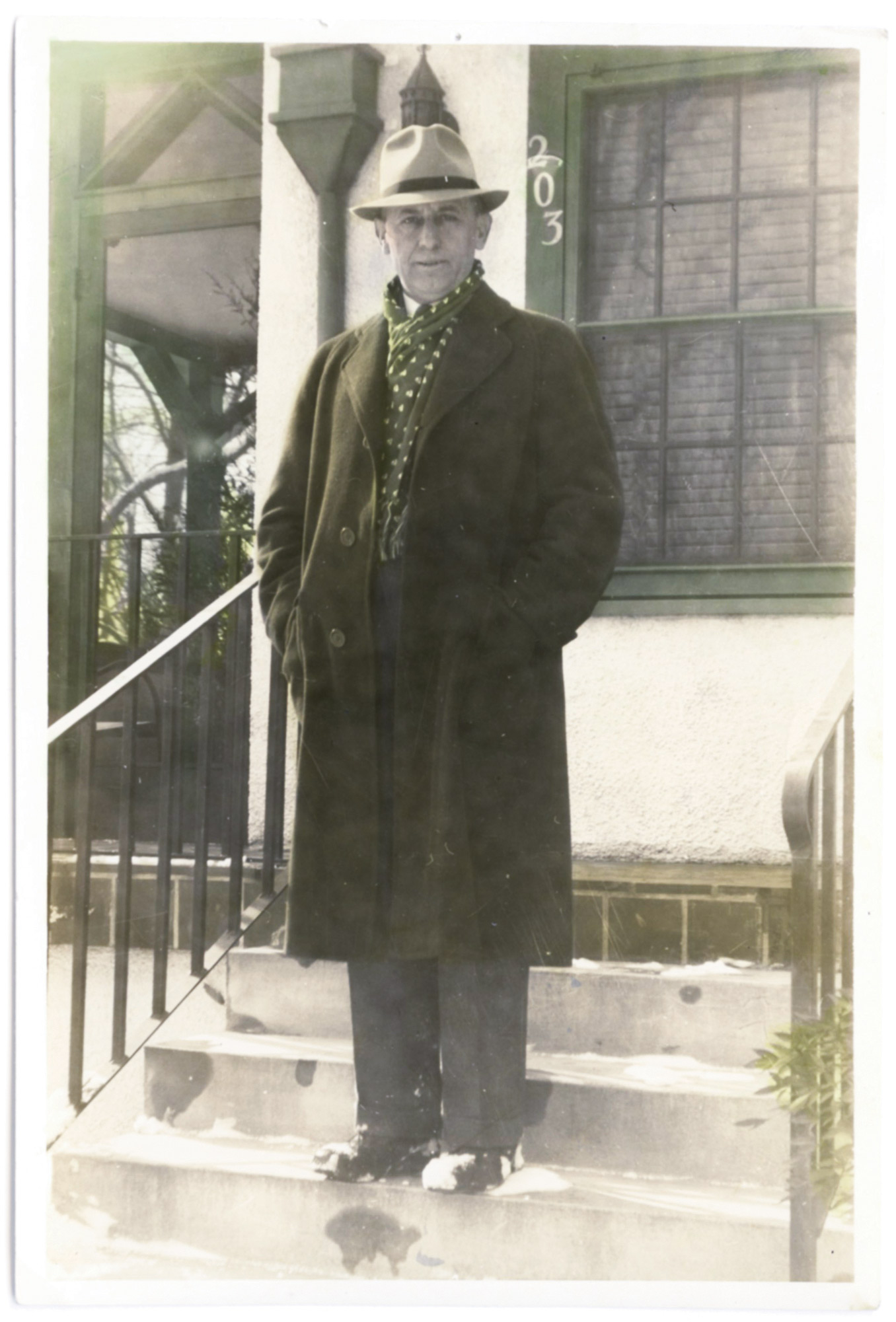
He also understood the land. Although his father had held onto the family farm through the Great Depression, Hal expanded his own footprint across the Bootheel’s fertile acreage. His success mirrored his approach to life: deliberate, grounded and generous in its yield. Eventually he and his wife, Beulah, chose to turn their good fortune into something lasting: The Hal H. and Beulah Hale McHaney Scholarship, a fund dedicated to supporting Mizzou students with deep ties to their region.
“The brothers all navigated the upper echelon of business and society, but they never forgot their roots,” says Patrick, a county commissioner born and raised in Dunklin County. Hal walked onto campus first. Decades later, he and Beulah made sure the next generations could follow.
Shaping Civic Progress
When McHaney Hall opened at University Hospital in 1990 to house nursing students, it carried both Powell McHaney’s name and his legacy: practical, persistent and built to endure.
Powell, BA 1925, studied law at Harvard after graduating from Mizzou and built a life in St. Louis driven by civic purpose. He began in public service before joining General American Life Insurance Company, where he rose to the position of president. Colleagues described him as sharp, grounded and committed to the overlap between public good and private responsibility.
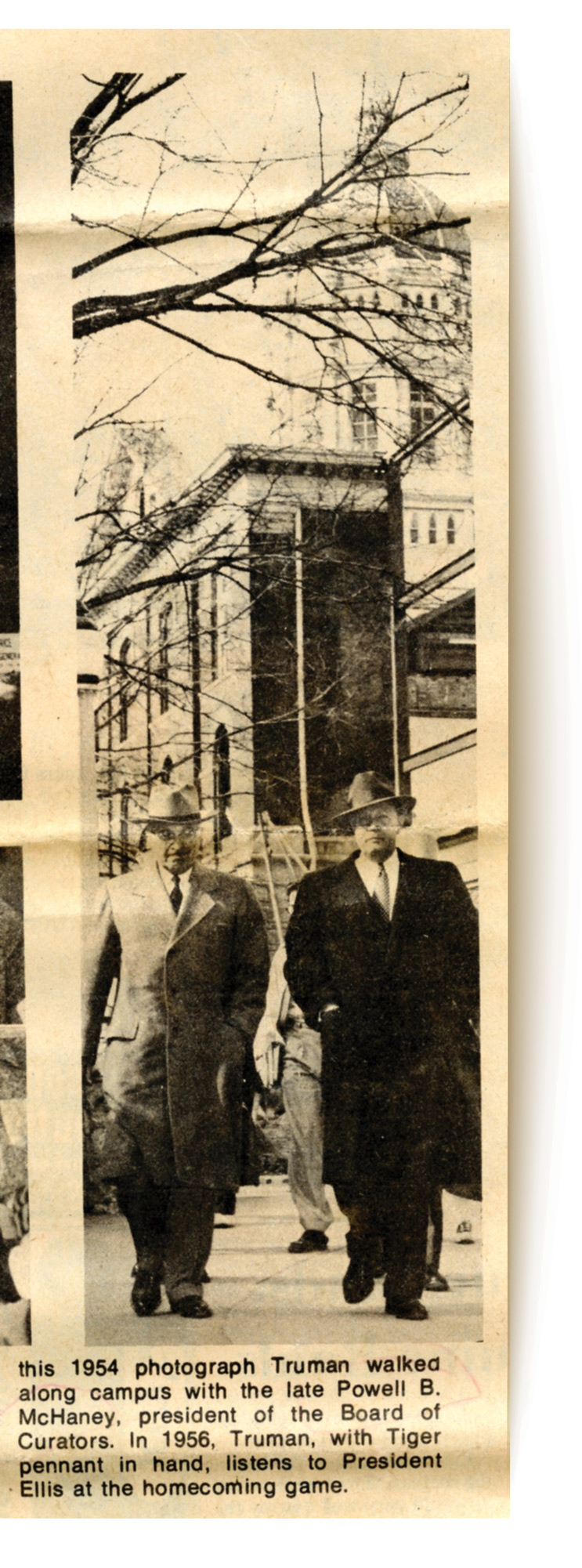
In 1953, Powell helped found Civic Progress Inc., a compact group of St. Louis CEOs who quietly shaped the city’s future. As its first president, he backed funding for schools, infrastructure and civic landmarks, including early support for the Gateway Arch. Critics considered it a kind of shadow government. But business leaders, Powell countered, owed more than taxes. They owed vision.
He brought that philosophy to Mizzou. As president of the University of Missouri Board of Curators in the 1950s, Powell pushed to reestablish the university’s four-year medical school, which had been dormant for decades. He helped secure funding for a proper academic hospital and insisted it should serve both students and the state. Tragically, in 1957 while in Washington, D.C., Powell was killed in a car wreck. One measure of his life: “When he passed away, there were 150 pallbearers,” Patrick says. “They stopped the street traffic in St. Louis for his procession.”
Courage in War, Clarity in Law
Before Flake McHaney, BA ’42, became a respected Missouri judge, he was a college kid with a mind wired for solutions. At Mizzou, he joined Army ROTC. That decision that landed him in the Italian campaign of World War II. As an operations officer, he hauled mortars through the fire-swept Apennines, where Allied forces faced German troops dug into ridgelines. The terrain was brutal. Flake adapted.
With another lieutenant, Flake engineered hinge-mounted mortars for high-angle fire. Their quick math turned battlefield guesswork into strategy. By 23, the young soldier had become Major Flake McHaney and received the Legion of Merit, the Bronze Star and the Italian Cross.
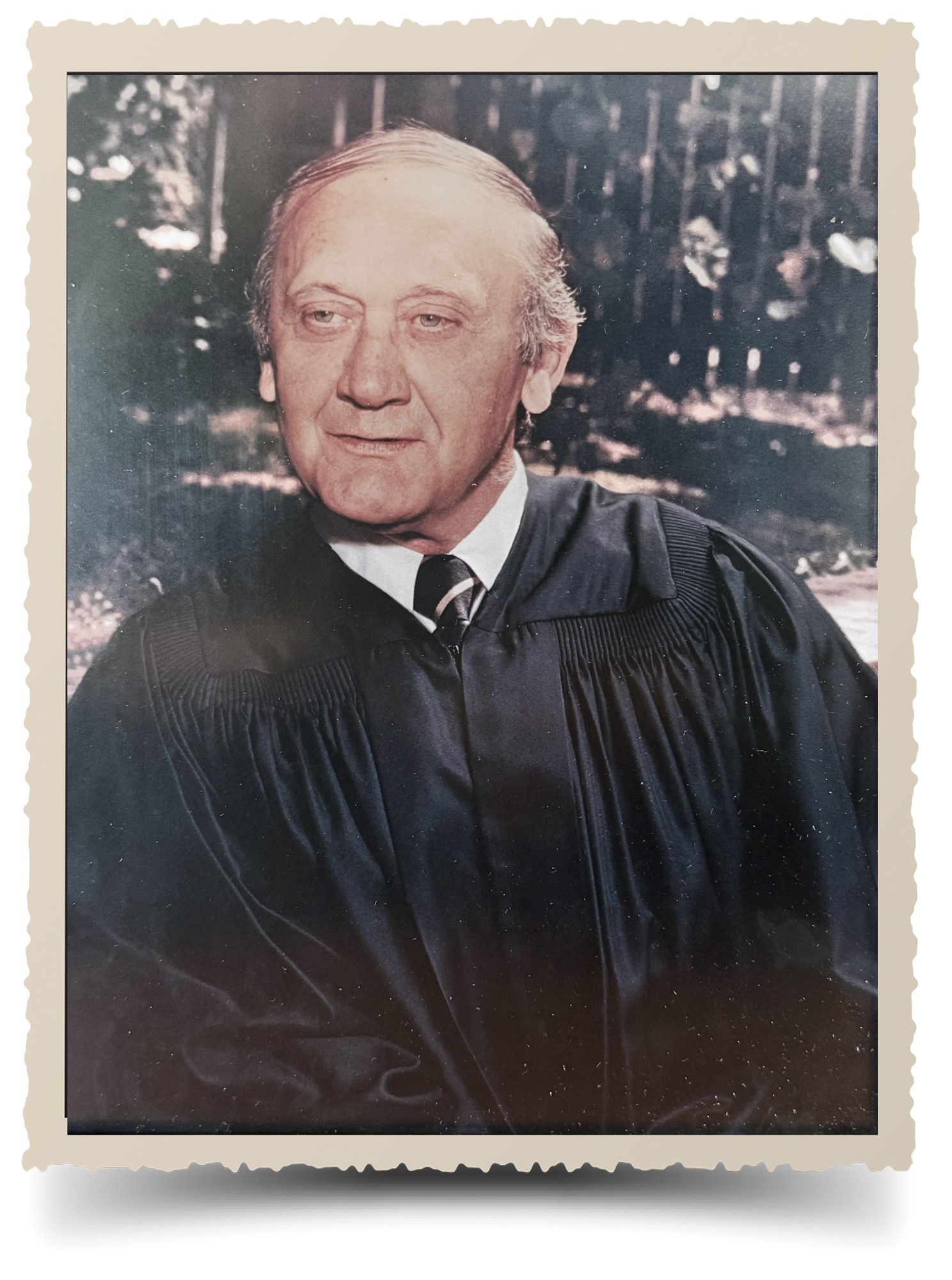
After the war, Flake earned a Harvard law degree and returned to Kennett to practice alongside Hal. Their firm, McHaney & McHaney, became a local fixture. In 1972, he was appointed judge of Missouri’s 35th Judicial Circuit. When he hit the mandatory retirement age years later, the Missouri Supreme Court brought him back as a senior judge — a rare encore for a jurist trusted across the state.
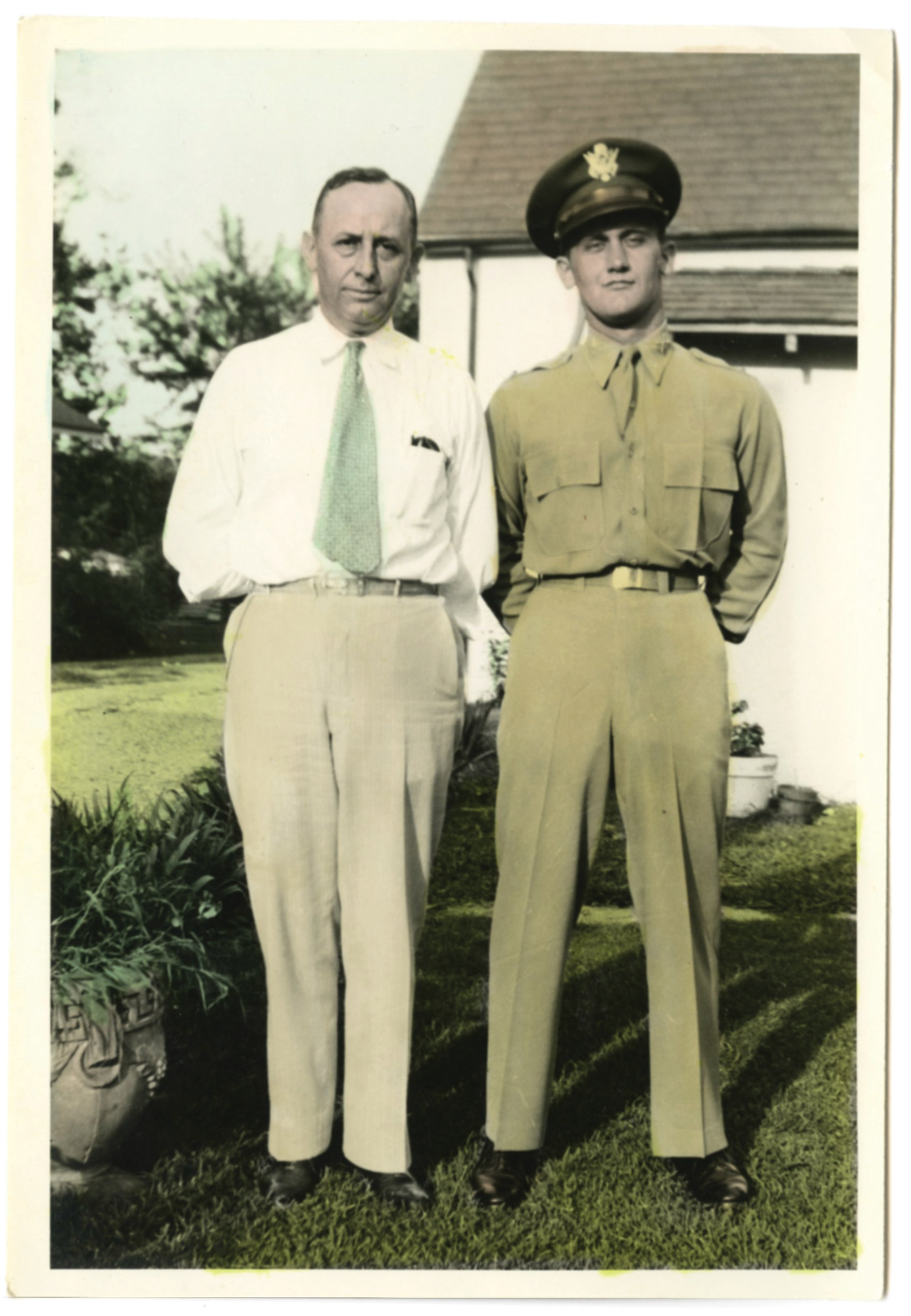
“He really relished practicing law,” Patrick says. “He had a sense of nobility, and it was very important to him to hold himself and all those who were in the arena with him accountable.”
Flake also remained fiercely loyal to Mizzou. A gifted orator, he rallied alumni, led one of Southeast Missouri’s most active booster clubs and rarely missed a football game, despite the five-hour round-trip drive. For his devotion, he received the MU Golden Tiger Award in 1997 and the Distinguished Alumni Award in 2004.
By the time the youngest McHaney, Robert, graduated in 1954, his brothers already were well established in Missouri. The age gap set him slightly apart, and after earning his degree, Robert moved to Texas, where he built a life and career largely independent of his four brothers.
Investing in Homegrown Potential
When each of the McHaney brothers passed through Mizzou, the world was in flux: war abroad, economic strain at home and a nation slowly stepping into modern life. They watched radio turn into television and politics shift in cycles of hope and division. When they returned home, it wasn’t just with diplomas but also with direction. Their towns needed doctors, lawyers and civic leaders. They were ready to serve, Patrick says.
“The five McHaney brothers came from a little rural area, and all ended up making names for themselves thanks to the level of excellence they received in their Mizzou education,” he says.
Today, the students who carry their legacy face different uncertainties: climate change, fractured politics and algorithms shaping culture. These, too, require clarity, resilience and care.
More than 500 students have been helped by the Hal H. and Beulah Hale McHaney Scholarship, which has awarded more than $2.6 million since 2007. While not limited to the region, the scholarship gives strong preference to students from Dunklin County to keep its roots close and its impact personal. Think of it as a generational handoff, from one family’s legacy to the next wave of rural students ready to lead.
Richie Leeker, who has spent more than sixteen years serving the Kennett School District — first as high school principal and now superintendent — has seen the impact up close. “This scholarship doesn’t just open doors to higher education; it changes the trajectory of students’ lives,” he says. “The McHaney family’s commitment to lifting up rural students continues to leave a profound and lasting impact on our schools and our entire community.”
Adiley Powers of Campbell is among these students. “I’m one of four siblings, and putting all of us through college wasn’t financially feasible for my dad,” she says of the impact of the Hal H. and Beulah Hale McHaney Scholarship. She’s studying agribusiness management and wants to be a force for women in agriculture.
McHaney scholarship recipient Ben McMullan of Kennett is studying strategic communication and hopes to lead creative teams in the advertising world. “This scholarship allowed me to worry about the more important things in my journey instead of the payments in order to go here,” he says.
College arrived at a hard moment for scholarship recipient Delayna Dalton. Her grandmother had just passed away, and she wasn’t sure how she’d manage. “I was so scared about how I was going to get through it, and now I can focus on my academics,” she says of the scholarship’s impact. “Since being at Mizzou, I’ve learned that I am not alone, and I’m not just another outcast kid that can’t seem to find anyone. There is something for me here.”
Dalton is studying psychology and hopes to become a counselor or pursue a PhD. Like the McHaney brothers before her, she’s finding a way forward through hardship and with purpose.
The world has changed since the first McHaney stepped on campus more than a century ago. But their values — will, service and belief in the power of education — still echo. Five brothers from the Bootheel marched into the unknown, and the traces they left behind still guide the way.
To read more articles like this, become a Mizzou Alumni Association member and receive MIZZOU magazine in your mailbox. Click here to join.